+8615674993216
 sales@forever-steels.com
 English
 العربية

The correct heat treatment for steel pipe is determined by the governing standard and grade, the pipe-making route, wall thickness, final forming or welding operations, and the intended service—not by the words “heat treated” alone.A technically complete order must define the delivery condition and treatment scope, then verify that final mechanical, hardness, impact and corrosion-related requirements were tested after the last relevant thermal cycle.
Heat treatment changes microstructure and therefore changes the balance among strength, hardness, ductility, toughness, residual stress, dimensional stability and corrosion behavior. The same pipe chemistry can produce materially different performance after normalizing, quenching and tempering, solution annealing or an uncontrolled reheating cycle. This is why product standards link material grade, manufacturing route, heat treatment and final testing rather than treating them as independent quotation options.
For example, ASTM A333/A333M covers seamless and welded pipe for low-temperature service and requires the pipe to be treated to control its microstructure; ASTM A312/A312M defines heat-treated conditions for austenitic stainless pipe; and API Specification 5L covers both seamless and welded line pipe together with manufacturing, inspection, testing, marking and traceability requirements.[1][3][5]
|
Term |
What it actually controls |
|
Mill heat treatment |
A thermal cycle included in the product-standard manufacturing route before final release. |
|
Full-body treatment |
The whole finished or near-finished pipe is heated and cooled under a defined furnace or continuous-line cycle. |
|
Local seam treatment |
Only the weld seam and adjacent heat-affected zone are reheated, common in qualified ERW/HFW routes. |
|
PWHT |
A code- or procedure-controlled treatment after component, attachment or girth welding; it is not automatically part of pipe manufacture. |
|
Heat-treated starting material |
Normalized, TMCP or quenched-and-tempered plate/coil used to make pipe; this does not by itself prove the finished pipe received full-body treatment. |
|
Important boundary TMCP, hot finishing and controlled rolling are manufacturing routes with thermal control, but they should not be described as interchangeable with a specified normalize, quench-and-temper or solution-anneal cycle unless the governing standard and purchaser explicitly permit that equivalence. |
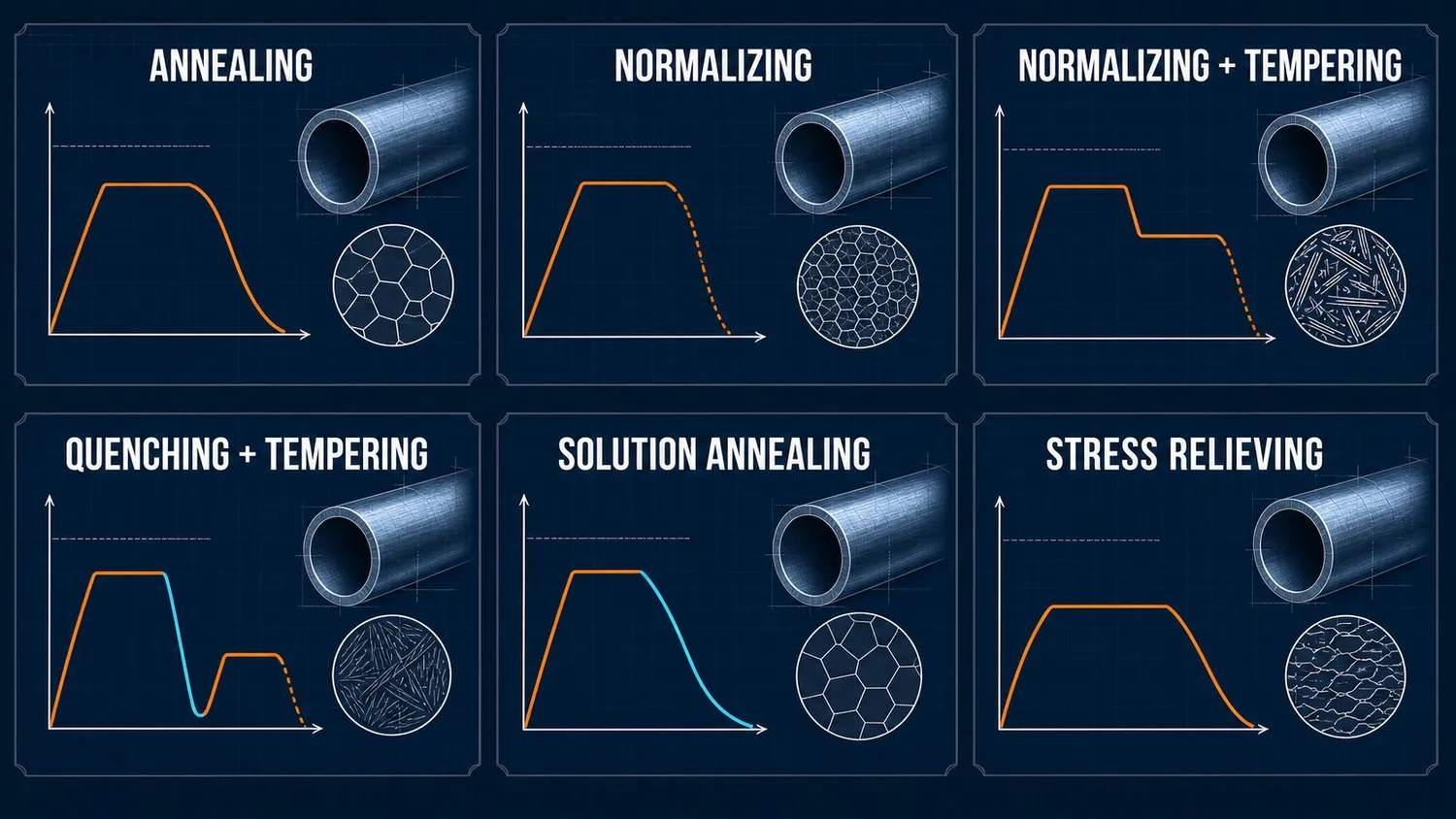
Figure 1. The main heat-treatment families use different peak temperatures, holding stages and cooling rates to achieve different property balances.
|
Method |
Primary production purpose |
Main control risk |
|
Annealing |
Soften material, improve ductility and machinability, reduce effects of cold work and promote a more uniform structure. |
May reduce strength or hardness; the exact cycle depends on composition and prior processing. |
|
Normalizing |
Refine and homogenize ferritic steel microstructure after hot working; commonly used to support strength–toughness consistency. |
Air cooling and section size affect the result; “normalized plate” is not the same as normalized finished pipe. |
|
Normalizing + tempering |
Combine refined structure with controlled tempering to adjust hardness, toughness and stability in selected alloy grades. |
The tempering step must be compatible with the grade and final property requirements. |
|
Quenching + tempering |
Develop higher strength through rapid cooling, then restore required toughness and control hardness by tempering. |
Uneven cooling can cause distortion, residual stress or property gradients; over-tempering can reduce strength. |
|
Solution annealing |
Dissolve detrimental precipitates and establish the required corrosion-resistant condition in austenitic or duplex stainless grades, followed by specified cooling. |
Cooling delay, sensitization or intermetallic-phase formation can impair corrosion performance; phase balance is critical for duplex. |
|
Stress relieving / PWHT |
Reduce or redistribute welding or forming residual stresses and, for some materials, temper a hard weld/HAZ structure. |
PWHT is not universally beneficial; an unsuitable cycle can age, embrittle, soften or otherwise damage certain materials. |
· Strength and hardness: quench-and-temper routes can raise strength, while annealing or over-tempering can lower it.
· Toughness and ductility: a refined and controlled structure can improve resistance to brittle fracture, but only when chemistry, wall thickness and cooling are compatible.
· Residual stress and shape: stress relief may improve dimensional stability; aggressive quenching can increase distortion, ovality or straightness risk.
· Weld and HAZ behavior: local seam treatment may reduce a hard or non-uniform ERW/HFW seam zone, but it does not replace weld-integrity inspection.
· Corrosion condition: solution annealing and cooling are fundamental for many stainless grades; austenitic stainless steel is not hardened by quenching in the same way as carbon steel.
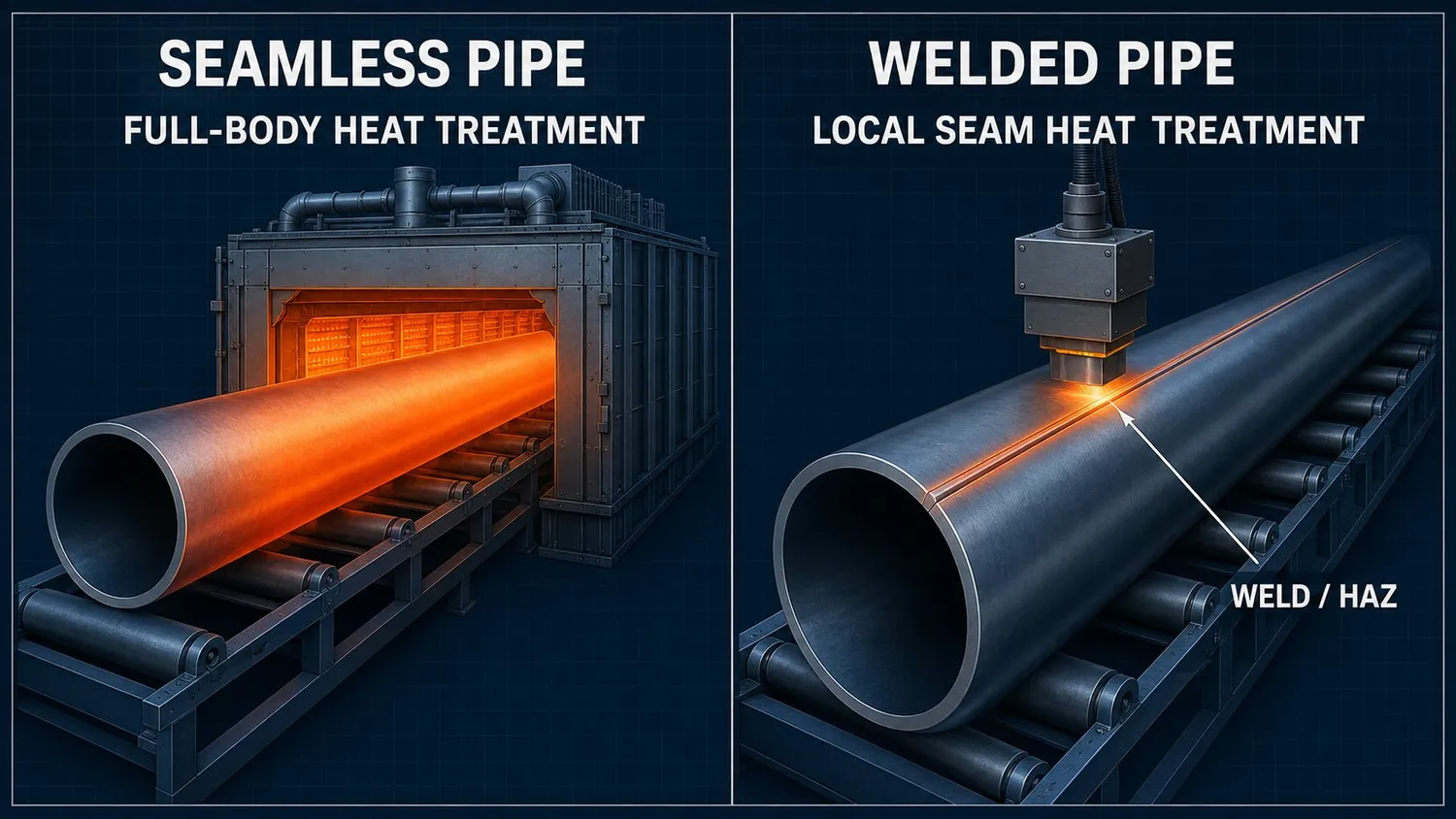
There is no valid blanket rule that seamless pipe always needs one treatment and welded pipe another.The difference is that welded pipe has a starting plate or coil condition, a forming history and a weld/HAZ condition that must all be reconciled with the final product requirements. Seamless pipe has no longitudinal weld, but piercing, rolling, extrusion, cold drawing and final sizing can still create non-uniform structure or residual stress that the specified delivery condition must control.
For ERW/HFW and LSAW pipe, the pipe-making seam normally runs longitudinally—parallel to the pipe axis. SSAW pipe has a helical seam. A transverse girth weld joins separate pipe lengths during fabrication or field installation; it is not the longitudinal manufacturing seam shown in Figure 3 and should not be used to illustrate ERW/HFW seam heat treatment.
|
Decision point |
Seamless pipe |
Welded pipe |
|
Starting material |
Billet or hollow shell; chemistry and hot-working route are central. |
Plate or coil may be as-rolled, normalized, TMCP or Q&T before forming. |
|
Local metallurgical feature |
No longitudinal weld; cold-worked or hot-worked condition may vary through the wall. |
Weld metal/bond line and HAZ can differ from the pipe body. |
|
Typical treatment scope |
Full-body normalizing, annealing, Q&T or solution annealing when required by grade/process. |
Local seam treatment, full-body treatment, or neither—depending on process, standard, grade and class. |
|
Common buyer error |
Assuming “hot finished” automatically proves a named heat-treated condition. |
Assuming heat-treated plate/coil means the finished pipe or weld seam is in the required final condition. |
|
Evidence priority |
Furnace/load traceability, final tests, dimensions and MTC delivery condition. |
Starting-material MTC + welding route + seam-treatment record + final pipe tests and NDE. |
High-frequency welded pipe can use online local heat treatment to modify the weld seam and adjacent HAZ after welding. The procurement question is not only whether a heater exists on the line. Buyers should review the qualified temperature window, power/speed relationship, treated width, alarm and interruption handling, seam hardness or macro evidence, and traceability to the production lot. For the detailed seam-specific workflow, see ERW Weld Seam Heat Treatment: HAZ, Hardness and Record Review.
Submerged-arc-welded pipe is commonly produced from plate or coil whose delivery condition supports the required final properties. Full-body furnace treatment or local stress relief may be required by a particular ASTM class, alloy route, wall thickness, service condition or project specification, but it should not be presumed for every API line-pipe or structural order. The governing product standard, design code and approved manufacturing procedure specification (MPS) must define the actual route.
|
Material family |
Typical pipe context |
Treatment logic |
Buyer focus |
|
Carbon steel |
ASTM A106; selected API 5L grades |
Hot-finished, normalized, normalized and tempered, or Q&T routes may apply by grade, process and required properties. |
Do not infer low-temperature toughness from strength alone; verify the final delivery condition and required tests. |
|
Low-temperature ferritic steel |
ASTM A333 grades |
Microstructure-control treatment and impact testing are central to the material definition. |
Match grade, wall, heat-treatment lot and impact-test record to the specified minimum design condition. |
|
Cr-Mo ferritic alloy steel |
ASTM A335 P11/P22/P91 families |
Annealed, normalized and tempered, or Q&T routes vary by grade; fabrication PWHT is a separate code/WPS decision. |
Avoid mixing mill treatment, weld PWHT and later hot-forming cycles; final hardness and traceability matter. |
|
High-strength line pipe / OCTG |
API or project grades |
Controlled rolling/TMCP, normalizing or Q&T may be used depending on grade and manufacturing route. |
Strength, toughness, weldability and sour-service hardness cannot be optimized independently. |
|
Austenitic stainless |
ASTM A312 TP304L/316L and others |
Solution annealing with controlled cooling establishes the required corrosion-resistant condition. |
Quenching is for retaining the solution-treated structure, not martensitic hardening; control sensitization and surface condition. |
|
Duplex stainless |
Project/ASTM duplex grades |
Solution annealing and rapid cooling are used to restore suitable ferrite–austenite balance and limit harmful phases. |
Avoid casual local PWHT or slow cooling; verify qualified procedure, phase/ferrite evidence and corrosion testing where required. |
|
Service / product need |
Metallurgical objective |
Evidence to place in RFQ / ITP |
|
Low-temperature piping |
Notch toughness at the project test temperature; microstructure control |
Grade/edition, heat-treatment condition, impact temperature/results, specimen and represented lot |
|
High-temperature steam or process service |
Long-term strength, oxidation/creep resistance and weld condition |
Cr-Mo grade route, mill condition, forming history, WPS/PQR, PWHT and final hardness where applicable |
|
Sour or hardness-controlled service |
Hard zones and weld/HAZ susceptibility |
Applicable sour-service requirements, chemistry, hardness map/test location, seam treatment, NDE and traceability |
|
Cold-drawn precision tube |
Work hardening, ductility, dimensional stability and machinability |
Final anneal/stress relief condition, straightness, OD/ID/wall, hardness and sampling location |
|
ERW/HFW line pipe |
Seam/HAZ uniformity plus body properties |
Qualified seam treatment, interruption controls, macro/hardness/flattening evidence, full-pipe NDE and hydrotest |
|
Austenitic stainless corrosive service |
Solution-treated corrosion condition and weld restoration |
Heat-treatment condition, cooling route, pickling/passivation or finish, intergranular/corrosion testing if specified |
|
Duplex stainless |
Phase balance, toughness and corrosion resistance |
Solution anneal/cooling, ferrite or phase evidence, qualified welding, corrosion test and no unapproved local reheating |
· Underheating or short soak: incomplete transformation, retained processing effects or inconsistent properties between load positions.
· Overheating or excessive soak: grain coarsening, decarburization, scale, oxidation, distortion or unwanted precipitation.
· Incorrect cooling rate: missed strength/toughness balance, non-uniform hardness, residual stress, ovality or cracking risk.
· Uneven furnace loading: temperature shadowing, local overheat, inconsistent pipe-end condition or unrepresentative thermocouple placement.
· Interrupted online seam treatment: an untreated or partially treated length may remain unless the line has defined alarm, marking, cropping and disposition rules.
· Reheating after final tests: hot sizing, bending, repair, coating cure or fabrication heat can invalidate the assumed final condition if not reviewed.
· Stainless-specific damage: sensitization, incomplete solution treatment, slow cooling, oxidation or harmful intermetallic phases can reduce corrosion performance.
|
Supplier statement |
Required clarification |
|
“Heat treated” |
Name the process, scope, production stage and acceptance basis. |
|
“Annealed” |
Specify full, process, bright or solution anneal as applicable; identify atmosphere/cooling and final tests. |
|
“Normalized material” |
State whether the starting plate/coil, pipe body or finished pipe was normalized. |
|
“Online seam heat treatment” |
Request treated width, temperature/power-speed controls, alarms, records and seam verification. |
|
“PWHT available” |
Confirm whether this means pipe-mill treatment, local fabrication PWHT or full assembly furnace treatment. |
|
“Properties comply” |
Confirm sampling location, lot definition and that testing followed the final relevant heat cycle. |
|
“Temperature certificate” |
Require chart identity, calibrated channels, time base, pipe/load mapping and approval criteria—not a generic screenshot. |
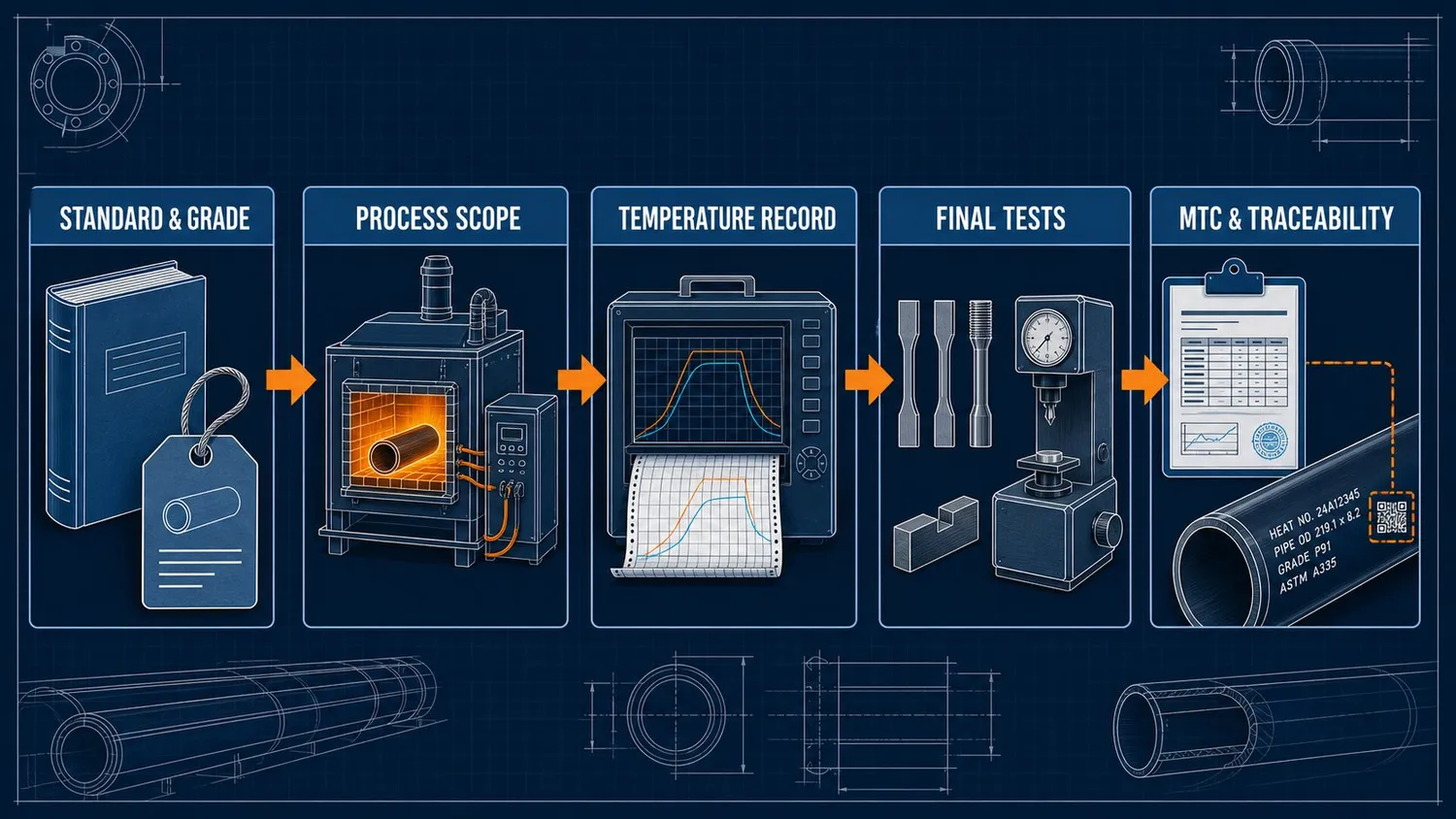
Figure 3. Acceptance evidence should connect the ordered grade to the actual process, final tests and pipe-level traceability.
· Governing product standard, edition, grade, PSL/class and any supplementary requirements.
· Manufacturing route: seamless, ERW/HFW, LSAW, SSAW, cold drawn, hot expanded or welded stainless.
· Required delivery condition and treatment scope: full body, local seam, starting material, or post-fabrication PWHT.
· Approved MPS and ITP, including furnace/line identification, load/lot definition and review, witness or hold points.
· Final tests required after the last relevant thermal cycle, with sampling positions and retest/reheat rules.
· Pipe, heat and heat-treatment load mapping; treatment date; furnace or line identification; operator and recipe/revision.
· Temperature-time record with calibrated channels, chart speed/time base, setpoint, actual profile and any required thermocouple locations.
· For continuous or local treatment: line speed, power or frequency, treated width/location, alarm history and interruption disposition.
· Nonconformance, reheat, cropping, repair, concession and retest records tied to the affected material identifiers.
· Final tensile, hardness and impact results as required, with sample orientation, location, test temperature and represented lot.
· Seam macro, hardness traverse, flattening/bend and NDE evidence where the welded route or project requires them.
· Dimensional reinspection for OD, wall, ovality, straightness and pipe ends after a cycle that can affect shape.
· MTC statement of manufacturing method and delivery condition, reconciled with heat number, pipe marking and document index.
|
RFQ wording Supplier shall state the proposed steelmaking, pipe-making and heat-treatment route for each offered grade and size. The offer shall distinguish starting-material condition, full-body pipe treatment, local weld-seam treatment and any post-fabrication PWHT. The final treatment shall comply with the specified product-standard edition and project requirements. Mechanical, hardness, impact, corrosion-related and dimensional tests shall be performed after the last relevant thermal cycle unless the governing document explicitly permits otherwise. |
|
Record wording Heat-treatment records shall identify heat number, pipe or lot, furnace/line, recipe revision, treatment date, calibrated temperature channels, time-temperature profile, cooling method and any process interruption or reheat. Records shall reconcile with the MTC, test reports, pipe marking and final packing list. |
|
ITP hold point Before production release, purchaser and supplier shall agree the MPS heat-treatment route, lot definition, sampling locations, acceptance criteria, reheat/retest rules and required document review. No alternative cycle or subcontract treatment shall be used without documented technical approval. |
No. The required delivery condition depends on the product standard, grade, manufacturing route, dimensions and service requirements. Some carbon-steel pipe may be supplied in a permitted hot-finished or as-rolled condition, while low-temperature, alloy, stainless or high-strength grades may require a defined normalizing, quench-and-temper or solution-anneal route. The order should therefore state the required condition rather than adding a generic heat-treatment requirement. If the standard permits more than one route, the supplier should declare the proposed route and show that testing represents the final delivered condition.
Seamless pipe has no longitudinal manufacturing seam, so treatment normally addresses the pipe body after piercing, rolling, extrusion, cold drawing or sizing. Welded pipe also has a starting plate or coil condition, forming history and weld/HAZ condition. It may therefore require local seam treatment, full-body treatment, or no additional treatment when the qualified route and governing standard permit it. Compare the available Seamless Steel Pipes and Welded Steel Pipe routes against the project specification rather than selecting by pipe type alone.
No. ERW/HFW seam heat treatment is a local process applied along the longitudinal weld and adjacent HAZ; it does not establish the thermal condition of the entire pipe body. Buyers should verify treated width, line speed and power controls, interruption handling, seam hardness or macro evidence, and traceability to the production lot. Full-body treatment heats the complete pipe under a defined cycle. For the seam-specific acceptance route, see ERW Weld Seam Heat Treatment: HAZ, Hardness and Record Review and the ERW Steel Pipe product scope.
Not necessarily. A normalized, TMCP or quenched-and-tempered plate or coil describes the starting material condition. Forming and welding then introduce additional strain and a local weld/HAZ thermal cycle. The finished pipe may retain an acceptable plate-derived body condition, but that is not the same as proving that the complete pipe received full-body heat treatment. The MPS and MTC should distinguish starting-material condition, pipe-making process, local seam treatment and any final full-body cycle. Final pipe tests and weld inspection must represent the actual approved manufacturing route.
No. PWHT is controlled by the material, weld procedure, product standard, design code, wall thickness, service and project specification. Many welded line-pipe or structural-pipe orders do not require full-body PWHT simply because the pipe contains a manufacturing weld. Conversely, selected Cr-Mo alloy fabrications or thick, highly restrained joints may require a qualified PWHT cycle. TWI also notes that an unsuitable cycle can damage some materials through aging, precipitation, softening or embrittlement. Mill heat treatment, ERW seam treatment and fabrication PWHT should therefore be specified and documented as separate scopes. [6][7]
Carbon and low-temperature ferritic steels commonly use hot-finished, normalized or quench-and-temper routes to obtain the required strength-toughness balance. Cr-Mo alloy grades may require grade-specific annealed, normalized-and-tempered or quenched-and-tempered conditions, followed by separately controlled fabrication PWHT where applicable. Austenitic and duplex stainless steels use solution annealing and controlled cooling to protect corrosion performance and, for duplex, phase balance; rapid cooling is not martensitic hardening of austenitic stainless. Review relevant Low-Temperature Seamless Steel Pipe, Alloy Seamless Steel Pipe and Seamless Stainless Steel Pipe supply conditions against the purchased standard edition. [3][4][5][9]
Request the approved MPS and ITP, heat-treatment procedure or recipe, furnace or line identification, calibration status, load and pipe mapping, time-temperature record, cooling method, process alarms or interruptions, and any reheat or nonconformance disposition. The final test package should include the mechanical, hardness, impact, corrosion-related, seam and dimensional results required by the contract after the last relevant thermal cycle. The MTC, heat number, pipe marking, test reports and packing list must reconcile. A generic furnace screenshot or a certificate stating only 'heat treated' is not complete acceptance evidence.
· Exact standard, edition, grade, class/PSL and project specification are stated.
· Manufacturing route and starting-material condition are declared.
· Heat-treatment method and scope are unambiguous.
· Final treatment occurs at the correct production stage.
· Furnace/line capacity is compatible with OD, wall, length and load arrangement.
· Calibrated temperature and process records are required and traceable.
· Final tests occur after the last relevant thermal cycle.
· Weld seam/HAZ evidence is included for the applicable welded route.
· Dimensional reinspection follows cycles that may distort the pipe.
· Reheat, retest, repair and interruption rules are agreed before production.
· MTC, heat number, pipe marking, test reports and packing list reconcile.
· Any substitution or alternative cycle requires purchaser approval.
Steel pipe heat treatment should be selected as part of the complete material and manufacturing route. A useful specification connects service conditions to grade, pipe-making process, treatment scope, final testing and traceable records. This prevents a common procurement failure: receiving a certificate that says “heat treated” without proving what was treated, how it was controlled or whether the delivered pipe still satisfies the required properties after its final thermal history.
For project review, compare Seamless Steel Pipes and Welded Steel Pipe by standard, grade, dimensions, treatment route, inspection plan and required documentation. Send the full RFQ or material requisition when the delivery condition is project-specific.
· ERW Weld Seam Heat Treatment: HAZ, Hardness and Record Review
· ASTM A106 Pipe Procurement Guide: How to Specify Grade, Dimensions, Testing and Documentation
· ASTM A333 Grade 6 vs ASTM A106 Grade B: Can PMI Distinguish Low-Temperature Pipe?
· Pickled vs Bright Annealed vs Polished Stainless Steel Pipe: Finish Selection Guide
· LSAW Pipe Documentation Package: What We Check Before Release
The sources below are intentionally limited to nine and diversified across standards organizations, an independent welding institute, an industry technical institute and peer-reviewed research. Contract requirements must be checked against the purchased edition and project documents.
[1] American Petroleum Institute — API Announces 47th Edition of API Specification 5L
[2] ASTM International — ASTM A106/A106M-26, Seamless Carbon Steel Pipe for High-Temperature Service
[6] TWI — Heat Treatment of Welded Joints, Part 1
[7] TWI — What Is Meant by Post-Weld Heat Treatment / Stress Relief Heat Treatment?
[9] Nickel Institute — Practical Guidelines for the Fabrication of Duplex Stainless Steels