+8615674993216
 sales@forever-steels.com
 English
 العربية

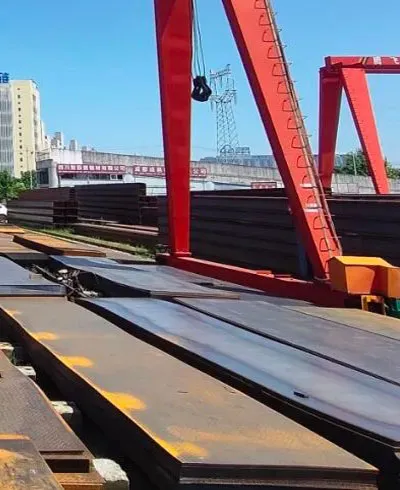
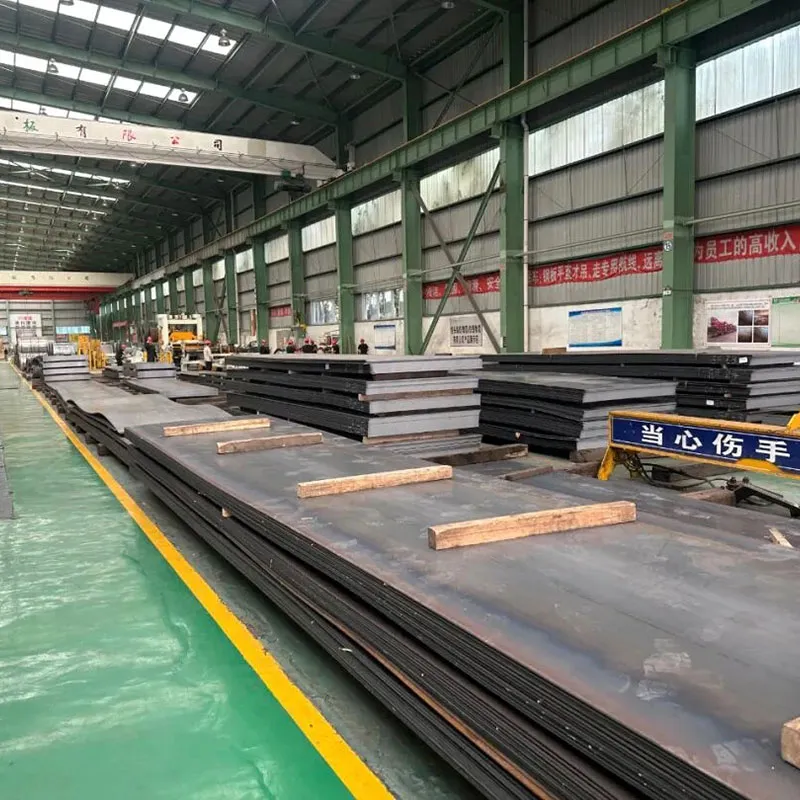
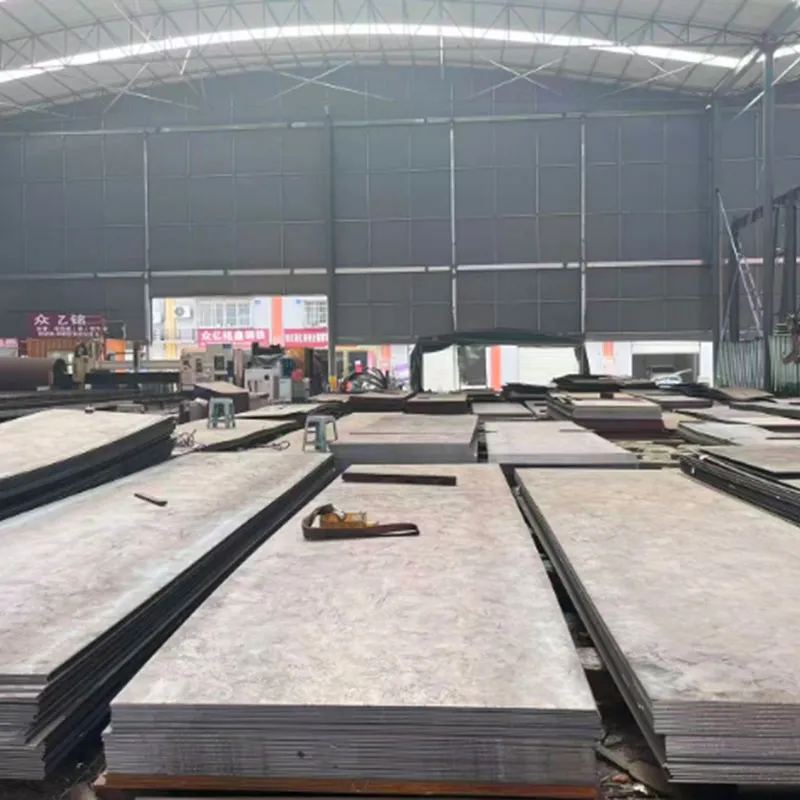
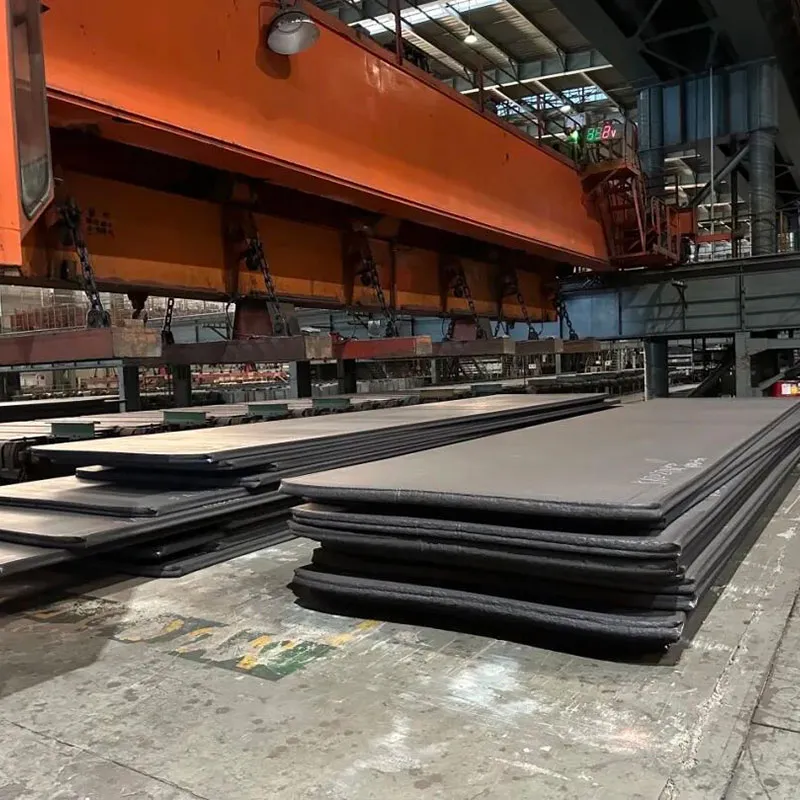
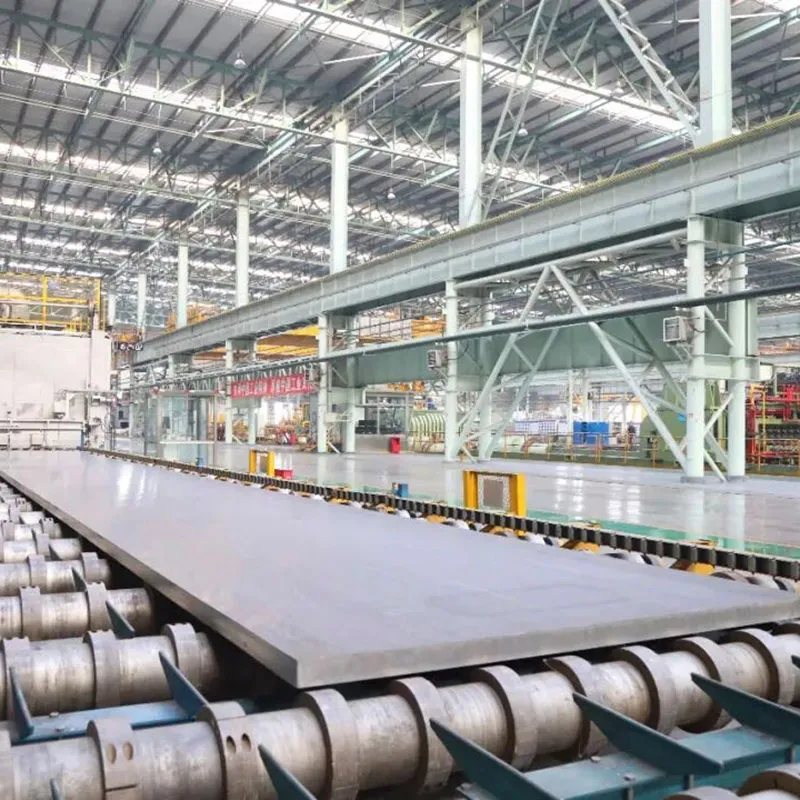
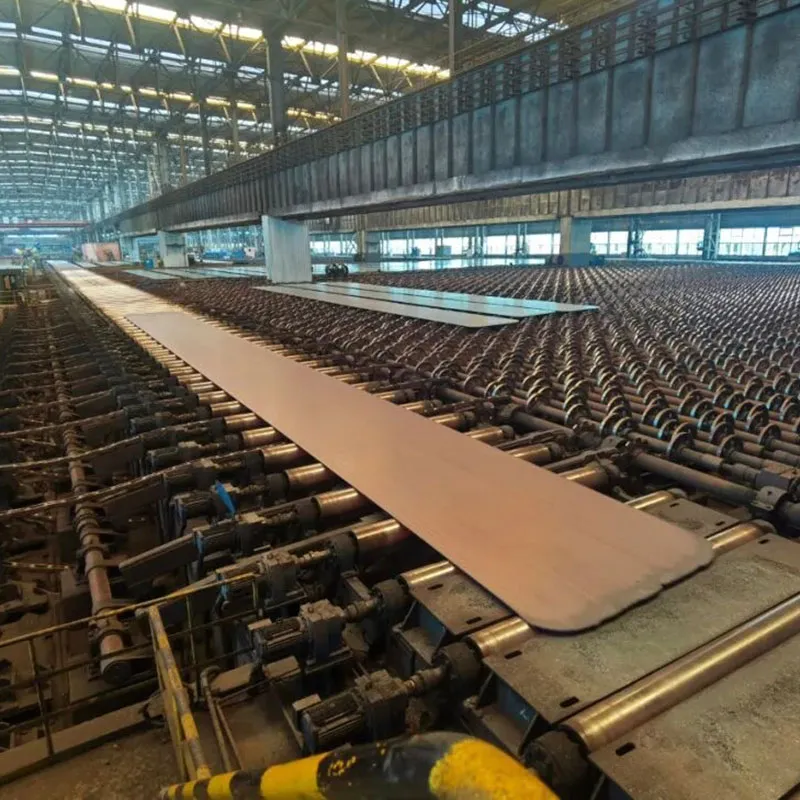
Our Marine & Offshore Steel Plates are specifically engineered to withstand the harshest maritime environments, from corrosive saltwater to extreme Arctic temperatures. We provide high-quality, certified plates used in the construction of commercial vessels, offshore drilling platforms, and FPSO units. With a focus on structural integrity and "Z-direction" properties to prevent lamellar tearing, our plates ensure long-term safety for critical offshore assets.
All our marine steel is fully traceable and certified by the world's leading classification societies (IACS members):
Classification Societies: ABS, DNV, LR, BV, GL, KR, NK, RINA, CCS.
ASTM Standards:
ASTM A131: The primary standard for shipbuilding steel.
Common Grades: Grade A, B, D, E (Ordinary Strength) and AH32, DH32, EH32, AH36, DH36, EH36 (Higher Strength).
Offshore Structural Standards:
API 2H / 2W / 2Y: High-strength plates for offshore structures (e.g., Grade 50).
EN 10225: Weldable structural steels for fixed offshore structures (S355G7, S355G8, S420, S460).
We provide a massive range of sizes to minimize the number of welds required in large-scale hull or platform construction:
|
Feature |
Specification Range |
|
Thickness (WT) |
5mm to 150mm (Up to 300mm for specialized offshore blocks) |
|
Width |
1500mm, 2000mm, 2500mm, 3000mm, 4000mm (Super-wide plates) |
|
Length |
6000mm, 9000mm, 12000mm (Custom lengths up to 18000mm) |
|
Surface Treatment |
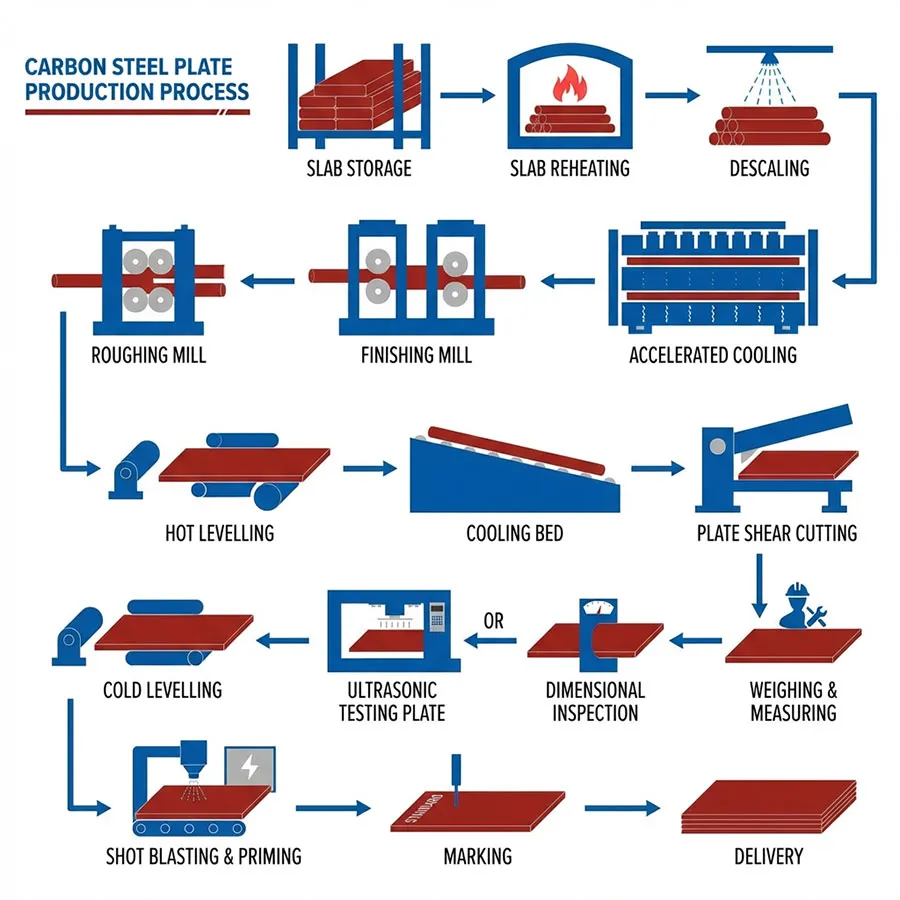
Shot-blasted and Shop Primed (Pre-painted to prevent rust during storage) |
|
Heat Treatment |
AR (As Rolled), TMCP (Thermo-Mechanical Control Process), N (Normalized) |
Marine and offshore plates are essential for projects where failure is not an option:
Shipbuilding: Hulls of bulk carriers, oil tankers, container ships, and luxury cruise liners.
Offshore Platforms: Jack-up rigs, semi-submersible platforms, and fixed offshore jackets.
FPSO & FSO: Floating Production Storage and Offloading vessel conversions and newbuilds.
Renewable Energy: Foundations for offshore wind turbines and transition pieces.
Marine Equipment: Ship cranes, deck machinery, and watertight bulkheads.
For marine and offshore plate enquiries, confirm the specified impact-test temperature, specimen basis and heat traceability. The following procurement guides explain questions to resolve; the ordered plate and classification requirements govern acceptance.
| Steel Grade | C (max) | Si (max) | Mn | P (max) | S (max) | Al (min) | Ni (max) | CEV (max) |
| S355G7+M/N | 0.18 | 0.5 | 1.6 | 0.025 | 0.015 | 0.02 | 0.3 | 0.43 |
| S355G10+M | 0.14 | 0.5 | 1.6 | 0.02 | 0.005 | 0.018 | 0.5 | 0.39 |
| S420G2+M | 0.16 | 0.5 | 1.7 | 0.02 | 0.005 | 0.018 | 0.5 | 0.43 |
| S460G2+M | 0.16 | 0.5 | 1.7 | 0.02 | 0.005 | 0.018 | 0.7 | 0.45 |
| Category | Standard | Common Steel Grades |
| Shipbuilding (Normal Strength) | ASTM A131 / Class Societies | Grade A, B, D, E |
| Shipbuilding (Higher Strength) | ASTM A131 / Class Societies | AH32, DH32, EH32, FH32AH36, DH36, EH36, FH36AH40, DH40, EH40, FH40 |
| Offshore Structural Steel | API Spec 2H / 2W / 2Y | Grade 42, Grade 50, Grade 60 |
| High-Strength Quenched & Tempered | EN 10225 | S355G2+N, S355G3+N, S355G7+M, S420G2+M, S460G2+M |
| ASTM A572 / A588 | Grade 50, Grade 60 (Weathering Steel) | |
| ASTM A514 | Grade Q, Grade S (Yield strength up to 690 MPa) | |
| EN 10025-6 | S690QL, S890QL, S960QL |
They usually know it when class approval, toughness, or marine-duty confidence becomes part of the buying decision. The shift is often driven by approval route and operating environment rather than by thickness alone. Typical applications include marine steel plate for ship structures, offshore steel plate with class approval, and AH36 or EH36 marine plate.
The difference usually reflects approval burden, toughness expectations, test discipline, and documentation rather than just material weight. Buyers often pay for confidence and acceptance, not only for steel. That price gap appears often when buyers compare AH36 marine plate, DH36 shipbuilding plate, and general structural plate for offshore fabrication.
The most useful question is usually which class or approval body the project must satisfy. That answer shapes the quotation more directly than a long description of the end use. This is common in offshore platform fabrication, vessel structures, and marine equipment manufacturing.
Approvals often stall when class expectations, UT requirements, or document package details appear late in the process. Those are common friction points even when the basic grade choice is already clear. Approval delays are common in class-approved marine plate supply where ABS, DNV, LR, or CCS expectations are not pinned down early.