+8615674993216
 sales@forever-steels.com
 English
 العربية

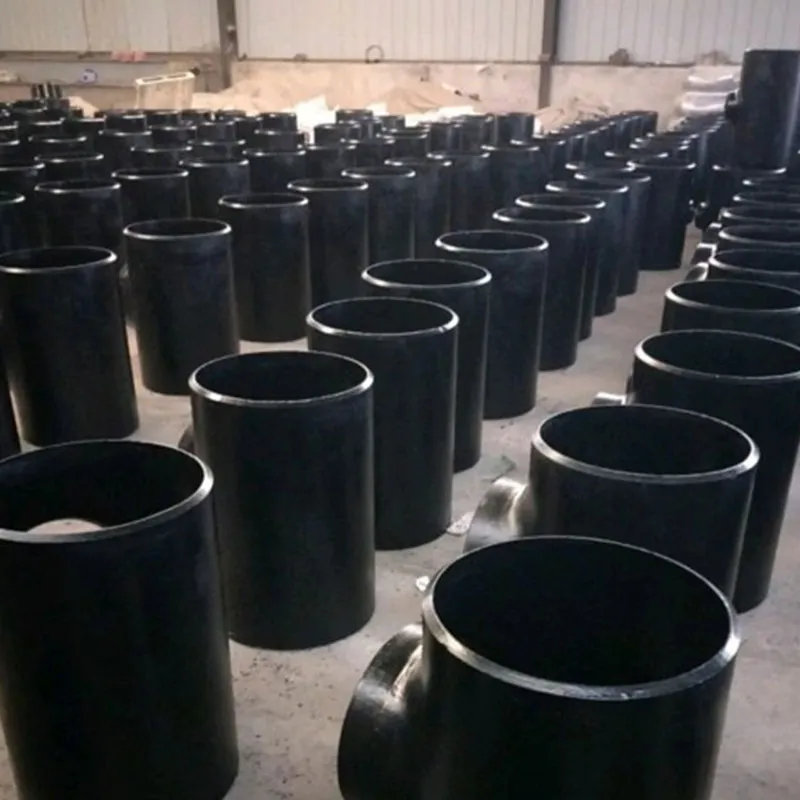
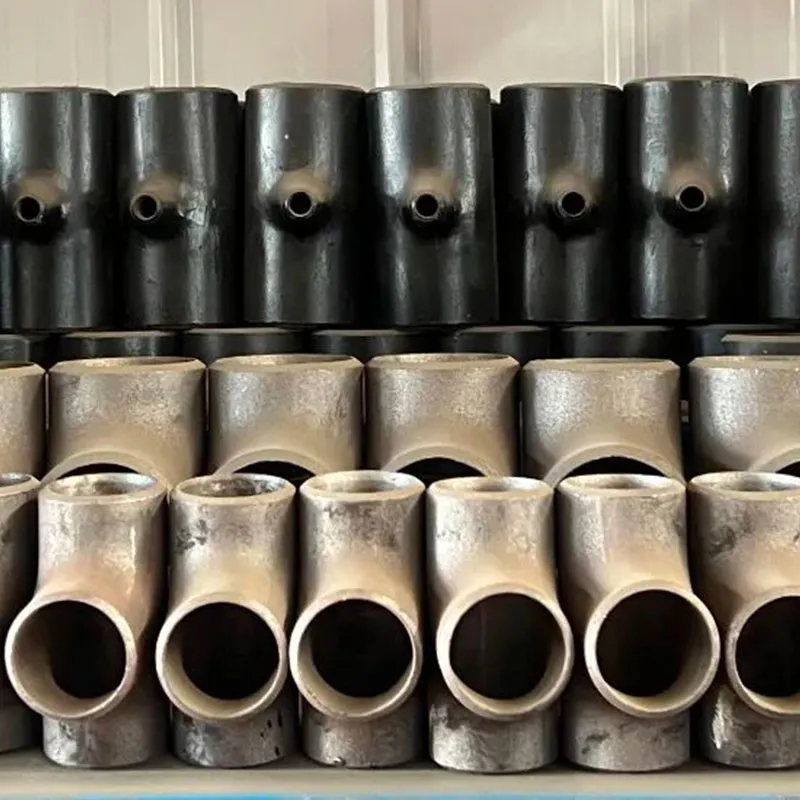
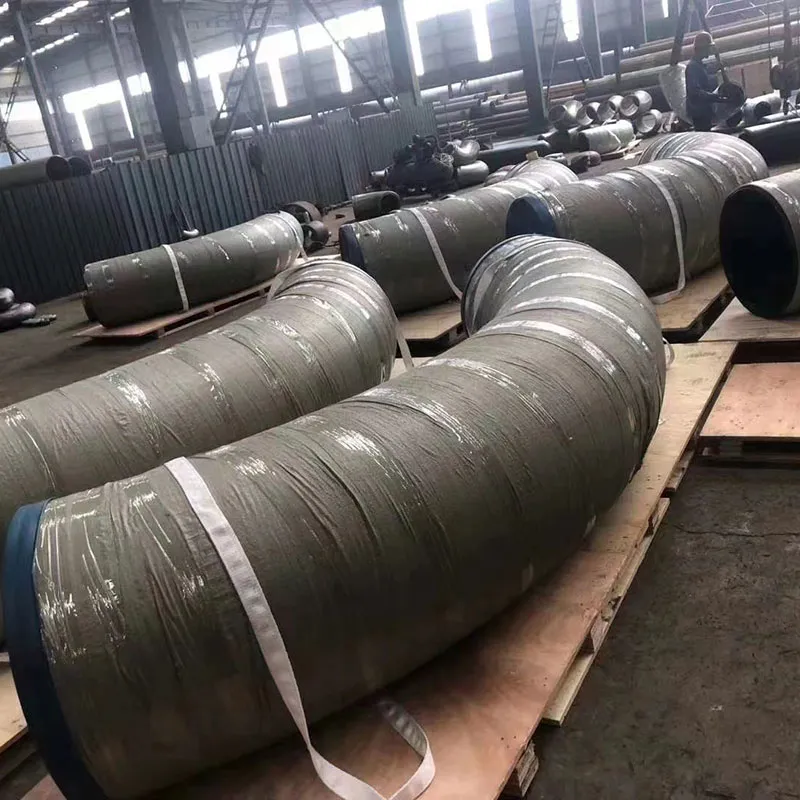
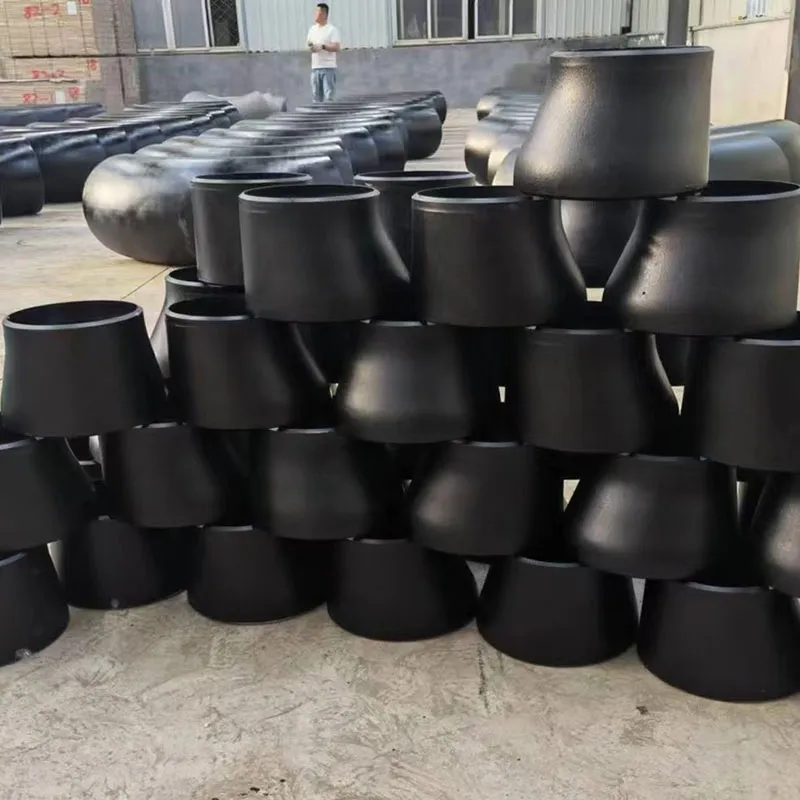
Our pipe tees are high-strength components used to combine or divide fluid flow within a piping network. Designed with a 90-degree branch, we offer both Equal Tees (where the branch diameter matches the main pipe) and Reducing Tees (where the branch is smaller), ensuring maximum flexibility for complex piping layouts.
Size Range:
Seamless (SMLS): 1/2" to 24" (DN15 – DN600)
Welded (Seam): 24" to 72" (DN600 – DN1800)
Wall Thickness: SCH 10, SCH 40, SCH 80, SCH 160, XS, XXS (Up to 100mm for specialized projects).
ASME/ANSI: B16.9, B16.11 (for forged fittings)
DIN/EN: EN 10253-1, EN 10253-2, DIN 2615
MSS: SP-75 (High-test, wrought butt-welding fittings)
JIS: B2311, B2312
Carbon Steel: ASTM A234 WPB (Most common), WPC; ASTM A105 (Forged)
Alloy Steel: ASTM A234 WP1, WP5, WP9, WP11, WP22, WP91
Low-Temperature Steel: ASTM A420 WPL3, WPL6
Stainless Steel: ASTM A403 WP304/304L, WP316/316L, 317L, 321, 347
High-Yield/Pipeline Steel: ASTM A860 WPHY 42, 46, 52, 60, 65, 70
Pipe tees are indispensable in industrial systems where multi-directional flow is required:
Oil & Gas Pipelines: Creating branch connections for gathering lines and distribution manifolds.
Petrochemical & Refining: Handling the diversion of chemicals and hydrocarbons under high pressure and temperature.
Power Generation: Used in cooling water systems and steam distribution networks.
HVAC & Civil Construction: Managing flow in large-scale heating, cooling, and fire protection systems.
Mining & Slurry Transport: Specifically designed heavy-wall tees are used to handle abrasive materials.
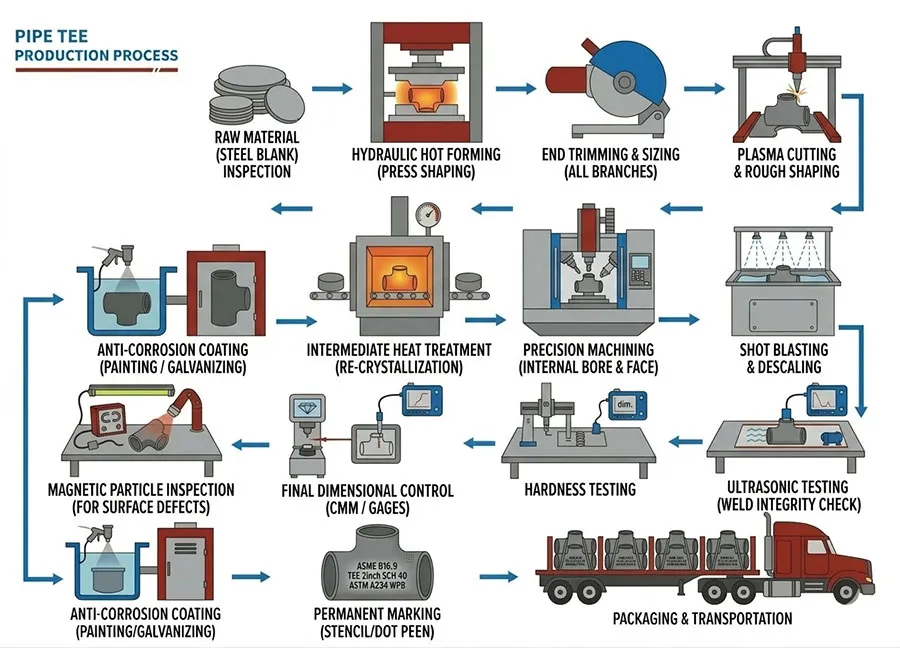
To ensure the integrity of the branch weld and the overall structural strength, all our tees undergo:
Dimensional Verification: Ensuring 90-degree accuracy and precise beveling for easy field welding.
Non-Destructive Testing (NDT): Including Ultrasonic (UT), Magnetic Particle (MPI), and X-ray testing on welded joints.
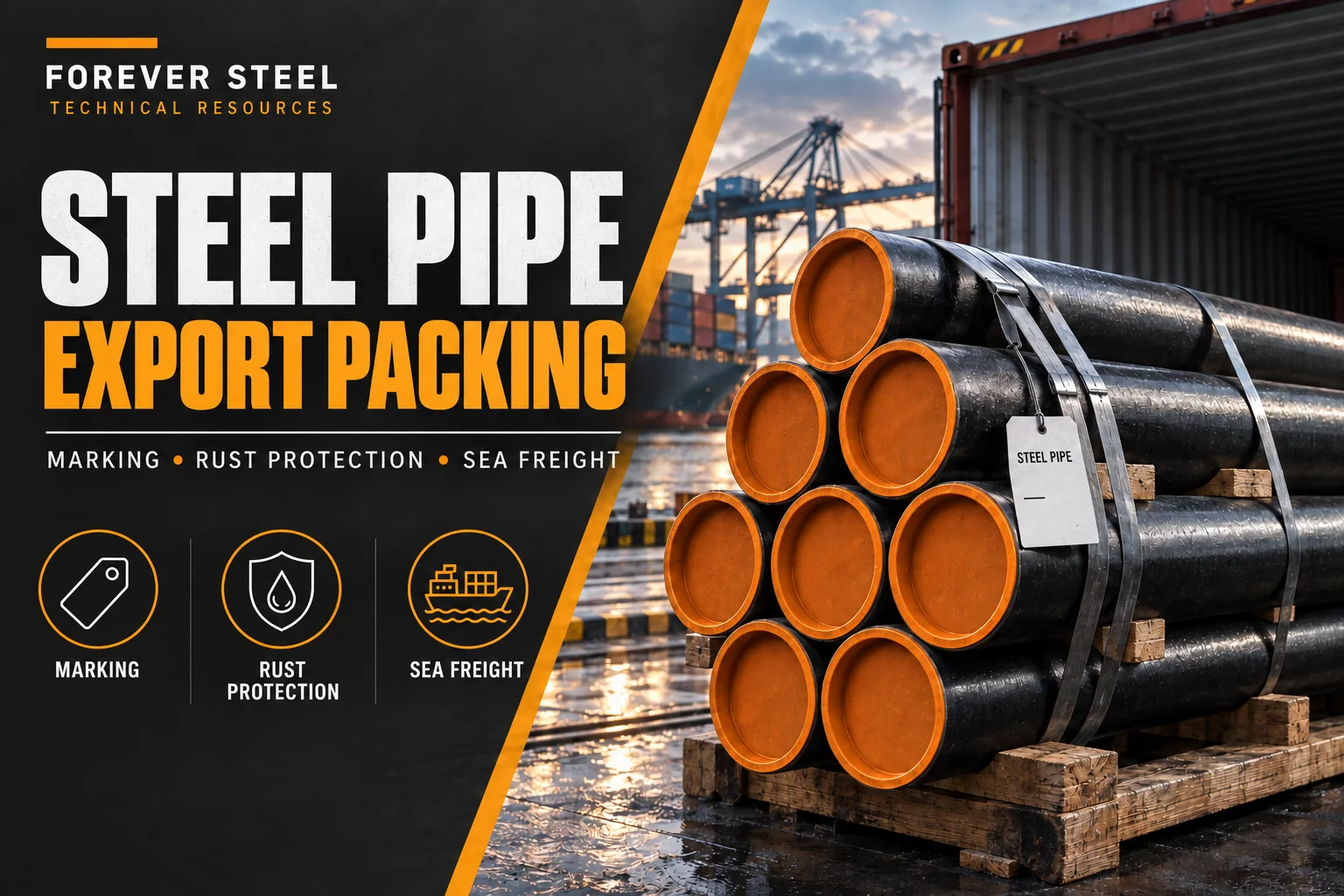
Surface Treatment: Provided with rust-proof oil, black painting, hot-dip galvanizing, or sandblasting as per client requirements.
Certification: Every shipment includes a Mill Test Certificate (MTC) per EN 10204 3.1, documenting the chemical and mechanical properties of the steel.
For butt-weld fittings, confirm the mating pipe dimensions, end preparation and material traceability before release.
| Material | Grades |
| Nickel Alloy | ASTM / ASME SB 336 UNS 2200 (NICKEL 200), UNS 2201 (NICKEL 201), UNS 4400 (MONEL 400), UNS 8020 (ALLOY 20 / 20 CB 3), UNS 8825 INCONEL (825), UNS 6600 (INCONEL 600), UNS 6601 (INCONEL 601), UNS 6625 (INCONEL 625), UNS 10276 (HASTELLOY C 276) |
| Carbon Steel | ASTM / ASME A/SA 234 GR. WPB, WPC, WPBW, WPHY 42, WPHY 46, WPHY 52, WPH 60, WPHY 65 & WPHY 70 |
| Low Alloy Steel | ASTM / ASME A/SA 234 GR. WP 1, WP 5, WP 9, WP 11, WP 12, WP 22, WP 23, WP 91 |
| Low Temp Carbon steel | ASTM A420 WPL3, A420 WPL6 |
| Duplex and Super Duplex Steel | ASTM A 815, ASME SA 815 UNS NO S31803, S32205. UNS S32750, S32950. Werkstoff No. 1.4462 |
| Stainless Steel | ASTM A403 WP316/316L, ASTM A403 SA / A 774 WP-S, WP-W, WP-WX 304/304L, ASTM A182 F316L, 304L, DIN 1.4301, DIN1.4306, DIN 1.4401, DIN 1.4404 |
| High Strength Ferritic Steel | ASTM A860 WPHY42, WPHY52, WPHY60, WPHY65, WPHY70 |
| Titanium | ASTM / ASME SB 363 GR. 1, GR. 2, GR. 3, GR. 4, GR. 5, GR. 7, GR. 9, GR. 12, GR. 23 |
| Cu Ni Alloy | C70600 (90:10), C71500 (70:30), C71640 |
| Standard | Type |
| ASME B16.9 | Factory-Made Wrought Buttwelding Fittings |
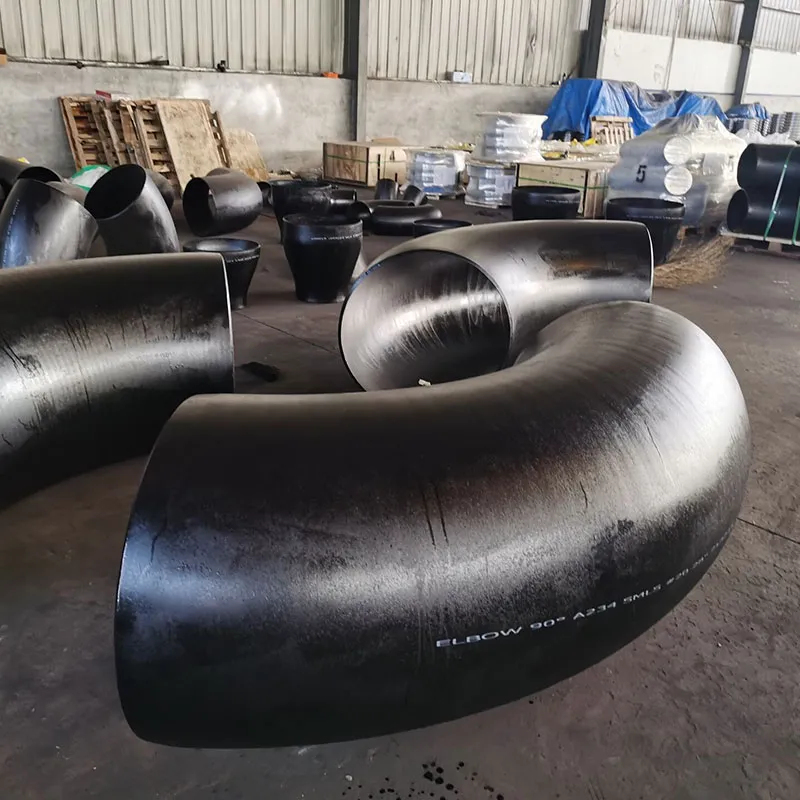
| ASME B16.28 | Wrought Steel Short Radius Elbows and Buttwelding Returns |
| ASME B16.49 | Factory-Made, Wrought Steel, Buttwelding Induction Bends for Transportation and Distribution Systems |
| MSS SP43 | Wrought and Fabricated Butt-Welding Fittings for Low Pressure, Corrosion Resistant Applications |
| MSS SP75 | Specification for High-Test, Wrought, Butt-Welding Fittings |
They usually choose a tee when they want a simpler standardized fitting route and the branch geometry suits it. The decision often depends on fabrication preference, inspection comfort, and branch loading. Typical applications include equal tee for process piping, reducing tee for branch connection, and carbon steel tee fittings for oil and gas projects.
The biggest differences usually come from schedule combination, reducing versus equal type, testing expectations, and whether the order needs coordinated packing and documents with the rest of the piping system. This becomes visible in branch fitting supply for refinery piping and utility lines where equal and reducing tee choices affect both design and price.
A useful question is whether the branch service, branch size, and schedule combination really match the line list. That check often prevents small but expensive ordering mistakes. That question matters most in branch connections for process plants, municipal water systems, and industrial utility piping.
They often overlook the fact that branch and run details must both align with the actual piping schedule. The tee may look simple, but mismatch risk is common. Errors are common in tee supply when run size, branch size, and schedule matching are not reviewed against the actual branch service.