+8615674993216
 sales@forever-steels.com
 English
 العربية

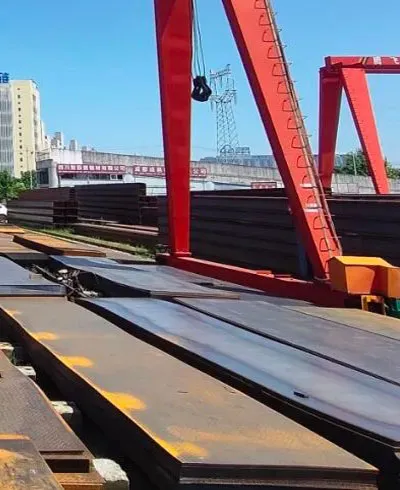
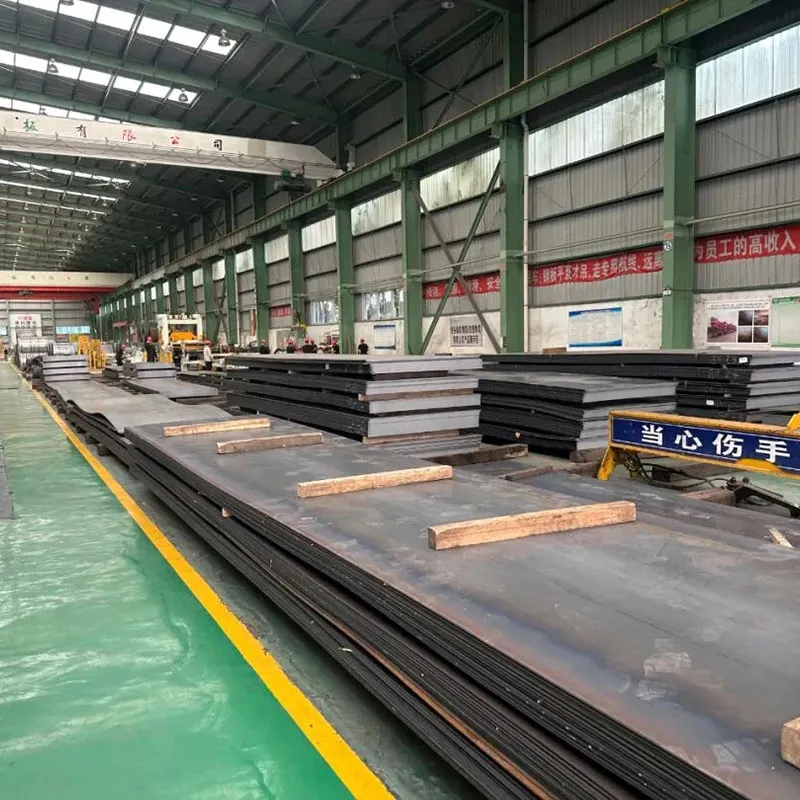
ASTM structural steel plate is used for load-bearing, welded and fabricated work such as buildings, bridges and industrial equipment. Forever Steel supplies hot-rolled plate to the specified structural standard and grade; confirm thickness, dimensions, delivery condition, weldability, surface requirements and inspection documents rather than relying on a general strength claim.
We provide a comprehensive inventory of carbon and low-alloy structural steels tailored to specific environmental and mechanical needs:
ASTM A36:The most widely used carbon structural steel. Excellent weldability and machinability for general construction.
ASTM A572:High-strength low-alloy (HSLA) columbium-vanadium steel.
Common Grades:Grade 42, Grade 50, Grade 60, Grade 65.
ASTM A588 (Corten Steel):High-strength low-alloy steel with enhanced atmospheric corrosion resistance (weathering steel). Perfect for bridges and outdoor structures.
ASTM A514:High-yield-strength, quenched and tempered alloy steel plate. Used in heavy-duty machinery and crane booms (GradesA, B, E, F, H, P, Q).
ASTM A283:Low and intermediate tensile strength carbon steel plates for general structural purposes.
We offer a vast range of sizes, from thin structural sheets to heavy-duty thick plates, with precision cutting services available:
|
Feature |
Specification Range |
|
Thickness (WT) |
3mm to 300mm (0.118” to 11.8”) |
|
Width |
1500mm, 1800mm, 2000mm, 2200mm, 2500mm, 3000mm |
|
Length |
6000mm, 9000mm, 12000mm (Up to 18000mm for special projects) |
|
Surface Finish |
Black (Hot Rolled), Shot Blasted, Primed, or Galvanized |
|
Processing |
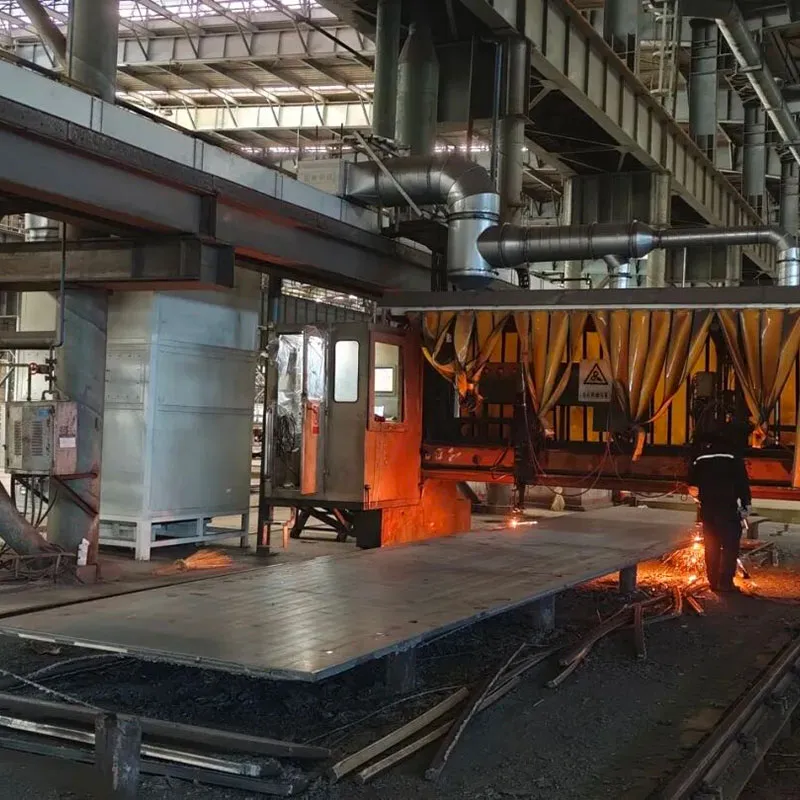
CNC Plasma Cutting, Laser Cutting, Bending, and Drilling |
Structural steel plates are the backbone of diverse industrial and civil engineering sectors:
Civil Construction:High-rise building frames, stadium roofs, and warehouse structures.
Bridge Engineering:Plate girders, trusses, and suspension bridge components using A588 weathering steel.
Shipbuilding & Marine:Offshore platforms, deck plating, and hull structures.
Heavy Machinery:Excavator buckets, crane arms, mining equipment, and agricultural machinery.
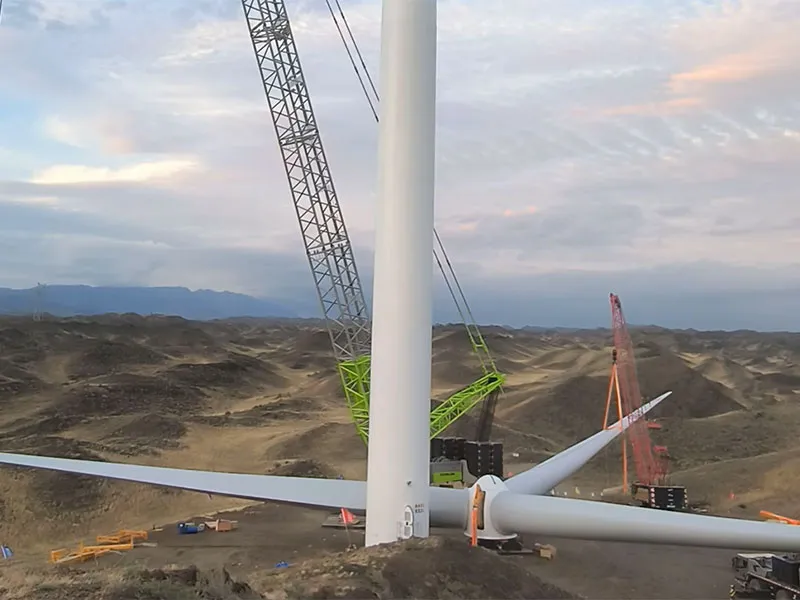
Energy & Storage:Base plates for wind towers, storage tank floors, and transmission tower components.
For fabricated structural plate and base-plate orders, review connection details and material traceability alongside the specified plate grade.
| Standard | Steel Grade | C (max) | Si (max) | Mn (max) | P (max) | S (max) | N (max) | Cu (max) | CEV (max) |
| Part 2 | S235JR | 0.17 | - | 1.4 | 0.035 | 0.035 | 0.012 | 0.55 | 0.35 |
| (Non-alloy) | S235J0 | 0.17 | - | 1.4 | 0.03 | 0.03 | 0.012 | 0.55 | 0.35 |
| S235J2 | 0.17 | - | 1.4 | 0.025 | 0.025 | - | 0.55 | 0.35 | |
| S275JR | 0.21 | - | 1.5 | 0.035 | 0.035 | 0.012 | 0.55 | 0.4 | |
| S275J0 | 0.18 | - | 1.5 | 0.03 | 0.03 | 0.012 | 0.55 | 0.4 | |
| S275J2 | 0.18 | - | 1.5 | 0.025 | 0.025 | - | 0.55 | 0.4 | |
| S355JR | 0.24 | 0.55 | 1.6 | 0.035 | 0.035 | 0.012 | 0.55 | 0.45 | |
| S355J0 | 0.2 | 0.55 | 1.6 | 0.03 | 0.03 | 0.012 | 0.55 | 0.45 | |
| S355J2 | 0.2 | 0.55 | 1.6 | 0.025 | 0.025 | - | 0.55 | 0.45 | |
| S355K2 | 0.2 | 0.55 | 1.6 | 0.025 | 0.025 | - | 0.55 | 0.45 | |
| Part 3/4 | S420N/ML | 0.2 | 0.5 | 1.7 | 0.025 | 0.02 | 0.015 | 0.35 | 0.48 |
| (Fine grain) | S460N/ML | 0.2 | 0.6 | 1.7 | 0.025 | 0.02 | 0.025 | 0.4 | 0.53 |
| Standard | Steel Grade | Thickness (mm) | Yield ReH (min MPa) | Tensile Rm (MPa) | Elongation A (min %) | Impact Test (Temp/Value) |
| EN 10025-2 | S235JR |
t ≤ 16 16 < t ≤ 40 |
235 225 |
360 – 510 | 26 | 20°C / 27J |
| S275JR |
t ≤ 16 16 < t ≤ 40 |
275 265 |
410 – 560 | 23 | 20°C / 27J | |
| S355J2 |
t ≤ 16 16 < t ≤ 40 40 < t ≤ 63 |
355 345 335 |
470 – 630 | 22 | -20°C / 27J | |
| ASTM A516 | Grade 60 | ≤200 | 220 | 415 – 550 | 21 | Per Order (e.g., -46°C) |
| Grade 65 | ≤200 | 240 | 450 – 585 | 19 | Per Order | |
| Grade 70 | ≤200 | 260 | 485 – 620 | 17 | Per Order | |
| EN 10225 | S355G10+M |
≤1
16 |
355 345 |
470 – 630 | 22 | -40°C / 50J (L) |
| S420G2+M |
≤1
16 |
420 400 |
500 – 660 | 19 | -40°C / 50J (L) | |
| S460G2+M |
≤1
16 |
460 440 |
530 – 710 | 17 | -40°C / 50J (L) | |
| API 5L | Grade B | All | 245 – 450 | ≥415 | Formula | PSL2: 0°C / 27J |
| X52Q | All | 360 – 530 | 460 – 760 | Formula | PSL2: 0°C / 27J | |
| X65Q | All | 450 – 600 | 535 – 760 | Formula | PSL2: 0°C / 27J | |
| X70Q | All | 485 – 635 | 570 – 760 | Formula | PSL2: 0°C / 27J |
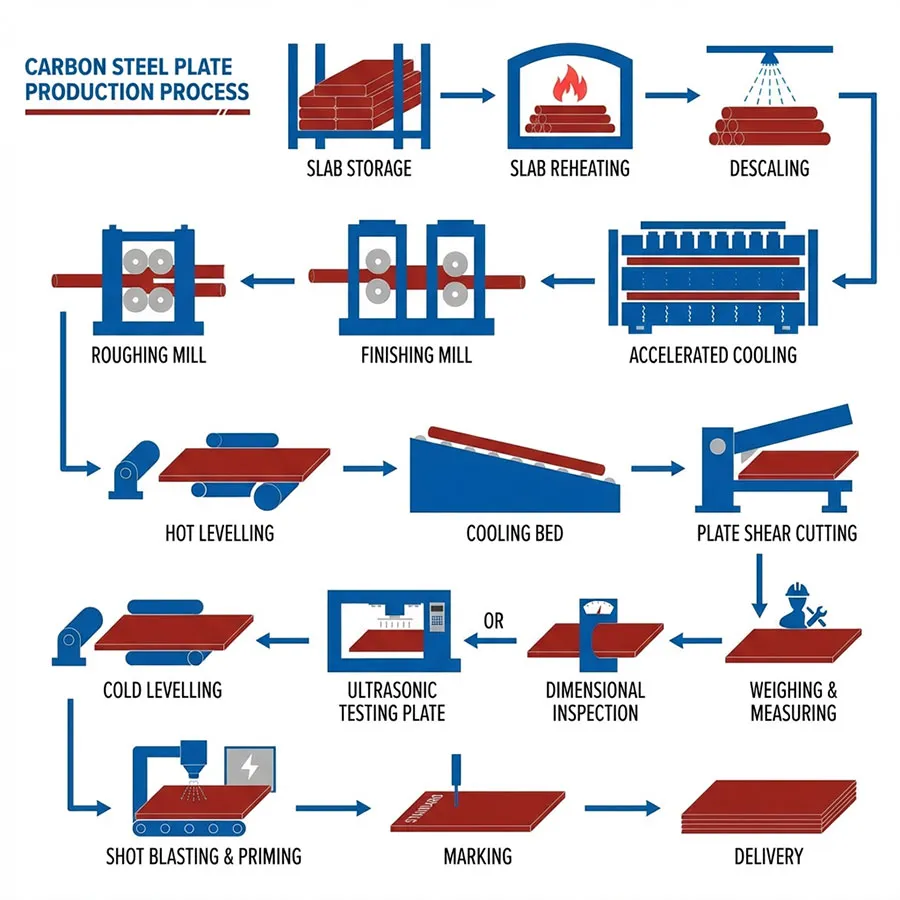
They usually choose it when the project is clearly structural and wants a familiar approval path for fabrication and construction. The decision is often about code fit and fabrication comfort more than about raw strength alone. Typical applications include ASTM A36 structural steel plate, ASTM A572 Grade 50 plate for bridge fabrication, and carbon steel plate for building structures.
Price often changes with delivery condition, cutting, testing, documentation, and whether the plate is being supplied for direct fabrication or for a more controlled project environment. Buyers often notice that the 'same grade' comparison is not enough. That is often visible when buyers compare ASTM A36 steel plate with ASTM A572 Grade 50 plate for fabrication shops and steel structure projects.
A very useful question is whether the plate will go into a building or bridge fabrication route, or whether it actually belongs to a pressure, marine, or pipeline specification. That keeps the order in the right product family. This question comes up in bridge fabrication, building construction, heavy steel frames, and equipment bases.
They often overlook processing and approval details such as cutting, UT, impact testing, or whether the fabricator needs a tighter document package. Those items often matter more than first-time buyers think. Those issues matter most in structural steel plate orders for fabrication where cutting, UT, and document level affect approval and job cost.