+8615674993216
 sales@forever-steels.com
 English
 العربية

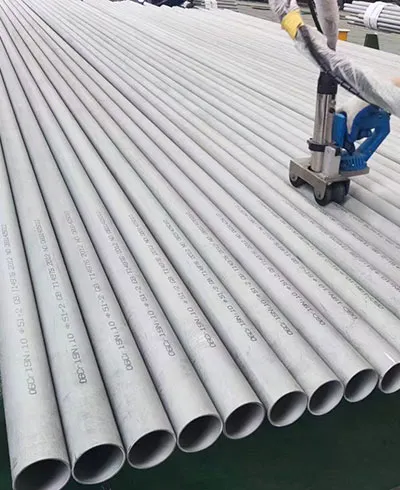
Pickled, bright annealed (BA) and polished stainless pipe are not interchangeable descriptions of a shiny surface. Pickled finish is primarily a chemical descaling and surface-restoration route after heat treatment or fabrication; BA is produced by annealing in a controlled protective atmosphere to limit oxidation and retain a bright mill surface; polished finish is a mechanical finish specified for appearance, cleanability or a defined roughness requirement. The correct finish depends on the real service: corrosion environment, product-contact hygiene, cleanability, weld treatment, visual expectation, allowable surface roughness, budget and how the pipe will be protected through shipment and installation.
|
Buyer rule:Do not order 'polished stainless pipe' or 'BA finish' without saying which surface, what appearance or maximum Ra is needed, whether welds must match, how Ra is measured, and what packing will prevent scratches or contamination. |
Stainless steel's corrosion resistance depends on a continuous passive surface, but the grade alone does not determine field performance. Surface roughness, embedded contamination, weld heat tint, crevices, directional grinding marks, deposits and inadequate cleaning can all create a less forgiving surface. This is why a 316L line with poorly restored welds can disappoint, while a correctly finished 304L line can perform well in a cleaner, less aggressive service. The finish decision needs the same discipline as grade and wall-thickness selection.
|
Finish route |
What it is |
Best fit |
Main buyer risk |
|
Pickled / annealed and pickled |
Chemical removal of oxide scale and surface contamination after heat treatment or fabrication; typically a matte industrial surface. |
General corrosive-service pipe, fabricated systems, process equipment where descaling and weld restoration matter. |
Assuming pickling alone removes oil, gives a decorative appearance or proves a particular Ra value. |
|
Bright annealed (BA) |
Annealing in a controlled protective atmosphere to limit oxidation and retain a smooth, bright reflective surface. |
Clean, light-gauge or small-diameter applications where bright mill appearance and controlled processing are useful. |
Assuming BA is automatically sanitary, scratch-proof or adequate after field welding without restoration. |
|
Mechanically polished |
Grinding, brushing, satin finishing or bright/mirror polishing to achieve an agreed appearance and/or measured roughness. |
Hygienic pipework, visible architecture, food/pharma equipment and applications with a defined cleaning or appearance requirement. |
Specifying grit number only, without direction, Ra, visual standard, weld treatment and inspection method. |
Pickling removes a thin surface layer containing oxide scale, heat tint and some contamination. In stainless fabrication it is especially valuable after forming, heat treatment or welding because those operations can leave an oxidized surface whose local corrosion behavior is not the same as an intact passive surface. Depending on the project procedure, pickling may be followed by passivation or controlled cleaning. The terminology varies between mills and fabricators, so the buyer should ask for the actual route rather than rely only on the word 'pickled'.
For industrial pipe, a pickled finish is often the practical answer when corrosion performance, weld restoration and cost matter more than mirror appearance. It is suitable for many chemical-process, water-treatment and general corrosive applications, provided grade, environment and cleaning regime are appropriate. It is not automatically a hygienic finish, a precision roughness specification or a substitute for removing oil and shop contamination before chemical treatment. If a project needs a maximum Ra, it should state the limit and measurement method separately.
Pickled, BA and polished options can be specified on Forever Steel's Welded Stainless Steel Pipe range. For welded pipe, also confirm how the longitudinal seam and any internal bead are finished, not only the visible outside surface.
Bright annealing is performed in a protective or inert atmosphere after cold rolling or cold working so that substantial oxidation is avoided. The resulting BA/2R-type mill surface is smoother and brighter than common cold-rolled pickled finishes. It can be useful when a clean, reflective appearance is wanted without a separate mechanical polishing operation, and it can provide a good starting point for later finishing.
The procurement error is treating BA as a universal proxy for cleanliness or corrosion resistance. BA does not define a product-contact roughness limit; it does not guarantee that a field-welded joint will retain the same condition; it does not prevent damage during handling; and it does not remove the need to specify grade, wall thickness and test evidence. A BA pipe that is scratched by unprotected steel slings or contaminated during fabrication can need cleaning and restoration before installation.
|
Question |
BA finish answer |
What to put in the RFQ |
|
Is BA a standard appearance? |
It is a recognized bright-annealed mill finish, but appearance varies by starting strip, tube/pipe process and supplier. |
Request photos or a retained visual sample for visible work. |
|
Does BA define Ra? |
No universal Ra value should be assumed from the term BA alone. |
State maximum Ra, sampling area, direction and instrument/report requirement if critical. |
|
Can BA be welded in the field? |
Yes, but the weld and heat-affected area will not automatically match the original BA surface. |
Specify weld cleaning, pickling/passivation or mechanical restoration procedure. |
|
Is BA best for every sanitary line? |
Not automatically. Hygienic systems may require a defined internal finish, weld-bead treatment and cleaning validation. |
Follow the owner, hygienic standard and process requirements rather than finish name alone. |
Mechanical polishing can create brushed, satin, bright or mirror-like surfaces. It can improve cleanability and visual consistency when the process is controlled, but a label such as '180 grit' or 'No. 4' is incomplete for pipe procurement. Abrasive type, sequence, direction, whether the finish is internal or external, the treatment of the weld seam, maximum Ra, visual standard and repair method all change the delivered result. A directional external architectural polish and a low-Ra internal hygienic finish are not the same requirement.
For product-contact service, the specification should describe the inside surface first. A highly polished outside diameter does not improve cleanability inside the pipe. For visible equipment, the direction of the grain, uniformity between lengths, ability to blend field welds and the protective film or wrapping become equally important. If corrosion exposure is severe, polishing must be chosen with the grade and environment in mind; a rough or poorly executed mechanical finish can retain deposits and reduce the expected benefit of the alloy.
|
Polished requirement |
Better specification language |
Why it matters |
|
Decorative satin exterior |
External surface: directional satin finish; agree grain direction, visual sample, scratch acceptance and protective film. |
Prevents a supplier from delivering a different brushed appearance or mixed direction. |
|
Hygienic internal finish |
Internal Ra <= [project value] micrometres; define cutoff, measurement orientation, sampling quantity, weld-bead condition and certificate/report. |
Turns a marketing phrase into a measurable acceptance condition. |
|
Bright/mirror finish |
State required reflectivity/visual sample and whether buffing is permitted; specify scratch and handling protection. |
'Mirror' is subjective without a comparator and packing requirement. |
|
Field-weld restoration |
Define cleaning, pickling/passivation or mechanical blend, and required final finish/inspection around every weld. |
Avoids a good mill finish being lost at installation. |
A pipe can leave the factory with an excellent finish and still lose its local corrosion resistance at a fabricated joint. Welding creates heat tint and can leave oxide, discoloration, spatter, rough weld reinforcement or iron contamination from tools. A finish specification should say what happens after welding: mechanical cleaning only, chemical pickling, passivation, electropolishing, or another qualified restoration route. The right method depends on grade, service, accessibility, hygiene needs and the owner's fabrication procedure.
For the acceptance sequence and the distinction between heat tint and free iron, see stainless steel pipe pickling and passivation after welding.
Pickling and passivation are related but not identical. Pickling removes a thin surface layer and can remove heat tint and contaminants. Passivation is used to improve the quality of the passive film after cleaning. Neither operation removes grease or oil by itself, so a dirty fabrication may need suitable degreasing before chemical treatment. In a hygienic or high-purity project, the procedure, chemicals, rinse quality and inspection records may be as important as the nominal finish.
|
Application |
Finish direction |
Critical extra requirement |
|
General chemical-process piping |
Pickled or annealed-and-pickled is often a practical industrial starting point. |
Grade/environment review, weld restoration, MTC, dimensional records and clean packing. |
|
Water treatment / desalination |
Pickled industrial surface or project-specified internal treatment; BA only where the service and fabrication route support it. |
Chloride exposure, deposits, welding restoration and grade selection are more important than shine. |
|
Food, beverage, pharmaceutical or high-purity systems |
Defined internal polished or hygienic finish where required by the owner standard. |
Maximum Ra, measurement report, weld-bead condition, cleaning/passivation and compatible fittings. |
|
Architectural handrail / visible fabrication |
Satin, brushed or bright polished external finish to an approved sample. |
Grain direction, visual uniformity, repair method, protective film and transit scratch control. |
|
Heat exchanger / tight fabrication space |
Use the specified product standard and surface state; do not choose a finish solely for appearance. |
Tube/pipe standard, dimensions, cleanliness, corrosion medium and test requirements. |
|
Marine or polluted exterior |
Smooth, well-controlled finish may help, but it is not a replacement for the right alloy and maintenance plan. |
Grade, drainage, crevices, deposit removal, surface roughness and environmental exposure. |
A usable finish specification should separate material from surface condition. First state the standard, grade, OD, wall thickness, length and quantity. Then identify the surface: pickled, BA, brushed, satin, mechanically polished, electropolished or another defined route. State whether the requirement applies internally, externally or both. Where a roughness target is necessary, specify maximum Ra, the measurement method/cutoff, direction of measurement, locations, sample quantity and report requirement. Finally, cover weld-bead treatment, post-weld restoration, acceptance sample, marking, packing and handling.
|
Common vague wording |
Why it fails |
Better RFQ wording |
|
'Polished 316L pipe' |
No surface, Ra, visual or weld requirement is identified. |
'TP316L welded pipe; internal Ra <= X micrometres; external satin sample approved; longitudinal weld bead treatment and Ra report required.' |
|
'BA finish, sanitary' |
BA does not by itself define sanitary geometry, internal roughness or cleaning validation. |
'BA starting finish; internal condition and weld treatment per project hygienic specification; documented visual/Ra acceptance where required.' |
|
'Pickled after welding' |
Does not state cleaning, chemical route, rinse, passivation, test or record. |
'Post-weld heat-tint removal and passive-surface restoration per approved procedure; provide treatment and inspection record.' |
|
'No scratches' |
Unmeasurable and impractical unless a visual standard and packing rule are agreed. |
'External finish to approved sample; individual protective film/wrap, non-metallic separators and photo record before loading.' |
Finish control continues after the last polishing pass. Inspectors should check that the surface described on the PO is on the correct side of the pipe, that the longitudinal weld and ends meet the agreed condition, that no carbon-steel contamination or deep handling damage is visible, and that marks can be traced to the MTC and inspection reports. If Ra is a contractual requirement, the report should identify the instrument, calibration state, locations and measured values. A good finish can be destroyed in transit by metal-to-metal contact, wet packing, steel strapping against a polished surface or unprotected forklift handling.
For applications where the design genuinely requires no longitudinal weld, the finish requirement should be transferred to the Seamless Stainless Steel Pipe specification rather than assumed to be identical. In either case, specify packing around the actual surface condition.
Pickled, bright annealed and polished stainless pipe each solve a different problem. Pickled finish is a practical route for descaling and restoring industrial stainless surfaces. BA supplies a bright controlled-atmosphere mill finish, but does not replace a defined hygiene or weld-restoration requirement. Mechanical polishing can deliver appearance and lower roughness when it is specified, measured and protected correctly. The buyer who links finish to service, weld treatment, Ra, inspection and packing will obtain a useful technical offer instead of an attractive but incomplete surface description.
Confirm the ordered edition and applicable test or acceptance requirements against the project specification.
· ASTM A312 vs A269 vs A213: Stainless Steel Pipe Selection Guide
· ASTM A312 TP304 vs TP316: Metallurgical Differences, Pitting Resistance, and Sensitization Risk
· Steel Pipe Inspection Checklist Before Shipment
Surface appearance does not verify the alloy grade; use the stainless steel PMI testing guide when defining material verification.