+8615674993216
 sales@forever-steels.com
 English
 العربية

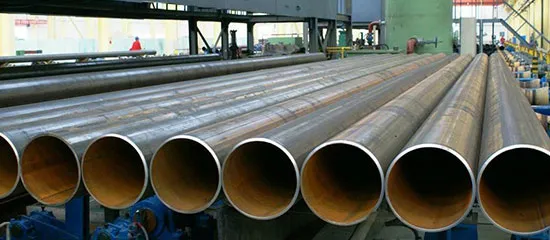
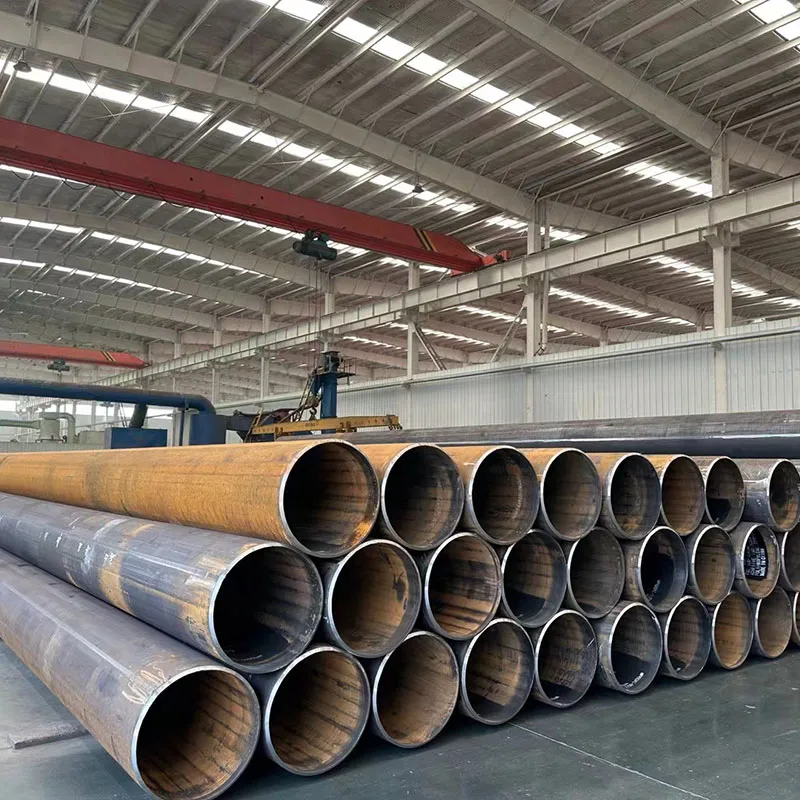
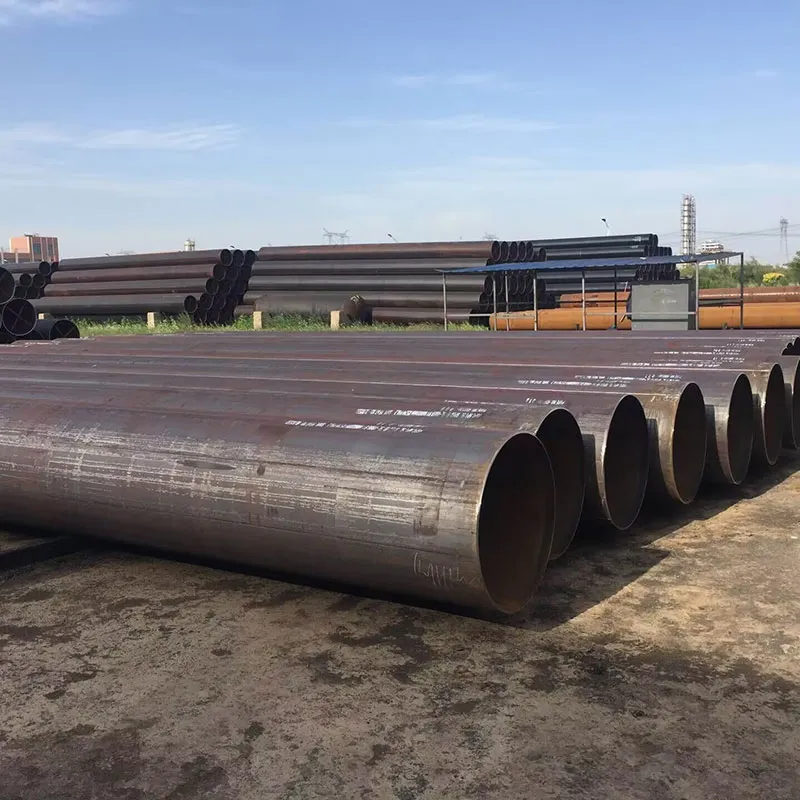
LSAW steel pipe is selected when a project needs large diameter, controlled wall thickness, defined longitudinal-weld quality and project-specific testing. Confirm UOE/JCOE route, OD, wall thickness, grade, PSL, impact requirements, NDT, hydrotest, end preparation, coating and document package before mill feasibility review.
Outside Diameter (O.D.): 16"–72" (406.4mm–1828.8mm)
Compare manufacturing routes before RFQ: use the LSAW, seamless, ERW and SSAW pipe decision guide to check diameter and wall range, service conditions, weld inspection and project approval before fixing the LSAW route.
Wall Thickness (W.T.): 6.4mm–100mm (Up to SCH 160)
Length: Single Pipe Up to 36 meters.
Jointing: Custom lengths available via professional circumferential welding for structural applications.
Production Process: High-precision JCOE / UOE / Bending Forming.
Our production facility strictly adheres to international quality protocols, ensuring full compliance with the following standards:
API 5L (PSL1 & PSL2): Grades B, X42, X46, X52, X56, X60, X65, X70, X80.
ASTM / ASME: ASTM A671, A672, A252 (Grades 1, 2, 3).
European Standards: EN 10219 (S235JRH, S275J0H, S355J2H), EN 10217.
German Standards: DIN 2458 / DIN 17172.
To facilitate seamless field welding and ensure joint structural integrity:
Bevelled Ends: Precisely machined to 30°(+5°/-0°) with a 1.6mm (±0.8mm) root face per ANSI B16.25.
Plain Ends: Square cut (90°), deburred to eliminate sharp edges.
Special Preparation: Custom bevel configurations or internal counter-boring for heavy-wall pipes.
We provide multi-layer coating systems to mitigate corrosion in diverse terrestrial and subsea conditions:
Standard Protection: Black bitumen paint, clear varnish, or transparent anti-rust oil.
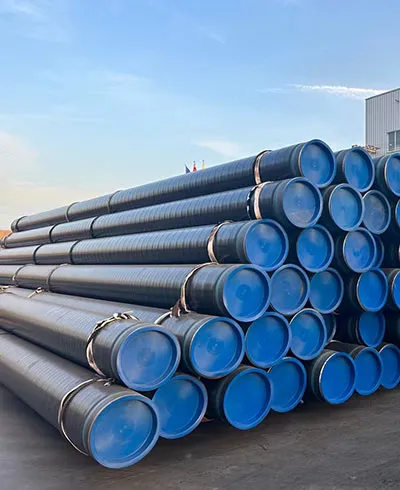
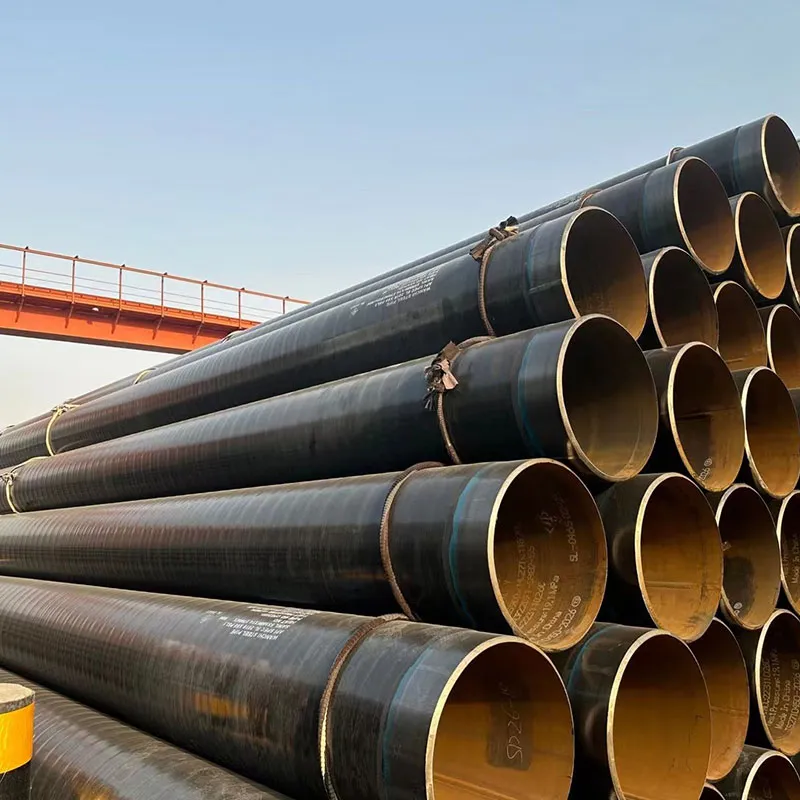
Advanced Anti-Corrosion: 3PE (3-Layer Polyethylene), 3PP, FBE (Fusion Bonded Epoxy) compliant with DIN 30670 / CAN CSA Z245.21.
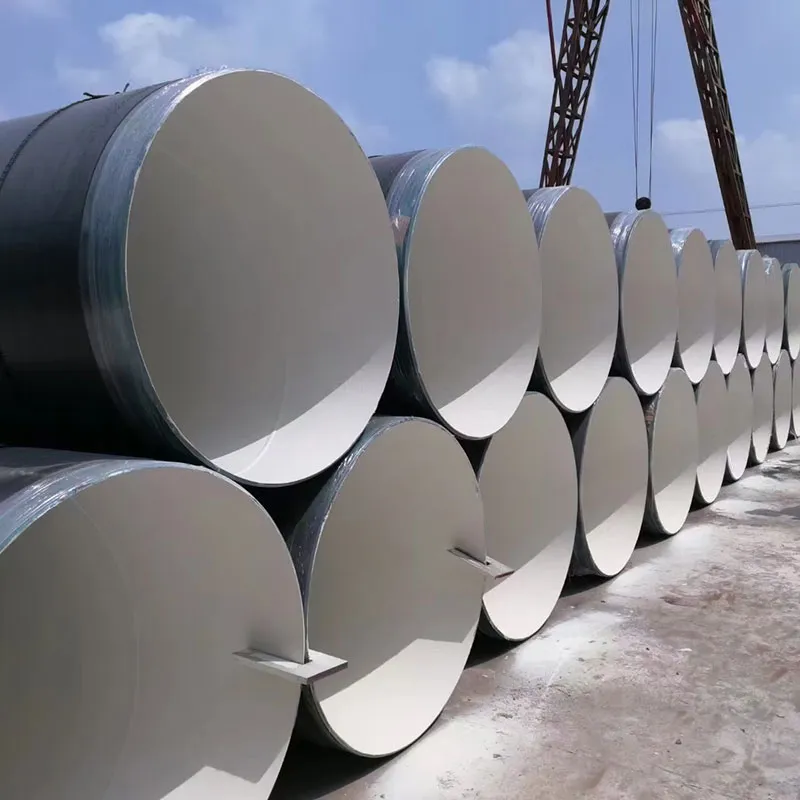
Internal Lining: Liquid epoxy coating for friction reduction and enhanced flow efficiency.
100% NDT Testing: Full-length Ultrasonic Testing (UT) and X-ray Inspection of weld seams.
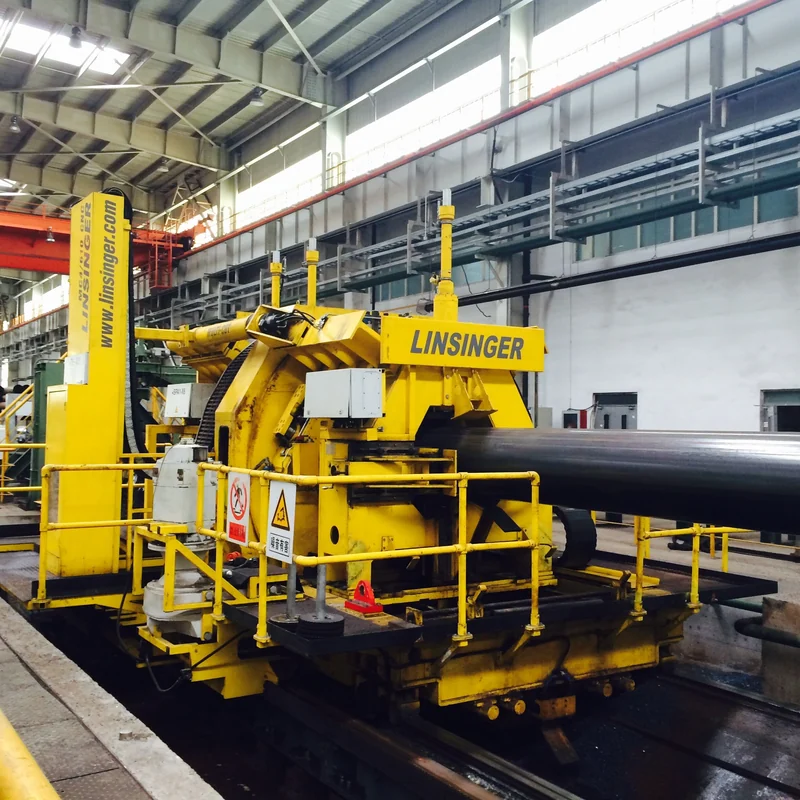
Mechanical Expanding: Cold mechanical expanding process ensures uniform diameter and eliminates internal residual stress, enhancing dimensional precision.
Certification: Mill Test Certificates (MTC) provided in accordance with EN 10204 3.1 (3.2 available upon request).
Third-Party Inspection: Full cooperation with SGS, BV, TUV, DNV, or client-appointed inspectors.
· UOE vs JCOE: Which LSAW Forming Route Fits Your Project?
· Can This LSAW Pipe Size Be Manufactured? A Practical OD x WT x Grade Review
· LSAW Pipe-End Geometry for Girth-Weld Fit-Up: Ovality, Hi-Lo and End Matching
· LSAW Pipe Documentation Package: What We Check Before Release
· LSAW Pipe Nonconformance: How We Contain, Repair and Close the Record
· Passed 100% NDT? What UT and RT Actually Prove About the Weld
· LSAW Pipe Cost Breakdown: Plate, Testing, MOQ and Freight
Our logistics team ensures that your cargo reaches the destination in "Mill-New" condition:
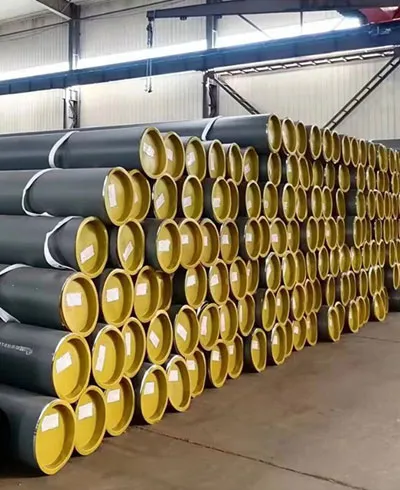
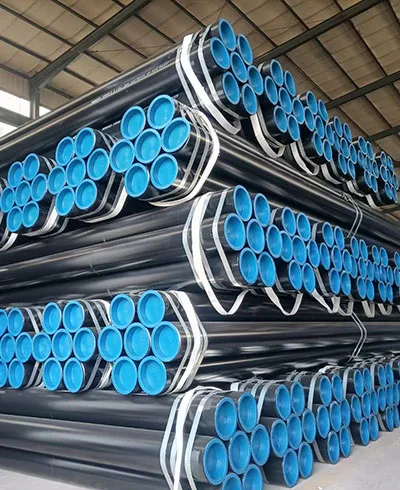
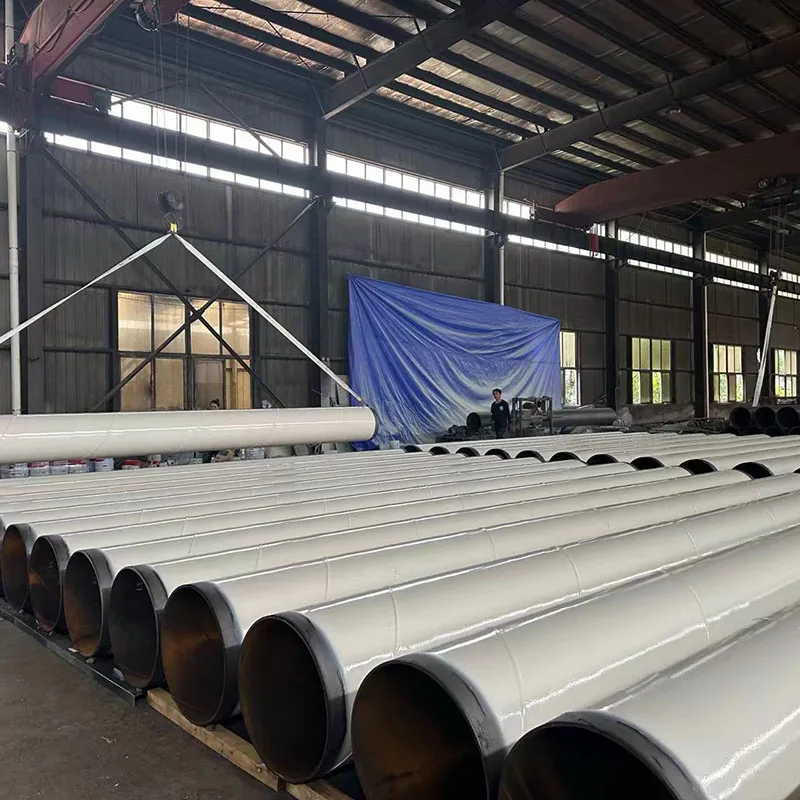
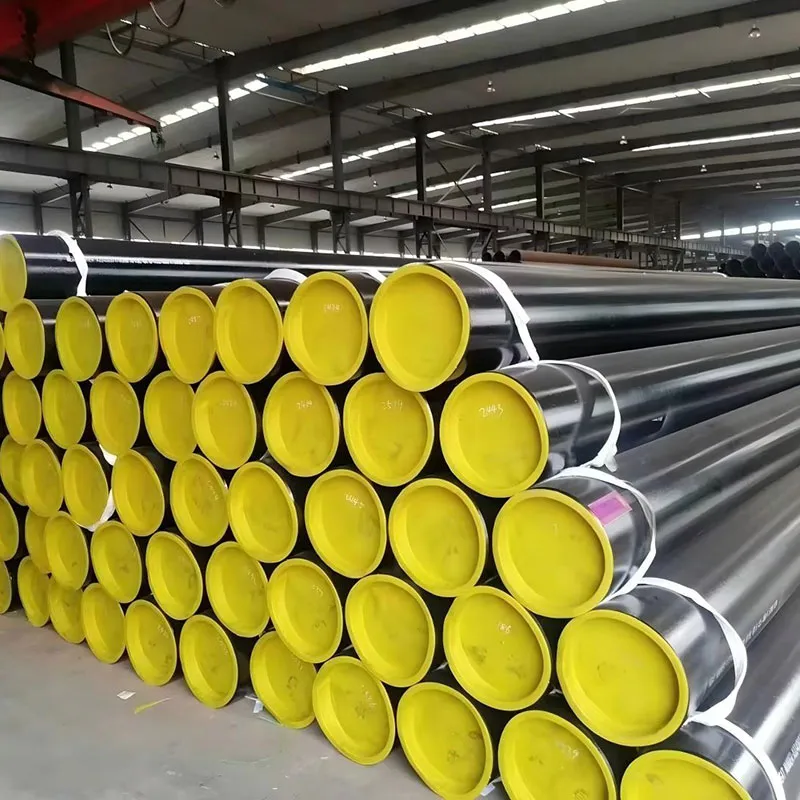
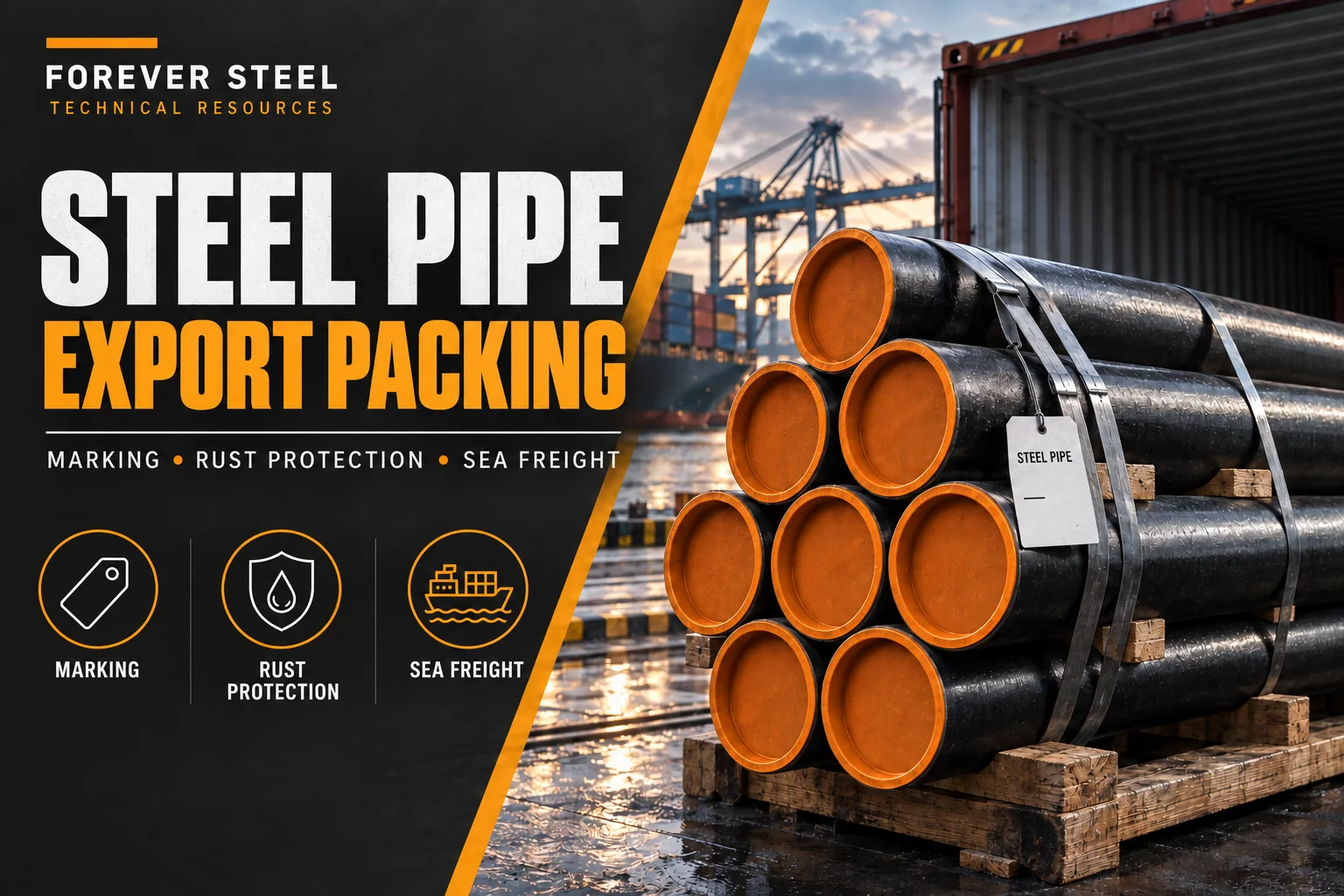
Pipe Protection: Heavy-duty plastic end caps or steel ring protectors to prevent bevel deformation and internal contamination.
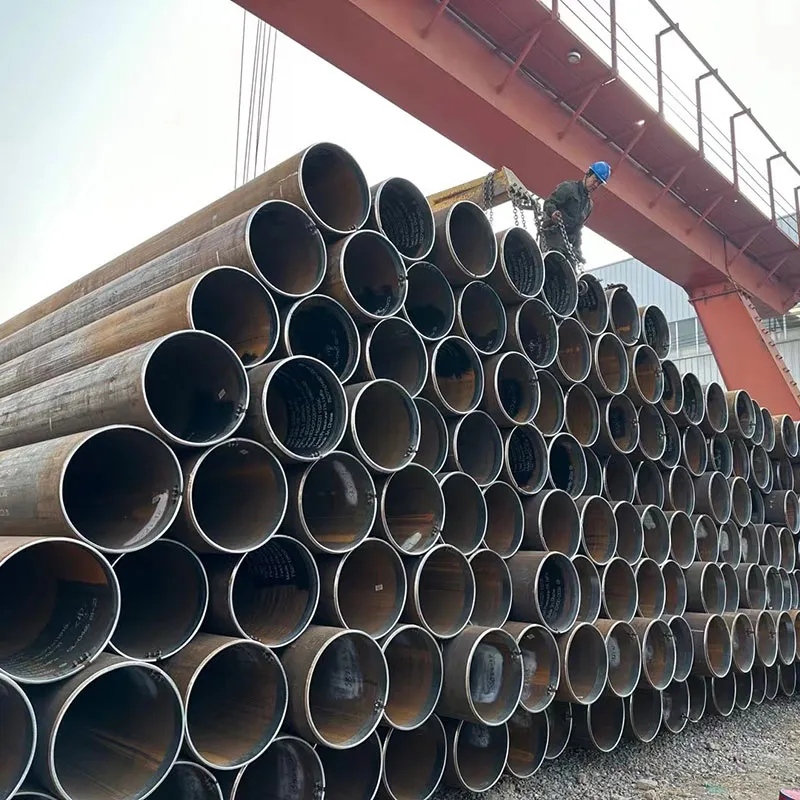
Packaging: Bulk shipment or containerized loading. Large diameter pipes are often shipped with "Nested" loading where feasible to optimize freight costs.
Marking: Professional stenciling of Heat Number, Pipe Number, Dimensions, Steel Grade, and Manufacturer Code for full traceability.
Critical Shipping Precautions:
Strict use of non-metallic slings to prevent surface scarring.
Robust sea-worthy bracing and timber dunnage to mitigate shifting during maritime transit.
Rigid lashing procedures for both "On Deck" and "Below Deck" storage.
Export quotation inputs: for delivery to the Middle East or Africa, include the destination country and port, requested Incoterm, delivery window, coating and end-protection requirements, and any named operator or project approval requirement. Ask the offer to identify the producing mill, confirmed OD x wall x grade combination, inspection/document scope, and freight validity before comparing landed prices.
LSAW steel pipes are engineered for critical infrastructure where safety and extreme durability are non-negotiable:
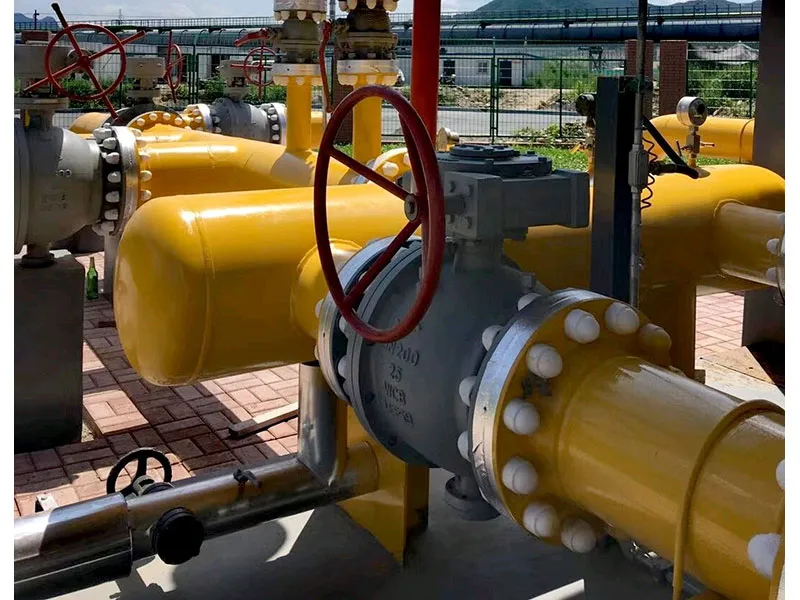
LSAW pipes are the global standard for high-pressure, long-distance trunk lines. They are used to transport crude oil, natural gas, and water across vast terrains, including onshore and offshore environments.
Specifically designed to withstand the crushing external pressures of deep-sea environments and the corrosive nature of saltwater. They are vital for subsea pipelines, risers, and jacket structures for offshore platforms.
In the construction industry, LSAW pipes serve as critical load-bearing components.
Bridge Construction:Used for bridge piers and structural arches.
Large-Scale Facilities:Used in the skeletal frameworks of stadiums, airports, and high-rise buildings.
Piling Projects:Ideal for foundation piling in ports, docks, and coastal defenses.
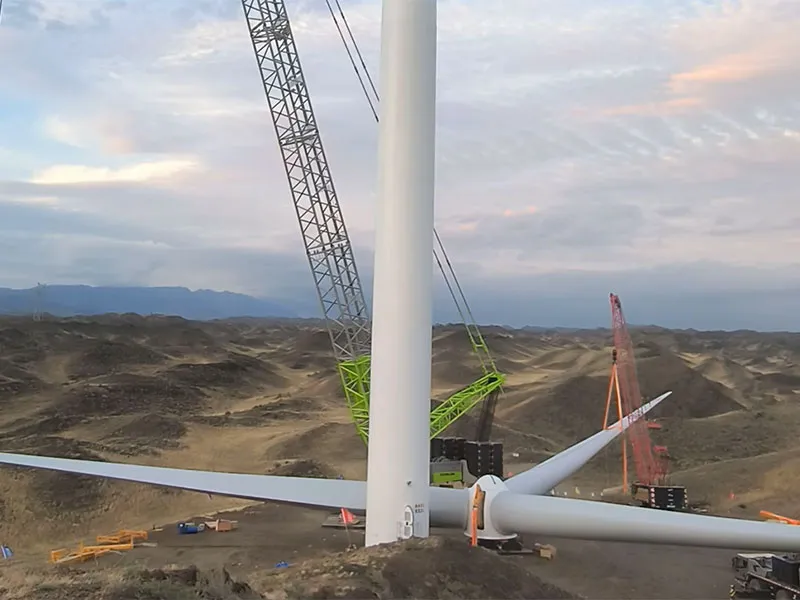
LSAW pipes are increasingly used as the foundational steel piles for offshore wind turbines, where they must support massive weight while enduring constant wave action and offshore wind loads.
Used in heavy industrial complexes for high-temperature and high-pressure steam or chemical conveyance systems where smaller diameter or thinner-walled pipes would fail.
| Outer Diameter (OD) | Wall Thickness (WT) Range | Length Range | Common Applications |
| 16" (406.4 mm) | 6.35 mm – 40.00 mm | 5.8m – 12.5m | Oil & Gas / Standard Pipelines |
| 20" (508.0 mm) | 7.92 mm – 50.00 mm | 5.8m – 12.5m | High Pressure Transmission |
| 24" (609.6 mm) | 7.92 mm – 60.00 mm | 5.8m – 12.5m | Natural Gas Mainlines |
| 30" (762.0 mm) | 9.53 mm – 70.00 mm | 5.8m – 12.5m | Long-distance Gas Lines |
| 36" (914.4 mm) | 12.70 mm – 80.00 mm | 5.8m – 12.5m | Major Infrastructure / Water |
| 40" (1016.0 mm) | 12.70 mm – 80.00 mm | 5.8m – 12.5m | Offshore Piling / Sea Water |
| 42" (1066.8 mm) | 12.70 mm – 85.00 mm | 5.8m – 12.5m | Structural Steel / Casing |
| 48" (1219.2 mm) | 15.88 mm – 90.00 mm | 5.8m – 12.8m | Large Diameter Mainlines |
| 52" (1320.8 mm) | 15.88 mm – 90.00 mm | 5.8m – 12.8m | Heavy Load Structures |
| 56" (1422.4 mm) | 15.88 mm – 100.00 mm | 5.8m – 12.8m | Civil Engineering / Tunnels |
| 60" (1524.0 mm) | 19.05 mm – 100.00 mm | 5.8m – 12.8m | Marine Terminals / Jetty Piles |
| 64" (1625.6 mm) | 19.05 mm – 100.00 mm | 5.8m – 12.0m | Deep Water Intake Pipes |
| 68" (1727.2 mm) | 22.00 mm – 100.00 mm | 5.8m – 12.0m | Heavy Bridge Support Piles |
| 72" (1828.8 mm) | 22.00 mm – 100.00 mm | 5.8m – 12.0m | Mega-Infrastructure / Dredging |
| API 5L (PSL 1) |
A, B, X42, X46, X52, X56, X60, X65, X70 |
Outside Diameter (OD) | Body | ±0.75% of OD | |
| Pipe End | ±1.6 mm (0.063") | ||||
| Wall Thickness (WT) | 5.0 mm – 25.0 mm | +15.0% / -12.5% | |||
| Length | Random | ± 500 mm | |||
| API 5L (PSL 2) |
B, X42, X46, X52, X56, X60, X65, X70, X80 |
Outside Diameter (OD) | Body | ±0.50% of OD (Max ±4.0 mm) | |
| Pipe End | ±1.6 mm (0.063") | ||||
| Wall Thickness (WT) | > 10.0 mm | +3.0 mm / -1.5 mm | |||
| Out-of-Roundness | Pipe End | ≤ 1.0% of OD (Max 15 mm) | |||
| GB/T 9711 |
L245, L290, L360, L415, L450, L485, L555 |
OD / WT | All | Aligns with API 5L PSL 2 | |
| EN 10219 | S235, S275, S355 (All Suffixes) | Outside Diameter (OD) | All | ±1.0% (Min ±0.5 mm) | |
| Wall Thickness (WT) | WT > 5 mm | ±10% | |||
| Straightness | Total Length | ≤ 0.2% of total length | |||
| AS/NZS 1163 | C250, C250L0, C350, C350L0 | Outside Diameter (OD) | All | ±1.0% (Min ±0.5 mm) | |
| Wall Thickness (WT) | All | ±10% (Min ±0.5 mm) | |||
| Chemical Components (%) | Mechanical Properties | Impact Test | |||||||||
| Standard | Grade | C (%) | Si (%) | Mn (%) | P (%) | S (%) | Yield (MPa) | Tensile (MPa) | Elong. (%) | Impact Temp | Impact Energy (J) |
| API 5L PSL1 | B | 0.28 | - | 1.2 | 0.03 | 0.03 | ≥ 245 | ≥ 415 | 23 | N/A | N/A |
| X42 | 0.28 | - | 1.3 | 0.03 | 0.03 | ≥ 290 | ≥ 415 | 23 | N/A | N/A | |
| X46 | 0.28 | - | 1.4 | 0.03 | 0.03 | ≥ 320 | ≥ 435 | 22 | N/A | N/A | |
| X52 | 0.28 | - | 1.4 | 0.03 | 0.03 | ≥ 360 | ≥ 460 | 21 | N/A | N/A | |
| X56 | 0.28 | - | 1.4 | 0.03 | 0.03 | ≥ 390 | ≥ 490 | 19 | N/A | N/A | |
| X60 | 0.28 | - | 1.4 | 0.03 | 0.03 | ≥ 415 | ≥ 520 | 19 | N/A | N/A | |
| X65 | 0.28 | - | 1.45 | 0.03 | 0.03 | ≥ 450 | ≥ 535 | 18 | N/A | N/A | |
| X70 | 0.28 | - | 1.45 | 0.03 | 0.03 | ≥ 485 | ≥ 570 | 18 | N/A | N/A | |
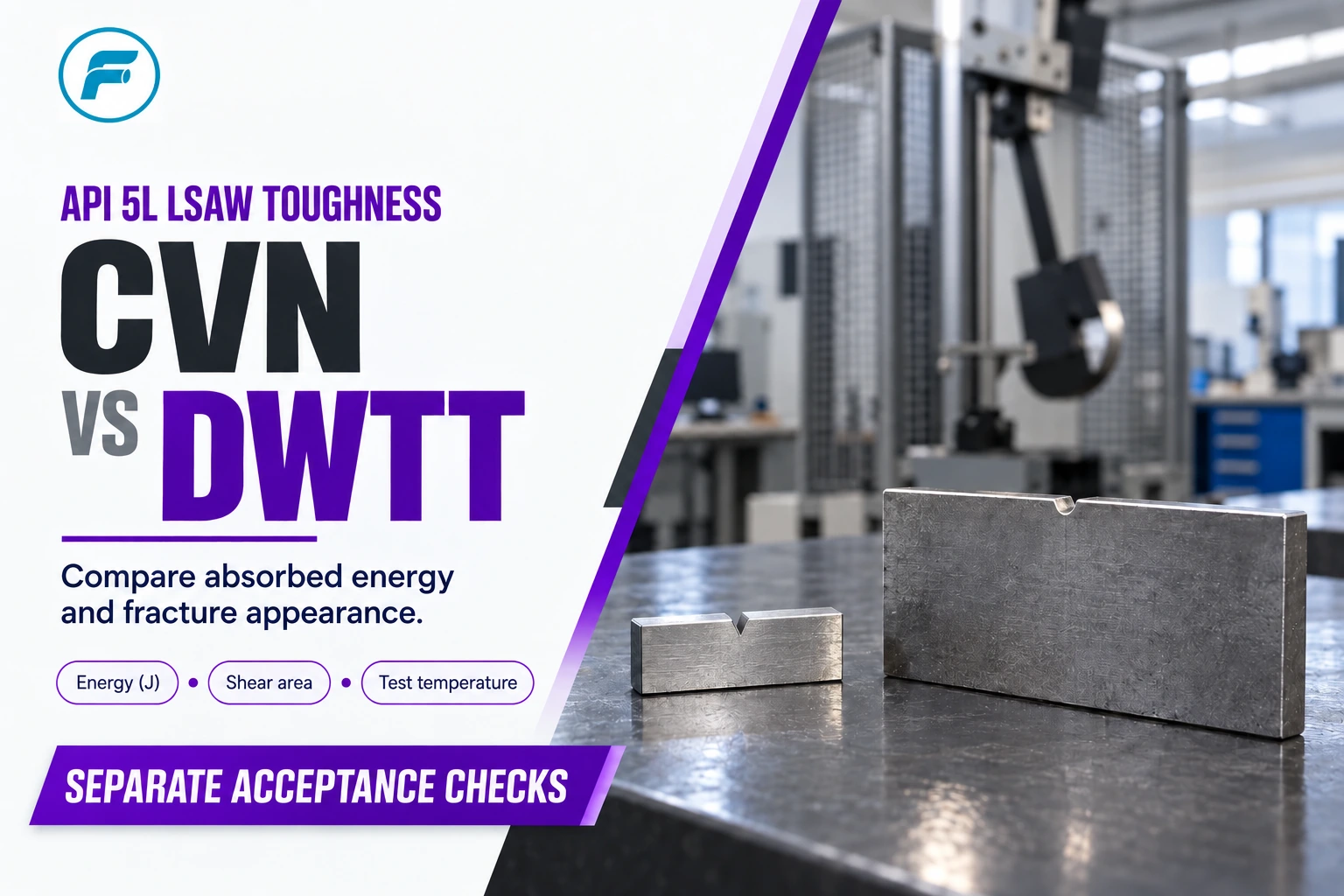
| API 5L PSL2 | B | 0.22 | 0.45 | 1.2 | 0.025 | 0.015 | 245-450 | ≥ 415 | 23 | 0°C | ≥ 27 |
| X42 | 0.22 | 0.45 | 1.3 | 0.025 | 0.015 | 290-496 | ≥ 415 | 23 | 0°C | ≥ 27 | |
| X52 | 0.22 | 0.45 | 1.4 | 0.025 | 0.015 | 360-530 | ≥ 460 | 21 | 0°C | ≥ 27 | |
| X60 | 0.12 | 0.45 | 1.6 | 0.02 | 0.01 | 415-565 | ≥ 520 | 19 | 0°C | ≥ 27 | |
| X65 | 0.12 | 0.45 | 1.6 | 0.02 | 0.01 | 450-600 | ≥ 535 | 18 | 0°C | ≥ 27 | |
| X70 | 0.12 | 0.45 | 1.7 | 0.02 | 0.01 | 485-635 | ≥ 570 | 18 | 0°C | ≥ 27 | |
| GB/T 9711 | L245N | 0.24 | 0.4 | 1.2 | 0.025 | 0.015 | 245-450 | ≥ 415 | 23 | 0°C | ≥ 27 |
| (PSL2 Equiv.) | L360N | 0.24 | 0.45 | 1.4 | 0.025 | 0.015 | 360-530 | ≥ 460 | 21 | 0°C | ≥ 27 |
| EN 10219 | S235JR | 0.17 | - | 1.4 | 0.035 | 0.035 | ≥ 235 | 360-510 | 24 | 20°C | ≥ 27 |
| S235J0 | 0.17 | - | 1.4 | 0.03 | 0.03 | ≥ 235 | 360-510 | 24 | 0°C | ≥ 27 | |
| S235J2 | 0.17 | - | 1.4 | 0.025 | 0.025 | ≥ 235 | 360-510 | 24 | -20°C | ≥ 27 | |
| S275JR | 0.2 | - | 1.5 | 0.035 | 0.035 | ≥ 275 | 410-560 | 20 | 20°C | ≥ 27 | |
| S275J0 | 0.2 | - | 1.5 | 0.03 | 0.03 | ≥ 275 | 410-560 | 20 | 0°C | ≥ 27 | |
| S275J2H | 0.2 | - | 1.5 | 0.025 | 0.025 | ≥ 275 | 410-560 | 20 | -20°C | ≥ 27 | |
| S355JR | 0.22 | 0.55 | 1.6 | 0.035 | 0.035 | ≥ 355 | 470-630 | 20 | 20°C | ≥ 27 | |
| S355J0 | 0.22 | 0.55 | 1.6 | 0.03 | 0.03 | ≥ 355 | 470-630 | 20 | 0°C | ≥ 27 | |
| S355J2H | 0.22 | 0.55 | 1.6 | 0.025 | 0.025 | ≥ 355 | 470-630 | 20 | -20°C | ≥ 27 | |
| AS/NZS 1163 | C250 | 0.16 | 0.1 | 1.2 | 0.03 | 0.03 | ≥ 250 | ≥ 320 | 22 | N/A | N/A |
| C250L0 | 0.16 | 0.1 | 1.2 | 0.03 | 0.03 | ≥ 250 | ≥ 320 | 22 | 0°C | ≥ 27 | |
| C350 | 0.2 | 0.45 | 1.6 | 0.03 | 0.03 | ≥ 350 | ≥ 430 | 20 | N/A | N/A | |
| C350L0 | 0.2 | 0.45 | 1.6 | 0.03 | 0.03 | ≥ 350 | ≥ 430 | 20 | 0°C | ≥ 27 | |
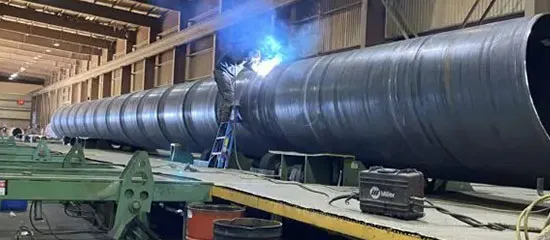
LSAW steel pipe is made from steel plate, formed into a cylindrical shell and welded along a straight longitudinal seam. JCOE and UOE differ in how the plate is formed before welding. Both routes include mechanical expansion, represented by the letter E, to control final pipe geometry.
For the effects on order quantity, size flexibility and pipe-end fit-up, read UOE vs JCOE: Which LSAW Forming Route Fits Your Project?
JCOE uses progressive press strokes to form the plate through J, C and open-O shapes. Confirm the mill's qualified diameter, wall thickness and grade combination before selecting the route.
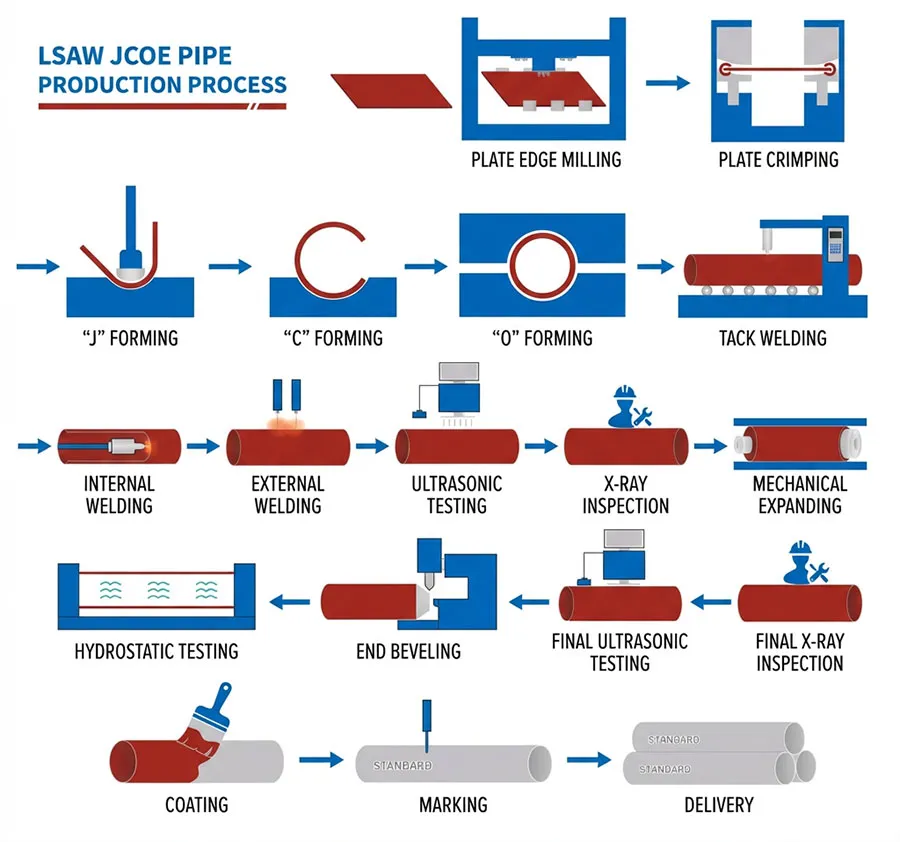
1. Plate Preparation and Edge Pre-bending: Review plate identity and condition, machine the longitudinal edges and pre-bend the edge zones. Control the weld preparation and preserve material traceability.
2. Progressive J, C and O Forming: Successive press strokes bend one side and then the other before closing the plate into an open cylindrical shape. Check edge alignment and seam fit-up before pre-welding.
3. Welding and Expansion: Secure the seam and complete internal and external submerged arc welding under the qualified procedure. Mechanically expand the welded pipe to control diameter and roundness, then complete finishing and acceptance checks.
UOE uses dedicated U-forming and O-forming presses. The formed shell is welded before mechanical expansion; the illustration below shows the main stages of this route.
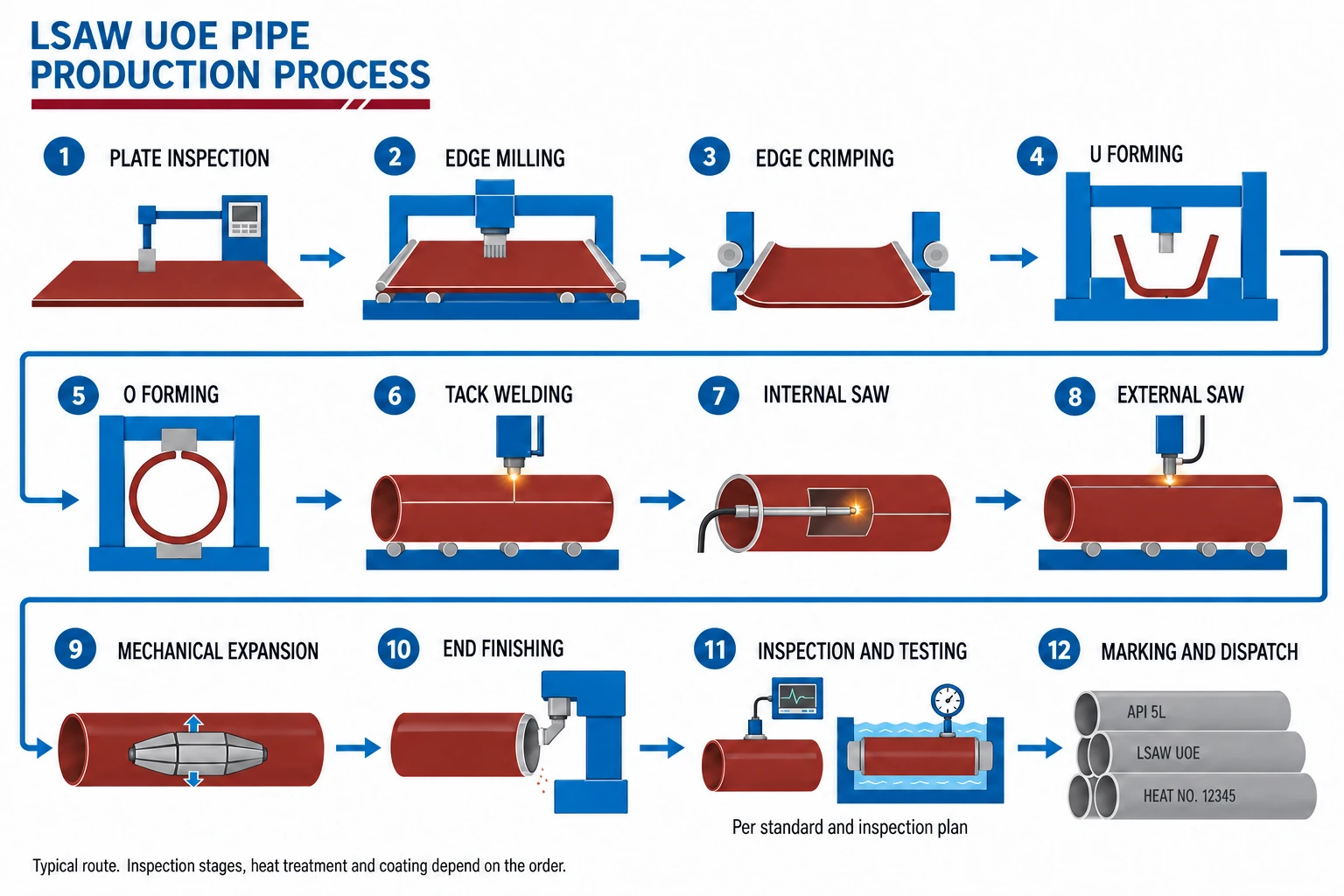
1. Plate Preparation and U Forming: Prepare the plate edges and pre-bend the edge zones. A U-forming press bends the prepared plate into a U-shaped cross-section.
2. O Forming and Seam Welding: An O-forming press closes the U-shaped plate into an open round shell. Align and pre-weld the seam, then carry out internal and external submerged arc welding.
3. Expansion and Finishing: Expand the welded pipe mechanically to control its final dimensions. Finish the ends and complete the inspections and tests required by the order.
Material and Weld Traceability: Link each pipe to the plate heat and material records. Control welding parameters, consumables and any repair operations under the approved procedures.
Dimensions and Pipe-End Geometry: Check diameter, wall thickness, length, roundness, straightness and end preparation. Confirm any additional fit-up or end-matching tolerances before production.
Inspection and Testing: Specify NDT methods, coverage, acceptance criteria, hydrostatic testing and required material tests in the inspection plan. The diagrams are route illustrations; test stages and sequence, heat treatment and coating must follow the applicable standard and order.
Protection and Release: Verify marking, inspection documents, ordered coating or temporary protection, and end protection before packing and dispatch.
Before ordering: Confirm JCOE or UOE, the standard and edition, grade, OD, wall thickness, length, inspection scope, end geometry, coating and required certificates.
Buyers select LSAW steel pipe when the approved project specification, diameter and wall combination, plate-based manufacturing route or longitudinal-weld inspection requirements call for it. For oil and gas transmission or large-diameter water pipelines, confirm the grade, PSL, service conditions and required testing before comparing LSAW with ERW or SSAW. The weld direction alone does not establish pressure capability or project acceptance.
LSAW steel pipe suppliers may quote different plate grades, delivery conditions, inspection scope, coating systems and logistics. Compare offers against the same OD, wall thickness, grade, PSL, length, quantity, NDT and hydrotest requirements, certificate package, coating and delivery terms. For API 5L X60 or X70 LSAW pipe, state any impact-testing and project-approval requirements in the RFQ so that prices cover the same supply scope.
The next checks are whether the OD x wall thickness x grade combination can be supplied, which forming route and delivery condition apply, and what testing and documents the project requires. Send the standard and edition, grade, PSL, dimensions, length, quantity, end preparation, coating, inspection requirements and destination for specification review. A listed maximum diameter and maximum wall thickness should not be assumed to apply together to every grade or pipe length.
The extra cost is justified when the approved specification requires LSAW, or when its plate-based route, available dimensions and verified inspection scope meet project requirements better than the alternatives. Compare technically acceptable offers on the same basis, including coating, documentation and transport. High-pressure, offshore or structural service still requires project-specific engineering checks; choosing LSAW alone does not demonstrate suitability.