+8615674993216
 sales@forever-steels.com
 English
 العربية

When you’re specifying stainless steel pipe for an industrial project, the first mistake is to jump straight to “304 or 316?” without looking at the service condition. The reality is: the right standard and grade depend on temperature, pressure, fluid corrosivity, and fabrication needs.
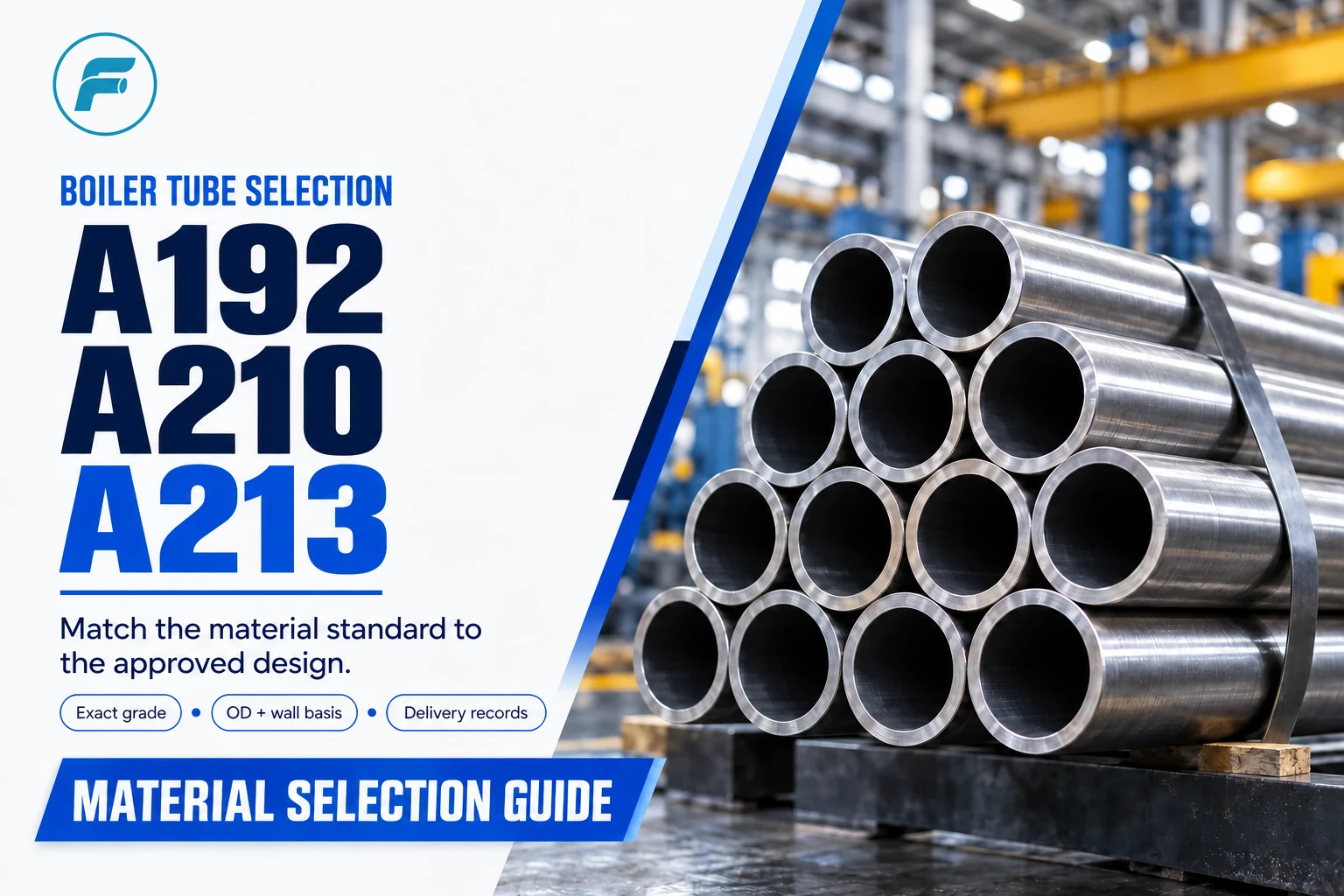
ASTM A312 covers pipe for high-temperature and general corrosive service; ASTM A269 covers tubing for general service; ASTM A213 covers seamless boiler, superheater and heat-exchanger tubes. Select the product specification and dimensional basis first, then the grade, design wall and required inspection. The same alloy name does not make these products interchangeable.
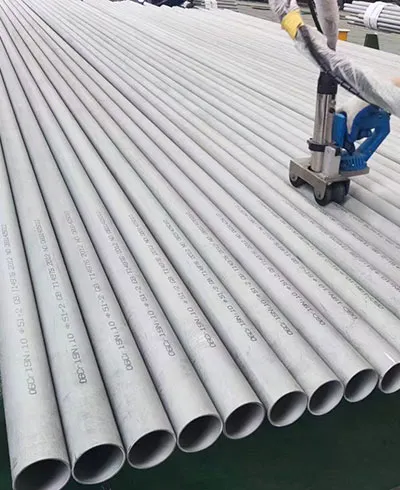
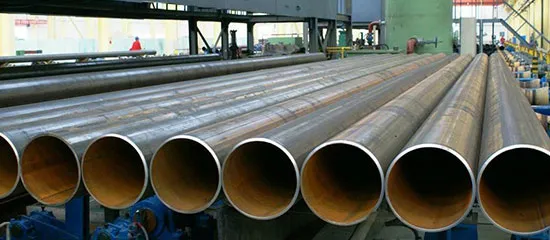
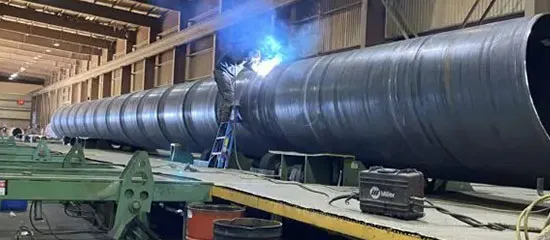
Once the specification and manufacturing route are confirmed, review seamless stainless steel pipe or welded stainless steel pipe supply details.
Service temperature, pressure, fluid chemistry and fabrication history affect material selection. A grade suitable for one environment is not automatically suitable for seawater or a different acid concentration.
For stainless steel pipe selection by pressure rating and environment, record the following design inputs before finalizing the procurement specification:
· Fluid Chemistry: Is the medium acidic, alkaline, chloride-containing, oxidizing, or reducing?
· Thermal Profile: What is the continuous operating temperature and peak thermal fluctuation (ranging from –200°C to 800°C+)?
· Mechanical Load: What are the working pressure ratings (low, medium, high, or cyclic) and structural stresses (vibration, thermal expansion)?
Use the governing design code to establish allowable material, wall thickness and service limits. ASTM A312, A269 and A213 specify products; none alone is a pressure-temperature rating for an installed system.
| Standard | Product form | Size and wall basis | Inspection to specify | Typical procurement task |
|---|---|---|---|---|
| ASTM A312 | Seamless, welded or heavily cold-worked welded austenitic stainless pipe | NPS and specified schedule or stated OD/wall; confirm dimensional standard | Heat treatment, mechanical tests and hydrostatic or nondestructive electric testing as required by the ordered edition | Process piping under the applicable design code |
| ASTM A269 | Seamless or welded austenitic stainless tubing | Specify OD and nominal wall, tolerances and finish; not a 0.5-inch OD ceiling | Hardness and applicable mechanical tests; hydrostatic or nondestructive electric testing under the ordered specification | General-service tubing, subject to system and fitting requirements |
| ASTM A213 | Seamless ferritic or austenitic alloy-steel tubes | Specify OD and minimum wall, or average wall when ordered; 0.500 in in the published usual size range refers to wall, not maximum OD | Grade-dependent heat treatment, mechanical tests and required hydrostatic or nondestructive electric test | Boiler, superheater or heat-exchanger tube orders |
There is no universal 150 psi or 400°F switch from A269 to A312. For a proposed substitution, compare permitted product form, grade, dimensional tolerance, wall basis, heat treatment and test records against the design code and purchase order. Obtain written engineering approval before accepting an alternative.
High-Temperature Service (550°C – 800°C)
For elevated-temperature service, review allowable stress, creep exposure, oxidation and the specified heat treatment. H grades or stabilized grades may be candidates, but the design code and service conditions determine suitability.
· Grades TP304H / TP316H: Engineered with a controlled carbon content of 0.04–0.10%. This high-carbon chemistry provides significantly higher creep rupture strength over long-term thermal exposure.
For heat exchanger tubing, compare ASTM A213 seamless and ASTM A249 welded tube requirements before accepting a change of route.
· Grades TP321 / TP347: Titanium or niobium stabilization helps limit sensitization under suitable processing conditions; it does not guarantee freedom from intergranular corrosion in every weld or thermal exposure.
Moderate Temperature with Moderate Corrosion
For moderate-temperature service, check the actual fluid composition, cleaning chemicals and weld condition rather than applying a single temperature cutoff.
· Grades TP304 / TP304L: Common candidates for general service. Confirm compatibility with the actual water or chemical composition; the grade name alone does not establish corrosion resistance.
· Typical Applications: Brewery piping, general water infrastructure, and aboveground utilities in oil and gas refineries.
Chloride-Rich and Marine Environments
TP316 / TP316L contains molybdenum and generally offers improved resistance to localized corrosion compared with TP304 / TP304L. It is not a blanket recommendation for seawater; chlorides, temperature, deposits and crevices must be evaluated.
Engineering caution: chloride stress corrosion cracking depends on temperature, chloride concentration, tensile stress and exposure. Do not treat 60°C as a universal safe/unsafe boundary. More resistant alloys, including duplex grades, require their own product specification and engineering review.
Aggressive Acid Processing
Grades TP317L and 904L are possible candidates for some acid duties. Selection requires corrosion data for the actual concentration, temperature, contaminants and flow condition; confirm the product standard applicable to the selected alloy.
Cryogenic Service (–200°C to –50°C)
Austenitic stainless grades are widely considered for cryogenic service. Confirm code-permitted material, design temperature, weld procedure and any impact-test requirements. Do not infer that every austenitic product is approved, or that every other family is categorically prohibited.
| Service condition | Candidate product route | Required confirmation before ordering |
|---|---|---|
| High-temperature steam | A312 pipe in a code-permitted grade | Design temperature/pressure, allowable stress, wall and heat treatment |
| Acid process line | A312 pipe or another approved alloy specification | Corrosion data for concentration, temperature and contaminants |
| Utility or instrument tubing | A269 tubing where permitted by system design | OD/wall, fitting compatibility, cleanliness and pressure design |
| Marine or chloride exposure | Approved corrosion-resistant alloy/product form | Pitting, crevice corrosion and stress-corrosion risk |
| Cryogenic transfer | Code-approved austenitic pipe/tube route | Minimum design temperature, welds and test requirements |
| Boiler or heat-exchanger replacement | A213 seamless tubes where specified | Grade, OD, minimum/average wall, length and tubesheet fit |
For a Forever Steel enquiry, state the standard and edition, grade, pipe or tube form, OD/NPS, wall basis, length and required test documents. Confirm the available supply route against these requirements before placing an order.
Specification scope: ASTM A213/A213M. Use the edition required by the purchase order for acceptance.