+8615674993216
 sales@forever-steels.com
 English
 العربية

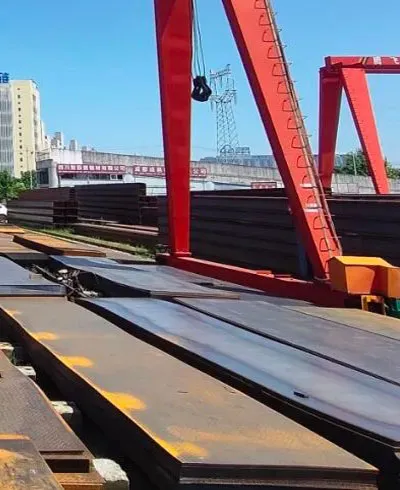
Pipeline steel plate is selected as the plate input for oil and gas transport and related energy-infrastructure fabrication. Confirm the applicable standard and edition, grade, PSL or project basis, thickness, dimensions, delivery condition, toughness, weldability and MTC before comparing offers.
API SPEC 5L:The industry benchmark for line pipe material.
Common Grades:Grade B, X42, X46, X52, X56, X60, X65, X70, X80.
Product Specification Levels:Available in both PSL1(General) and PSL2(Strict mechanical/chemical requirements).
ASTM A572:High-strength low-alloy structural steel for ancillary pipeline structures.
EN 10208:Steel pipes for pipelines for combustible fluids.
ISO 3183:International standard for petroleum and natural gas industries—Steel pipe for pipeline transportation systems.
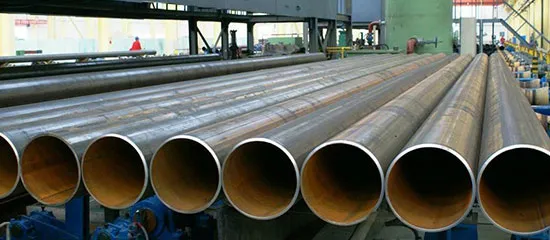
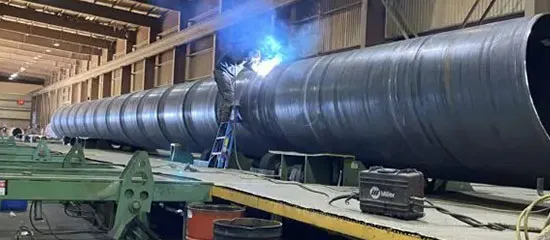
We provide large-format plates to facilitate the manufacturing of LSAW (Longitudinal Submerged Arc Welded) and SSAW (Spiral Submerged Arc Welded) pipes:
|
Feature |
Specification Range |
|
Thickness (WT) |
6mm to 60mm (Up to 100mm for high-pressure station piping) |
|
Width |
1500mm to 4500mm (Ultra-wide plates for large-diameter pipes) |
|
Length |
6000mm to 18000mm (Custom lengths to optimize pipe sections) |
|
Surface Condition |
Bare, Shot-blasted, or Anti-corrosion Coated |
|
Edge Condition |
Square cut or CNC Beveled for welding preparation |
Pipeline steel plates are the starting material for massive infrastructure projects:
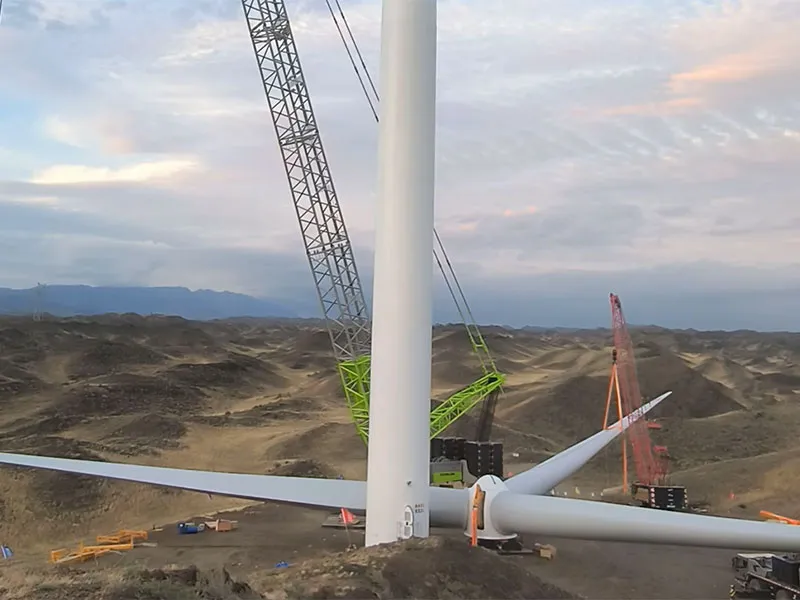
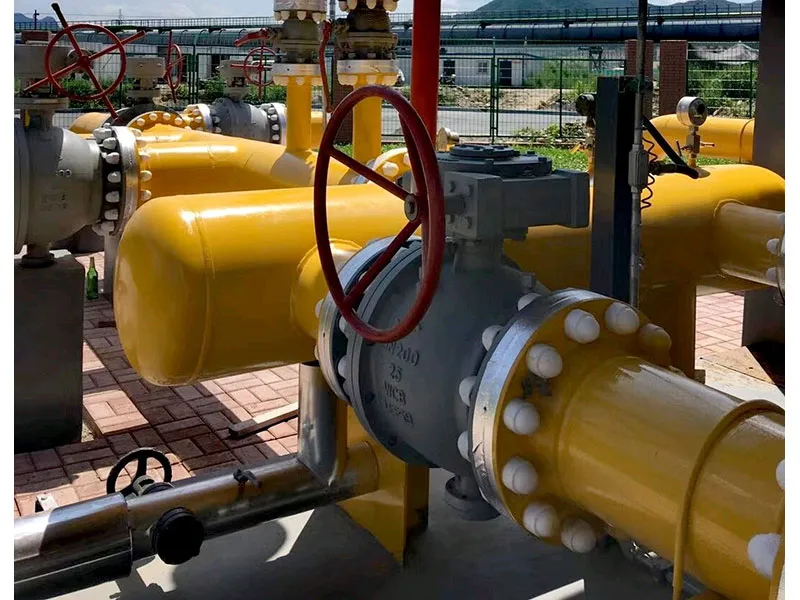
Oil & Gas Transmission:Manufacturing of high-pressure mainlines for crude oil, natural gas, and petroleum products.
Offshore Subsea Pipelines:Heavy-wall plates designed for deep-water collapse resistance and sour service (H2S resistance).
Water Transmission:Large-diameter pipes for municipal water supply and high-pressure irrigation systems.
Hydrogen Transport:Specialized "Hydrogen-Ready" plates with low-permeability microstructures.
Slurry Pipelines:Abrasion-resistant pipeline steel for mining and mineral transport.
For plate intended for welded pipe manufacture, define lamination and edge-zone inspection before forming, and keep the plate heat traceable through production.
| Application | International Standard | Common Material Grades |
| Structural / Construction |
ASTM A36
ASTM A572 AS/NZS 3678 |
Grade
36, Grade 50, Grade 60 S235JR, S275JR, S355JR/J0/J2 G250, G350, G450 |
| Pressure Vessel / Boiler |
ASTM A516 EN 10028 AS 1548 |
Gr.
60, Gr. 65, Gr. 70 P235GH, P265GH, P355GH PT430, PT460, PT490 |
| Shipbuilding / Offshore |
ASTM
A131 Class Societies |
Grade
A, B, D, E AH32, DH36, EH36 (ABS/BV/LR/DNV) |
| High Strength (HSLA) |
ASTM A514 EN 10025-6 |
Grade
Q, Grade S S690QL, S890QL, S960QL |
| Abrasion Resistant (AR) | Proprietary / ISO | AR400, AR450, AR500 (Hardness Brinell) |
| Standard (Application) | Parameter | Tolerance Category/Class | Thickness Range (mm) | Tolerance Value (mm) |
| EN 10025 / EN 10225(Structural & Offshore) | Thickness(Acc. to EN 10029) |
Class A (Standard) Class B (Fixed -0.3mm) Class C (All Plus) Class D (Symmetrical) |
8 ≤ t < 15 15 ≤ t < 25 25 ≤ t < 40 |
Class A: -0.5 / +1.1 Class B: -0.3 / +1.3 Class C: -0.0 / +1.6 Class D: -0.8 / +0.8 |
| Width |
Width ≤ 2000mm Width > 2000mm |
All |
-0
/ +20mm -0 / +25mm |
|
| Length |
Length < 4000mm 4000 ≤ L < 6000 |
All |
-0
/ +20mm -0 / +30mm |
|
| ASTM A516 / A20(Pressure Vessel) | Thickness | Under-tolerance (Fixed) |
t < 25mm 25 ≤ t < 50 50 ≤ t < 75 |
-0.3mm -0.3mm -0.3mm |
| Over-tolerance (Var.) |
t < 25mm 25 ≤ t < 50 50 ≤ t < 75 |
+1.1mm +1.5mm +1.8mm |
||
| Width |
W ≤ 1500mm 1500 < W ≤ 2100 |
All |
-0
/ +19mm -0 / +25mm |
|
| Length |
L < 3600mm 3600 ≤ L < 6000 |
All |
-0
/ +19mm -0 / +25mm |
For EN 10028 pressure-vessel plate, confirm the applicable dimensional standard, tolerance class and complete thickness range in the purchase specification. API 5L applies to finished line pipe; dimensions and tolerances for the plate used to manufacture it must be agreed separately with the plate supplier and pipe manufacturer.
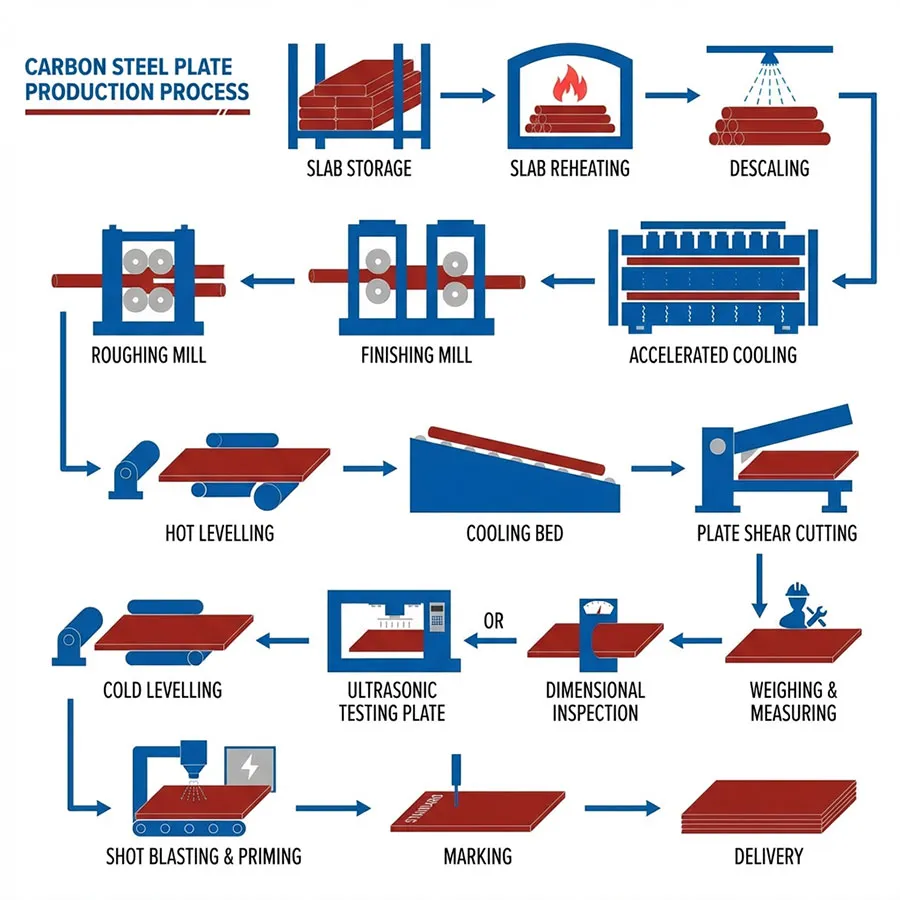
They usually do so when the plate is intended for downstream pipe manufacturing or when weld ability and toughness must align with line pipe performance. The decision is often tied to the next manufacturing step, not just the plate itself. Typical applications include pipeline steel plate for line pipe manufacturing, API 5L grade steel plate, and steel plate for spiral or LSAW pipe mills.
The main reason is that buyers are often comparing not just grade names, but chemistry control, toughness level, delivery condition, and acceptance support for pipe-making. Those hidden factors matter a lot. This is especially visible when buyers compare X52 or X60 pipeline plate with general structural plate for downstream pipe making.
A very useful question is whether the plate is for a pipe mill and, if so, what final pipe standard or PSL expectation it has to support. That makes the supplier's response far more relevant. That question is most useful in pipe mill supply, oil and gas line manufacture, and high-toughness plate purchasing for transmission projects.
They often overlook how strongly downstream forming and welding performance affect acceptance. A plate that looks fine on paper can still be the wrong buying decision if it does not suit the pipe-making route. Mistakes are common when pipeline plate is bought without clearly tying it to the final API 5L pipe grade or manufacturing route.