+8615674993216
 sales@forever-steels.com
 English
 العربية

A WPS tells production personnel how a defined weld is to be made; a PQR records the variables and test results that qualified that procedure. For LSAW and ERW procurement, the buyer's task is not to collect two signed forms. It is to prove that the qualification basis covers the actual mill seam, repair route, dimensions, material condition and project service, and that the approved limits are carried into pipe-level production records.
|
Quick answer:Approve the package only after confirming that the PQR supports the WPS and that its qualified ranges cover the actual material, dimensions, welding process, heat treatment and service requirements. |
|
Document |
Purpose |
Buyer check |
|
WPS |
Instructions and permitted production ranges |
Revision, code, joint, process, consumables and thermal controls |
|
PQR |
Actual qualification variables and test results |
Coupon identity, recorded values, reports and qualified ranges |
|
WPQ/WQTR |
Welder or operator qualification |
Process, position, range and continuity |
|
Production records |
Evidence that the approved route was followed |
Pipe/heat identity, parameters, repairs and inspection results |
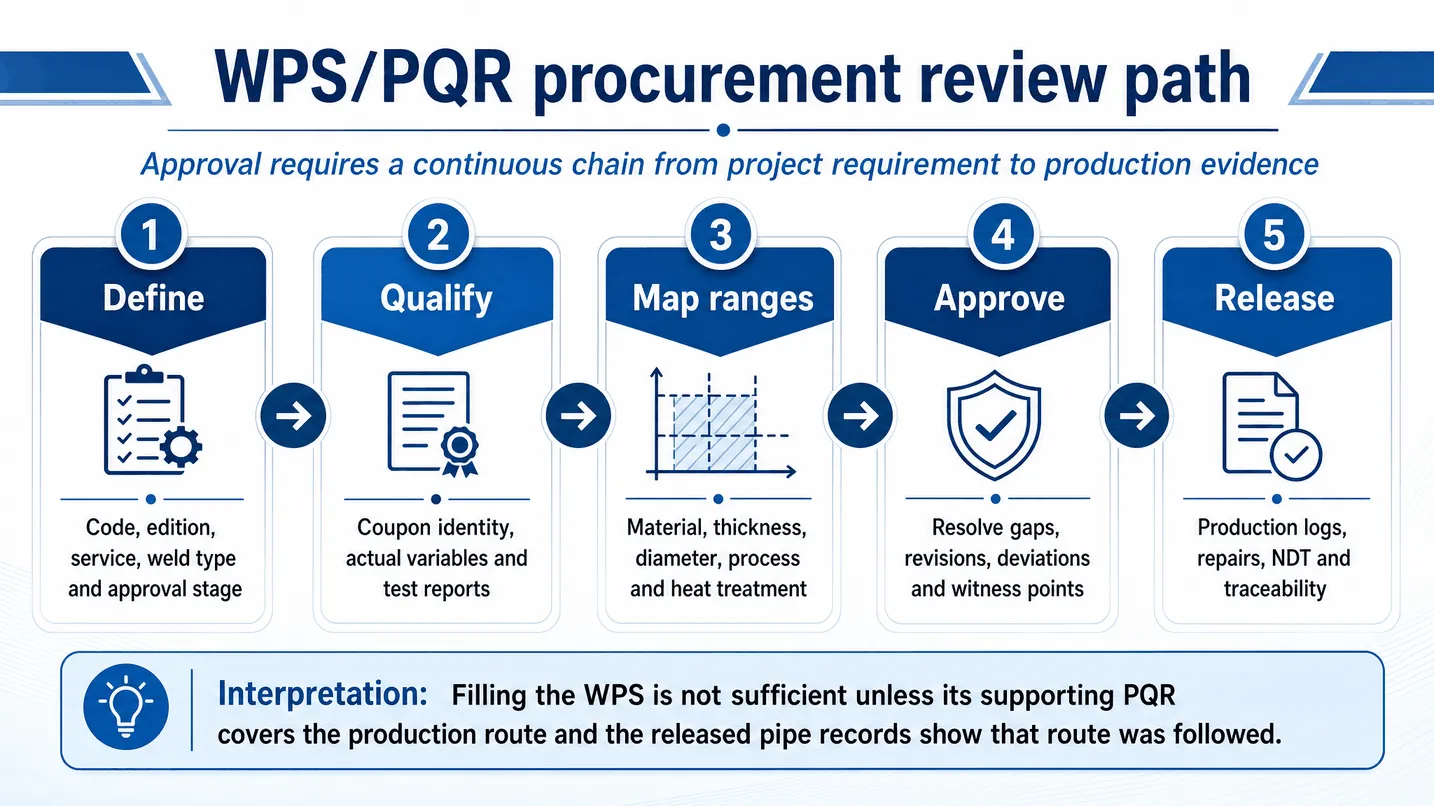
Figure 1. WPS/PQR approval is a five-step evidence chain from project definition to production release.
An LSAW longitudinal seam, an ERW/HFW seam, a local repair and a field girth weld are not the same qualification problem. A field girth-welding WPS should not be accepted as evidence for a mill longitudinal seam merely because the base grade is similar.
|
Weld |
Typical route |
Evidence focus |
|
LSAW seam |
Internal/external submerged arc welding |
Plate condition, SAW arrangement, consumables, heat input and seam NDT |
|
ERW/HFW seam |
Resistance heating and forge pressure |
Power/speed controls, upset, heat treatment and online NDT |
|
Repair weld |
Approved arc process |
Repair WPS/PQR, operator, repair map and post-repair NDT |
|
Field girth weld |
Construction welding process |
Pipeline construction code, position, consumables and field inspection |
A qualified procedure shows that a defined combination of variables produced a test weld meeting specified criteria. It does not certify every production pipe, replace the manufacturing procedure specification, prove production NDT, establish heat-number traceability or demonstrate coating and dimensional compliance.
· Begin with the product standard, project specification, welding qualification code and exact editions, then identify the weld being reviewed. A longitudinal submerged-arc seam, an HFW/ERW seam, a manual repair and a field girth weld have different qualification and production controls. This step prevents a technically valid but irrelevant procedure from being accepted for the order.
· Identify whether the review concerns a mill seam, repair, jointer or field weld.
· Confirm additional low-temperature, offshore, sour-service or fatigue requirements.
· Do not assume ASME Section IX, API 1104 or another code applies unless the order invokes it.
|
Variable |
What to compare |
Procurement question |
|
Base material |
WPS group/grade vs coupon identity and condition |
Does it cover the ordered grade and delivery condition? |
|
Thickness/diameter |
Production range vs actual coupon |
Are OD and wall thickness inside the qualified range? |
|
Joint/process |
Groove, backing, process and pass sequence |
Does the qualification represent the production seam? |
|
Consumables |
Classification, wire/flux or electrode |
Are production consumables within the qualified route? |
|
Thermal controls |
Heat input, preheat, interpass and PWHT |
Are limits supported by actual qualification values? |
Tensile and bend results may be sufficient for one procedure but inadequate for a project requiring low-temperature toughness, hardness control or sour-service evidence. Check specimen location, orientation, temperature, acceptance criterion, laboratory identity and traceability to the coupon.
· Impact testing: confirm temperature and specimen location.
· Hardness survey: review weld metal, HAZ and base-metal readings where required.
· Macro examination: check penetration, fusion and seam profile.
· SSC/HIC or corrosion testing: request only when the project or material route requires it.
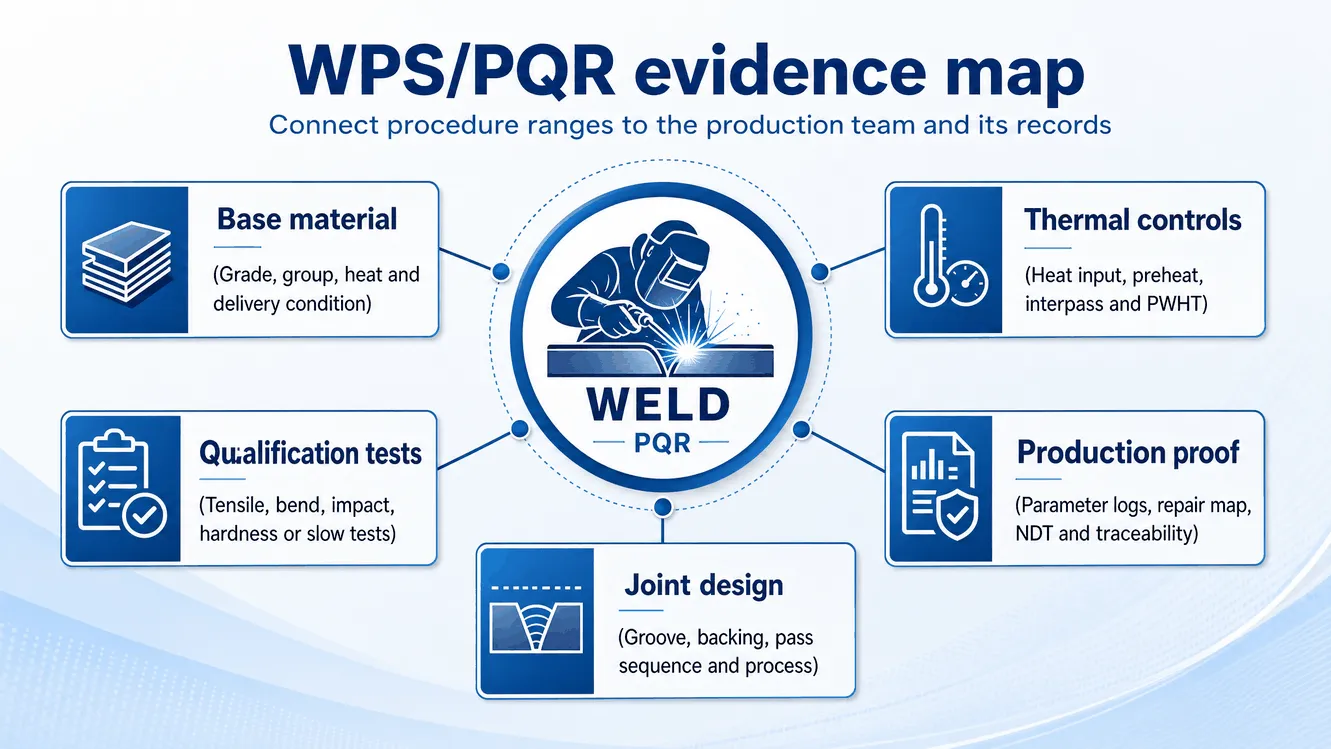
Figure 2. A buyer should map every WPS range and PQR result to the production weld, HAZ and release records.
Start with document control before reading amperage or heat input. The WPS number, revision, date, organization, supporting PQR numbers and approval signatures should form a consistent sequence. A technically acceptable procedure can still be unusable if the quotation references one revision, the manufacturing procedure references another and the production traveller lists a third. Ask for a controlled document register that identifies the revision approved for the order and records any later change.
The title should identify the actual weld application. For a longitudinally welded pipe, the package should distinguish the mill seam from tack welds, run-on or run-off tabs, jointer welds and permitted repairs. If one document is presented for every weld, require a clause-by-clause explanation of the qualification basis. Similar steel grades do not make fundamentally different joints, welding processes or service requirements equivalent.
Qualification codes classify welding variables according to how a change affects the validity of the procedure. Essential variables can require requalification when changed beyond the permitted range. Supplementary essential variables become important when notch toughness is required. Nonessential variables may be revised on the WPS without a new PQR, but they still need practical control because they affect repeatability and workmanship. The governing code and edition determine the exact classification; a supplier-created label is not a substitute.
|
Variable family |
Examples to review |
Buyer decision |
|
Material |
Specification/grade or grouping, delivery condition, thickness and sometimes diameter |
Confirm the production material lies within the qualified basis |
|
Process and joint |
Welding process, groove, backing, number of processes and deposition sequence |
Confirm the coupon represents the production seam or repair |
|
Filler and flux |
Classification, trade combination where required, diameter and control practice |
Confirm production consumables match the approved route |
|
Thermal |
Preheat, interpass, heat input, pass thickness and postweld heat treatment |
Confirm limits are supported by recorded PQR values |
|
Technique |
Travel direction, oscillation, electrical mode and cleaning between passes |
Confirm the WPS gives operators usable production instructions |
Heat input is normally derived from current, voltage and travel speed, with the applicable code or project method determining units and any efficiency treatment. A PQR should record actual welding values, while the WPS should state a production range that the qualification supports. A single rounded heat-input value is weak evidence if the underlying current, voltage, travel speed, polarity, wire arrangement and pass sequence are absent.
For multi-wire submerged arc welding, do not assume that one amperage and voltage line describes the complete thermal cycle. Confirm how each wire or power source is recorded and how travel speed is controlled. For repairs, review the smaller local heat sink, preheat method and cumulative thermal exposure. Where toughness, HAZ hardness or sour service matters, ask how production parameter logs will demonstrate compliance rather than relying on a procedure posted at the welding station.
The PQR establishes the consumables used for qualification; the WPS translates them into production requirements. Check filler classification, wire-flux combination, electrode or wire diameter, shielding gas where applicable and any diffusible-hydrogen classification invoked by the project. For submerged arc welding, flux brand, classification, lot control, recycling limits and baking or drying rules can affect consistency even when the nominal classification appears unchanged.
Procurement evidence should connect consumable certificates and batch numbers to production records. This does not mean every routine order needs an oversized data book. It means the inspection plan should state what will be recorded, at what frequency and how a buyer or third-party inspector can trace a questioned weld back to the relevant procedure, operator, consumable batch and inspection result.
A PQR summary that says pass or acceptable is not enough for critical procurement. Review the original laboratory reports or controlled copies for tensile, bend, macro, impact, hardness and any project-specific corrosion or cracking tests. Coupon identification, material heat, weld orientation, specimen location, test temperature, dimensions, result and acceptance basis should agree across the reports. If specimen identity changes between the PQR and laboratory report, stop the review until the discrepancy is resolved.
Test selection must match the service condition. Charpy impact results should identify notch location and test temperature. A hardness survey should show the traverse and individual readings rather than one maximum value without location. Macro examination should show fusion and profile at the required section. HIC or SSC testing belongs only where the material route and project specification require it, but when required the solution, exposure, specimen orientation and acceptance criteria must be stated.
A qualified procedure does not automatically qualify the person or machine operator who makes the weld. Review WPQ or WOPQ records against the actual process, position, product form and automation level. Automated LSAW seam welding and manual repair welding are different qualification tasks. Continuity records may also be required by the governing code. The buyer does not need personal data beyond the contract requirement, but the supplier should be able to demonstrate that assigned personnel remain qualified.
Qualification proves that a defined variable set produced an acceptable test weld; production records prove the mill stayed within those controls. The manufacturing procedure specification and ITP should therefore identify parameter monitoring, calibration, start-up verification, consumable control, seam treatment, repair limits and release records by pipe or production lot. This is the point where WPS/PQR review becomes procurement assurance rather than document collection.
|
Production evidence |
What it proves |
Common gap |
|
Welding parameter log |
The approved range was used on the identified pipe or production lot |
Only nominal set points are shown; actual values are unavailable |
|
Consumable issue record |
Wire, flux or electrode batches were controlled |
Certificate exists but cannot be linked to production |
|
Repair map and procedure |
Repairs were permitted, qualified and re-examined |
Repair is mentioned in the NCR but location and NDT are missing |
|
NDT report |
The completed seam met the specified examination route |
Report identifies a batch but not pipe numbers or seam locations |
|
Calibration status |
Monitoring and inspection equipment was within control |
Certificate dates do not cover production |
Assume a supplier submits one PQR to support LSAW pipe in two wall thicknesses. Do not accept or reject it by comparing the coupon thickness with the order one-to-one. First apply the qualification ranges of the governing code and edition. Then check whether supplementary toughness rules, deposited weld-metal thickness, process combination, heat treatment and diameter limitations alter the range. Finally confirm that the proposed production heat-input and consumable ranges remain inside the supported envelope.
If the thinner size is inside the basic thickness range but its impact-test requirement differs, the PQR may still be incomplete for that project. If a thicker size needs an additional welding process or a different pass arrangement, the original PQR may not support the revised WPS. Record the conclusion in a review matrix with accepted, rejected and clarification-required fields instead of relying on email approval.
It can, provided each WPS stays within the ranges and variable rules supported by that PQR under the governing code. The relationship should be stated clearly, and every WPS still needs application-specific instructions.
Only when the invoked code permits that route and the product or project specification accepts it. Many mill-seam and critical-service requirements expect procedure qualification evidence rather than a generic prequalified form.
Not always. At quotation, a supplier can provide an applicability statement and sample document index. The purchase order should define when the final package is submitted, reviewed and approved relative to production.
Confirm the code and edition, weld application, supporting PQR, material identity, thickness range, welding process, heat treatment and required tests. Those fields expose most fundamental mismatches before detailed review.
· LSAW Pipe Documentation Package: Release Checklist
· Weld Seam Inspection for ERW, LSAW and SSAW Pipes
· Common Steel Pipe Welding Defects
· Steel Pipe Heat Number and Material Traceability
The references below are provided for technical context. The purchase order and project specification must identify the controlling edition and acceptance criteria.
· American Welding Society - WPS/PQR Explained - Functions, variables and qualification tests.
· TWI - Welding Procedure - Independent technical explanation of procedure qualification.
· ASME - BPVC Section IX - Official overview of welding and brazing qualification rules.
· API - Specification 5L 47th Edition announcement - Current line-pipe manufacturing, inspection, testing, marking and traceability context.
· The Welding Institute - Professional welding knowledge and qualification context.