+8615674993216
 sales@forever-steels.com
 English
 العربية



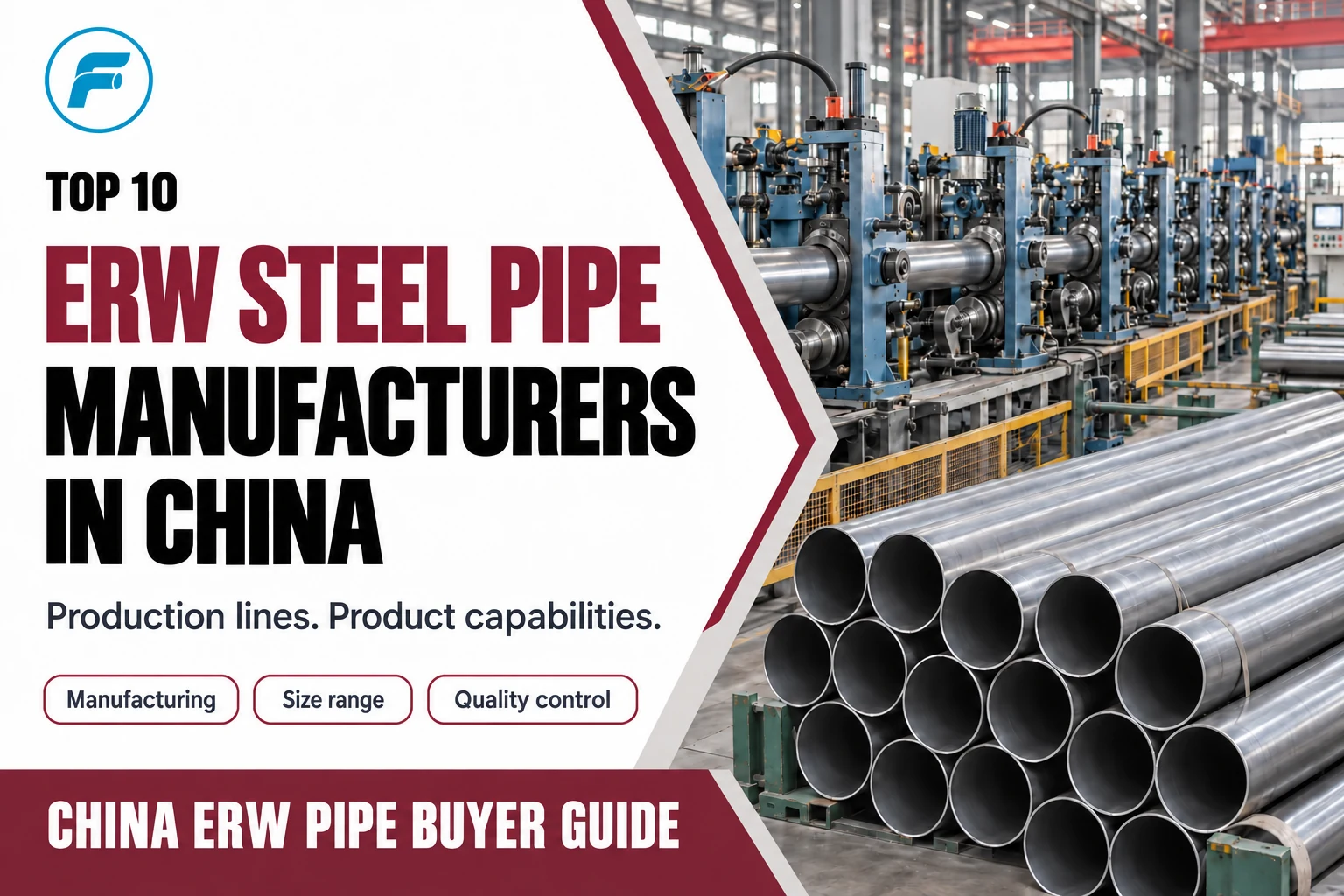
Heat-number traceability links the delivered pipe to its steelmaking and test evidence. A usable chain maps heat, lot, pipe or bundle marking, MTC, inspection records and packing identity without assuming that a certificate alone proves the cargo.
For a purchase order, include traceability and certificate requirements with the seamless pipe supply specification or the specified welded-pipe route.
|
Quick answer:Steel pipe traceability is proven by a continuous match between the purchase order, MTC, heat or lot identification, pipe marking, inspection reports, bundle tags and packing list. A certificate alone does not prove the identity of cargo if the physical pipes cannot be mapped back to it. |
A heat number identifies steel produced under a defined melt or heat. It connects the material to the chemical analysis recorded for that heat and, together with the applicable production and testing records, to the mechanical properties and inspection results reported for the supplied product.
For a steel pipe buyer, the practical question is not simply whether a heat number appears on a certificate. The question is whether the heat number on the certificate matches the marking on the pipe or bundle, the item shown on the packing list, and the product described in the purchase order. Traceability depends on this continuous match.
|
Identifier |
What it normally represents |
Buyer verification point |
|
Heat number |
A melt or heat of steel with recorded chemical composition. |
Match the heat shown on the MTC with pipe or bundle identification and the packing-list line. |
|
Lot number |
A controlled production or inspection grouping. One lot may follow rules defined by the product standard, order or mill procedure. |
Confirm how the lot was formed and which heat numbers, sizes and test records belong to it. |
|
Pipe number |
An individual pipe identifier used when piece-level control is required. |
Use it to connect dimensions, NDT, repair or tally records to a specific pipe. |
|
Bundle number |
A shipment-unit identifier for a grouped quantity of pipes. |
Match bundle tag, quantity, weight, heat information and packing-list line. |
|
Important:Heat number and lot number are not interchangeable. The heat provides the material-origin link; the lot controls a production or inspection grouping. The order documents should make the relationship between them visible. |
The traceability process begins when raw material or finished-pipe documentation is reviewed. Material identity, heat number, grade and size are checked against the order requirements. During production, sourcing, inspection or warehouse handling, identification must remain visible or be transferred to a controlled tag or record when the original marking is no longer practical.
Before shipment, physical marking, bundle tags, MTCs, inspection reports and packing-list lines are reviewed together. This creates a chain that can be followed in both directions: from a pipe or bundle to its certificate, and from a certificate line item back to the related cargo.
|
Stage |
Identification or record |
Control objective |
|
Material review |
Material description, grade, heat number and source document |
Confirm the material can be linked to the ordered specification. |
|
Production or sourcing |
Heat retained in production records, pipe marking or controlled tags |
Prevent loss of identity during processing and handling. |
|
Inspection |
Measurements and tests referenced to the relevant heat, lot or pipe |
Connect acceptance evidence to the material inspected. |
|
Pipe marking |
Standard, grade, size, heat and required customer marks |
Make product identity visible on the physical pipe. |
|
Bundle control |
Bundle number, size, quantity and heat information |
Control grouped pipes as a shipment unit. |
|
Document matching |
MTC, inspection report and packing-list mapping |
Ensure documents describe the actual cargo. |
|
Shipment release |
Final tags, packages, loading and release record |
Preserve evidence of what was authorized for shipment. |
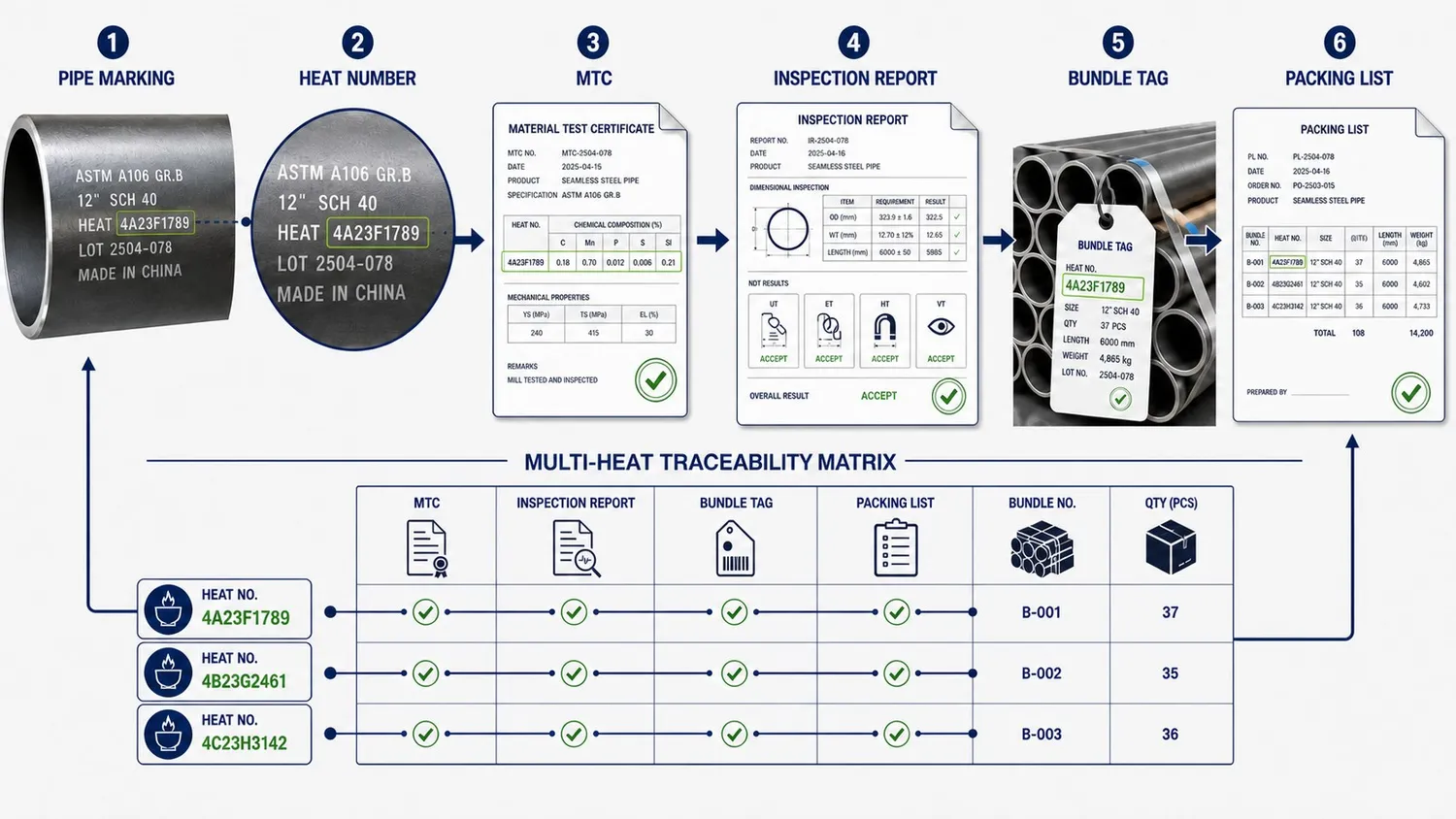
Figure 1. Pipe marking, heat number, MTC, inspection records, bundle tags and packing lists must map to the same cargo
Read the MTC in layers instead of checking only the grade. First confirm document identity and the applicable order. Then verify the product description and heat number. Finally, review reported chemistry, mechanical properties, tests and document authorization against the standard and purchase requirements.
|
MTC area |
What to check |
Mismatch that requires clarification |
|
Document identity |
Manufacturer or issuing entity, certificate number, issue date and document type |
Certificate origin or revision cannot be tied to the supplied order. |
|
Order and product |
PO reference, product, standard, grade, size, quantity and delivery condition |
Correct grade but wrong size, product route or delivery condition. |
|
Heat or lot |
Heat number and any lot, batch or pipe-number references |
Heat on the certificate does not appear on pipe, bundle tag or packing list. |
|
Chemical analysis |
Reported elements and applicable limits |
Values are missing, use the wrong basis, or belong to another heat. |
|
Mechanical results |
Yield, tensile, elongation and impact results when required |
Required test, orientation, temperature or result is absent. |
|
Additional tests |
Hydrotest, NDT, heat treatment, coating or supplementary requirements as applicable |
The PO requires evidence that the certificate does not identify. |
|
Authorization |
Inspection statement, signature or validation and revision status |
Uncontrolled draft, inconsistent revision or missing authorization. |
|
Buyer rule:Do not accept an MTC merely because the grade line looks correct. The certificate must describe the same heat, size, product and delivery condition as the cargo being released. |
A useful document package lets the buyer move across records without guessing. The mapping should show where each identifier appears and which record confirms the next step.
|
Starting point |
Match to |
Required common identifier |
Result |
|
Pipe marking |
MTC |
Heat number plus product description |
Physical pipe is linked to material properties. |
|
Pipe or bundle |
Inspection report |
Heat, lot, pipe or bundle reference |
Measured and tested items are identifiable. |
|
Bundle tag |
Packing list |
Bundle number, size, quantity and heat |
Shipment unit matches the commercial packing record. |
|
Packing list |
Shipment release |
Package or bundle list and released quantity |
Only accepted cargo enters loading control. |
When one order contains several heats, sizes or inspection lots, a traceability matrix should be prepared before final document review. One row should represent one clearly controlled material group. Do not merge heats into a single line if the physical bundles and certificates need separate verification.
|
PO item |
Size / grade |
Heat |
Lot |
Bundle(s) |
MTC |
Inspection record |
Packing-list line |
|
1 |
API 5L X52 / size A |
H24031 |
L01 |
B01-B03 |
MTC-01 |
IR-01 |
PL-1 to PL-3 |
|
1 |
API 5L X52 / size A |
H24047 |
L02 |
B04-B05 |
MTC-02 |
IR-02 |
PL-4 to PL-5 |
|
2 |
ASTM A106 Gr.B / size B |
H24102 |
L03 |
B06 |
MTC-03 |
IR-03 |
PL-6 |
The example identifiers above are illustrative. The actual matrix should use the order's approved naming system and should be revised after sorting, rework, bundle splitting or quantity changes.
Heat numbers provide the material link, while bundle numbers control the shipment unit. A bundle number can connect a group of pipes to size, quantity, weight, heat number and packing-list line. This is especially useful when an order contains multiple sizes, grades, heats or delivery marks.
During packing review, bundle tags and pipe markings are checked for readability and consistency. The packing list is then reviewed against the physical bundles. This reduces the risk of mixed material, omitted packages, duplicated bundle numbers or records that cannot be reconciled with the cargo at destination.
|
Risk situation |
Control required before release |
|
Pipes cut to shorter lengths |
Transfer the original heat identity to the cut pieces or a controlled piece record. |
|
Bundles split or rebuilt |
Issue new bundle identification and update quantity and packing-list mapping. |
|
Several heats in one shipment |
Separate by controlled bundle or piece identification and use a traceability matrix. |
|
Marking covered by coating |
Use approved transferred marking, tags or records that preserve the original link. |
|
Rework, repair or sorting |
Keep affected pipes segregated and update inspection and release records after acceptance. |
|
Unreadable or missing identification |
Hold the material for clarification; do not recreate identity from assumption. |
Incoming inspection should test the chain in reverse. Start with the physical bundles received and work back to the packing list, MTC and inspection evidence. This helps detect transport loss, mixed bundles, damaged labels or document mismatch before the material is released to fabrication or installation.
1. Count packages and compare bundle numbers, quantities and visible damage with the packing list and delivery record.
2. Select representative bundles or pipes and photograph the marking before removing tags or protective wrapping.
3. Match the heat number and product description to the relevant MTC line, not merely to a certificate with the same grade.
4. Use the traceability matrix to find the related inspection report, NDT record or dimensional record where required.
5. Quarantine any unidentified, mixed or damaged material until the discrepancy is documented and resolved.
|
Evidence |
Purpose |
|
Masked MTC sample |
Shows heat number, reported properties and certificate format without exposing sensitive order data. |
|
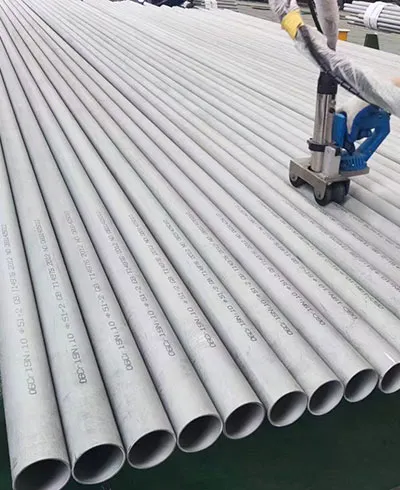
Pipe heat-number photo |
Shows identification on the physical pipe. |
|
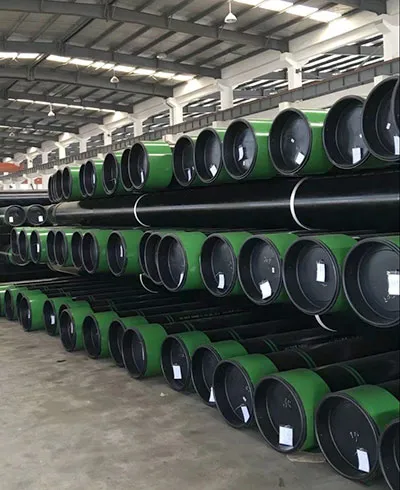
Bundle-tag photo |
Connects grouped pipes to bundle and heat information. |
|
Packing-list preview |
Shows organization of bundles, quantities, weights and heat numbers. |
|
Traceability matrix |
Maps each heat or lot to bundles, MTCs, inspection records and packing-list lines. |
|
Traceability check record |
Confirms that physical marks and shipment documents were reviewed together. |
EPC, oil and gas, energy, infrastructure and government projects often require material records before installation or final acceptance. This is particularly important for API 5L seamless line pipe, seamless steel pipes, welded steel pipe, stainless steel pipes and OCTG products supplied under project-specific inspection and documentation requirements.
A clear traceability package supports incoming inspection, quality-dossier preparation, third-party review and later maintenance records. It also improves problem isolation: if a question is raised about a specific bundle or heat, the buyer can identify the related certificate and shipment record without treating the entire order as unknown material.
Tell Forever Steels which inspection document, marking format, heat-number record, bundle identification and packing-list detail your project requires. We can incorporate the agreed traceability checks into the order review and pre-shipment documentation plan.
Before shipment, buyers can request masked document previews and cargo-identification photos to confirm that the physical pipes and the traceability records are aligned.
|
Next step:Send your steel pipe specification or RFQ to Forever Steels for requirement review and a proposed quality-control documentation plan. |
· Steel Pipe Inspection Checklist Before Shipment
· API 5L Line Pipe Selection Guide for Oil and Gas Projects
· ASTM A500 Structural Tubing Guide
· ASTM A252 Pipe Pile Selection Guide
Confirm the ordered edition and applicable test or acceptance requirements against the project specification.