+8615674993216
 sales@forever-steels.com
 English
 العربية

Seamless versus welded pipe should be decided from the governing code, service conditions, size and wall range, inspection and qualified supply route. Seam type alone does not establish pressure suitability, quality or total delivered cost.
The important correction is this: seamless does not automatically mean stronger, and welded does not automatically mean lower quality. Strength comes primarily from the specified steel grade and heat treatment. Fitness for service comes from the complete manufacturing and quality plan, including forming, welding, heat treatment, hydrostatic testing and nondestructive examination.
For cross-industry route selection, compare seamless, ERW/HFW, LSAW and SSAW against the governing code, service conditions, size range and inspection scope. When API 5L governs an oil, gas or water line-pipe project, the purchase specification must additionally state grade, PSL, delivery condition, coating, inspection and document requirements.
On this page: Seamless, ERW/HFW, LSAW and SSAW: Quick Comparison | 2. Strength: Why the Usual Comparison Is Incomplete | 6. Cost and Lead Time: Use Total Installed Cost | 10. Information to Send With an RFQ | Frequently Asked Questions
| Route | Starting material / seam | Practical selection focus | Evidence to check |
|---|---|---|---|
| SMLS (seamless) | Billet or hollow shell; no manufacturing weld seam | Specified seamless service; available OD/wall and grade combination | Material certificate, delivery condition, wall distribution and required body tests |
| ERW/HFW | Coil; longitudinal resistance weld; HFW denotes high-frequency welding | Repeatable coil-based sizes where the standard and project permit this route | Seam treatment where required, weld examination, dimensions and required pressure tests |
| LSAW | Plate; longitudinal submerged-arc weld | Large diameter or heavy wall within qualified mill capability | Plate identity, welding qualification, seam NDT and pipe-end dimensions |
| SSAW/HSAW | Coil; helical submerged-arc weld | Large-diameter water, structural or line-pipe applications where permitted | Coil identity, seam/repair examination, roundness and coating interfaces |
This is a route-selection summary, not a universal size limit or pressure rating. Confirm the purchased standard, grade, dimensions, mill capability and project restrictions before substituting one route for another.
|
Project condition |
Usually preferred |
Engineering reason |
|---|---|---|
| Small/medium diameter, heavy wall or pressure service | Specification-dependent; evaluate seamless and permitted welded routes | First check code and purchaser restrictions; pressure alone does not mandate seamless pipe. |
|
Large-diameter transmission pipeline |
LSAW or SSAW |
Plate/coil forming enables diameters that are impractical or uneconomic as seamless pipe. |
|
High-volume, controlled outside diameter and wall |
ERW/HFW |
Continuous production and sizing provide good dimensional consistency. |
|
Low-temperature service |
Specification-dependent |
Material grade, impact toughness and heat treatment matter more than the seam alone. |
|
Structural piling or water transmission |
Welded pipe |
Diameter, length, coating and project cost often dominate the decision. |
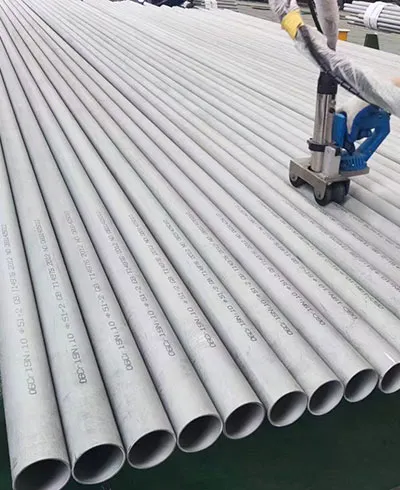
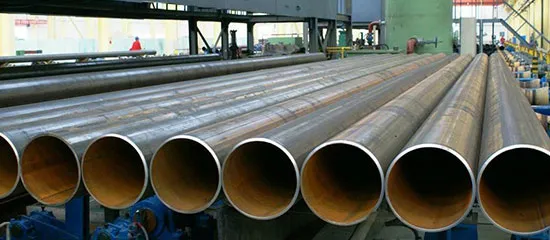
Seamless steel pipe is produced from a solid billet. The billet is heated, pierced to create a hollow shell, then rolled or drawn to the required outside diameter and wall thickness. Depending on the grade and specification, normalizing, quenching and tempering, or other heat treatment may follow.
The process removes the need for a longitudinal weld, but it does not eliminate manufacturing variables. Wall eccentricity, surface laps, dimensional variation, decarburization and heat-treatment control still require verification. Buyers evaluating seamless steel pipe should therefore specify tolerances and inspection requirements rather than relying on the word ‘seamless’ as a quality guarantee.
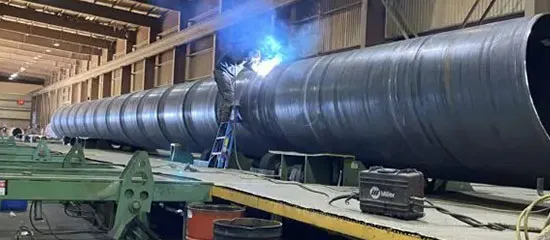
Welded pipe begins with steel coil or plate that is formed into a cylindrical shape. The edges are joined longitudinally or helically, and the weld is processed and inspected according to the governing standard. Modern welded-pipe production is not one method; ERW/HFW, LSAW and SSAW have different size ranges, forming behavior and typical applications.
|
Route |
Feedstock and weld |
Typical strengths |
Common project fit |
|---|---|---|---|
|
ERW / HFW |
Coil; longitudinal high-frequency weld |
High throughput, close dimensional control, efficient material use |
Line pipe, water, mechanical and structural applications |
|
LSAW |
Plate; one or more longitudinal submerged-arc welds |
Heavy wall, large diameter, strong control of plate properties |
High-pressure transmission and demanding large-diameter projects |
|
SSAW / HSAW |
Coil; helical submerged-arc weld |
Wide diameter flexibility from coil, long production runs |
Water transmission, piling and selected pipeline projects |
Forever Steel supplies ERW steel pipe, LSAW steel pipe and SSAW steel pipe for different diameter, pressure and project requirements. The manufacturing route should be selected only after the design basis and inspection scope are clear.
A common claim is that seamless pipe is always stronger because it has no weld seam. That statement ignores how pipe is actually specified. Minimum yield strength and tensile strength are properties of the grade, not simply the manufacturing route. An API 5L grade, for example, must meet specified mechanical properties whether the permitted product is seamless or welded.
The weld remains an important quality zone, but its significance depends on the welding process, heat treatment, weld geometry, defect acceptance criteria and nondestructive testing. Conversely, seamless pipe may have wall-thickness eccentricity or surface imperfections that affect local performance. A technically sound comparison therefore asks whether the finished pipe meets the same design and acceptance requirements.
Engineering rule Compare certified grade, actual wall thickness, design factor, toughness, heat treatment and inspection results before comparing manufacturing route.
A manufacturing route and a material grade answer different questions. Compare the complete product requirements before accepting an alternative:
Low-temperature scope: ASTM A333/A333M covers seamless and welded pipe for low-temperature and notch-toughness applications. The selected grade, permitted process, heat treatment and required impact-test conditions still have to match the order.
Always start with the project specification and governing code. A manufacturing route may be permitted under one standard but restricted by the purchaser, service environment or local regulation. The table below is a planning guide, not a substitute for the current edition of the applicable standard.
|
Service / reference |
Common product routes |
What the buyer should confirm |
|---|---|---|
|
API 5L line pipe |
Seamless, ERW/HFW, LSAW or SSAW as permitted by product specification level and size |
PSL, grade, delivery condition, CVN/DWTT requirements, NDE, hydrotest and dimensional tolerances |
|
ASTM A106 pressure pipe |
Seamless |
Grade, schedule/wall, heat treatment, supplementary testing and impact requirements if applicable |
|
ASTM A53 general/service pipe |
Seamless or welded depending on type |
Type, grade, galvanizing, hydro/NDE option, end finish and intended service |
|
ASTM A333 low-temperature pipe |
Seamless or welded depending on grade |
Impact-test temperature, heat treatment, grade, wall and welding restrictions |
|
Structural hollow sections |
Usually welded |
Section standard, dimensional tolerances, weld location, straightness and coating system |
|
Water transmission |
ERW, LSAW or SSAW |
Design pressure, surge, lining/coating, joint system, ovality and field-welding requirements |
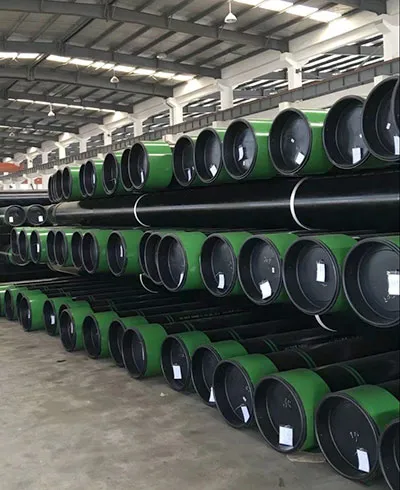
For pipeline projects, review the available API 5L line pipe routes against diameter, wall thickness, grade and product specification level. For cold service, evaluate low-temperature seamless steel pipe together with the required impact-test temperature and project-specific supplementary requirements.
Pressure capacity is governed by the design code equation and its inputs: outside diameter, specified or measured wall thickness, allowable stress, design factor, temperature derating, corrosion allowance and manufacturing factor where applicable. A seamless pipe with insufficient wall thickness is not safer than a correctly specified welded pipe.
Seamless pipe is commonly competitive in smaller and medium diameters, including heavy-wall combinations used for pressure and mechanical service. Welded routes become increasingly important as diameter grows. LSAW is often selected for large-diameter, heavy-wall line pipe, while SSAW can provide broad diameter flexibility for water and structural projects. ERW/HFW is efficient for repeatable sizes produced from coil.
Downstream fabrication also matters. Purchasers should evaluate end squareness, bevel geometry, out-of-roundness, wall mismatch, straightness and internal weld-bead requirements. These characteristics influence field fit-up, automated welding, coating continuity and installation productivity.
For a large-diameter inquiry, obtain a review of the exact LSAW OD, wall and grade combination before treating a published size range as an available order combination.
Avoid using a universal percentage premium for seamless pipe. Price differences change with grade, diameter, wall thickness, quantity, mill loading, billet or coil/plate costs, heat treatment, testing, coating and freight. In some common dimensions the gap may be modest; in large diameters, a seamless option may be unavailable rather than merely expensive.
|
Cost driver |
Seamless impact |
Welded impact |
|---|---|---|
|
Raw material |
Billet route and conversion yield |
Coil/plate grade, width and plate quality |
|
Size and wall |
Availability can tighten at large OD/heavy wall combinations |
Forming route and mill capacity determine economical range |
|
Inspection |
UT, hydrotest, surface inspection and supplementary tests |
Weld NDE, plate/coil inspection, hydrotest and supplementary tests |
|
Fabrication |
Eccentricity and end preparation can affect fit-up |
Ovality, weld bead and seam location can affect fabrication |
|
Logistics |
Weight per piece and production lot size |
Long lengths and large diameters may improve installation but increase transport constraints |
|
Risk cost |
Specification mismatch or unavailable size can delay procurement |
Inadequate weld/NDE requirements can increase technical risk |
Visual identification can suggest a manufacturing route, but it is not reliable enough for acceptance. Weld seams may be scarfed or processed until they are difficult to see, and surface appearance does not prove material grade or compliance. Verification should be document-led and supported by physical inspection.
Procurement warning A certificate that lists the correct standard is not enough if heat numbers, pipe markings and packing records cannot be reconciled. Traceability must remain intact through cutting, coating, bundling and shipment.
For ERW-specific acceptance, distinguish weld-seam heat-treatment requirements from internal bead and bore-clearance checks. Confirm both against the ordered standard and intended service.
Use the weld-seam inspection comparison across ERW, LSAW and SSAW to define the NDT method, coverage and acceptance basis for the chosen route.
|
Decision question |
If yes |
If no / uncertain |
|---|---|---|
|
Does the code or purchaser specification mandate a route? |
Follow the requirement; document any proposed deviation. |
Compare all routes permitted by the standard. |
|
Is the size/wall available from qualified mills? |
Shortlist mills and verify production history. |
Reconsider route, wall, design or delivery schedule. |
|
Is fracture control or low-temperature toughness critical? |
Define CVN/DWTT, heat treatment and test temperature. |
Apply standard requirements and project risk review. |
|
Is large diameter or long length a priority? |
Evaluate LSAW/SSAW and transport constraints. |
Compare seamless and ERW/HFW economics. |
|
Will field fit-up or automated welding be sensitive? |
Tighten ovality, end and wall-mismatch tolerances. |
Use standard tolerances if they remain suitable. |
|
Is delivery time the main commercial constraint? |
Confirm feedstock availability and mill slot before award. |
Optimize on technical compliance and total cost. |
Where both large-diameter welded routes are permitted, compare LSAW and SSAW against the project requirements before fixing the manufacturing route in the purchase specification.
A more expensive manufacturing route does not compensate for the wrong grade, insufficient wall, unsuitable heat treatment or missing toughness requirements.
The purchase specification should identify the permitted route, weld NDE, heat treatment, acceptance criteria and required production records.
One quote may exclude impact testing, third-party inspection, coating, beveling, special tolerances or certification. Normalize the scope before comparing unit prices.
A technically acceptable route may still create schedule risk if the required diameter, wall, grade or heat treatment is outside normal mill capability.
A complete inquiry allows the supplier to select an appropriate route and prevents hidden scope differences between quotations. Include:
After the engineering decision is made, carry the selected route into the RFQ, purchase order and inspection plan. Avoid wording such as “seamless preferred” when one route is mandatory, and do not permit substitution without a controlled technical review.
| Decision area | What to record | Release check |
|---|---|---|
| Code and service | Permitted route and any owner restriction | Product standard and project clause |
| Dimensions | OD/NPS, wall/Schedule, length and tolerance | Dimensional report |
| Manufacture | SMLS, ERW/HFW, LSAW or SSAW as applicable | MTC and marking |
| Integrity | NDT, hydrotest and repair rules | Traceable test reports |
Forever Steel can compare available seamless steel pipe and welded steel pipe routes against the same line item. The comparison is most useful when performance, inspection, delivery and cost are normalized rather than reduced to the presence of a weld.
No. Grade, wall thickness, heat treatment and compliance determine the specified strength. Seamless pipe removes a longitudinal weld, which may be beneficial in certain services, but that alone does not establish overall fitness for service.
Yes, when ERW/HFW is permitted by the governing API 5L requirements and purchaser specification, and when the mill, heat treatment, weld inspection and qualification meet the project requirements.
LSAW and SSAW are commonly used because plate or coil can be formed into large diameters efficiently. Selection between them depends on pressure, wall thickness, diameter, project specification, mill capability and inspection requirements.
Check the purchase documents, mill certificate and pipe marking first. A visible seam or internal bead can support identification, but surface appearance alone is not an acceptance method.
There is no universal answer. Standard ERW sizes may be produced efficiently in long runs, while stock seamless sizes may ship quickly. Custom grade, heat treatment, testing, coating and the current mill schedule usually determine actual lead time.
The best pipe is not the one with the most favorable label; it is the one whose manufacturing route, grade, dimensions, heat treatment, inspection and documentation match the project design basis. Seamless pipe remains important for many pressure, mechanical and critical-service applications. ERW, LSAW and SSAW provide technically sound and often more practical solutions across line pipe, water, structural and large-diameter projects.
Forever Steel can review specifications before production and match the inquiry to suitable seamless and welded steel pipe products. For an accurate recommendation, provide the governing standard, grade, dimensions, service conditions, inspection scope and destination rather than requesting a manufacturing route alone.
Continue with these closely related Forever Steel technical resources:
Confirm the ordered edition and applicable test or acceptance requirements against the project specification.