+8615674993216
 sales@forever-steels.com
 English
 العربية

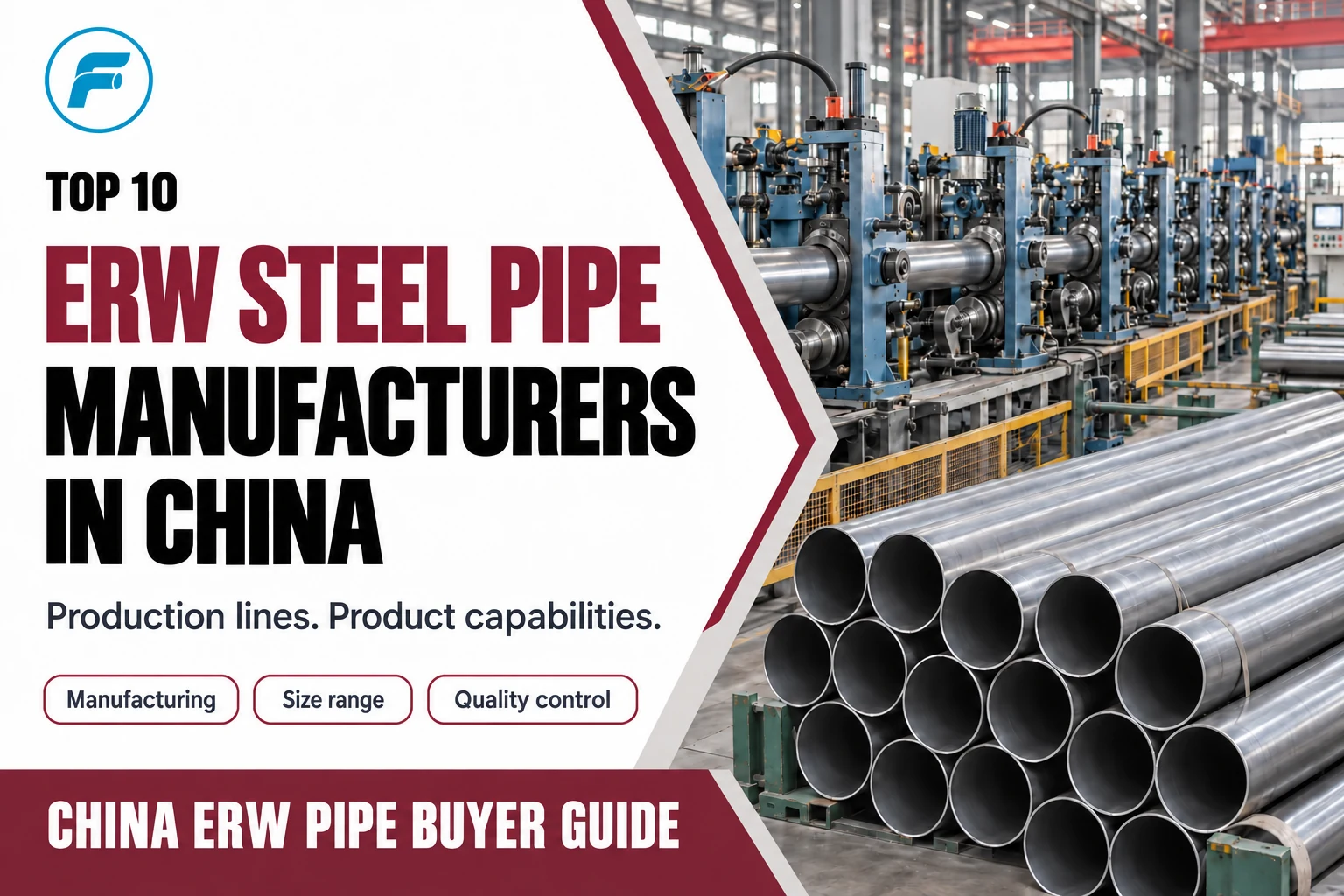
What must an API 5L line pipe RFQ define? Specify the permitted manufacturing route, grade, PSL, OD, wall, ends, coating, inspection scope and document package together. Comparing price before these fields are aligned can compare different products under the same short description.
This guide is written for buyers who need to prepare a clear API 5L line pipe RFQ for oil, gas, water transmission and industrial pipeline projects. It explains the decisions that change cost, delivery time and approval risk, then gives a practical checklist you can send to a pipe supplier before quotation.
If the project requires seamless line pipe supply, buyers should confirm the size range, grade, PSL, delivery condition and inspection scope before quotation. Where welded line pipe is permitted, the same RFQ logic should be used when comparing ERW/HFW, LSAW or SSAW alternatives.
Scope of this guide: this page is for API 5L line-pipe procurement in oil, gas, water-transmission and related pipeline projects. For a broader cross-industry choice among seamless, ERW/HFW, LSAW and SSAW manufacturing routes, use the seamless versus welded steel pipe decision guide.
Use this summary before sending an inquiry. It does not replace the project specification, but it helps buyers identify which details must be confirmed before a reliable quotation can be issued.
|
Buyer situation |
Usually check first |
Why it matters |
|
Small to medium diameter, general oil, gas or water transmission |
ERW/HFW or seamless line pipe, Grade B to X52, PSL1 or PSL2 depending on project requirements |
The main decision is often cost, availability and whether the project requires extra testing or traceability. |
|
High-pressure service, critical approval, or seamless-only project specification |
API 5L seamless line pipe, grade and PSL level confirmed by design document |
Seamless pipe avoids a longitudinal weld seam, but it may have different size limits, cost and lead time. |
|
Large-diameter long-distance pipeline |
LSAW or SSAW line pipe, coating system, weld inspection and dimensional tolerance |
Large diameter projects are often controlled by plate/coil availability, weld quality, coating and transportation constraints. |
|
Severe service, low temperature, offshore, sour or owner-specified conditions |
PSL2, impact testing, supplementary requirements, NACE/ISO sour service requirements if specified |
These requirements change chemical limits, testing, documentation and mill acceptance. Do not assume standard PSL1 pipe is acceptable. |
|
Buried pipeline or corrosion-sensitive environment |
3LPE, FBE, internal coating, field joint coating and coating inspection records |
The coating system can be as important as the pipe body. Missing coating details often delay approval. |
|
Third-party inspection or strict receiving control |
MTC, heat traceability, NDT, hydrotest, dimensional report, marking and packing photos |
A complete document chain reduces disputes after shipment and helps the buyer match pipe bundles to certificates. |
The most common mistake is to begin with a product name, such as "API 5L pipe", while the real engineering question is service-based. The buyer should first confirm what the line will carry, the design pressure and temperature, whether the line is buried or above ground, the expected corrosion environment, and whether the project owner has already specified PSL2, sour service, impact testing or third-party inspection.
For routine water or low to medium pressure transmission, a standard API 5L grade with normal inspection may be enough. For gas transmission, long-distance pipeline work, offshore service or owner-controlled oil and gas projects, the specification may require stricter chemistry, toughness testing, weld inspection, coating records and full traceability. These requirements should be written into the inquiry before price comparison begins.
· Fluid or medium: oil, gas, water, slurry, refined product or industrial fluid.
· Design conditions: pressure, temperature, location class, corrosion allowance and design code if available.
· Environment: buried, offshore, low temperature, sour service or external corrosion risk.
· Approval scope: owner specification, EPC standard, third-party inspection, ITP and document submission requirements.
If the service includes H2S, review the environmental and qualification requirements for sour-service pipe before accepting a grade or manufacturing route.
API 5L covers both seamless and welded line pipe. The right choice depends on diameter, wall thickness, pressure class, project specification, delivery schedule and cost. Buyers should avoid treating the four manufacturing routes as interchangeable without engineering approval. For ERW/HFW projects, the same selection logic should be checked against the feasible OD and wall-thickness range, weld-seam controls and project approval requirements.
|
Pipe type |
Where it often fits |
What buyers should verify |
|
High-pressure lines, critical service, smaller and medium sizes where seamless construction is required |
OD and wall range, grade availability, heat treatment condition, hydrotest, UT and MTC traceability. |
|
|
Cost-effective oil, gas and water transmission in common diameters and moderate wall thickness |
Weld seam heat treatment, weld NDT, flattening or other applicable tests, dimensional control and coating compatibility. |
|
|
Large-diameter, heavier-wall or long-distance pipeline projects requiring a longitudinal SAW seam |
Plate source, forming method, internal/external weld inspection, expansion, hydrotest and bevel protection. |
|
|
Large-diameter water transmission, piling and certain pipeline projects where flexible sizing is useful |
Spiral weld inspection, ovality, length tolerance, coating, end squareness and project acceptance rules. |
A practical rule is to select the manufacturing route from the project conditions, not from a supplier catalog. If the project specification says API 5L seamless pipe, do not quote welded pipe as an alternative unless the engineer approves the substitution. If the project permits welded line pipe, then ERW, LSAW and SSAW should be compared by diameter, wall thickness, weld inspection requirement, coating plan and delivery time.
API 5L grades such as Grade B, X42, X52, X60, X65 and X70 reflect different strength levels. A higher grade is not automatically a better purchase. Higher strength can reduce wall thickness in some designs, but it may also bring stricter production control, tougher approval requirements, less flexible stock availability and higher inspection expectations.
|
Grade family |
Typical buying logic |
Common risk if specified poorly |
|
Grade B / X42 |
General line pipe service where moderate strength is sufficient and availability matters |
The buyer may forget to define PSL level, pipe type or wall thickness, causing suppliers to quote different products. |
|
X52 / X60 |
Common oil and gas transmission grades where strength, cost and availability need balance |
Project may require PSL2, impact testing or coating records that are not included in a basic quotation. |
|
X65 / X70 and above |
Higher-strength pipeline work where design and owner approval control the choice |
Availability, weldability, toughness and supplementary requirements must be checked before confirming delivery. |
When the design team has already issued a grade, the supplier should quote exactly against that requirement. When the buyer is still collecting budget prices, the RFQ should state the intended service and ask the supplier to separate price and lead time by grade, PSL level and manufacturing type. This makes the comparison useful instead of mixing different assumptions in one price.
Product Specification Level is one of the most important API 5L decisions. PSL1 is commonly used for standard line pipe requirements. PSL2 includes tighter technical controls and additional testing requirements for more demanding applications. The exact requirements depend on grade, size, manufacturing type and project specification, so buyers should verify against the current API 5L standard and the owner or EPC document before ordering.
|
Decision point |
PSL1 approach |
PSL2 approach |
|
Technical control |
Basic API 5L line pipe requirements for standard service |
More stringent chemical, mechanical and testing controls depending on grade and size. |
|
Testing and toughness |
May be sufficient for non-critical service when project permits |
Often required for demanding pipeline projects and may include impact testing requirements. |
|
Documentation |
MTC and standard inspection records should still be requested |
Document package is usually more detailed and should be aligned with ITP and third-party inspection. |
|
Procurement impact |
Generally easier availability and lower cost |
Higher approval confidence, but cost and lead time may increase. |
The buyer should not write "API 5L X52" alone and expect suppliers to understand the same scope. API 5L X52 PSL1 and API 5L X52 PSL2 are not the same buying package. If the project requires PSL2, write PSL2 clearly in the RFQ, purchase order, inspection plan and marking requirement.
When updating an earlier purchase template, review the API 5L edition changes relevant to the order and state the governing edition, addenda and errata explicitly.
Many quotation problems start with dimensions. Pipe buyers often use NPS, OD, schedule and wall thickness in the same conversation, but suppliers need a precise final description. For API 5L line pipe, the inquiry should clearly state outside diameter, wall thickness, length, quantity and applicable tolerances. If the buyer only gives a nominal size and schedule, the supplier may still need the exact OD and wall thickness for production confirmation, weight calculation and packing planning.
· Use OD and wall thickness as the final technical basis for quotation.
· State whether length is SRL, DRL, fixed length or project-specific cut length.
· Confirm pipe ends: plain end, beveled end, caps and bevel protection.
· For coated pipe, define cutback length and end protection before coating production begins.
A complete dimension line is clearer than a short description. For example: API 5L X52 PSL2 seamless line pipe, OD 323.9 mm, WT 12.7 mm, beveled ends, 12 m length, bare or coated as specified, with MTC, hydrotest record and UT report. This gives the supplier enough information to check capability, weight, packing, price and delivery.
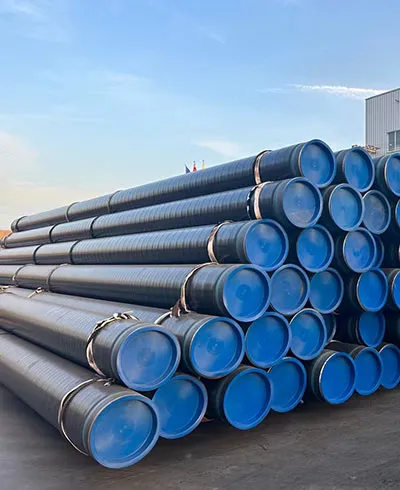
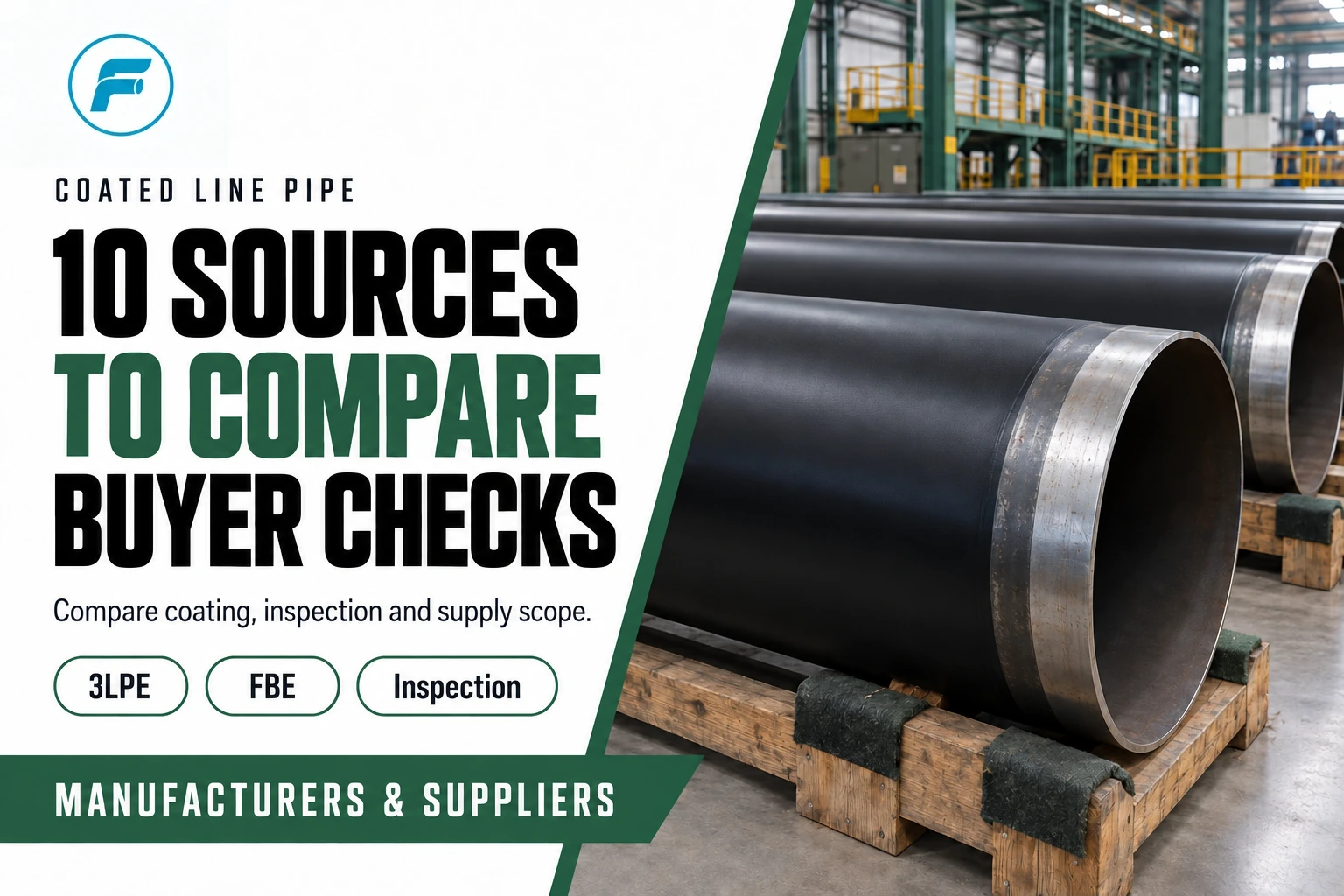
For buried or corrosion-sensitive pipelines, coating should not be treated as an afterthought. A line pipe quotation can change significantly when the buyer adds 3LPE, FBE, internal coating, external blasting, holiday detection, coating thickness records, cutback control or field joint coating requirements. If coating is part of the order, the inquiry should define the coating standard, thickness, surface preparation, pipe end cutback, inspection records and repair acceptance criteria.
|
Coating or surface option |
Typical use |
RFQ detail to include |
|
Bare or lightly oiled pipe |
Indoor storage, short-term handling or buyer-applied coating |
Rust prevention method, storage period, packing and marking. |
|
Black varnish or painted surface |
General export protection and temporary surface protection |
Paint type, thickness expectation and whether it is protective or cosmetic. |
|
FBE coating |
Buried pipeline and corrosion protection systems |
Coating standard, DFT, holiday test, cutback, repair method and inspection report. |
|
3LPE / 3LPP coating |
Buried oil, gas and water pipelines requiring stronger external protection |
Coating layers, thickness, adhesive layer, PE/PP layer, cutback, holiday test and handling protection. |
|
Internal coating or lining |
Water, flow assurance or project-specific corrosion control |
Lining material, application standard, thickness, curing, inspection and compatibility with service. |
The document package is part of the product. A low price is not useful if the supplier cannot provide the records needed for project approval, customs clearance or receiving inspection. Buyers should define the required certificates and reports before quotation, especially when third-party inspection is involved.
|
Document or record |
Why it matters |
When to request it |
|
Material Test Certificate (MTC) |
Connects heat number, grade, chemical composition and mechanical properties to the supplied pipe |
Every API 5L order. |
|
Heat number and marking photos |
Helps receiving team match bundles with certificates and packing list |
Every export order, especially mixed sizes or grades. |
|
Hydrostatic test record |
Confirms pressure test completion when required by standard or project specification |
Line pipe orders where hydrotest is required or buyer requests evidence. |
|
NDT report |
Supports weld seam or pipe body inspection, depending on manufacturing type |
Welded line pipe, PSL2 or project-controlled inspection. |
|
Dimensional inspection report |
Verifies OD, wall thickness, length, straightness, bevel and visual condition |
Before shipment and third-party inspection. |
|
Coating inspection report |
Confirms DFT, holiday test, cutback, appearance and repair records |
All coated line pipe orders. |
|
Third-party inspection report |
Provides independent confirmation for owner/EPC-controlled projects |
When specified in PO or inspection test plan. |
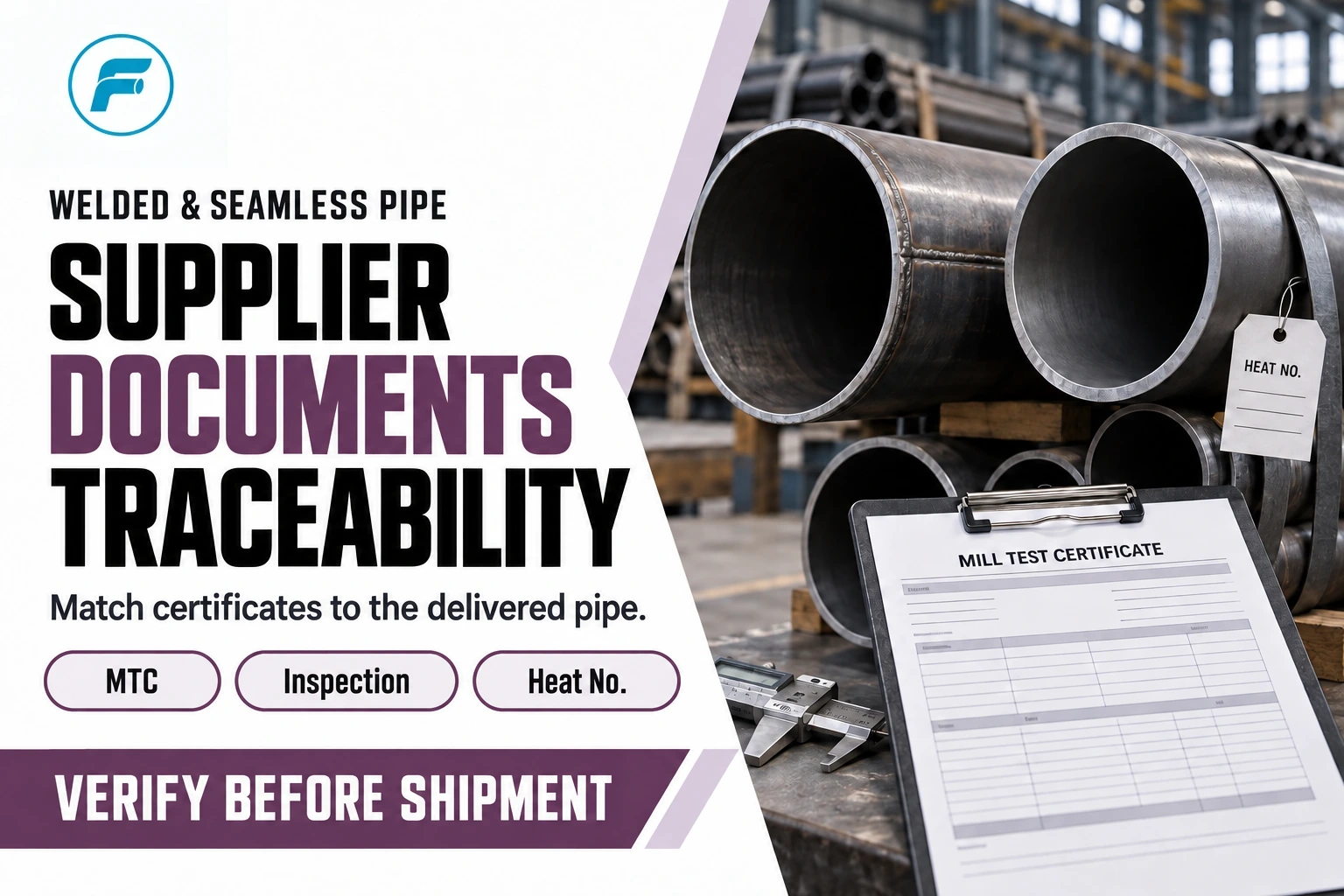
A strong traceability chain should connect pipe marking, heat number, MTC, inspection reports, packing list and shipment documents. If the buyer cannot follow that chain, receiving inspection becomes slower and disputes are harder to resolve.
Before asking for a final price, send the supplier a complete inquiry. The following checklist can be copied into an email or RFQ form.
1. Project application: oil, gas, water, slurry or industrial fluid transmission.
2. Standard and edition if specified by project document: API 5L, PSL1 or PSL2, plus any supplementary requirements.
3. Manufacturing type: seamless, ERW/HFW, LSAW or SSAW. State whether alternatives are allowed.
4. Grade: Grade B, X42, X52, X60, X65, X70 or project-specified grade.
5. Dimensions: OD, wall thickness, length, quantity and tolerance requirement.
6. Pipe ends: plain, beveled, caps, cutback requirement if coating is included.
7. Surface or coating: bare, oiled, black painted, FBE, 3LPE, 3LPP, internal coating or project coating standard.
8. Inspection: MTC, hydrotest, NDT, dimensional report, visual inspection, coating report and third-party inspection if needed.
9. Marking and packing: bundle marking, pipe stencil, heat number visibility, sea-worthy packing and photos before shipment.
10. Delivery requirement: destination port, Incoterms, lead time target and partial shipment requirement.
· Writing only "API 5L pipe" without pipe type, grade, PSL level or wall thickness.
· Asking several suppliers for prices while each supplier assumes a different manufacturing route.
· Specifying a high grade when the design requirement is actually controlled by wall thickness, pressure class or coating.
· Forgetting to include coating standard, cutback, holiday test and coating documents in the first RFQ.
· Treating PSL1 and PSL2 as small wording differences instead of different technical buying scopes.
· Requesting third-party inspection after production instead of defining the inspection test plan before manufacturing.
· Receiving pipe bundles without checking that marking, heat number, MTC and packing list match each other.
Forever Steel supplies API 5L seamless line pipe and related carbon steel line pipe products for oil, gas, water and fluid transmission projects. For buyers who are still confirming project specifications, our team can review the inquiry details and help separate the quotation by pipe type, grade, PSL level, coating and inspection scope. This makes technical comparison easier and reduces the risk of hidden assumptions in the final price.
For API 5L seamless line pipe inquiries, buyers can send the target grade, OD, wall thickness, length, coating requirement and document package to Forever Steel for review before issuing the purchase order.
· API 5L Grade B vs X42 vs X52: Which Line Pipe Grade Fits Your Project?
Compare common API 5L line pipe grades by strength level, project use, PSL requirement, inspection scope and buying risk.
· API 5L PSL1 vs PSL2 for Oil and Gas Pipeline Projects
Review how PSL level affects testing, documentation, approval confidence, cost and lead time.
· Weld Seam Inspection for ERW, LSAW and SSAW Pipes
Define how weld seam quality, NDT records, hydrotest, dimensional checks and traceability should be verified before shipment.
The selection logic in this guide should be checked against the applicable project specification, current line-pipe standard, coating standard and inspection test plan before purchase order release.
· API Specification 5L, Line Pipe — American Petroleum Institute. Primary standard reference for line pipe product requirements; buyers should verify the applicable edition against the project specification.
· ISO 3183 — Petroleum and natural gas industries — Steel pipe for pipeline transportation systems. International line-pipe standard frequently aligned with API 5L project requirements.
· ASME B36.10M — Welded and Seamless Wrought Steel Pipe. Reference for nominal pipe size, outside diameter, schedule and wall-thickness conventions used in many RFQs.
· NACE MR0175 / ISO 15156 — Materials for use in H2S-containing environments in oil and gas production. Reference framework when sour service or H2S exposure is specified.
· NACE TM0284 — Evaluation of pipeline and pressure-vessel steels for resistance to hydrogen-induced cracking when HIC testing is required.
· API 5L project inspection records — Order-specific MTC, hydrostatic test, NDT, coating inspection, marking and packing records should connect pipe marking, heat number, test results and shipment documents.