+8615674993216
 sales@forever-steels.com
 English
 العربية

A practical buyer-focused overview for line pipe procurement, supplier qualification and project documentation.
API Specification 5L is one of the most important standards for steel line pipe used in pipeline transportation systems. It covers seamless and welded steel pipe for oil, gas and related energy infrastructure, including requirements for material, manufacturing, inspection, testing, marking and traceability.
The 46th edition of API Spec 5L was issued in April 2018, with an API Monogram Program effective date of November 1, 2018. On June 2, 2026, the American Petroleum Institute announced the publication of the 47th edition of API Spec 5L. According to API's announcement, the new edition introduces important requirements across more than 15 topic areas, including high-frequency weld pipe quality and pipe used in CO2 transport.
For buyers, EPC contractors and pipe suppliers, the 47th edition should not be treated as a simple document refresh. It signals a stronger focus on manufacturing control, inspection discipline, record retention, sour-service performance and emerging pipeline applications such as carbon dioxide transmission.
|
Item |
API Spec 5L 46th Edition |
API Spec 5L 47th Edition |
|
Publication status |
Forty-sixth edition, April 2018 |
Published by API on June 2, 2026 |
|
Main framework |
PSL 1 and PSL 2 requirements for seamless and welded line pipe |
Maintains the line pipe framework while updating requirements across more than 15 topic areas |
|
Application focus |
Oil and natural gas pipeline transportation systems |
Oil, gas and broader energy infrastructure, with added attention to CO2 transmission pipeline requirements |
|
Manufacturing control |
Established requirements for process, delivery condition, traceability and PSL 2 manufacturing procedure qualification |
Stronger attention to process control, HFW pipe quality, chemical element ranges and quality consistency |
|
Inspection and testing |
Mechanical tests, hydrostatic testing, NDT, impact testing and application-specific annex requirements |
Updates related to hydrotest pressure gauge calibration, NDE personnel certification, magnetic particle testing, tensile test flattening and impact toughness |
|
Special services |
Sour service, offshore service, TFL pipe, ductile fracture propagation and longitudinal plastic strain capacity covered through annexes |
Updates include sour-service requirements and sulfide stress cracking test requirements |
|
Records and traceability |
Record retention and traceability already included as core topics |
API identifies records retention as an updated topic |
One of the clearest update areas named by API is high-frequency weld pipe quality. This matters because HFW pipe is widely used where cost efficiency, production speed and dimensional consistency are important. Buyers should review weld quality control, weld heat treatment, NDT coverage, weld seam inspection records and manufacturing route instead of judging an offer by grade and price alone.
API specifically mentions pipe used in CO2 transport and carbon dioxide transmission pipeline requirements. This is a major practical update as carbon capture, utilization and storage projects expand globally. CO2 service can create different design and material concerns compared with conventional gas pipelines, so service conditions, pressure, temperature, impurity content, fracture control, toughness and corrosion management should be reviewed before purchase.
Hydrostatic testing remains a key acceptance step for line pipe. The 47th edition update area includes hydrotest pressure gauge calibration, which points to tighter attention to the reliability of pressure measurement during testing. Buyers should ask suppliers to provide hydrotest records that show test pressure, holding time, gauge identification and calibration status.
API identifies non-destructive evaluation personnel certification and magnetic particle testing as update areas. This is important because NDT quality depends on both the inspection method and the competence of the person performing the inspection. A simple statement that NDT has passed is less useful than records showing method, coverage, acceptance criteria and personnel qualification.
The announcement also mentions tensile test flattening and impact toughness requirements. For demanding pipeline service, impact toughness and test orientation can be just as important as yield strength, tensile strength and elongation. The 47th edition reinforces the need to review mechanical test details instead of relying only on grade names such as X52, X60, X65 or X70.
The 46th edition already included requirements for PSL 2 pipe ordered for sour service. The 47th edition includes updates related to sour-service requirements and sulfide stress cracking test requirements. If the pipeline will operate in H2S-containing environments, the purchase order should clearly state sour-service requirements and request chemical composition control, hardness control, SSC testing, NDT records and traceability.
API also names chemical element ranges and lamination control as updated areas. These topics affect steelmaking quality, weldability, toughness and pipe body integrity. Lamination control is especially relevant for welded pipe made from plate or coil, and for projects where through-thickness integrity and NDT confidence are important.
The 46th edition already treated traceability and records as important parts of line pipe supply. The 47th edition continues this direction by identifying records retention as an updated topic. Buyers should confirm how long production, inspection, heat treatment, hydrotest, NDT and MTC records will be retained and whether they can be retrieved after shipment.
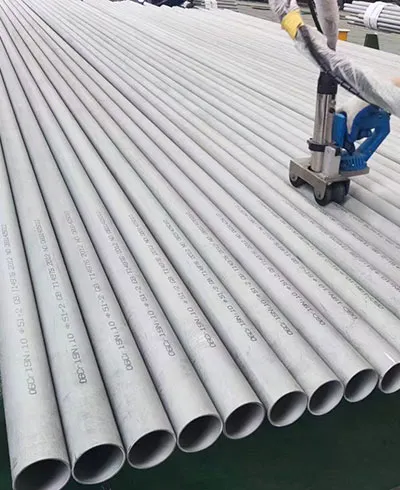
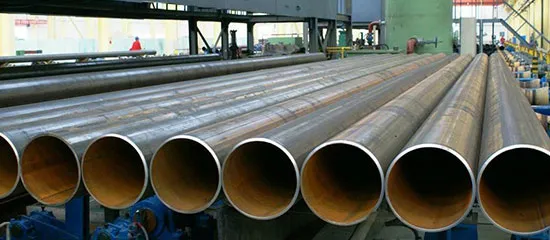
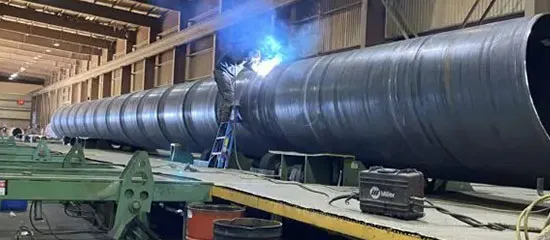
For project procurement, buyers should match the new edition requirements with the actual pipe route: API 5L Seamless Line Pipe for seamless line pipe orders, ERW Steel Pipe for HFW/ERW supply discussions, and LSAW Steel Pipe or SSAW Steel Pipe where welded large-diameter line pipe is being evaluated.
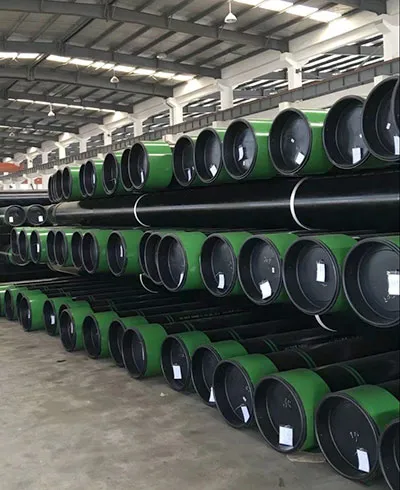
Where upstream oilfield tubulars are involved, line pipe requirements should be separated from OCTG Products because casing and tubing orders follow different product standards, connection requirements and end-use assumptions.
|
Project Need |
What to Check Under the 47th Edition Mindset |
|
Standard API 5L pipe purchase |
Confirm edition, PSL level, grade, pipe type, delivery condition, size, wall thickness and MTC format. |
|
HFW / ERW pipe |
Review weld seam control, weld heat treatment, NDT coverage and HFW quality documentation. |
|
CO2 pipeline project |
Do not rely on grade alone; review service conditions, toughness, fracture control and project-specific CO2 requirements. |
|
Sour service |
Specify sour service clearly and request chemical, hardness, SSC and NDT documentation. |
|
PSL 2 pipe |
Confirm mechanical testing, impact testing, traceability, inspection frequency and manufacturing procedure controls. |
|
Export procurement |
Align RFQ, purchase order, inspection plan and certificate requirements before production. |
A practical RFQ should not only say "API 5L pipe." It should define the exact standard edition and project requirements. The fields below help reduce misunderstanding before production starts.
|
RFQ Field |
Recommended Buyer Input |
|
Standard |
API Spec 5L, 47th Edition, unless otherwise agreed. |
|
Product specification level |
PSL 1 or PSL 2. |
|
Pipe type |
SMLS, HFW/ERW, SAW, LSAW or SSAW as required. |
|
Grade |
B, X42, X52, X60, X65, X70 or project-specific grade. |
|
Service condition |
Standard, sour service, offshore, CO2 transmission or other special application. |
|
Testing |
Hydrotest, NDT, tensile test, impact test and supplementary tests as applicable. |
|
Documents |
MTC, heat number traceability, inspection report, hydrotest record, NDT report and coating report if required. |
|
Edition control |
Supplier must confirm compliance with the specified API 5L edition before production. |
The 47th edition of API Spec 5L appears to be a meaningful update rather than a minor administrative revision. Compared with the 46th edition, its publicly announced changes place more attention on HFW pipe quality, CO2 pipeline applications, calibration control, NDE personnel qualification, sour-service performance, sulfide stress cracking tests, impact toughness, lamination control and records retention.
For buyers, the key lesson is simple: API 5L compliance should be specified with edition, PSL level, service condition and documentation requirements. For suppliers, the new edition creates a stronger need to demonstrate process control, inspection competence and traceable quality records.
This article is a practical overview only. For contractual use, buyers and suppliers should always consult the official API Spec 5L 47th edition and the project specification.
Continue with these closely related Forever Steel technical resources:
· API Announces the 47th Edition of API Specification 5L — American Petroleum Institute.
· API Specification 5L, Line Pipe — 47th Edition — American Petroleum Institute.
· ISO 3183:2019 — Steel Pipe for Pipeline Transportation Systems — International Organization for Standardization.
· Important Standards Announcements — American Petroleum Institute.