+8615674993216
 sales@forever-steels.com
 English
 العربية

HDD crossings fail coating in a different way from ordinary open-cut burial. The pipe is pulled, not placed. The coating can rub against borehole wall, rock, drilling slurry, rollers, clamps and field joint areas before the pipeline ever sees normal service. Standard FBE may be an excellent corrosion barrier, but the pullback environment can demand a tougher outer layer.
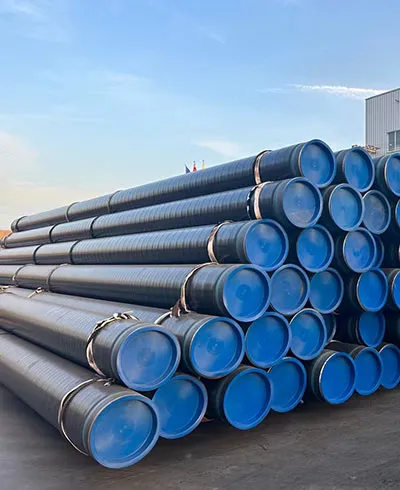
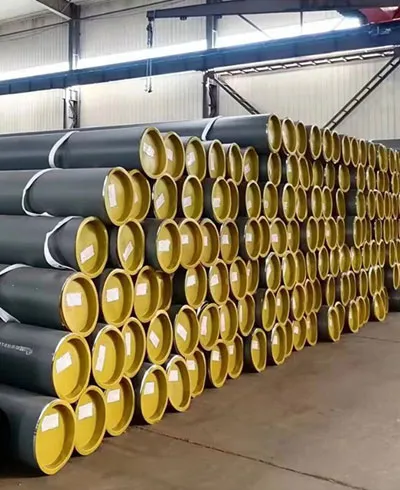
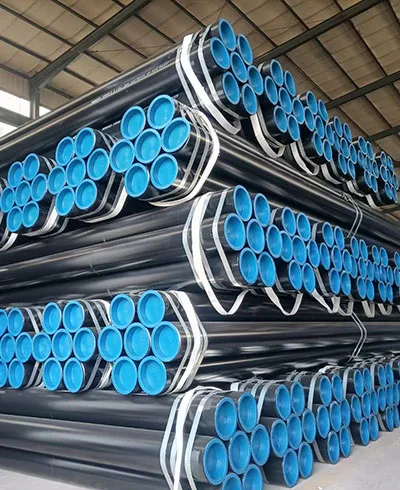
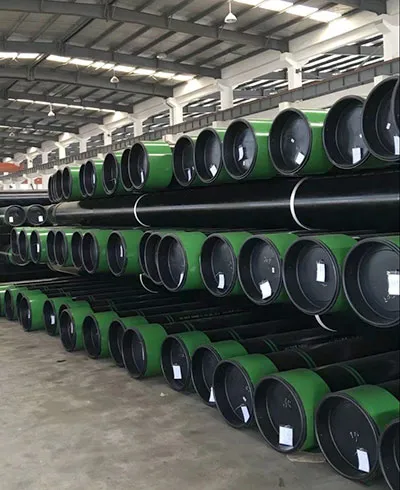
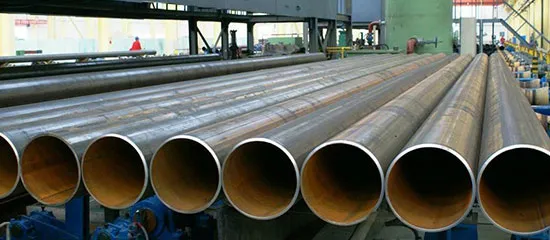
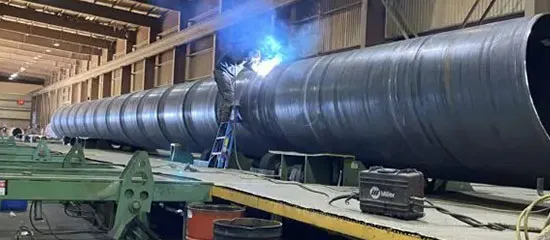
For crossing sections, the base corrosion layer may still be FBE coated steel pipe. The pipe body can be supplied as LSAW steel pipe or SSAW steel pipe depending on diameter, wall thickness, grade and project specification. The HDD question is whether that pipe also needs ARO for mechanical protection.
In open-cut installation, the contractor can often inspect the trench, improve bedding, lower the pipe carefully and repair visible coating damage before backfill. During HDD pullback, access is limited. Damage can occur inside the bore, and the most vulnerable areas are often the field joints, entry/exit points and sections exposed to high drag. This is why ARO is usually discussed as part of installation risk rather than as a coating preference alone.
|
Route condition |
Damage mechanism |
Coating approach to discuss |
Extra check before approval |
|
Short open-cut section with selected bedding |
Normal scratches, isolated handling marks. |
FBE alone may be acceptable when bedding and handling are controlled. |
Plant holiday test and packing protection. |
|
Rocky trench or poor bedding |
Point loading, abrasion and sharp stone contact after lowering-in. |
FBE with added mechanical protection, improved bedding or alternate coating system. |
Backfill control and coating repair plan. |
|
Short HDD in soft ground |
Pullback abrasion at entry/exit and bend points. |
FBE + ARO may be used if the owner wants extra margin. |
Bore profile, pullback force estimate and field joint coating method. |
|
Long HDD or mixed soil/rock |
Sustained rubbing, gouging and difficult access after pullback. |
FBE + ARO is often the safer discussion point. |
ARO qualification, joint coating protection and post-pullback inspection plan. |
|
High consequence crossing |
Repair access is limited and failure cost is high. |
Specify coating and inspection more conservatively. |
Owner approval of coating system, repair method and acceptance records. |
An abrasion resistant overcoat reduces gouge and abrasion risk, but it does not correct a poor weld joint coating, sharp handling equipment, wrong cutback, dragging on bare ground or a missing holiday test. ARO should be specified with the whole installation sequence in mind. The plant coating, field joint system, repair material and pullback controls need to work together.
On an HDD string, the pipe body coating may be factory-controlled, while the field joint is applied after welding in more difficult conditions. If the joint coating is thinner, softer or less abrasion-resistant than the pipe body, the crossing may fail at the most predictable location. A serious HDD coating plan names the joint coating system, surface preparation, cure or set time, holiday testing and protection before pullback.
|
Pullback control point |
What to record |
Why it matters |
|
Stringing area |
Support type, roller condition, ground contact and coating protection. |
Damage often happens before the pipe enters the bore. |
|
Field joint coating |
Material, applicator, surface preparation, thickness and cure/set time. |
Joint coating is usually less factory-controlled than the main pipe coating. |
|
Pre-pullback test |
Holiday test result and repair record. |
Confirms the coating system starts the pullback in acceptable condition. |
|
Pullback operation |
Pull force trend, stoppages, abnormal resistance and entry/exit handling. |
Unexpected resistance can signal higher coating damage risk. |
|
Post-pullback check |
Accessible coating inspection, repair record and owner sign-off. |
Creates evidence for acceptance when later access is limited. |
ARO is easier to justify when pullback length is long, soil contains rock, the crossing is under a road/river/railway, access for repair is limited, the pipe diameter is large, or the owner has strict coating-integrity requirements. It may be harder to justify for short, low-risk sections with controlled bedding and easy access for repair. The point is not to choose the most expensive coating by default; it is to match coating toughness to installation exposure.
No. It depends on bore length, soil/rock condition, owner specification, pipe size, repair access and consequence of coating damage.
No. Rough rollers, dragging, poor joint coating or missing holiday testing can still damage an ARO-coated pipe.
Bore profile, pullback length, soil/rock condition, pipe size, base coating, ARO requirement, field joint coating and inspection plan.
· How to Prevent Surface Damage to Coated Steel Pipes
· LSAW vs SSAW Steel Pipe for Large Diameter Pipeline Projects
· How to Prevent Corrosion in Underground Oil Pipelines
• ISO 21809-2:2026 — Single-Layer Fusion-Bonded Epoxy Coatings — International Organization for Standardization.
• Fusion-Bonded Epoxy Coating Protects Water Pipeline — AMPP field case by Dustin Traylor and William Spickelmire covering FBE with an abrasion-resistant overcoat.
• Practical In-Plant Evaluation of Two FBE Abrasion-Resistant Overcoat Systems — technical study by Emre Aksu, B. Mannesman, Alan Kehr and Matt Dabiri.
• Optimization of FBE-ARO Thicknesses for Trenchless Installations — technical research focused on trenchless installation damage and coating thickness.
• Trenchless and HDD Coating Protection — Denso North America technical manufacturer resource; use for system examples, not project acceptance criteria.
• Cold Field Bend ARO-Coated Pipeline — AMPP practitioner discussion; use as field context, not as an acceptance standard.