+8615674993216
 sales@forever-steels.com
 English
 العربية

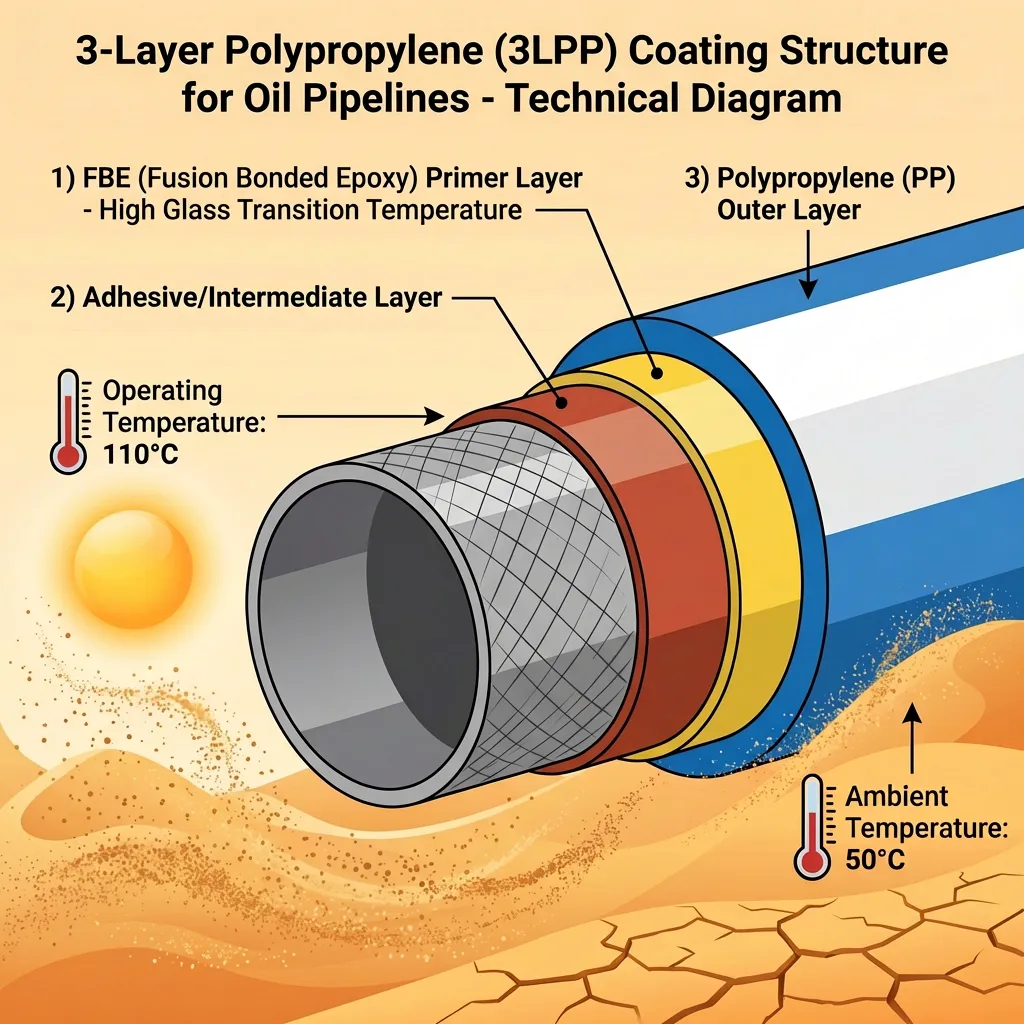
Prevent corrosion in underground oil pipelines with a coordinated plan for external coating, cathodic protection, internal corrosion control and inspection. Separate external soil exposure from the fluid inside the pipe; each has different design inputs and verification methods.
Match the operating pipe-wall temperature, soil conditions, installation method and project specification to the available coated steel pipe systems. A Middle Eastern location alone does not select 3LPP, an anode system or a chemical-treatment programme.
Use the design and operating pipe-wall temperatures, including transients, rather than ambient air temperature alone. Confirm the qualified coating system and its project-approved temperature range.
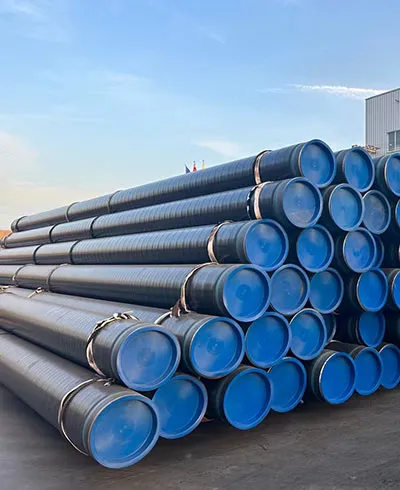
3-Layer Polypropylene (3LPP) and 3LPE: compare qualified service temperature, adhesion, mechanical damage resistance, field-joint compatibility and installation conditions. Neither is the default for every project or operator; use the governing project coating specification.
FBE coating and primer: check the manufacturer-qualified system, cure, adhesion, cathodic-disbondment performance and operating-temperature limits. Glass-transition temperature alone is not proof of suitability.
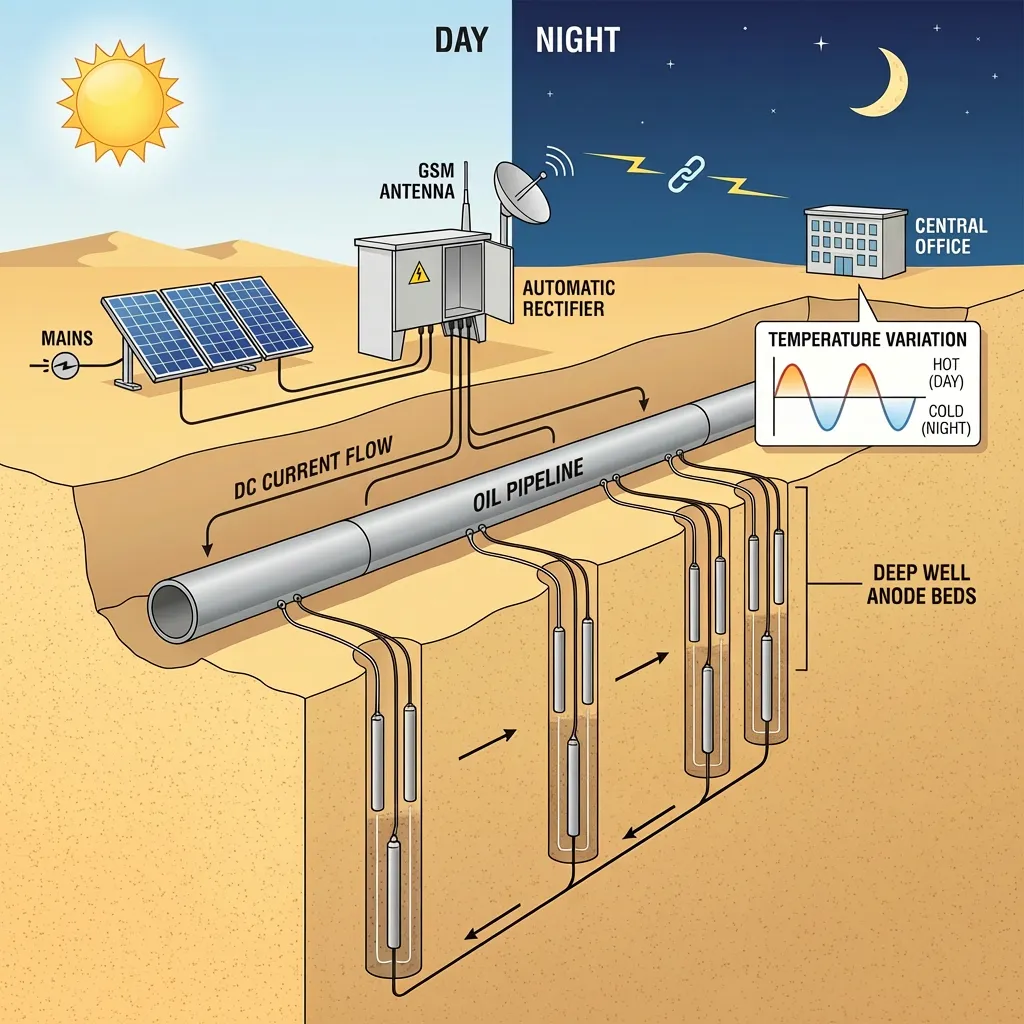
Cathodic protection complements the coating on buried steel. Its design depends on current demand, coating condition, soil resistivity, electrical isolation and interference. A fixed doubling of corrosion rate per 10°C is not a universal pipeline design rule.
Impressed Current Cathodic Protection (ICCP): assess ICCP or sacrificial-anode systems from the corrosion-control design. Pipeline length and soil resistivity are inputs, not by themselves a universal mandate for ICCP.
Deep Well Anode Beds: select the anode configuration from soil investigation, current distribution, access, interference and environmental constraints. A deep well is one option, not a requirement for all dry soils.
Automatic Rectifiers: specify controls, alarms and monitoring when justified by the system design. Commissioning and field verification remain necessary even when output is remotely controlled.
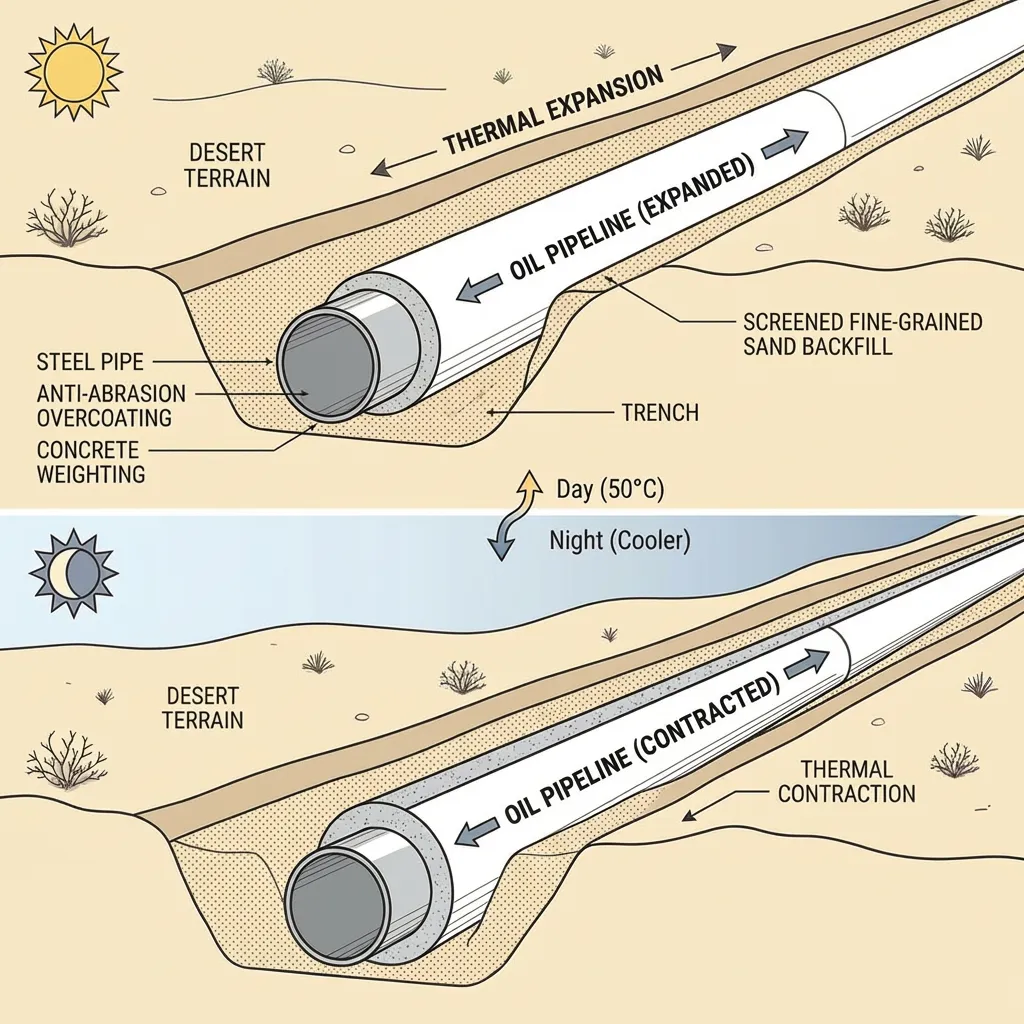
Check pipe movement and coating loads against buried-pipe design, operating-temperature changes, restraint and backfill conditions; do not assume the pipe experiences the full daily air-temperature swing.
Anti-Abrasion Overcoating: consider qualified mechanical protection where installation or movement can damage the coating. Concrete weight coating serves a different design function and is not an automatic substitute for an abrasion-resistant system.
Selection of Backfill: specify bedding and backfill grading, compaction and rock protection suitable for the coating and pipe design. Verify the coating condition before lowering-in and backfilling.
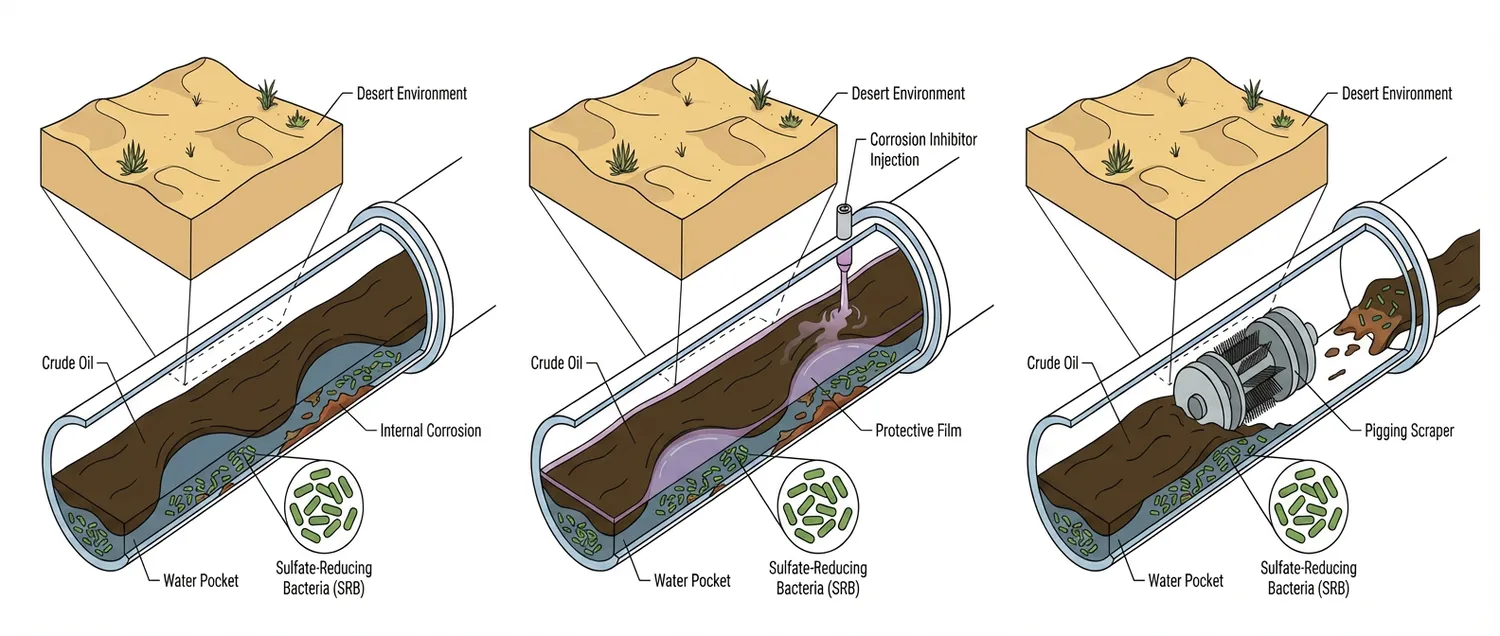
Evaluate free water, CO2/H2S where present, oxygen ingress, solids, temperature, flow and water accumulation. External desert conditions do not establish whether internal corrosion or MIC is active.
Microbiologically Influenced Corrosion (MIC): investigate microbial activity together with deposit, water and corrosion evidence. Detecting bacteria alone does not quantify the corrosion threat or prove a treatment is effective.
Inhibitor Injection and Pigging: select chemical treatment, water management and cleaning from the internal-corrosion assessment and operating constraints. Confirm chemical compatibility, piggability and monitoring results; frequency and dosage are not universal.
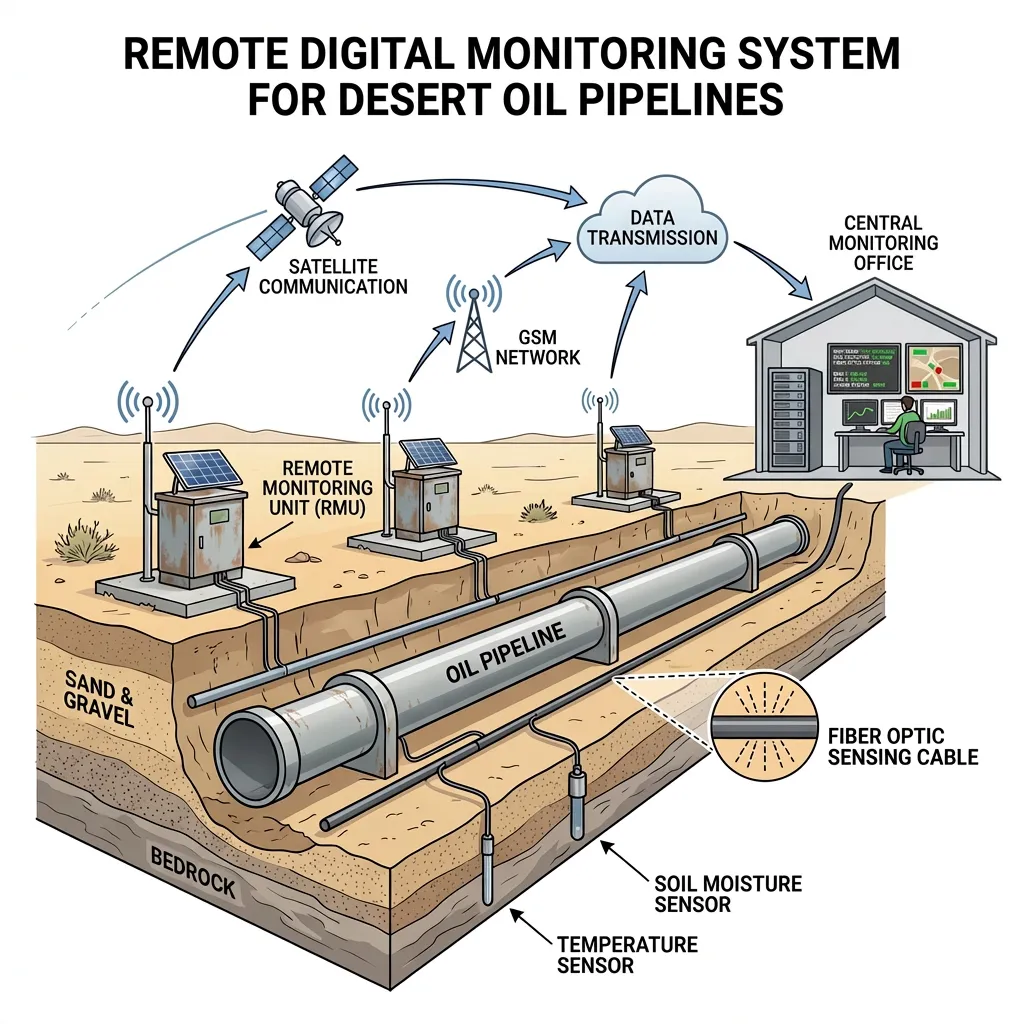
Choose remote monitoring to support the inspection and integrity plan where access, risk and operating conditions justify it.
Remote Monitoring Units (RMU): transmit CP measurements and alarms, with instrument checks and periodic field verification. Continuous telemetry does not guarantee that every coating defect receives adequate protection.
Fiber Optic Sensing: may support leak or strain detection where the selected system is validated for the intended threat. It does not replace corrosion assessment, coating inspection or required integrity testing.
| Design input | Decision to record | Evidence to retain |
|---|---|---|
| Pipe-wall temperature and installation | Qualified coating and field-joint system | Approved specification; coating and repair inspection records |
| Soil survey, current demand and interference | CP system and monitoring design | Design calculations; commissioning and survey results |
| Water, fluid chemistry and deposits | Internal corrosion control and cleaning plan | Sampling, inspection and treatment-effectiveness records |
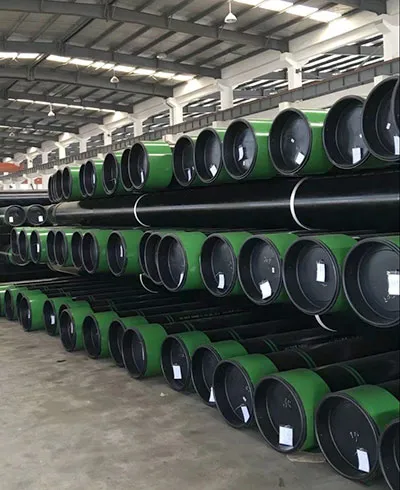
For a Forever Steel coated-pipe enquiry, provide the approved coating specification, thickness class, cutbacks, field-joint interface and required inspection documents. Pipeline corrosion-control design and operating decisions remain with the responsible project engineers.
Coating and cathodic protection are complementary parts of the external corrosion-control plan. Coating defects, installation damage and field joints need inspection and repair; the CP system needs appropriate design, commissioning and monitoring.
Compare the qualified coating systems against operating pipe-wall temperature, installation loads, soil exposure and the approved project specification. Location or ambient air temperature alone does not establish the correct system. Include field-joint compatibility in the selection.
The external CP system addresses corrosion on the buried external steel surface. Internal corrosion needs a separate assessment of water, fluid chemistry, deposits and operating conditions, followed by suitable treatment, cleaning and monitoring.
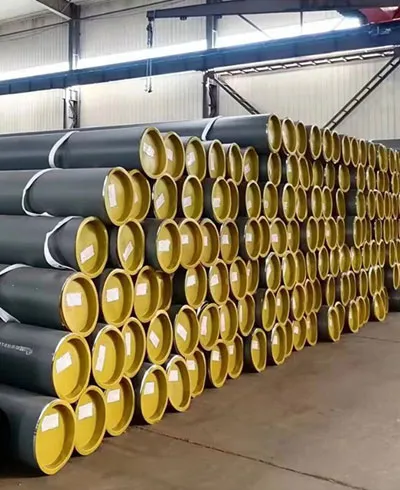
Provide the base-pipe specification, coating standard and system, qualified temperature range, thickness requirements, cutbacks, field-joint interface and inspection scope. Include coating repair, handling and release records so the delivered pipe can be checked against the order.
· Anti-Corrosion Coating Standards for Steel Pipes: ISO, DIN, CSA, AS/NZS and GOST Compared
· How to Prevent Surface Damage to Coated Steel Pipes During Transportation
· Sour Service Steel Pipe: What H₂S Environments Actually Require
· API 5L Line Pipe Selection Guide for Oil and Gas Projects
1. AMPP — Cathodic Protection for Corrosion Control. Explains the principles of cathodic protection and its application to buried metallic structures and pipelines.
2. U.S. Pipeline and Hazardous Materials Safety Administration — Pipeline Corrosion — Final Report. Government technical report covering corrosion mechanisms and the combined role of coatings, cathodic protection, monitoring and integrity management.
3. ISO — ISO 21809-1:2018 — Polyolefin Coatings for Buried or Submerged Pipelines. Authoritative coating-system reference for plant-applied 3LPE and 3LPP external corrosion protection.
4. AMPP Materials Performance — Using Pipeline Coatings with Cathodic Protection. Industry expert discussion of why coatings and cathodic protection are designed as complementary barriers.
5. Wiley Encyclopedia of Environmental Microbiology — Microbiologically Influenced Corrosion. Academic reference for microbiologically influenced corrosion mechanisms and control considerations.