+8615674993216
 sales@forever-steels.com
 English
 العربية

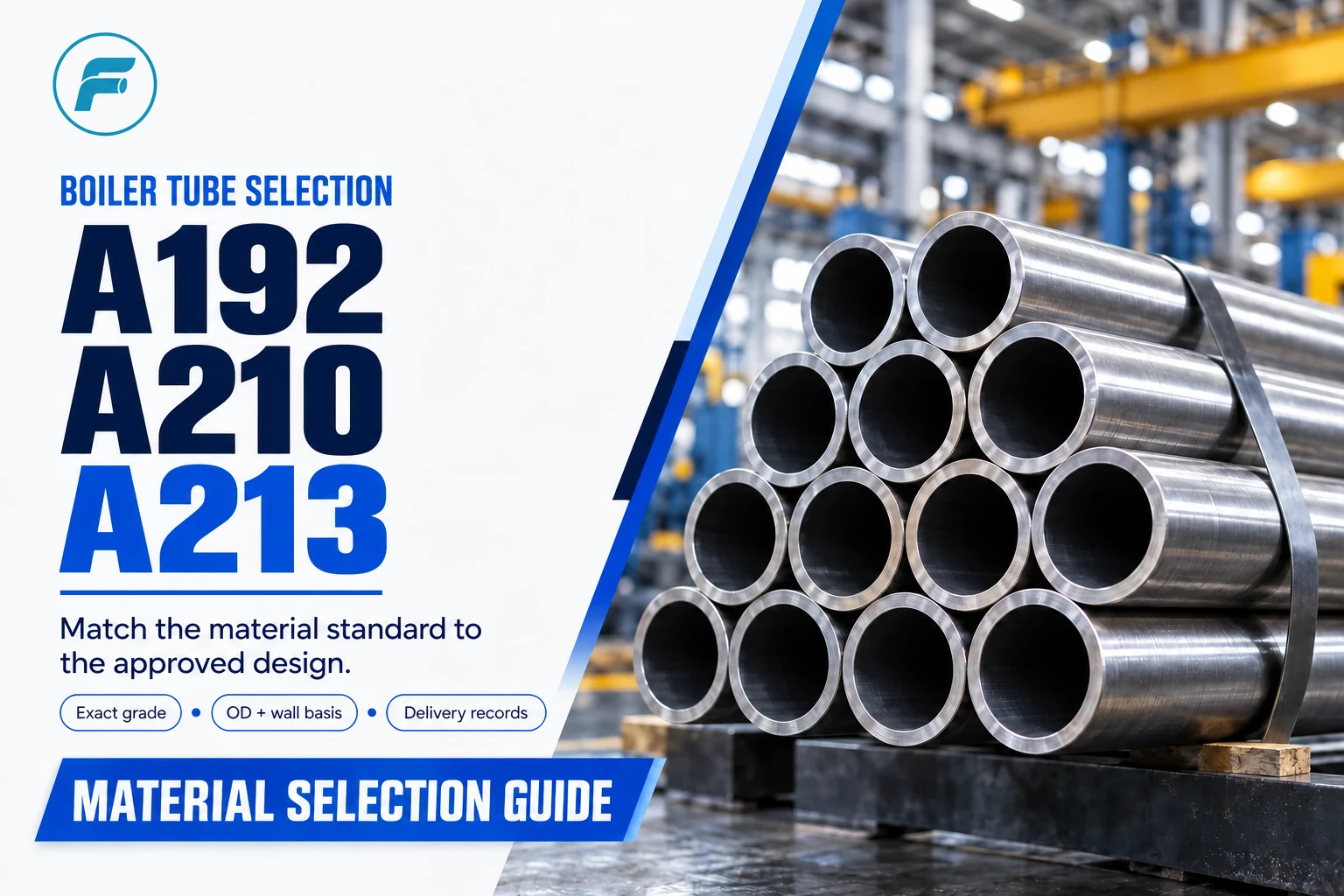
ASTM A192, A210 and A213 are boiler tube specifications with different material scopes. A192 covers seamless carbon steel boiler tubes for high-pressure service; A210 covers seamless medium-carbon steel boiler and superheater tubes; A213 covers seamless ferritic and austenitic alloy-steel tubes for boilers, superheaters and heat exchangers. They are not interchangeable pressure classes, and the standard number alone does not establish a safe operating temperature.
Start with the approved equipment design, then order the exact specification, grade, wall basis and heat-treated condition. For available carbon steel and alloy steel boiler tube supply options, refer to seamless boiler tubes. Confirm the particular size and condition in the quotation rather than transferring a broad product-page range into the design.
The useful comparison is the material the design requires, not a sequence from “low pressure” to “high pressure.” In particular, A192 explicitly addresses high-pressure service; it should not be described as merely a low-pressure alternative to A210.
|
Ordering decision |
ASTM A192 |
ASTM A210 |
ASTM A213 |
|
Material scope |
Seamless carbon steel boiler/superheater tubing |
Seamless medium-carbon steel boiler/superheater tubing |
Seamless ferritic and austenitic alloy-steel tubing |
|
Grade description |
Identify A192 and its ordered edition |
State Grade A-1 or Grade C as required |
State the exact T or TP grade; “A213 alloy” is incomplete |
|
Wall description |
Minimum-wall tubing |
Minimum-wall tubing |
Minimum wall, or average wall when specified in the order |
|
Main substitution concern |
Different material or product requirements cannot be inferred equivalent |
Grade and approved design basis must match |
Chemistry, heat treatment and fabrication requirements depend on grade |
|
Buyer action |
Match the approved tube material and dimensions |
Confirm the actual grade, not A210 alone |
Confirm grade, condition and the complete inspection scope |
The scope and wall descriptions above follow the public summaries for A192/A192M, A210/A210M and A213/A213M. Detailed acceptance requirements and sampling must follow the editions named in the purchase order.
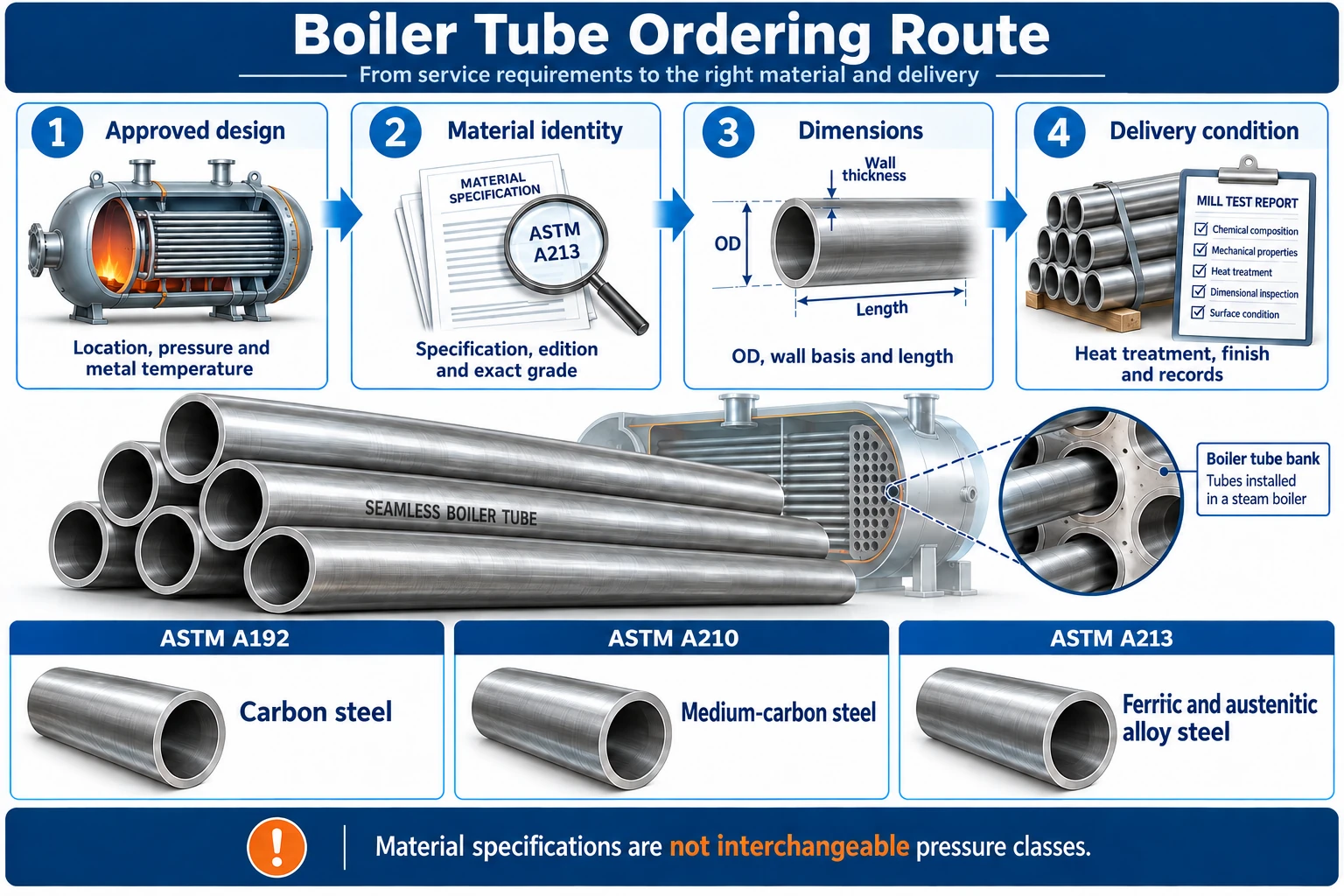
Figure 1. Tube procurement follows the approved design through material identity, dimensions, condition and inspection. Pressure or steam temperature alone cannot complete the selection.
Steam temperature is relevant, but the tube metal can operate at a different temperature. Heat flux, deposits, oxide scale and cooling conditions influence the metal temperature. The National Board’s technical explanation of creep and creep failures describes how stress, time and temperature interact and how steam-side scale can increase tube metal temperature.
For a new order, obtain the design pressure, design metal temperature, equipment location, corrosion allowance where applicable and approved material designation. The responsible engineer should check allowable stress, required thickness and the construction code. A supplier’s generic temperature chart cannot replace that review.
For replacement tubing, identify the original material from the drawing, material record and equipment documentation. Do not upgrade from carbon steel to an alloy solely because the alloy appears to offer a higher temperature capability. Welding, expansion, thermal behavior and the approved repair route also need review. The boiler tube replacement guide covers that separate repair decision.
A213 T11, T22 and T91 are tube designations; A335 P11, P22 and P91 are pipe designations. A shared grade number is not an instruction to substitute one product specification for the other. Similar alloy families still have to be assessed against product form, dimensions, tests, heat treatment and the design requirement. Use the alloy steel pipe standards guide to review the pipe-versus-tube distinction before considering an alternative.
The same applies to A106 carbon steel pipe. It may be relevant to associated piping, but it is not automatically a replacement for an A192 or A210 tube order. A quotation should identify the requested product rather than resolving a stock shortage by silently changing the standard. The official A335 specification scope identifies it as a pipe specification for high-temperature service. For a stainless TP-grade tube request, compare A312, A269 and A213 product scope before accepting a pipe or general-service tube alternative.
|
Incomplete inquiry |
Why it leaves a decision open |
Better ordering description |
|
“A213 boiler tube” |
No exact material grade |
A213/A213M, ordered edition, exact T or TP grade and condition |
|
“T22 or P22, either is fine” |
Tube and pipe specifications are mixed |
Product specification required by the equipment design; alternatives submitted separately |
|
“Same as 20G” |
A cross-reference is being used as an equivalence approval |
Required GB/T or ASTM/ASME designation, with a documented substitution review if proposed |
|
“High-temperature tube” |
Temperature, material and equipment scope are missing |
Approved material, component location, design conditions and dimensions |
For cross-standard inquiries, use Chinese steel pipe grade cross-reference to organize a review, not to authorize a direct material replacement.
Boiler tube dimensions should be stated as outside diameter, wall basis and length. If a gauge such as BWG is used, identify the gauge system and its corresponding thickness in the agreed units. Avoid a gauge number on its own.
Minimum wall thickness and average wall thickness describe different acceptance bases. A buyer who needs a specified minimum should not accept an offer based only on an average without checking the design and the applicable tolerance. For A213, the order must make an average-wall requirement explicit when that basis is intended.
Ordering example. An approved bill of materials calls for A210 Grade A-1 tubing, 50.8 mm OD and 4.0 mm minimum wall, supplied as straight lengths. A stock offer describes 50.8 mm × 4.0 mm without saying whether 4.0 mm is minimum or nominal. The dimensions look similar, but the offer is incomplete. Resolve the wall basis and tolerance before award; do not wait for the receiving inspection to discover the difference.
This example illustrates an ordering ambiguity, not a recommended design or a universal tube size. For bent tubes or fabricated panels, add bend geometry and any specified minimum wall after fabrication. Those requirements should be agreed with the fabricator separately from straight-tube mill acceptance.
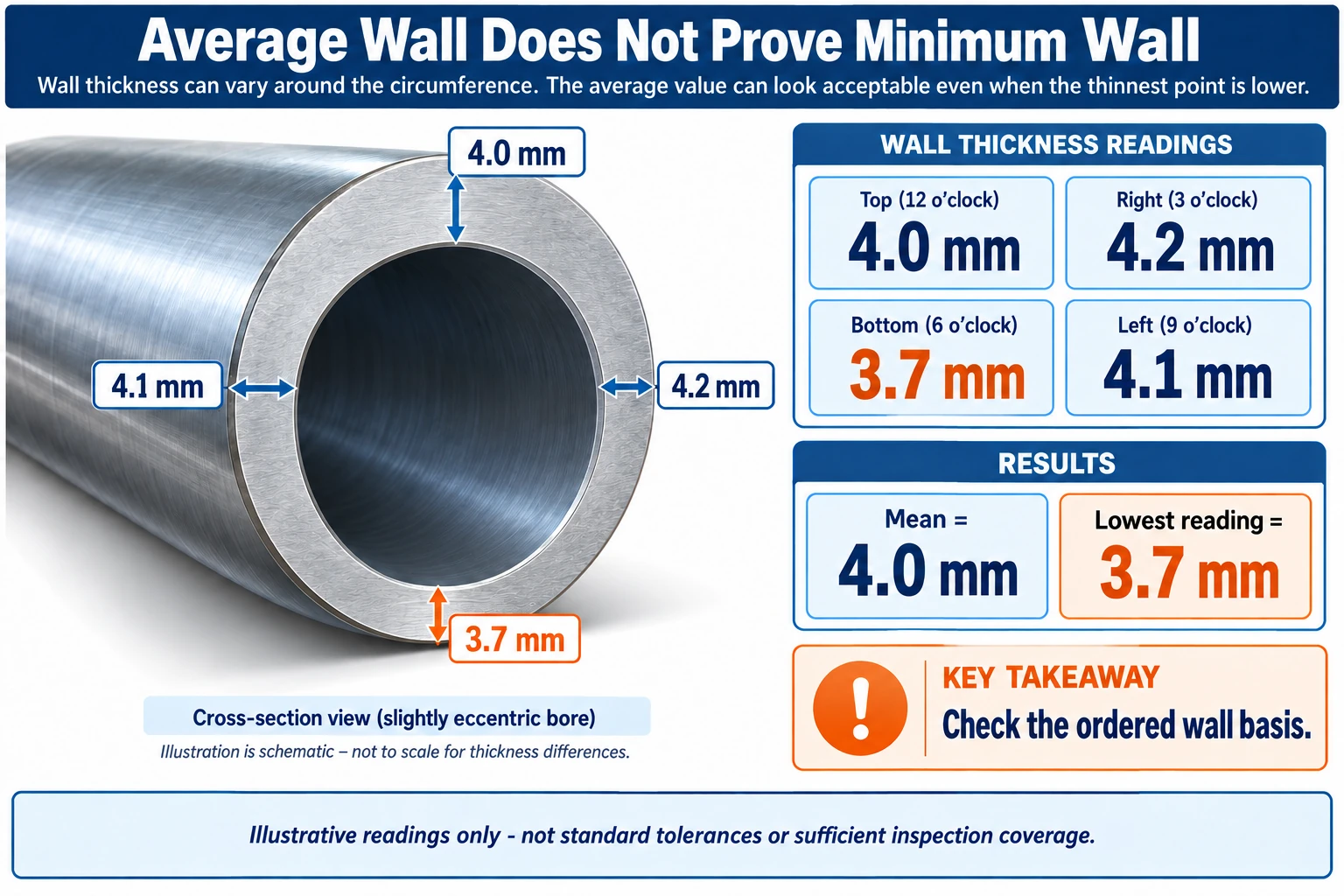
Figure 2. Four illustrative readings average 4.0 mm, but the lowest is 3.7 mm. The example explains the wall basis; it does not define standard tolerances or sufficient inspection coverage.
The material test certificate, or MTC, should identify the specification and edition, exact grade, heat identity, chemistry and required test results. Heat treatment, finish and dimensional records should be available to the extent required by the order. The bundle marking and packing list must connect the delivered tubes to the certificate.
Do not assume every test is performed on every tube. Sampling rules for mechanical tests and the tube-by-tube examination requirements are controlled by the applicable specification and general requirements. For A213 orders, A1016/A1016M is a relevant general-requirements reference. Also distinguish a hydrostatic test from a nondestructive electric test; where an alternative is permitted, the order should identify the accepted route and any additional project requirement.
|
Record |
What the buyer checks |
Typical unresolved issue |
|
Material certificate |
Exact standard, grade, heat and reported results |
Standard shown without the ordered grade or required condition |
|
Heat-treatment record where required |
Required cycle and traceability to the supplied lot |
Statement of condition without the agreed supporting record |
|
Mechanical-test report |
Applicable test, sampling and results |
Results cannot be matched to the heat or lot |
|
Hydrostatic/NDE record |
Method, applicable criteria and coverage |
Generic “tested” statement without the actual method |
|
Dimensional report |
OD, wall basis, length and relevant tolerances |
Average measurements used to answer a minimum-wall order |
|
Marking and packing list |
Tube/bundle identity connected to the MTC |
Cutting or repacking breaks traceability |
The ASTM public summaries identify relevant mechanical and integrity tests, but they are not a complete ITP. Use the ordered specifications to establish test frequency, applicable exceptions and acceptance values.
Send the approved material designation first: ASTM or ASME specification, edition, grade and required certification. If ASME SA material is required (SA-192, SA-210 or SA-213), state that explicitly rather than assuming an ASTM designation alone answers the code requirement.
Add OD, minimum or average wall as applicable, units, length, quantity and finish. Include the required heat-treated condition, ends, straightness or surface requirements, and whether bending or fabrication is included. State mechanical tests, hydrostatic/NDE route, additional examinations and inspection witness points required by the project.
For replacements, attach the relevant material record or approved drawing and identify whether the order is for straight stock, shaped tubes or a fabricated assembly. Ask suppliers to list deviations separately. Comparing technically different offers by unit price alone can hide a material, wall or documentation change.
The difference is material scope. A192 covers seamless carbon steel boiler tubes for high-pressure service; A210 covers seamless medium-carbon steel boiler and superheater tubes, ordered as Grade A-1 or Grade C; A213 covers seamless ferritic and austenitic alloy-steel boiler, superheater and heat-exchanger tubes, ordered by exact T or TP grade. Select from the approved equipment design, not from the standard number alone.
No. A192’s stated scope includes seamless carbon steel boiler and superheater tubes for high-pressure service. The actual pressure capability comes from the approved design and dimensions, not a simplified ranking of standard numbers.
Only after the responsible design or repair authority approves the substitution. A different grade changes the material requirement; matching OD and wall does not establish interchangeability.
No. A213 includes ferritic and austenitic alloy-steel tubing. State the exact grade. A T-grade carbon-alloy tube and a TP-grade stainless tube must not be purchased under the same generic description.
Not as an automatic substitution. They are different pipe and tube specifications. Submit a documented alternative for review against the equipment design, product requirements and fabrication route.
No. A gauge identifies a thickness only when the system is clear. The order still needs the governing wall basis and tolerance. State the thickness in units and identify minimum or average wall as applicable.
Do not assume that. The governing specification and order establish the test route and any permitted alternative. If the project requires both, make that additional scope explicit and obtain confirmation before award.
No. The contract and approved design determine the applicable edition. ASTM’s catalogue lists A192/A192M-24, A210/A210M-26 and A213/A213M-25 as active editions, checked on 8 October 2026. A later catalogue edition should prompt a review, not a silent change to an approved material order.
· Boiler Tube Replacement Guide
· ASTM A312 vs A269 vs A213 Stainless Product Selection
· Alloy Steel Pipe Standards and Grade Selection Guide
· ASTM A192/A192M-24 — Seamless Carbon Steel Boiler Tubes
· ASTM A210/A210M-26 — Seamless Medium-Carbon Steel Boiler and Superheater Tubes
· ASTM A213/A213M-25 — Seamless Alloy-Steel Boiler, Superheater and Heat-Exchanger Tubes
· National Board — Creep and Creep Failures
· ASTM A1016/A1016M-24a — General Requirements for Alloy and Stainless Steel Tubes
ASTM A335/A335M-26 — Seamless Alloy-Steel Pipe for High-Temperature Service