+8615674993216
 sales@forever-steels.com
 English
 العربية

Selecting the right alloy steel pipe is not simply a matter of choosing a familiar grade. In high-temperature piping systems, the correct material must match the design code, operating temperature, pressure level, corrosion environment, welding procedure, and inspection requirements. A grade that performs well in moderate refinery service may not be suitable for long-term creep exposure in a main steam line.
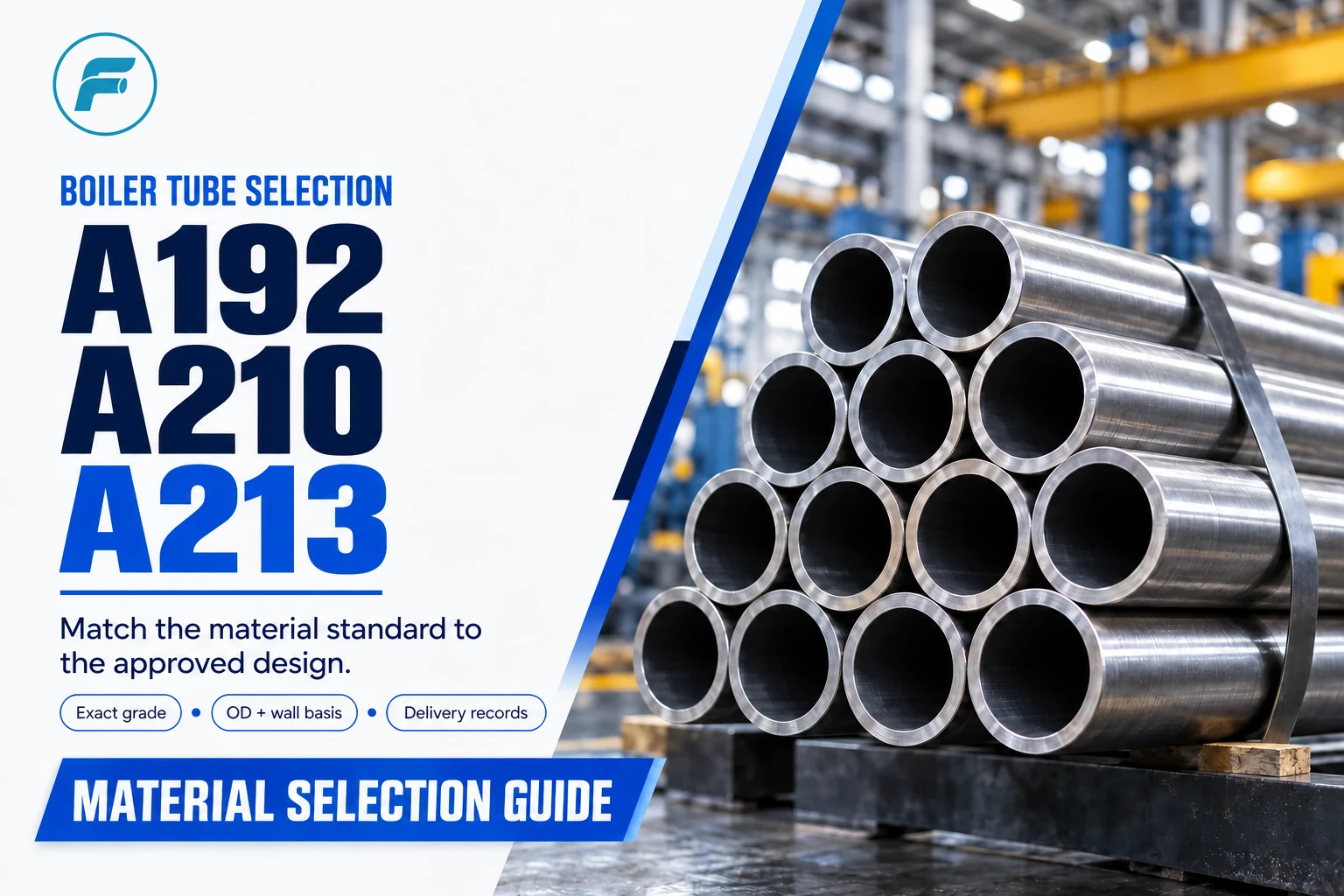
Start by identifying the product form. ASTM A335 / ASME SA335 pipe and ASTM A213 / ASME SA213 tube are different procurement routes. State the governing standard and edition, grade, dimensions, heat treatment and inspection requirements. Similar alloy names do not make products interchangeable.
Alloy steel pipes are used where carbon steel cannot provide enough strength, oxidation resistance, creep resistance, or corrosion performance. By adding chromium, molybdenum, vanadium, niobium, or other alloying elements, the material can maintain mechanical properties under demanding service conditions.
The standard defines the purchasing baseline: chemical composition, tensile properties, heat treatment, dimensional tolerance, testing, marking, and certification. In practice, the same grade name is not enough. The project should specify the standard, edition, product form, size, heat treatment condition, supplementary tests, and certificate type.
|
Standard |
Main Scope |
Common Grades |
Application and ordering check |
|
ASTM A335 / ASME SA335 |
Seamless ferritic alloy steel pipe for high-temperature service |
P5, P9, P11, P22, P91, P92 |
Power plants, refineries, petrochemical piping, high-temperature steam lines For pipe, state NPS and schedule or the specified OD and wall thickness; include length and end preparation. |
|
ASTM A213 / ASME SA213 |
Seamless alloy steel boiler, superheater, and heat-exchanger tubes |
T5, T9, T11, T22, T91, T92 |
Boilers, superheaters, reheaters, heat exchangers For tubes, state OD, specified wall basis (minimum or average), length and end condition. |
|
ASTM A691 |
Electric-fusion-welded carbon and alloy steel pipe for high-pressure service at high temperatures |
Depends on plate material and class |
Large-diameter high-pressure piping State the plate grade and pipe class, dimensions, heat treatment and examination requirements. |
|
EN 10216-2 |
Seamless steel tubes for pressure purposes with elevated-temperature properties |
16Mo3, 13CrMo4-5, 10CrMo9-10, X10CrMoVNb9-1 |
European boiler and pressure equipment systems State the EN grade, OD, wall thickness, length and required delivery condition. |
|
GB/T 5310 |
Seamless steel tubes and pipes for high-pressure boilers |
15CrMoG, 12Cr1MoVG, 10Cr9Mo1VNbN |
Chinese high-pressure boiler and power plant applications State the exact grade, OD, wall thickness, length and inspection requirements. |
|
GB/T 9948 |
Seamless steel tubes for petroleum cracking |
12CrMo, 15CrMo, 12Cr5Mo |
Refinery furnace tubes and petrochemical piping State the exact grade, dimensions and required heat treatment and inspection. |
|
JIS G3458 |
Alloy steel pipes for elevated-temperature service |
STPA12, STPA22, STPA23, STPA24 |
Japanese high-temperature piping systems State the exact pipe grade, dimensions and end preparation. |
|
JIS G3462 |
Alloy steel boiler and heat-exchanger tubes |
STBA12, STBA22, STBA24 |
Boilers, heat exchangers, chemical equipment State the exact tube grade, OD, wall basis and length. |
A common mistake is treating pipe and tube standards as interchangeable. ASTM A335 is normally used for pressure piping, while ASTM A213 is used for boiler tubes, superheater tubes, and heat-exchanger tubes. The application, dimensional tolerance, testing scope, and procurement language can differ significantly.
Most heat-resistant alloy steel pipes used in industrial service belong to Cr-Mo or modified Cr-Mo families. Chromium improves oxidation and corrosion resistance, while molybdenum increases high-temperature strength and creep resistance. Vanadium, niobium, and nitrogen in P91-type materials support precipitation strengthening and long-term creep performance.
|
Alloy Family |
Typical Grades |
Key Features |
Common Service Conditions |
|
1Cr-0.5Mo / 1.25Cr-0.5Mo |
ASTM A335 P11, ASTM A213 T11, 15CrMoG |
Good weldability, moderate creep strength, economical |
Moderate-temperature steam, refinery piping, boiler systems |
|
2.25Cr-1Mo |
ASTM A335 P22, ASTM A213 T22, 10CrMo9-10 |
Higher strength and oxidation resistance than P11 |
Higher-temperature steam lines, petrochemical units, power plants |
|
5Cr-0.5Mo |
ASTM A335 P5, 12Cr5Mo |
Better sulfidation and oxidation resistance |
Refinery and petrochemical high-temperature service |
|
9Cr-1Mo-V-Nb |
ASTM A335 P91, ASTM A213 T91, X10CrMoVNb9-1 |
Excellent creep strength and thinner-wall design potential |
Critical steam piping, supercritical and ultra-supercritical units |
|
9Cr-W-Mo-V-Nb |
ASTM A335 P92, ASTM A213 T92 |
Higher creep strength than P91 in advanced applications |
Ultra-supercritical power generation systems |
|
Service Requirement |
Recommended Grade Range |
Selection Notes |
|
Moderate high-temperature service with cost control |
P11 / T11, 15CrMoG, 13CrMo4-5 |
Suitable where moderate creep strength is enough and fabrication simplicity matters |
|
Higher-temperature steam or process piping |
P22 / T22, 12Cr1MoVG, 10CrMo9-10 |
Better oxidation resistance and creep strength than P11 |
|
Critical high-pressure, high-temperature service |
P91 / T91, P92 / T92, X10CrMoVNb9-1 |
Requires strict control of welding, PWHT, hardness, and inspection |
|
Refinery sulfidation or oxidation exposure |
P5, P9, 12Cr5Mo |
Higher chromium content improves resistance in selected refinery environments |
|
Large-diameter high-pressure line pipe |
ASTM A691 |
Consider when welded construction is allowed by the design code |
|
Boiler, superheater, and reheater tubes |
ASTM A213, EN 10216-2, GB/T 5310, JIS G3462 |
Tube standards are usually more appropriate than pipe standards |
The grades listed above are candidates for engineering review, not automatic equivalents. P22 and T22 belong to different product standards; cross-standard substitutions require a comparison of product form, chemistry, properties, delivery condition and testing, followed by project approval.
· Creep strength: for long-term operation at elevated temperature, creep strength becomes more important than room-temperature tensile strength.
· Oxidation resistance: higher chromium content generally improves oxidation resistance, which is one reason P5, P9, P91, and P92 are used in hotter environments.
· Weldability: P11 is easier to weld than P91. P91 requires carefully qualified procedures, proper preheating, controlled interpass temperature, suitable filler metal, and accurate PWHT.
· Heat treatment condition: different grades may be supplied normalized, tempered, annealed, or quenched and tempered depending on the standard and grade.
· Hardness control: for creep-resistant grades, hardness values after welding and PWHT are important indicators of proper microstructure.
|
Item |
What to Check |
|
Standard and edition |
ASTM, ASME, EN, GB/T, or JIS requirement |
|
Grade |
Exact standard and grade; any proposed substitute requires documented project approval |
|
Size and schedule |
NPS, OD, wall thickness, schedule, or custom dimension |
|
Manufacturing method |
Seamless or welded |
|
Heat treatment |
Normalized and tempered, annealed, or specified condition |
|
Testing |
Hydrostatic test, NDE, flattening, bending, hardness, PMI |
|
Certification |
Required EN 10204 certificate type; reconcile grade, size, heat number and purchase-order line with pipe/tube markings and the material report; retain traceability after cutting |
|
Supplementary requirements |
Impact test, grain size, additional NDE, special marking |
|
Welding requirements |
WPS/PQR, preheat, PWHT, hardness range |
Illustrative RFQ line — not a design recommendation: ASTM A335 P22 seamless pipe, NPS 4, Schedule 80, 6 m lengths, beveled ends; standard edition, quantity, heat treatment, tests and acceptance criteria to follow the approved project specification; EN 10204 3.1 certificate with heat-number and purchase-order traceability. Confirm technical compliance and availability before order acceptance.
The best alloy steel pipe grade is the one that satisfies the design code, service environment, fabrication method, and lifecycle reliability requirements. P11-type materials are economical for moderate high-temperature service. P22-type materials provide better strength and oxidation resistance. P91 and P92 are advanced creep-resistant grades for critical high-temperature and high-pressure applications.
When selecting material for boiler systems, steam lines, refinery units, or petrochemical piping, engineers should compare standards, grade properties, and welding requirements together. For projects that require certified high-temperature piping materials, review our alloy steel pipe supply options and discuss grade selection based on your project specification.
Confirm the ordered edition and applicable test or acceptance requirements against the project specification.
1. ASTM A335 P11 vs P22 vs P91 Technical Comparison
2. Heat Exchanger Retubing Specification: How to Replace Tubes Without Repeating the Original Failure
3. Boiler Tube Replacement Guide: Material Matching, Damage Review and Code-Controlled Installation
4. Steel Pipe Heat Treatment: How Grade, Manufacturing Route and Service Determine the Correct Process
5. Chemical Plant Process Piping: MTC, NDT and Coating Checks