+8615674993216
 sales@forever-steels.com
 English
 العربية

For welded steel pipes, the weld seam is not just a manufacturing mark. It is one of the most important areas that determines whether the pipe can pass inspection, withstand pressure, accept coating, fit at site and remain traceable after delivery.
Many buyers ask a simple question before shipment: Is the weld seam good? In practice, that question is too broad. ERW, LSAW and SSAW pipes are all welded pipes, but the weld seam form, manufacturing route, common defect risk and inspection method are different.
A useful inspection should answer a more practical question: has the weld seam been checked in the right way for this pipe type, standard and service condition?
A pipe can have correct outside diameter, wall thickness, length and marking, but still create problems if the weld seam is poorly controlled. Weld seam issues may affect pressure resistance, coating quality, field welding, bevel preparation, hydrostatic testing and final project acceptance.
The risk is higher in export orders because the buyer may not see the pipe until it has already arrived at the destination port or project site. If a problem is found after arrival, it becomes harder to identify whether the issue came from production, repair, handling, loading or storage.
· Visible cracks or undercut along the weld seam
· Excessive or irregular weld reinforcement
· Poor internal bead condition on ERW pipe
· Weld seam mismatch or local deformation
· Rust or coating damage concentrated near the weld
· NDT report missing, incomplete or not linked to the actual order
· Repair marks without clear repair records
· Pipe end weld area defects found during bevel inspection
|
Pipe Type |
Weld Seam Form |
Typical Inspection Focus |
Buyer Risk if Not Checked |
|
ERW Pipe |
Straight longitudinal resistance weld or HFW weld line |
Weld line continuity, internal bead removal, seam position, pipe end weld area, online NDT record |
Hidden bond-line defects, poor internal bead, end cracking, failed flattening or pressure test |
|
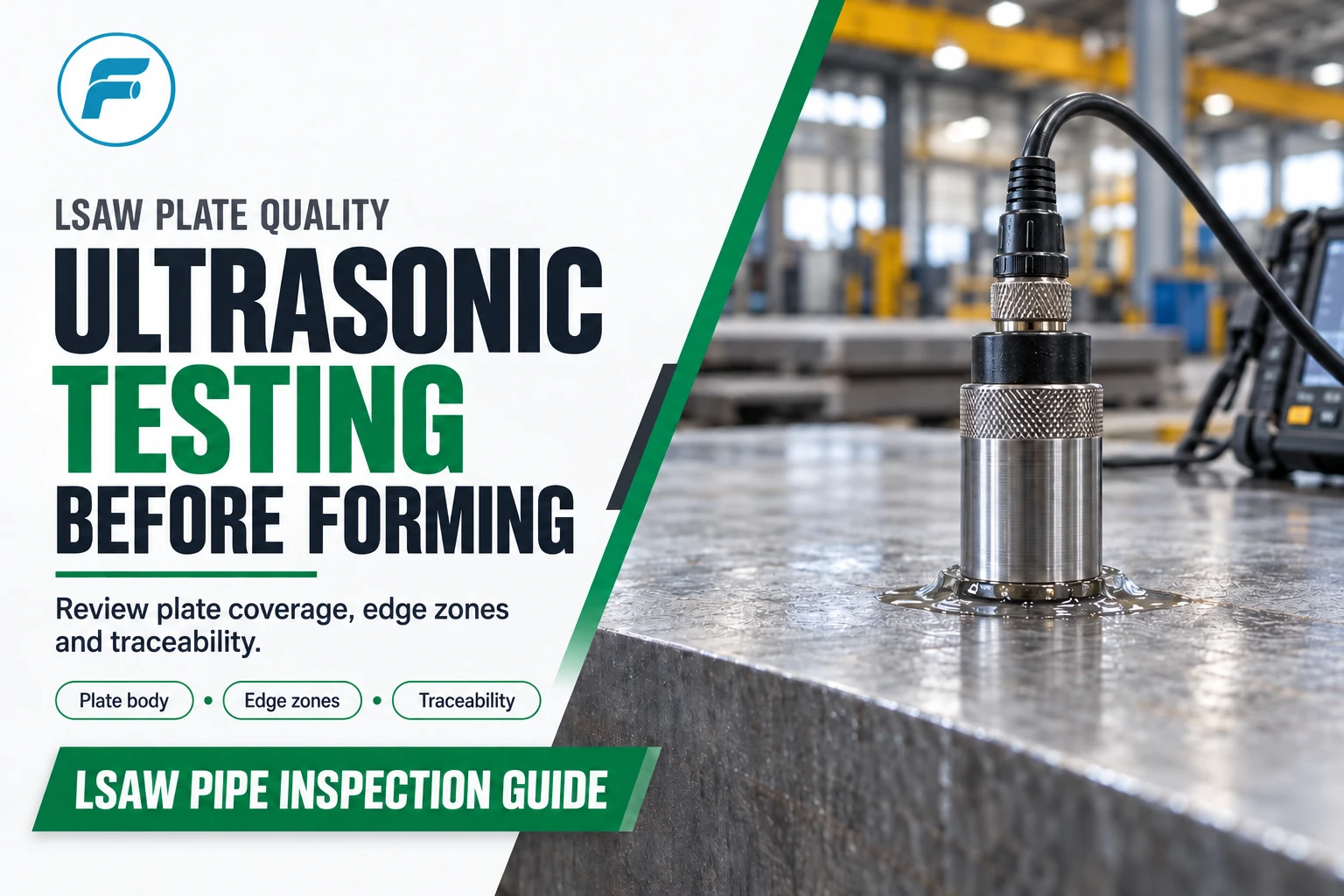
LSAW Pipe |
Straight longitudinal submerged arc weld |
Internal and external weld bead, reinforcement height, weld profile, UT/RT record, repair record |
Weld defects in heavy-wall pipe, coating problems over raised weld, bevel-end rejection |
|
SSAW Pipe |
Spiral submerged arc weld |
Spiral weld continuity, weld overlap condition, weld length coverage, hydrotest and NDT record |
Longer weld seam exposure, local weld repair risk, fit-up or coating issues along spiral seam |
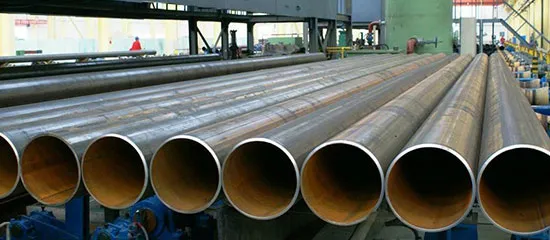
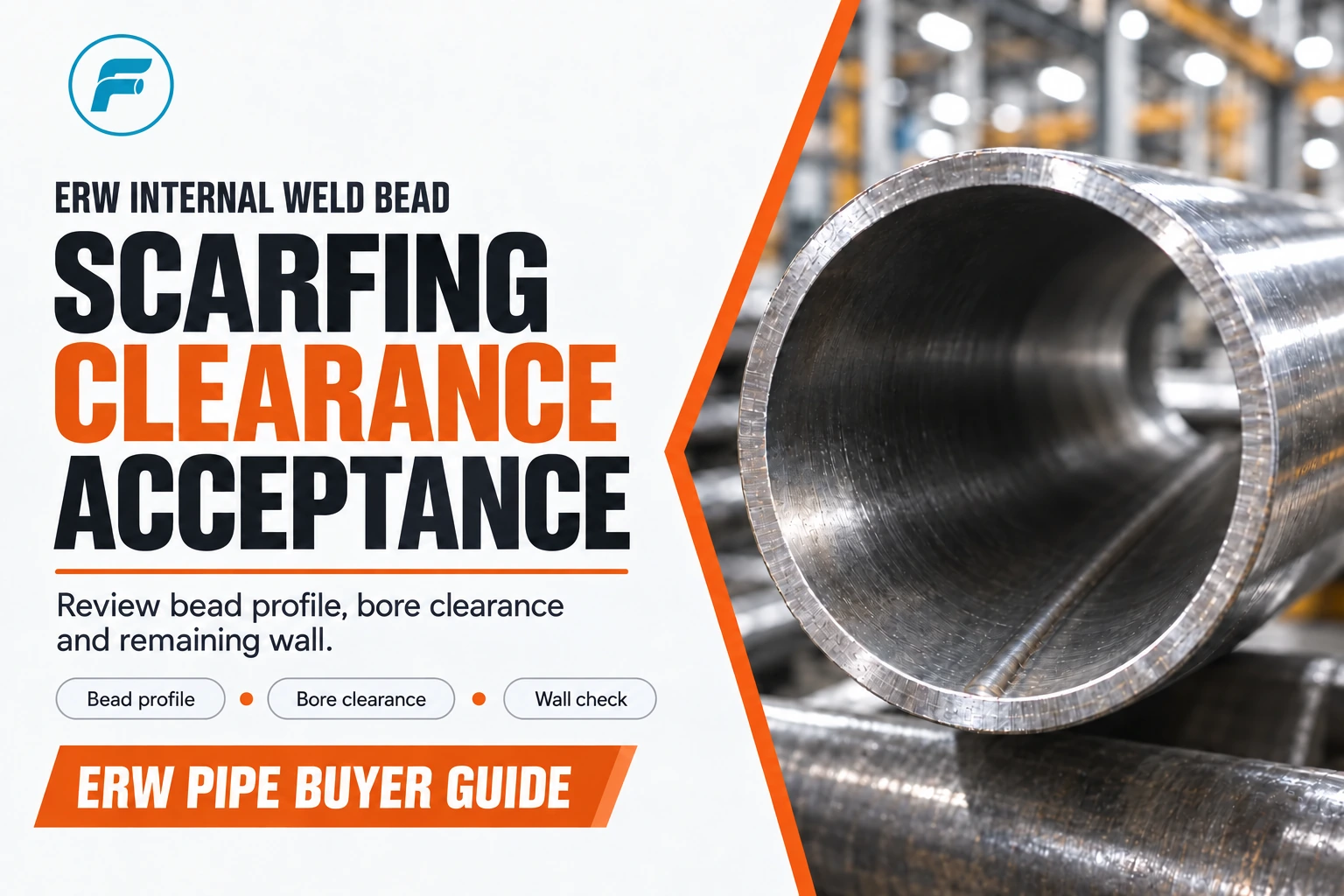
For ERW steel pipe, the weld line may look narrow or almost invisible after finishing, so buyers should not rely only on appearance. The inspection should pay attention to the longitudinal weld line, pipe ends and any requirement for internal bead removal.
For LSAW steel pipe, the weld seam is more visible and usually more relevant to large-diameter or heavy-wall projects. Buyers should check both internal and external weld bead condition, especially when the pipe will be coated, beveled or used for pressure-related service.
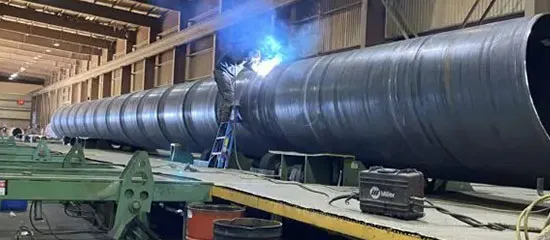
For SSAW steel pipe, the spiral weld is longer than a straight seam weld on the same pipe length. This makes continuous weld quality control, NDT coverage and repair traceability especially important.
For buyers comparing several routes, the broader welded steel pipe category can help clarify available product families before the final inspection scope is confirmed.
Visual inspection remains important because many practical problems can be found before testing records are reviewed. However, it should be performed with a clear checklist.
|
Visual Check Point |
What to Look For |
Why It Matters |
|
Weld continuity |
Seam should be continuous and stable without abnormal interruption |
Breaks or irregular areas may indicate process instability |
|
Weld surface |
Cracks, holes, pits, undercut, burn marks or porosity |
Visible surface defects may lead to rejection or further testing |
|
Weld reinforcement |
Bead should not be excessively high, sharp or uneven |
High or irregular welds may affect coating, fitting and stress distribution |
|
Pipe end area |
Weld condition at cut ends, bevels or threading area |
End defects often appear during cutting, beveling or inspection |
|
Internal bead |
Especially relevant for ERW pipe when internal bead removal is required |
Poor bead control may affect flow, fabrication or acceptance |
|
Weld corrosion |
Rust concentrated along the weld or heat-affected zone |
May indicate surface protection or storage problems |
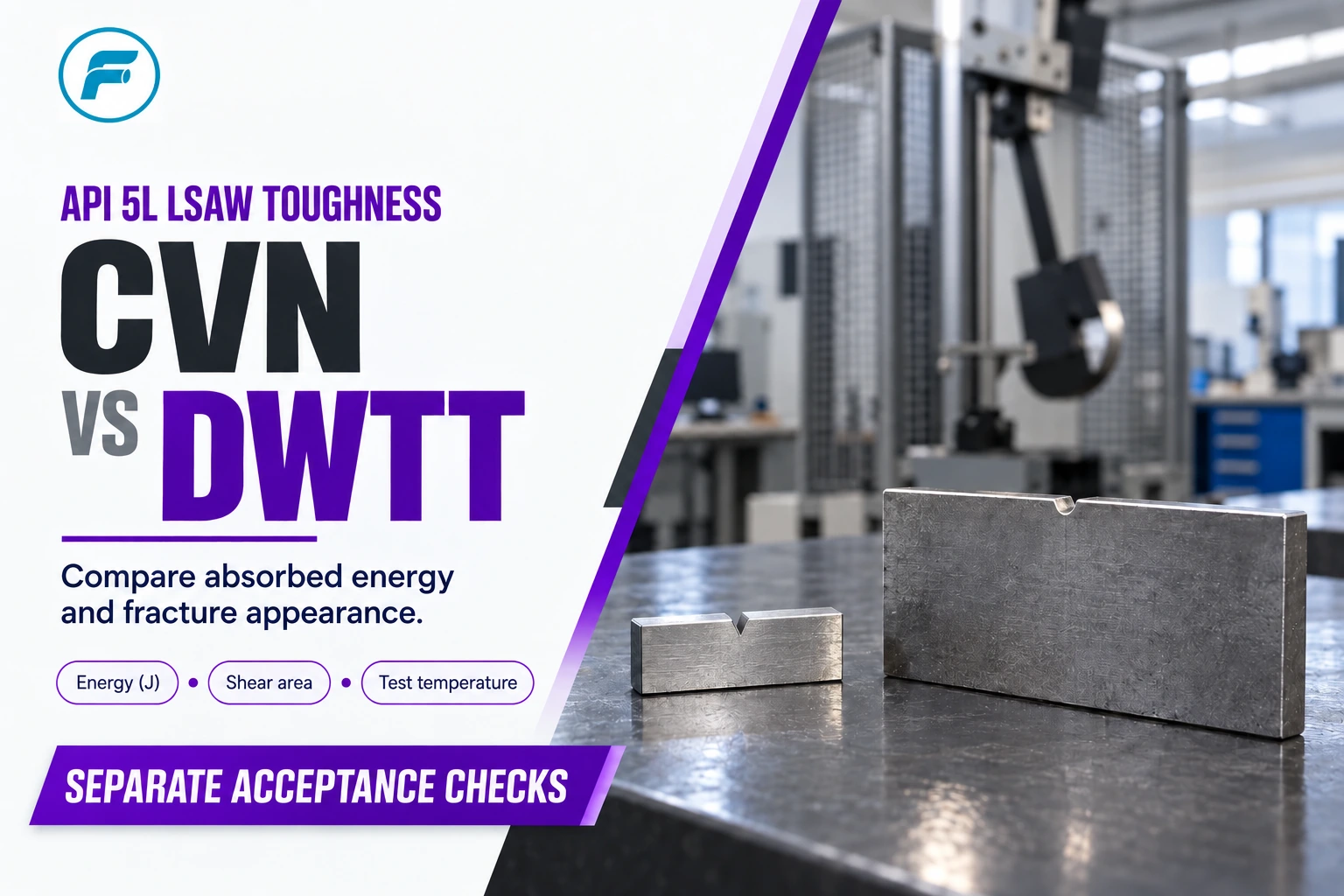
Non-destructive testing is used to detect weld discontinuities without cutting the pipe. The required method depends on the pipe standard, service condition, wall thickness, weld type and buyer specification.
|
Inspection Method |
Common Use |
What It Helps Detect |
Buyer Note |
|
Ultrasonic Testing (UT) |
ERW, LSAW and SSAW weld inspection |
Internal discontinuities, lack of fusion, laminations, weld defects depending on calibration |
Check coverage, acceptance standard and report traceability |
|
Eddy Current Testing |
Common for ERW/HFW pipe |
Surface and near-surface defects along the weld line |
Often used as part of online inspection |
|
Radiographic Testing (RT) |
Often used for SAW welds where required |
Volumetric weld defects such as porosity or slag inclusion |
Check film or digital record requirement and acceptance class |
|
Magnetic Particle Testing (MT) |
Ferromagnetic surface inspection |
Surface and near-surface cracks |
Useful for repair areas or suspicious surface indications |
|
Hydrostatic Test |
Pressure-related pipe orders |
Leakage and pressure resistance |
Confirms pressure holding but does not identify all weld defects |
|
Flattening or Bend Test |
Often used for ERW pipe quality verification |
Weld ductility and bonding behavior |
Usually linked to standard sampling requirements |
A frequent misunderstanding is that 100% NDT automatically means every risk has been removed. It does not. The inspection method, calibration, coverage, acceptance criteria and operator qualification must match the pipe type and project requirement.
|
Defect |
Practical Meaning |
Why Buyers Should Care |
|
Crack |
A break in the weld metal or heat-affected zone |
Usually serious and normally requires careful evaluation |
|
Undercut |
Groove along the weld toe |
Can reduce local wall thickness and create stress concentration |
|
Porosity |
Gas holes in or near the weld |
May reduce weld soundness and pressure reliability |
|
Lack of fusion |
Weld metal does not properly bond with base metal or previous pass |
Serious internal defect, often detected by NDT |
|
Incomplete penetration |
Weld does not fully penetrate the joint |
Critical for pressure or structural applications |
|
Slag inclusion |
Non-metallic material trapped inside weld metal |
May weaken the weld and fail NDT acceptance |
|
Excessive reinforcement |
Weld bead is too high or irregular |
May affect coating, installation or stress distribution |
|
Misalignment |
Pipe edges are not properly aligned before welding |
Can affect strength, roundness and end fit-up |
Weld repair is not automatically a problem. In many welded pipe standards, repairs may be allowed under controlled conditions. The real issue is whether the repair was identified, performed, retested and recorded correctly.
· Pipe number or bundle reference
· Repair location
· Defect type if known
· Repair method
· Welder or repair team reference if required
· NDT after repair
· Final acceptance result
· Photos if the buyer or third-party inspector requests them
· Pipe type: ERW, LSAW or SSAW
· Applicable standard and grade
· Outside diameter, wall thickness and length
· End condition: plain end, beveled end, threaded end or grooved end
· Required NDT method and coverage
· Hydrostatic test requirement
· Visual acceptance requirement
· Internal bead removal requirement for ERW pipe
· Whether weld repair is allowed
· Third-party inspection requirement
· MTC and inspection report requirement
· Photo record requirement before shipment
|
Record |
Purpose |
|
Material Test Certificate |
Confirms grade, heat number and standard compliance |
|
Visual Inspection Record |
Shows surface and weld appearance checks were completed |
|
NDT Report |
Confirms method, coverage, acceptance standard and results |
|
Confirms pressure test result where required |
|
|
Repair Record |
Shows repair location, method and retest result if repair occurred |
|
Dimension Inspection Report |
Confirms OD, wall thickness, length, straightness and end condition |
|
Pipe End Photos |
Helps verify weld condition near bevels or cut ends |
|
Packing and Loading Photos |
Creates evidence of condition before shipment |
Weld seam inspection should match the manufacturing route. ERW, LSAW and SSAW pipes may all be welded steel pipes, but their inspection focus is not identical.
A strong inspection process combines visual checks, NDT records, pressure testing where required, repair control and shipment documentation. For buyers, the goal is not to request every possible test. The goal is to define the right inspection scope for the pipe standard, service condition and project risk.
At Forever Steels, welded pipe orders can be reviewed according to the required manufacturing route, inspection standard, NDT scope, documentation package and shipment release evidence before delivery.
Continue with these closely related Forever Steel technical resources:
• ISO 17635:2025 — General Rules for Non-Destructive Testing of Welds — International Organization for Standardization.
• ISO 17637:2016 — Visual Testing of Fusion-Welded Joints — International Organization for Standardization.
• ISO 17640:2018 — Ultrasonic Testing of Welded Joints — International Organization for Standardization.
• ISO 17636-1:2022 — Radiographic Testing of Welds with Film — International Organization for Standardization.
• Comprehensive Study to Understand Longitudinal ERW Seam Failures — Pipeline and Hazardous Materials Safety Administration research program.
• HFI/ERW Pipe Quality and Seam Failures — Pipeline Research Council International.
Use the welding-defect identification guide for defect terminology, and the UT versus RT interpretation guide for method limitations. For an ERW, LSAW or SSAW order, convert those findings into route-specific examination coverage, acceptance criteria and traceable release records.