+8615674993216
 sales@forever-steels.com
 English
 العربية

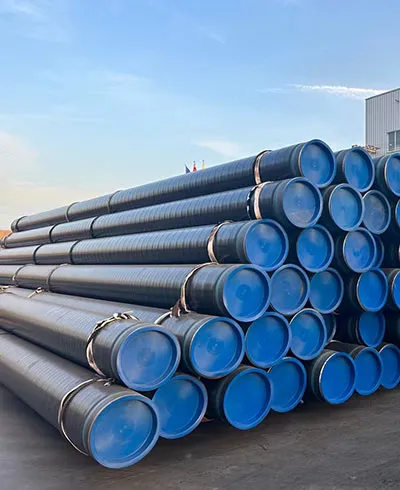
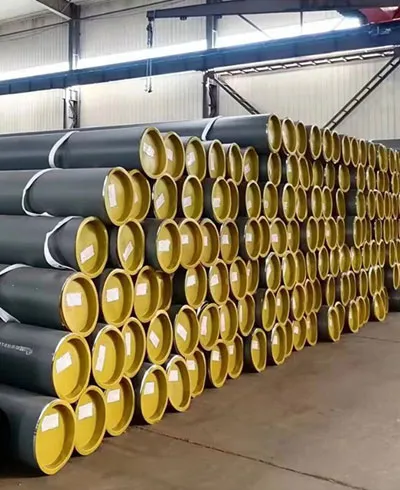
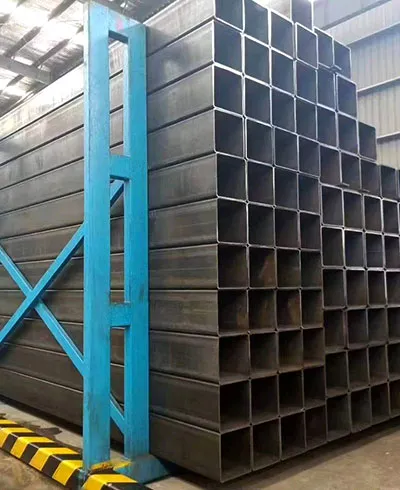
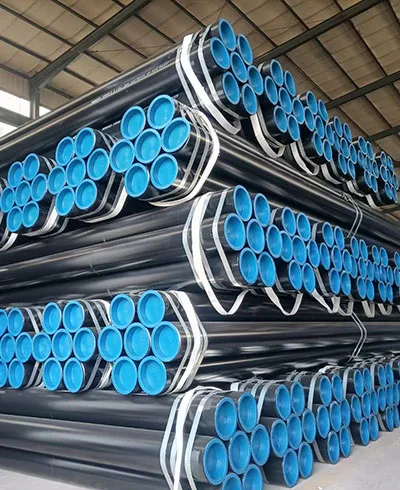
What should an ASTM A500 structural tubing buyer confirm? Define the grade, shape, outside dimensions, wall, corner geometry, length, straightness, weld or forming requirements, testing and coating or fabrication scope. Structural tubing selection should follow the frame design and applicable product standard rather than a generic “square tube” description. The referenced product pages are carbon steel hollow sections. and ERW steel pipe.
Grade C has higher minimum strength than Grade B. That does not mean every project should automatically buy Grade C, but it explains why many modern structural hollow section orders now specify it.
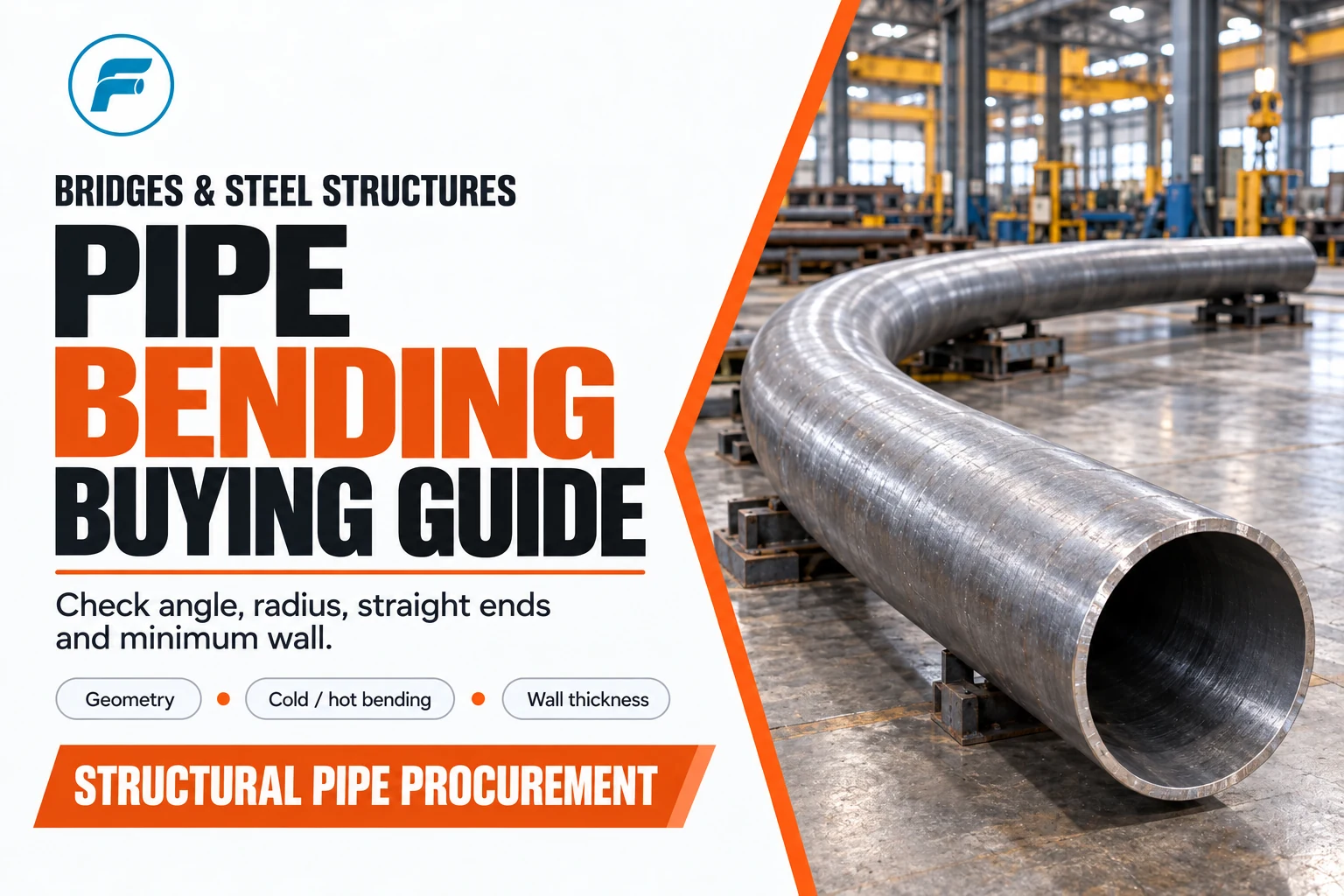
If straight structural tube will be formed into curved members, the structural pipe-bending buying guide defines geometry, retained tangents and acceptance information needed for an RFQ.
|
ASTM A500 Shape |
Grade B Minimum Yield |
Grade C Minimum Yield |
Practical Meaning |
|
Round tubing |
42 ksi / 290 MPa |
46 ksi / 315 MPa |
Grade C gives higher strength for round HSS/CHS |
|
Square tubing |
46 ksi / 315 MPa |
50 ksi / 345 MPa |
Grade C is often preferred for columns and frames |
|
Rectangular tubing |
46 ksi / 315 MPa |
50 ksi / 345 MPa |
Grade C can help where bending strength matters |
If the drawing says Grade B, do not substitute Grade C without approval. If the drawing says Grade C, do not quote a commercial Q235 or Q355 tube as if it were automatically equivalent. ASTM compliance depends on the standard, test results and mill certificate, not only on strength level.
The shape should follow the load path, connection detail and appearance requirement. This table gives buyers a fast way to compare the three common forms.
|
Shape |
Section type |
Best Use Cases |
Buyer Notes |
|
SHS |
Square hollow section |
Columns, posts, racks, gates, balanced frames |
Equal sides make design and fabrication straightforward; seecarbon steel hollow sections |
|
RHS |
Rectangular hollow section |
Trusses, roof members, trailers, machinery frames |
Efficient when stiffness is needed mainly in one direction; see carbon steel hollow sections |
|
CHS / round HSS |
Circular hollow section / round HSS |
Columns, bracing, handrails, exposed architecture |
Good torsional behavior and clean visual appearance; round welded structural tube is often supplied through ERW steel pipe routes |
SHS is the clean all-rounder. RHS is often more efficient when the member bends mainly in one direction. CHS is useful where torsion, multi-directional loading or appearance is important. None is automatically better; the correct shape is the one that matches the structural design.
A common mistake is replacing HSS with standard pipe because the weight looks close. Pipe is usually ordered by nominal pipe size and schedule. Structural tubing is ordered by outside dimension and wall thickness. A drawing that calls for HSS 100 x 100 x 6 mm should not be replaced by a pressure pipe size unless the engineer approves it.
|
Item |
Structural Tubing / HSS |
Standard Pipe |
|
Specification basis |
Outside dimensions and wall thickness |
Nominal pipe size and schedule |
|
Main use |
Structural members |
Fluid, pressure or general pipe service |
|
Shape options |
Square, rectangular, round and special shapes |
Mostly round |
|
Buyer risk |
Wrong shape tolerance or grade |
Wrong design assumption if substituted for HSS |
This distinction is especially important for international buyers because local suppliers may use "tube" and "pipe" loosely in quotation emails.
Grade and size get most attention, but small order details often decide whether the material works smoothly in fabrication.
|
Purchase Detail |
Why Buyers Should Specify It |
|
Outside dimension and wall thickness |
Controls fit-up, weight and structural capacity |
|
Fixed length or random length |
Affects cutting loss and fabrication planning |
|
Corner radius for SHS/RHS |
Matters for cap plates, connections and appearance |
|
Straightness and twist |
Critical for columns, long RHS and visible frames |
|
Surface finish |
Black, oiled, painted, galvanized or post-fabrication coating |
|
Packing |
Bundle weight, straps, waterproof wrapping and lifting method |
ASTM A500 tubing is often supplied black and lightly oiled. If the project requires galvanizing, confirm whether the tube will be pre-galvanized, galvanized after fabrication or painted after welding. Hot-dip galvanizing after fabrication also requires venting and drainage design.
The mill test certificate should identify the standard, grade, heat number, chemical composition, mechanical properties, size and quantity. For larger orders, the bundle tags should match the MTC. If third-party inspection is required, the inspector should check dimensions, wall thickness, length, straightness, surface condition, marking and packing.
|
Inspection Item |
What To Look For |
|
Grade confirmation |
ASTM A500 Grade B or Grade C clearly stated |
|
Dimensions |
OD/side length, wall thickness, length and tolerance |
|
Shape quality |
Corner condition, twist, bow and straightness |
|
Surface |
Rust, dents, scratches, seam appearance and coating condition |
|
Documentation |
MTC, packing list, bundle tags and traceability |
For most buyers, the decision starts with the drawing: Grade B or Grade C, SHS, RHS or CHS, size and length. Grade C is stronger, but the project specification controls the final grade. SHS is easy to use for balanced structures, RHS is efficient for directional bending, and CHS is strong in torsion and visually clean.
For export sizes and supply options, start with carbon steel hollow sections for SHS/RHS and ERW steel pipe for round welded tubing, then narrow the inquiry by grade, dimension, finish and packing requirement.
Not without approval. Matching one strength value does not establish the same product standard, manufacturing condition, chemistry, dimensions or test requirements. Ask the engineer to approve the complete proposed substitution.
Normally specify the actual outside dimensions and wall thickness shown on the drawing. Include the standard and edition, exact grade, length and dimensional tolerance. Do not convert a structural member to a pressure-pipe size without approval.
They should follow an approved fabrication and galvanizing detail. Confirm hole locations, welds and the galvanizing sequence before manufacture; adding holes later can affect both fabrication and the design.
An ASTM A500 inquiry is not complete when it states only the grade and outside size. The quotation should be tied to the shape, exact outside dimensions, design wall thickness, length, corner or radius expectations where relevant, surface condition, fabrication details and inspection documents.
The following data block separates structural design inputs from supply and fabrication requirements.
| RFQ item | Buyer input | Why it matters |
| Product identity | ASTM A500 edition, grade and round, square or rectangular shape | Controls the applicable property and dimensional requirements |
| Section size | Outside dimensions and design wall thickness | Avoids substitution by NPS and Schedule |
| Length and fabrication | Mill length, cut length, holes, slots, end cuts or weld preparation | Determines yield, handling and downstream work |
| Surface and packing | Bare, oiled, primed or coated; bundle and protection requirements | Controls storage, transport and fabrication readiness |
| Release documents | MTC, dimensional report, quantity tally and any witness points | Supports traceability and receiving inspection |
Similar yield strength does not make another structural grade automatically interchangeable with ASTM A500. Any substitution should be approved against section properties, tolerances, chemistry, weldability, forming route and the governing design code—not only a single strength value.
When Forever Steel reviews a structural tubing RFQ, drawings and the member schedule are checked against the requested carbon steel hollow section supply line. This gives the buyer one confirmed basis for quotation, fabrication instructions and pre-shipment inspection.
1. S235 vs S275 vs S355 Steel Grades: Which Structural Pipe Grade to Choose?
2. EN 10219 vs EN 10210: Key Differences for Structural Hollow Sections
3. API 5L Line Pipe Selection Guide for Oil and Gas Projects
4. Steel Pipe Inspection Checklist Before Shipment
Confirm the ordered edition and applicable test or acceptance requirements against the project specification.