+8615674993216
 sales@forever-steels.com
 English
 العربية




A practical guide for buyers comparing nominal size and actual outside diameter in global pipe trade
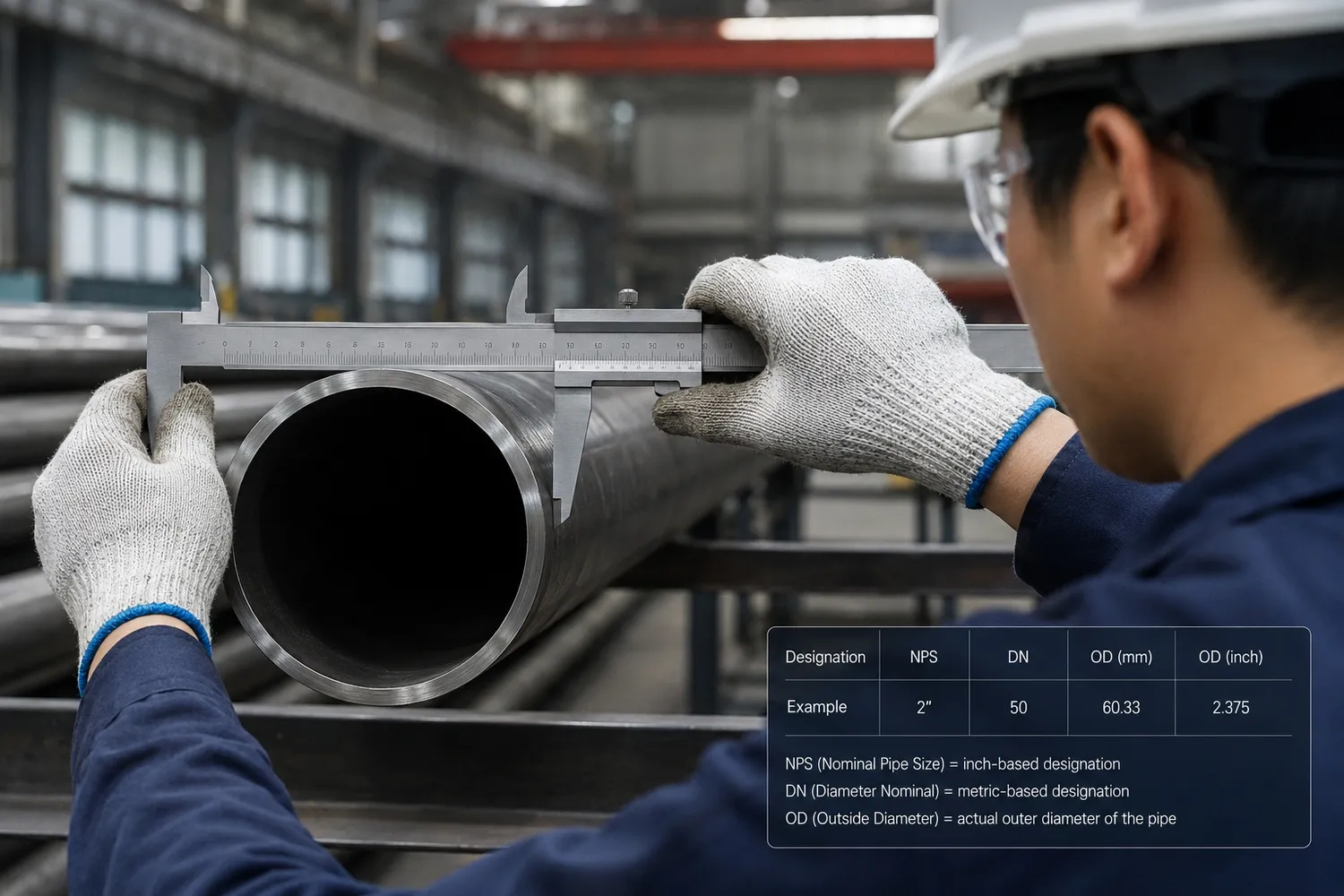
Use this steel pipe size chart to match NPS and DN with the actual outside diameter in inches and millimeters. NPS and DN are nominal designations, not measurements of the pipe bore. For example, NPS 4 / DN100 has an outside diameter of 4.500 in, or 114.3 mm.
Select the nominal size in the table below, then check wall thickness separately. For SCH 40, SCH 80 and other wall series, use the Pipe Schedule Chart; the same NPS does not have one fixed inside diameter.
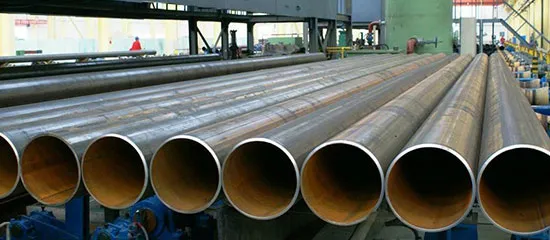
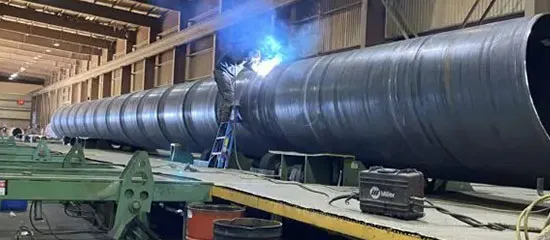
After confirming OD and wall thickness, compare the supply route: seamless steel pipe or ERW steel pipe. The project standard, grade, service and size determine which route is acceptable.
Quick nominal-size lookup: DN25 corresponds to NPS 1 (1-inch nominal pipe), with an actual OD of 33.4 mm; DN32 corresponds to NPS 1-1/4 (1-1/4-inch nominal pipe), with an actual OD of 42.2 mm. Use the chart for other sizes; DN is not the measured outside diameter.
|
NPS |
DN |
Actual OD (inch) |
Actual OD (mm) |
|
1/8 |
DN6 |
0.405 |
10.3 |
|
1/4 |
DN8 |
0.540 |
13.7 |
|
3/8 |
DN10 |
0.675 |
17.1 |
|
1/2 |
DN15 |
0.840 |
21.3 |
|
3/4 |
DN20 |
1.050 |
26.7 |
|
1 |
DN25 |
1.315 |
33.4 |
|
1-1/4 |
DN32 |
1.660 |
42.2 |
|
1-1/2 |
DN40 |
1.900 |
48.3 |
|
2 |
DN50 |
2.375 |
60.3 |
|
2-1/2 |
DN65 |
2.875 |
73.0 |
|
3 |
DN80 |
3.500 |
88.9 |
|
3-1/2 |
DN90 |
4.000 |
101.6 |
|
4 |
DN100 |
4.500 |
114.3 |
|
5 |
DN125 |
5.563 |
141.3 |
|
6 |
DN150 |
6.625 |
168.3 |
|
NPS |
DN |
Actual OD (inch) |
Actual OD (mm) |
|
8 |
DN200 |
8.625 |
219.1 |
|
10 |
DN250 |
10.750 |
273.1 |
|
12 |
DN300 |
12.750 |
323.9 |
|
14 |
DN350 |
14.000 |
355.6 |
|
16 |
DN400 |
16.000 |
406.4 |
|
18 |
DN450 |
18.000 |
457.2 |
|
20 |
DN500 |
20.000 |
508.0 |
|
22 |
DN550 |
22.000 |
558.8 |
|
24 |
DN600 |
24.000 |
609.6 |
|
26 |
DN650 |
26.000 |
660.4 |
|
28 |
DN700 |
28.000 |
711.2 |
|
30 |
DN750 |
30.000 |
762.0 |
|
32 |
DN800 |
32.000 |
812.8 |
|
34 |
DN850 |
34.000 |
863.6 |
|
36 |
DN900 |
36.000 |
914.4 |
|
Method |
Full Name |
Typical Usage |
Example |
Notes |
|
NPS |
Nominal Pipe Size |
USA, Canada, oil and gas trade |
NPS 4 |
Nominal inch-based system; not the actual measured OD |
|
DN |
Diameter Nominal |
Europe, Asia, international projects |
DN100 |
Metric nominal designation commonly used in specs |
|
OD |
Outside Diameter |
Global manufacturing and QA |
114.3 mm |
Actual outside diameter used for production and inspection |
|
Inch OD |
OD in inches |
Drawings and mill paperwork |
4.500" |
Imperial expression of the true OD |
|
Metric OD |
OD in millimeters |
Export quotations and fabrication |
168.3 mm |
Metric expression of the true OD |
|
NB |
Nominal Bore |
India, Australia, legacy trade |
100 NB |
Commercial shorthand often aligned with DN/NPS language |
|
Order Style |
Example |
What It Tells the Supplier |
|
NPS + Schedule |
NPS 4, Sch 40 seamless steel pipe |
Nominal size plus wall class under ASTM/ASME practice |
|
DN + thickness |
DN100 x 6.0 mm carbon steel pipe |
Metric nominal size with direct wall thickness |
|
OD x WT in mm |
114.3 x 6.02 mm ERW steel pipe |
Actual production dimensions for manufacturing |
|
OD x WT in inch |
4.500" x 0.237" ASTM A53 pipe |
Imperial production dimensions used in drawings and QA |
|
Nominal size + standard |
4 inch API 5L line pipe |
Commercial order language that still needs wall and grade confirmation |
Page scope: Use this page for NPS, DN, outside diameter (OD), and inch/mm conversion. Use the Pipe Schedule Chart for nominal OD and wall thickness by Schedule; the Wall Thickness guide for Schedule/mm/inch/gauge order wording; and the Weight guide for kg/m, lb/ft and order tonnage.
Not when 4 inch means NPS 4. The chart lists an OD of 4.500 inches, or 114.3 mm. If a drawing says 4 inch OD rather than NPS 4, clarify that difference before quotation.
No. DN and NPS are nominal designations, not direct unit conversions. Use the matching nominal-size row, then convert the actual OD between inches and millimetres if needed.
No. Under a given dimensional series the outside diameter stays tied to NPS, while wall thickness changes the inside diameter. Check the wall basis separately before selecting fittings, internal tools or flow dimensions.
Continue with these closely related Forever Steel technical resources:
The terminology and dimensional relationships used in this guide are based on recognized pipe and pipeline standards. The complete licensed standard and the edition specified by the project should always take precedence over a general online conversion table.
1. ASME B36.10M — Welded and Seamless Wrought Steel Pipe
Dimensional standard for welded and seamless wrought steel pipe, including NPS, outside diameter and wall-thickness series.
2. ASME B36.19M — Stainless Steel Pipe
Dimensional reference for welded and seamless wrought stainless steel pipe, including Schedule designations with the “S” suffix.
3. ISO 6708 — Pipework Components: Definition and Selection of DN
Defines the DN nominal-size designation used for pipework components.
4. API Specification 5L — Line Pipe
Requirements for seamless and welded steel line pipe, including manufacturing, inspection, testing, marking and dimensional information used in line-pipe procurement.