+8615674993216
 sales@forever-steels.com
 English
 العربية


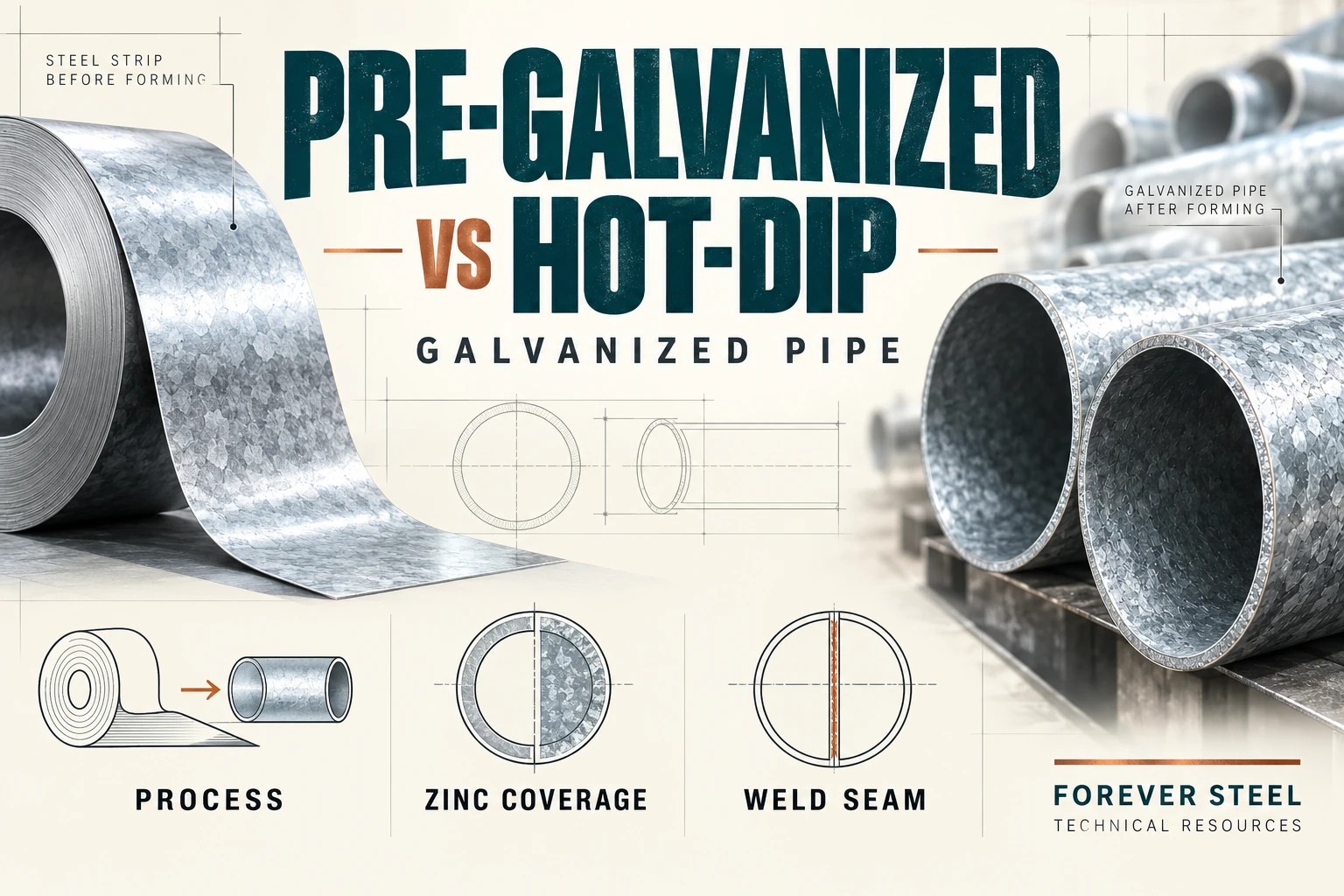
Pre-galvanized pipe is normally made from zinc-coated strip that is subsequently formed and welded. Pipe galvanized after manufacture is formed and welded first, then cleaned and dipped in molten zinc. The sequence matters at the weld, inside the bore and wherever later cutting exposes steel. It also changes what a coating certificate can prove.
When buying hot-dip galvanized steel pipe, write the required sequence into the enquiry. Pre-galvanized strip may itself be hot-dip coated, so “hot dip” alone does not distinguish the two products. A quote stating “Z275” also needs interpretation: for continuously galvanized sheet, that designation represents a coating-mass requirement for both faces together, not 275 μm on each pipe surface.
Specify the same base-pipe dimensions and coating acceptance requirements when comparing pre-galvanized and galvanized-after-manufacture offers. Product names alone leave several cost and inspection variables unresolved.
|
Purchase requirement |
Pre-galvanized pipe |
Galvanized after manufacture |
|
Outside diameter and wall |
Specify the finished-tube dimensions and tolerances. |
Specify the finished-pipe dimensions and tolerances. |
|
Zinc quantity |
Identify the strip coating designation and the acceptance basis for the finished tube. |
Specify the applicable finished-pipe coating requirements. |
|
Weld and bore coverage |
Identify internal and external seam treatment. |
Verify coating coverage and drainage after dipping. |
|
Processed ends |
State cutting, threading and repair requirements. |
State whether end processing occurs before or after galvanizing. |
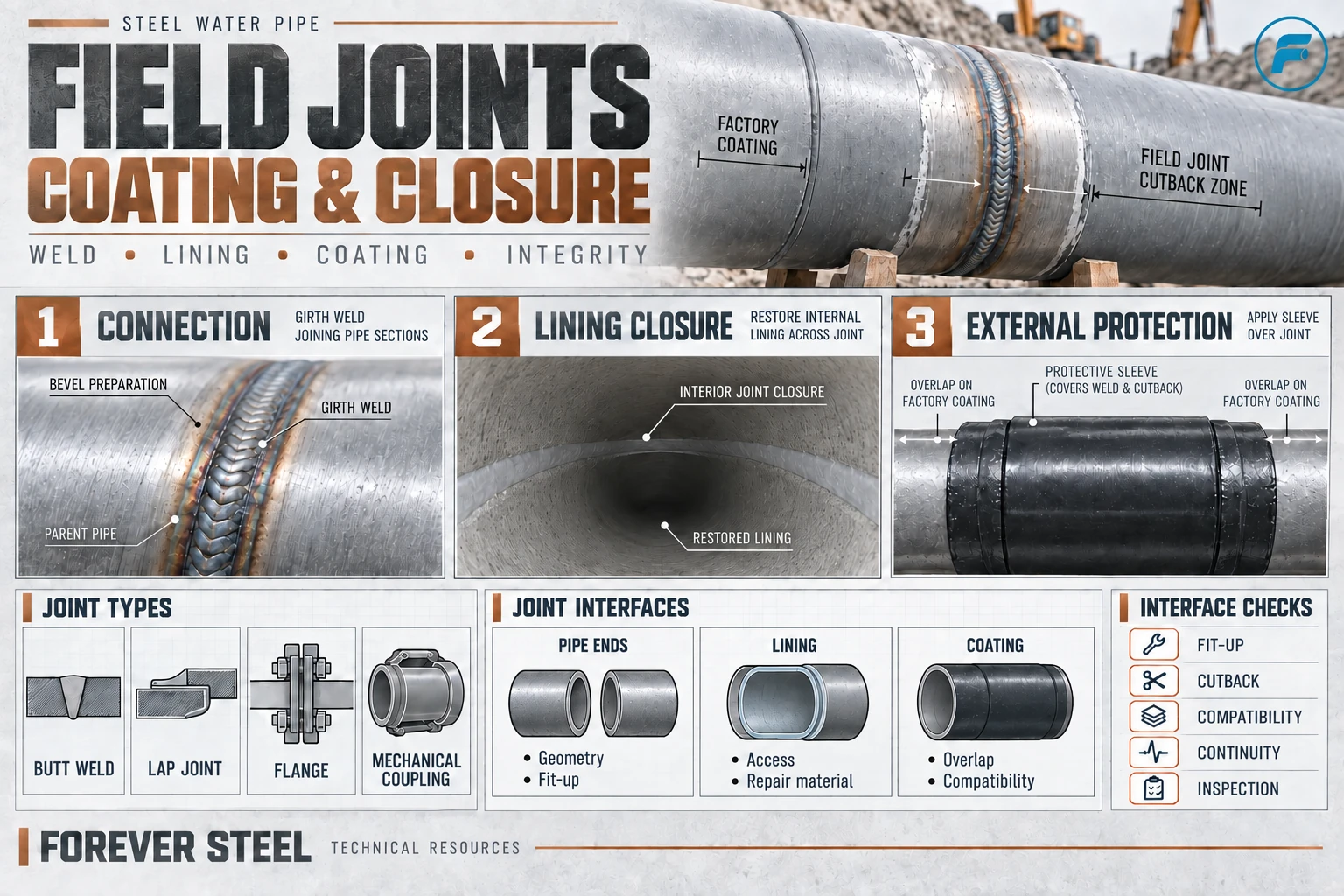
Continuous sheet galvanizing coats the strip before tube forming. Welding introduces a later heat-affected location, and the producer may restore protection at the seam through a separate operation. The repair specification and inspection records should identify external and internal seam treatment separately.
Galvanizing the manufactured tube allows zinc to reach accessible surfaces after welding. The American Galvanizers Association (AGA) explains that tubular items need suitable access, venting and drainage for internal treatment. Finished-pipe inspection confirms internal coverage and checks for drainage defects.
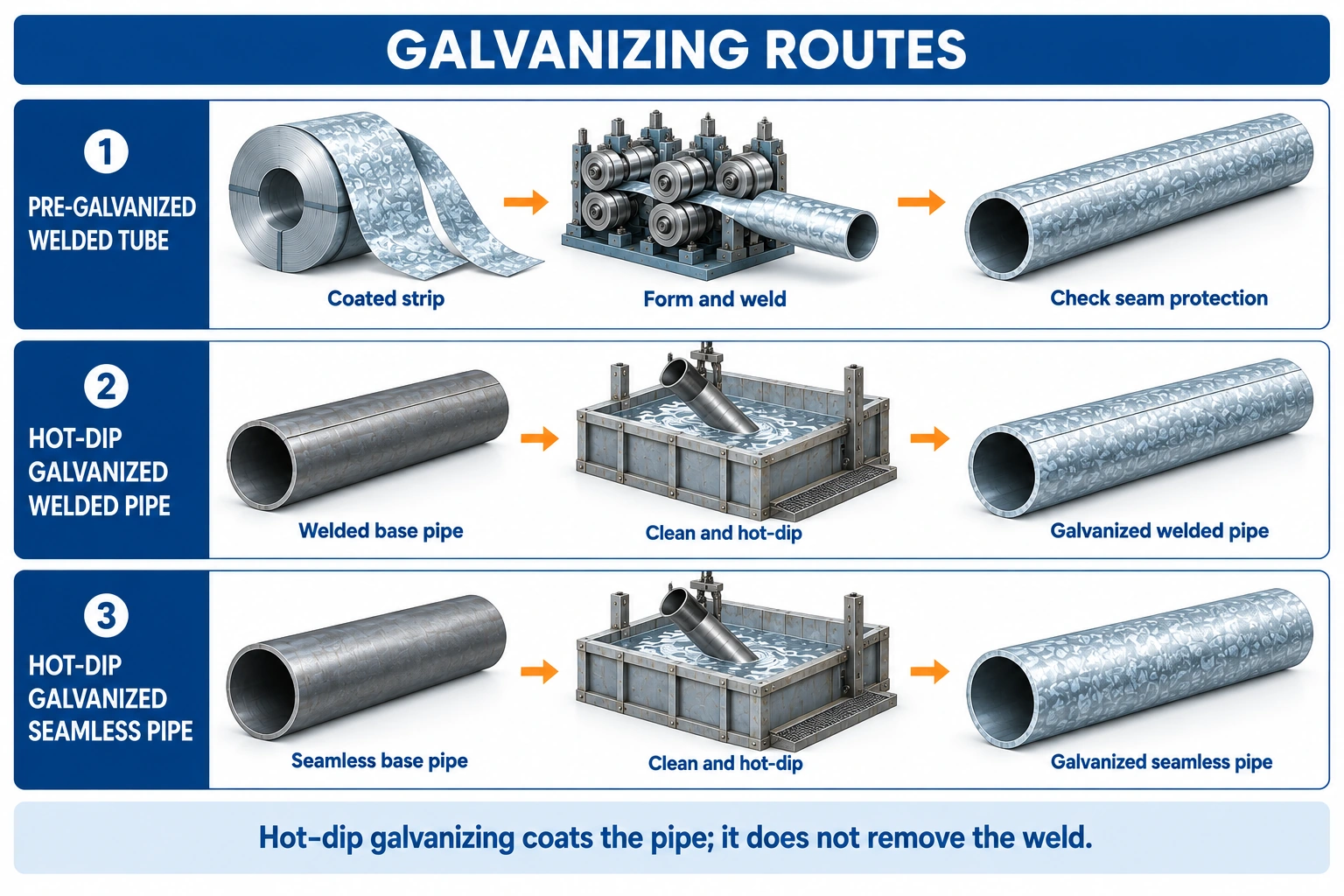
Galvanizing before and after tube manufacture.
|
Location |
Pre-galvanized route |
Galvanized after tube manufacture |
|
Main wall surfaces |
Inherit strip coating; forming and handling occur afterward. |
Receive coating after tube production and surface preparation. |
|
Longitudinal weld |
Coating can be disturbed; identify external and internal restoration. |
Weld is present during dipping; cleanliness and coverage still need inspection. |
|
Bore |
Strip record does not establish internal seam condition. |
Access, cleaning and drainage govern whether coverage is achieved. |
|
Ends and threads |
Cutting after strip coating exposes new surfaces. |
Cutting or threading after dipping can also expose steel. |
Zinc protects steel in two ways. An intact coating separates the steel from its environment. Where a small area of steel is exposed and the conditions support galvanic action, nearby zinc preferentially corrodes and can protect that steel. The extent of this sacrificial protection depends on the exposed area and service environment.
The zinc is nevertheless consumed. Atmospheric exposure also develops a protective patina through wet and dry cycles; that surface film slows zinc corrosion. Exposure conditions therefore matter alongside the amount of zinc initially present. A coating’s salt-spray hours cannot simply be converted into outdoor service years, because continuous laboratory wetting does not reproduce natural patina development. Source: AGA corrosion-protection explanation.
A narrow cut edge next to intact zinc and a long unprotected internal weld have different exposure geometries. Specify the required seam and bore coverage for the component and its service conditions; sacrificial protection alone does not establish acceptable bare-area limits.
GalvInfoNote 1.1 explains that Z275 is a minimum average triple-spot coating mass of 275 g/m² for both sheet faces combined. Using zinc density of 7,140 kg/m³, a 1 μm layer corresponds to 7.14 g/m² on one surface. For an equal split, the equivalent thickness per face is total coating mass ÷ (2 × 7.14).
|
Two-face mass basis |
Calculation |
Equivalent thickness per face |
|
120 g/m² |
120 ÷ 14.28 |
8.4 μm |
|
180 g/m² |
180 ÷ 14.28 |
12.6 μm |
|
275 g/m² (Z275) |
275 ÷ 14.28 |
19.3 μm |
Thus 275 ÷ 14.28 = 19.3 μm per face, assuming equal distribution. This is a calculated equivalent, not a minimum reading at every point. Single-spot limits, face distribution and finished-tube acceptance remain separate. Source: GalvInfoNote 1.1, coating weight and thickness.
A quotation saying only “275 g/m²” does not define the coated area used in the calculation. It could refer to the sheet designation above, or another expressly defined coating basis. Ask which surface area is used and which test method establishes compliance. A local outside reading of 19 μm cannot, by itself, confirm the combined strip designation, bore condition or weld treatment.
For a worked example, take a pipe with 60 mm outside diameter, 3 mm wall thickness and 6 m length. The inside diameter is 54 mm. Assume a uniform coating on the outside and bore, excluding the small end-face area.
Outside area = π × 0.060 × 6 = 1.131 m². Inside area = π × 0.054 × 6 = 1.018 m². Combined area = 2.149 m². The idealized zinc mass is area × coating thickness × zinc density, using thickness in metres and density of 7,140 kg/m³.
|
Assumed uniform coating |
Calculated zinc per 6 m pipe |
Calculated zinc for 100 pipes |
|
20 μm on outside and bore |
2.149 × 0.000020 × 7,140 = 0.307 kg |
30.7 kg |
|
60 μm on outside and bore |
2.149 × 0.000060 × 7,140 = 0.921 kg |
92.1 kg |
|
Difference |
Approximately 0.614 kg per pipe |
Approximately 61.4 kg |
Under these assumptions, the 60 μm coating contains three times as much zinc as the 20 μm coating. The effect on finished-pipe price also depends on steel weight, processing, preparation, production volume, inspection and logistics. Quotations should use the same coating requirement before prices are compared.
At 60 μm, the idealized outside zinc mass is about 0.485 kg; the bore contributes about 0.436 kg. Omitting the bore would exclude nearly half the coated surface area in this example. Actual production mass will vary with local thickness, surface geometry and the coating structure.
Steel wall thickness also affects price per length. For a round carbon-steel tube, theoretical bare mass per metre can be calculated as π × density × (D × t − t²), with D and t in metres. At an assumed steel density of 7,850 kg/m³, the equivalent formula is 0.02466 × (D − t) × t, using millimetres.
|
Illustrative 60 mm OD tube |
Theoretical bare steel mass |
Bare steel in a 6 m length |
|
2.0 mm wall |
0.02466 × 58 × 2 = 2.86 kg/m |
17.16 kg |
|
3.0 mm wall |
0.02466 × 57 × 3 = 4.22 kg/m |
25.30 kg |
The 2 mm option contains about 32% less steel per metre than the 3 mm option at the same OD. A lower price per length could therefore reflect a thinner tube, a lighter zinc coating, or both. Any reduction in wall thickness must still meet the specified pipe standard and design requirements.
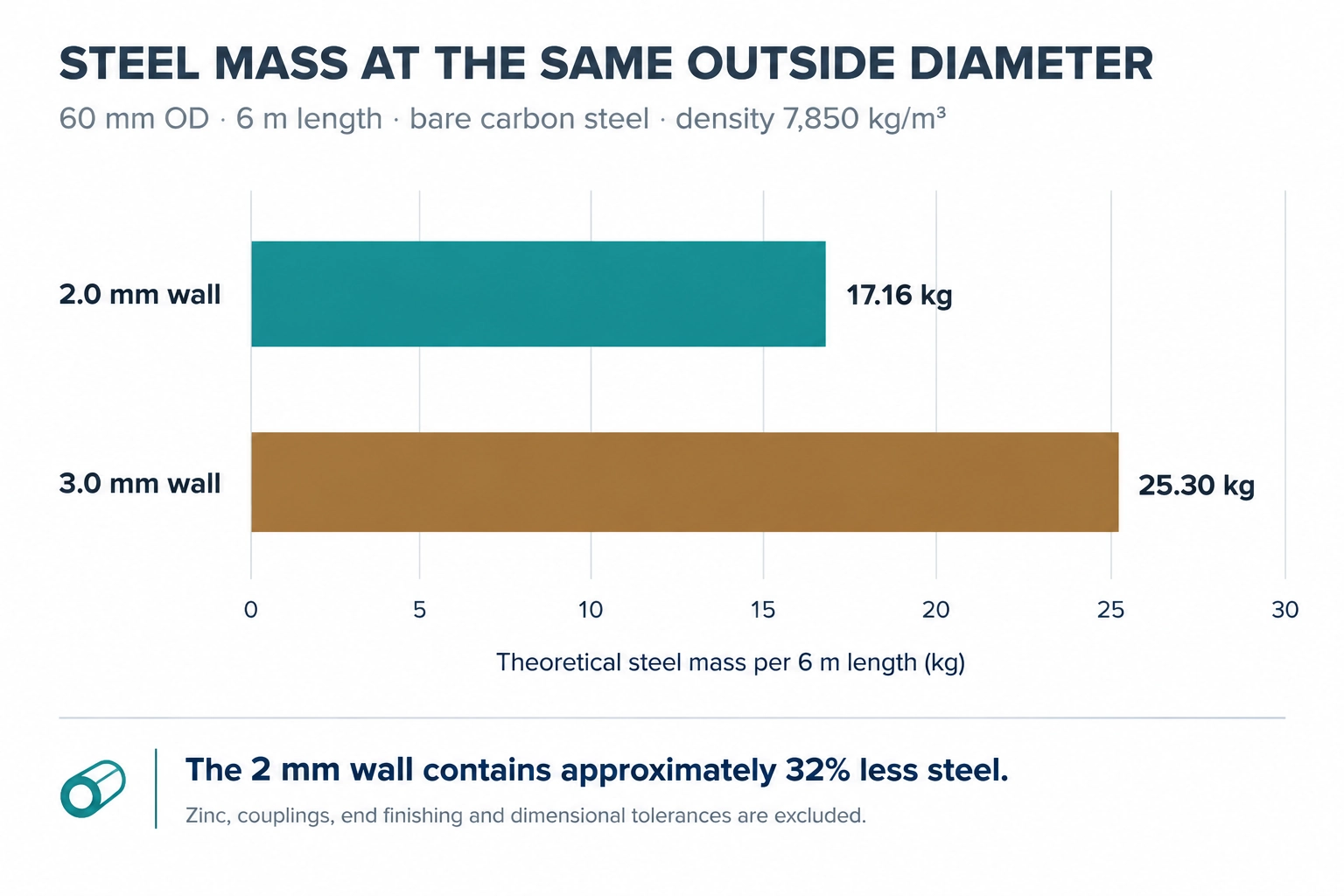
Theoretical bare-steel mass at 60 mm OD, excluding zinc, ends, couplings and manufacturing tolerances. Rounded masses are for comparison.
A repaired seam can look similar to the surrounding coating while using a different process. The AGA describes zinc metallizing as a mechanically bonded sprayed coating, unlike the alloyed bond formed by hot-dip galvanizing. It also identifies access limitations for sprayed coatings in recesses and cavities. Repair records should identify the method used and the surfaces treated, supported by inspection of the finished seam.
Identify whether the repair uses sprayed zinc, zinc-rich paint or another specified system. Then record its preparation, thickness or mass requirement, location and acceptance basis. Do not apply the solid-zinc calculation above directly to a zinc-rich paint film: the film contains other constituents, and equal dry-film thickness does not mean equal metallic zinc mass.
Steel chemistry, particularly silicon and phosphorus, affects the zinc-iron reaction and coating appearance. A matte or locally different finish can still provide the intended protection. Acceptance depends on coating coverage, thickness and adherence under the selected specification. Source: AGA steel-selection guidance.
Closely packed wet tubes with restricted airflow can develop zinc corrosion products during storage or shipment. The condition can range from light surface staining to substantial coating loss. Dry and ventilate affected stock, assess the affected coating and, where necessary, measure the zinc remaining after suitable cleaning. For export packs, drainage and condensation control belong in the packing plan. Source: AGA storage guidance.
Magnetic thickness gauges provide a practical nondestructive method for measuring accessible galvanized surfaces. The AGA also describes microscopy as another thickness assessment method. The inspection report should identify the measurement method, instrument checks and sampled locations, including whether readings cover the body, seam or bore.
Agree the sampling and acceptance rules from the applicable product specification before production. Record outside body and seam observations separately, and define how the internal surface will be assessed. Where the bore is inaccessible to the normal probe, agree on a suitable internal inspection method before production.
Specify the pipe standard as well as the coating route. ASTM A53/A53M includes black and hot-dipped zinc-coated welded and seamless pipe; the order should retain its applicable product requirements alongside any additional coating requirements. For service limits and application selection, use the existing galvanized pipe applications guide.
|
Application |
Supply option |
Selection requirements |
|
Dry indoor furniture or light fabrication |
Consider pre-galvanized tube of the required grade and wall. |
A controlled finish may be valuable; verify weld and cut-edge treatment for the finished item. |
|
Outdoor welded assembly |
Consider galvanizing after fabrication where practical. |
Later welds and cuts otherwise interrupt the original coating; design access, venting and drainage. |
|
Specified fluid-conveyance pipe |
Select the required pipe standard, grade and joint first. |
A zinc-coated structural tube is not automatically a pressure-pipe substitute. |
|
Persistently wet or chloride exposure |
Assess corrosion conditions and coating system separately. |
The word galvanized alone does not establish an adequate service life. |
A plain-end tube galvanized after manufacture may be cut or threaded later, creating freshly exposed steel. State whether the supply includes threads, couplings or grooves and identify the operation sequence. Check that the chosen joint is compatible with the actual OD and wall.
A comparable quotation should specify the base pipe, galvanizing sequence, zinc acceptance criteria, treatment of cut or welded areas and finished-pipe inspection. Include these requirements in the purchase order. The galvanized pipe applications guide covers application and standard selection.
1. Galvanized Steel Pipe Applications: Coating, Standards and Usage Limits
2. ASTM A53 Steel Pipe Procurement Guide: Type, Grade, Dimensions, Testing and Release
3. ASTM A795 vs ASTM A53 Fire Sprinkler Pipe: ERW and Galvanized Options
1. GalvInfo Center — GalvInfoNote 1.1: coating weight and thickness
2. American Galvanizers Association — Zinc Coatings
3. American Galvanizers Association — Tubular fabrications, venting and drainage
4. American Galvanizers Association — Coating thickness inspection
5. American Galvanizers Association — Zinc spraying / metallizing
6. ASTM A53/A53M-24 — Black and hot-dipped zinc-coated pipe
7. American Galvanizers Association — Barrier, cathodic protection and zinc patina
8. American Galvanizers Association — Steel chemistry and coating appearance
9. American Galvanizers Association — Storage and wet storage stain