+8615674993216
 sales@forever-steels.com
 English
 العربية

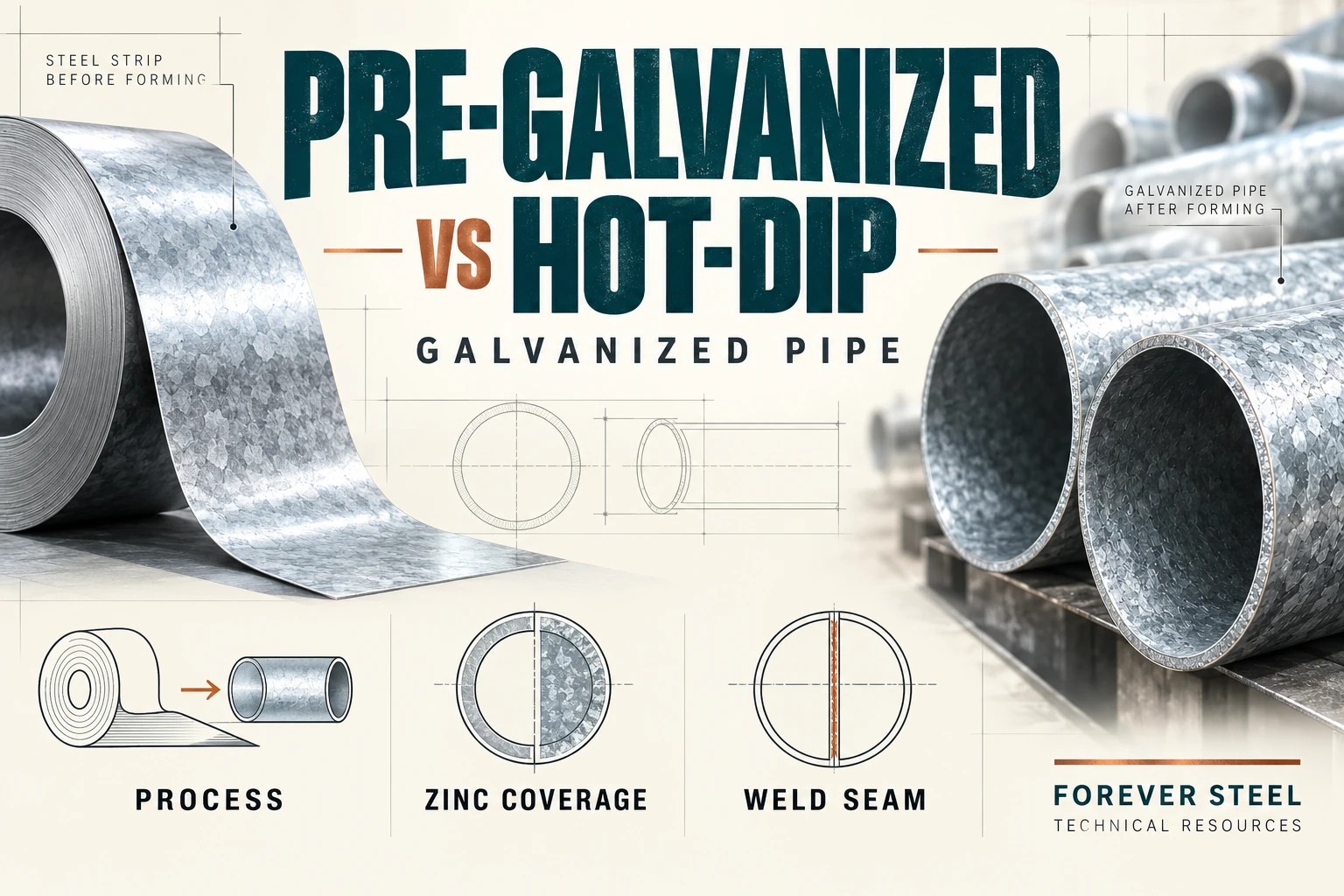
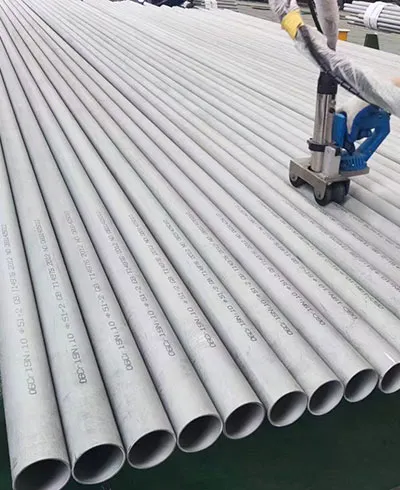
Quick answer: galvanized steel pipe is suitable when the main risk is ordinary atmospheric exposure, handling damage or a project specification that requires zinc-coated pipe. It is not a universal corrosion solution for buried soil, chemical service or long-life transmission lines. A professional RFQ should name the base pipe, wall series or schedule, steel grade, zinc coating requirement, end connection and inspection documents. For welded galvanized pipe, the base product is often ERW steel pipe, but the zinc layer and end processing decide whether the pipe is usable on site.
The weak point in many galvanized pipe orders is standard substitution. A project may still write BS 1387 because the drawing is old or the consultant uses legacy wording. Another project may use EN 10255. A buyer in an inch-based market may ask for ASTM A53 Grade B galvanized pipe. These are not interchangeable by habit. The buyer has to check wall series, thread standard, zinc coating evidence, certificate wording and the service environment.
|
Application |
Better specification route |
Steel grade / material language |
Limit to confirm |
|
Fire sprinkler or exposed fire service |
ASTM A795 or ASTM A53 galvanized where approved |
ASTM A795 Grade A/B; ASTM A53 Grade B common in project RFQs |
System approval, groove/thread quality and compatibility with listed fittings. |
|
Building utility water, air or low-pressure service |
EN 10255 or ASTM A53 by market |
EN 10255 S195T; ASTM A53 Grade A/B |
Water chemistry, pressure, threads, sockets and inside coating condition. |
|
Legacy Middle East / Africa project drawings |
BS 1387 wording often appears; EN 10255 may be proposed as current equivalent route |
BS 1387 Light/Medium/Heavy legacy classes; EN 10255 medium/heavy |
Consultant approval is needed before standard substitution. |
|
Outdoor structures, frames and handrails |
ASTM A53, EN 10255 or structural tube standard by design |
ASTM A500 Grade B/C or EN 10219 S235/S275 when structural tube is specified |
Straightness, weld repair, post-fabrication galvanizing and handling marks. |
|
Buried or corrosive industrial service |
Do not rely on simple galvanizing as the main system |
Base pipe plus engineered coating or lining |
Soil, stray current, chemical exposure and coating holiday risk. |
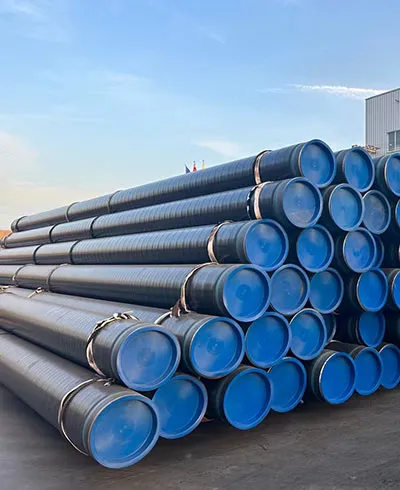
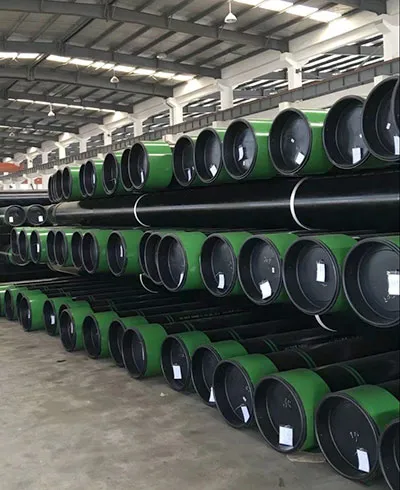
When the exposure changes from indoor or outdoor atmosphere to buried service, the buyer should move the conversation toward 3PE coated steel pipe or FBE coated steel pipe. A bright galvanized surface does not prove long service life in wet soil, coastal splash zones or chemical plant areas. The corrosion mechanism should decide the coating system, not the habit of asking for galvanized pipe.
|
Specification route |
Coating point to write in the inquiry |
Inspection point |
|
ASTM A53 galvanized pipe |
Hot-dip galvanized pipe; coating mass is commonly checked at 1.8 oz/ft2 average, about 0.55 kg/m2. |
Inside and outside zinc coverage, thread condition, pipe marking and MTC/test record. |
|
ASTM A795 galvanized fire pipe |
Black or hot-dipped zinc-coated fire pipe as accepted by project. |
Groove/thread quality, hydrostatic or NDE record and fire system approval package. |
|
EN 10255 galvanized tube |
EN 10255 S195T with galvanizing requirement often linked to EN 10240 where specified. |
Medium/heavy series, BSP threads, sockets, certificate type and local coating thickness. |
|
BS 1387 legacy wording |
Confirm Light, Medium or Heavy class and whether EN 10255 substitution is accepted. |
Wall thickness, thread form, socket supply and coating evidence. |
|
Fabricated item after welding |
Use ISO 1461 or ASTM A123 style project language for post-fabrication galvanizing. |
Vent holes, distortion, coating thickness around welds and touch-up areas. |
This is why a hot-dip galvanized steel pipe quote should not only say OD, wall thickness and length. It should state whether the pipe is hot-dip galvanized after manufacture, whether threading or grooving is done before or after galvanizing, whether couplings are included, and how coating damage at threads, cut ends or welded parts will be handled.
For fire protection or potable-water projects, identify the product approvals, certificates or local acceptance documents required by the project before ordering. Check that the evidence covers the offered pipe, coating and connection arrangement. Also confirm compatibility with valves and fittings, including any specified isolation at dissimilar-metal interfaces; a galvanized finish alone does not establish system acceptance.
|
Buyer assumption |
Where it fails |
Better decision |
|
Galvanized means anti-corrosion |
Internal water quality, trapped moisture or chemical exposure can attack the pipe from inside. |
Check service fluid, temperature, pH, chloride, oxygen and maintenance access. |
|
BS 1387 and EN 10255 are the same |
Wall series, certificate language and consultant approval may not match. |
Show the proposed equivalent standard clearly in the quotation. |
|
A shiny outside means good pipe |
Wet-storage stain, thin zinc, thread damage or poor inside coverage can still create rejection. |
Ask for coating evidence, photos and inspection records before shipment. |
|
It can be buried because it is galvanized |
Soil corrosion and coating damage are different from atmospheric exposure. |
Use designed external coating, field-joint protection and holiday testing. |
Often it can be proposed, especially when the old drawing uses BS 1387 Medium or Heavy wording, but it should not be changed silently. The supplier should state the EN 10255 basis, wall series, thread standard, galvanizing requirement and certificate type so the consultant can approve the substitution
The cheaper quote may use a lighter wall, different base grade, lower coating mass, poor inside zinc coverage, no sockets, weaker packing or a different certificate route. For temporary site service that might be acceptable; for fire, utility water or exposed permanent installation it can become a rejection risk.
It depends on water chemistry and project expectations. Galvanized pipe can be used in some utility and building services, but older water systems often suffer from internal rust and flow loss. If the service is critical, the buyer should ask about lining, alternative materials or a designed coating system instead of relying only on zinc.
Continue with these closely related Forever Steel technical resources: