+8615674993216
 sales@forever-steels.com
 English
 العربية

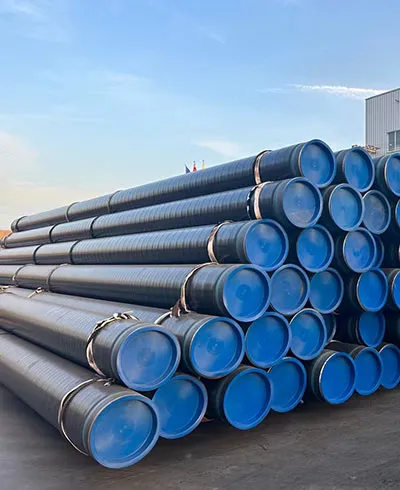
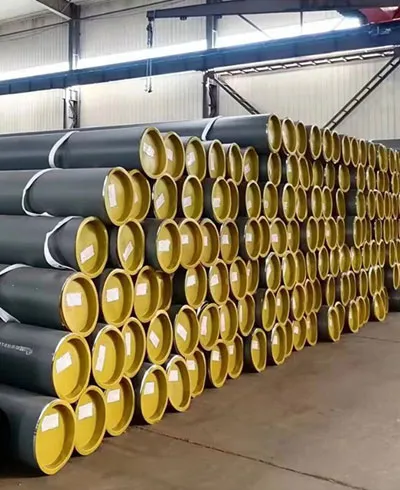
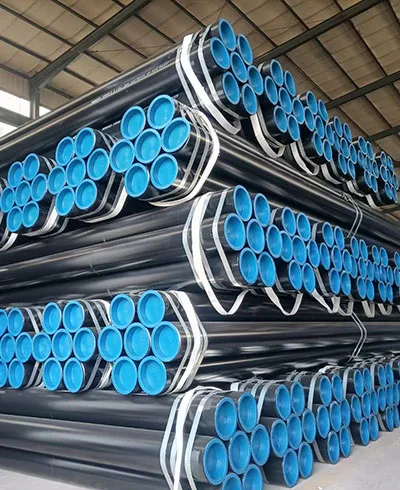
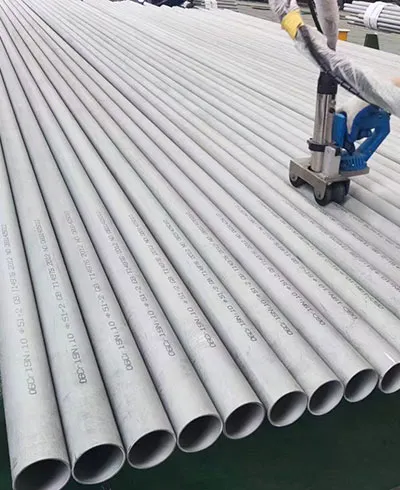
ASTM A53 Type E, EN 10217-1 and API 5L HFW are not three labels for the same pipe. ASTM A53 Type E covers electric-resistance-welded black or hot-dip galvanized pipe for mechanical, pressure and ordinary steam, water, gas and air service. EN 10217-1 covers welded non-alloy steel tubes for pressure purposes at room temperature. API 5L controls line pipe for pipeline transportation systems and separates PSL 1 from the more prescriptive PSL 2 route. Start with the design code and service, then compare grade, dimensions, delivery condition, weld route, testing, inspection certificate and marking. Approve a substitution only through the responsible engineer; never by matching outside diameter and wall thickness alone. [1]-[4]
A buyer often receives one offer marked A53 Grade B ERW, another marked P235TR1 EN 10217-1 and a third marked API 5L Grade B HFW. The commercial descriptions may look close, but each standard was written for a different procurement framework. The first question is therefore not which grade is stronger. It is which standard the piping design, owner specification, regulator and inspection plan require.
ASTM A53 is commonly encountered in general pressure, mechanical and utility piping. EN 10217-1 belongs to the European pressure-tube family and works with EN material designations and inspection-document practice. API 5L is the line-pipe route for oil, gas and other pipeline transportation services. If the project specification names one of these standards, the supplier should quote that standard or submit a documented deviation rather than silently replacing it.
|
Decision point |
ASTM A53 Type E |
EN 10217-1 |
API 5L HFW |
|
Primary context |
General pressure, mechanical and utility pipe |
Welded non-alloy pressure tubes |
Pipeline transportation line pipe |
|
Product terminology |
Type E electric-resistance welded |
Electric welded or submerged-arc welded tube |
HFW line pipe within an API product framework |
|
Grade system |
Grade A or B |
EN steel designations selected by service |
Grade B and X grades; PSL 1 or PSL 2 |
|
Coating/surface |
Black or hot-dip galvanized can be ordered |
Surface condition must be specified |
External coating is normally a separate project specification |
|
Approval question |
Does A53 satisfy the design and end-use code? |
Does the EN grade and test category match? |
Are grade, PSL and service annexes defined? |
The table is a screening tool, not a substitution certificate. Current edition requirements must be checked in the controlled standard and purchase specification. ASTM confirms that A53/A53M-24 includes Type E Grades A and B and covers black and hot-dip galvanized pipe. BSI identifies BS EN 10217-1:2019 as the current published base document on its catalogue page. API published the 47th edition of Spec 5L in June 2026, with additional attention to HFW quality. [1]-[3]
A grade name does not describe the whole product. For each quotation, request the exact standard edition, manufacturing route, steelmaking route, delivery condition, dimensional basis, test schedule, inspection certificate type, marking and traceability method. API 5L PSL 2, for example, carries a different control package from a generic Grade B statement. EN inspection documents also use a different vocabulary from ASTM mill test reporting.
The MTC should connect the delivered bundle to heat identity, chemistry, mechanical tests, dimensions and required product tests. It should not contain a vague dual-standard claim with no evidence matrix. If dual certification is offered, ask the supplier to show how every mandatory requirement of both named editions is met.
1. Is the proposed standard permitted by the design code, owner specification and regulatory basis?
2. Does the proposed grade meet strength, toughness, temperature and service requirements without changing design assumptions?
3. Are OD, wall, mass, length, end finish and tolerances compatible with fittings, supports and fabrication?
4. Are hydrostatic, nondestructive, mechanical and supplementary tests equivalent to the purchase requirement?
5. Will certificates, marking, traceability and third-party inspection remain acceptable to the owner?
When requesting ERW steel pipe, state the application and governing design basis before the product description. A defensible RFQ should include: standard and edition; grade; pipe type or weld route; OD/NPS and wall basis; length; ends; black, galvanized or other surface condition; test and inspection requirements; certificate type; marking; quantity; destination; and any owner-approved deviations.
Recommended wording: ‘Supplier shall quote the specified standard and edition. Any alternative standard shall be identified as a deviation and supported by a clause-by-clause technical comparison covering grade, manufacture, dimensions, tolerances, testing, inspection documents and marking. No substitution is approved by quotation acceptance alone.’
· Treating ERW and HFW as complete specifications instead of manufacturing-route descriptions.
· Approving an alternative because the OD and nominal wall match while ignoring tolerance and mass basis.
· Assuming Grade B carries identical chemistry, testing and documentation across ASTM and API systems.
· Ordering galvanizing, coating or end processing without checking whether it is integral to the named standard or a separate requirement.
· Using a supplier's historical certificate as proof for a new mill, size, grade or edition.
The correct ERW standard is the one that fits the service, design basis and acceptance system. ASTM A53 Type E, EN 10217-1 and API 5L HFW can overlap in commercial discussions, but they are not automatically interchangeable. Buyers reduce risk by freezing the governing standard first, then comparing manufacturing route, grade, dimensions, testing, documentation and marking through a controlled deviation process.
Check the commercial scope on the ERW Steel Pipe page. If the manufacturing route is still open, compare alternatives in the Welded Steel Pipe category; verify the proposed route against the ERW Workshop.
A53 Type E, EN 10217-1 and API 5L HFW describe products inside different design and conformity systems. A substitution review therefore has to preserve the engineering function of every requirement: service scope, ordered grade, dimensional basis, delivery condition, weld route, heat treatment, mechanical tests, NDE, hydrostatic test, inspection document and marking. A table that maps only Grade B to P235TR1 or API Grade B is not an equivalency assessment; it is merely a strength-level comparison.
Begin by separating mandatory requirements from purchaser options. A requirement printed in the governing design specification or owner data sheet has higher authority than a supplier's catalogue. Purchaser options become mandatory only when invoked in the purchase order. Where two documents use different test categories or inspection-document systems, the proposed substitute should meet the more demanding requirement or list the unresolved difference for engineering approval.
|
Review layer |
Question to close |
Objective evidence |
|
Design authority |
Which code, owner standard and service definition govern? |
Line list, material class, piping specification, approved deviation procedure |
|
Product identity |
Are process, grade, PSL/category and delivery condition unambiguous? |
Purchase description, MPS and controlled standard editions |
|
Properties |
Are chemistry, tensile, toughness, hardness or forming needs equivalent? |
Heat-specific MTC and test reports; not catalogue typicals |
|
Examination |
Do NDE method, coverage, calibration and acceptance match? |
Approved procedure, calibration records and pipe-level report |
|
Traceability |
Can every pipe be connected to heat, coil and test records? |
Marking map, tally, MTC and release dossier |
Assume an inquiry names ASTM A53 Grade B Type E, NPS 8, Schedule 40, black pipe, beveled ends and hydrostatic testing, while a supplier offers EN 10217-1 P235TR1 at the same nominal size. The first comparison is dimensional: NPS/Schedule and an EN outside-diameter-by-wall description may not express the same ordered tolerance. Next compare service and design acceptance, steelmaking and delivery condition, weld route, required tests, inspection certificate and marking. If the owner specification requires an ASTM designation on the MTC, the EN offer is a deviation even when calculated pressure capacity appears adequate.
The correct commercial response is a deviation register with one row per difference, a proposed mitigation, and an approval owner. It is not acceptable to relabel the EN product as A53 after manufacture. Similarly, API 5L Grade B HFW should not be offered as A53 Type E without demonstrating all invoked A53 requirements and obtaining written acceptance.
|
Deviation |
Risk if hidden |
Disposition |
|
Different dimensional tolerance |
Fit-up, mass, pressure calculation or coupling mismatch |
Compare controlled tables and obtain design approval |
|
Different inspection certificate |
Missing declared results or purchaser verification |
Specify required EN 10204 certificate and content |
|
Different NDE route |
Unequal seam coverage or acceptance basis |
Align method, coverage, reference standard and reporting |
|
Different marking |
Material identity becomes ambiguous at receipt |
Approve dual/alternative marking only with traceability controls |
Quote the specified standard and edition without substitution. If an alternative is proposed, attach a clause-by-clause deviation schedule covering scope, manufacturing process, grade, chemistry, mechanical properties, dimensions and tolerances, heat treatment, NDE, hydrotest, inspection documents, marking and purchaser options. State every proposed deviation in the quotation; silence shall not constitute acceptance. Production shall not begin until the responsible engineer approves the disposition in writing.
TWI's process description shows why a standard name alone is not a manufacturing equivalency: HF induction welding forms strip through rolls, concentrates current at the strip edges and consolidates the joint through squeeze rolls. The offer still has to prove the ordered product requirements, testing and traceability; the process description cannot substitute for the governing specification.
Continue with these closely related Forever Steel technical resources:
· ASTM A53/A53M-24 - Official ASTM scope for black, galvanized, welded and seamless pipe, including Type E.
· BS EN 10217-1:2019 - Official BSI catalogue entry for welded non-alloy pressure tubes.
· API Specification 5L, 47th Edition - Official API announcement for the current line-pipe edition.
· ISO 3183:2019 - Official ISO scope for PSL 1 and PSL 2 welded and seamless line pipe.
· TWI — What Is High Frequency Induction Welding? - Independent technical-institute explanation of the HFI pipe-forming and weld-consolidation process.