+8615674993216
 sales@forever-steels.com
 English
 العربية



Does the strength on your pipe MTC match the ordered grade? Compare the property before comparing the number.
When customers ask us why X52 appears as L360 in a steel pipe material reference, the short answer is:52 ksi converts to about 358.53 MPa, but the grade's specified limit must come from the ordered standard—not from converting the number in its name.Mannesmann's L360/X52 reference, for example, lists a minimum yield strength of 360 MPa. [7]
It is easy to see why this raises questions when you are checking a mill test certificate (MTC). The grade name, the required minimum and the mill's measured result can all show different numbers. They describe different things, so a calculator can only answer part of the question.
To convert ksi to MPa, multiply by 6.894757; to go back to ksi, divide by the same factor.A reported yield strength of 450 MPa is therefore about 65.27 ksi. [1, 2] When reviewing an API 5L seamless line pipe offer, keep that result beside its original property label and specified limit. A higher measured value does not, on its own, change the pipe's certified grade.
Jump to: Identify the value | ksi to MPa chart | X52 vs L360 | MTC comparison | FAQ
|
Number in the inquiry or certificate |
What it represents |
How to use it |
|
Grade designation such as X52 or L360 |
Material identification within a standard |
Match the ordered grade, edition and product requirements |
|
Specified minimum or maximum |
Acceptance limit for a defined property |
Keep the governing standard's unit basis |
|
Actual test result |
Measured property for an identified specimen |
Convert for comparison without changing its identity |
A supplier's typical value is a fourth category. It describes expected behavior, not necessarily a guaranteed minimum. SSAB explicitly separates guaranteed, typical and nominal material data. When an offer gives a strength number, ask which category it belongs to. [6]
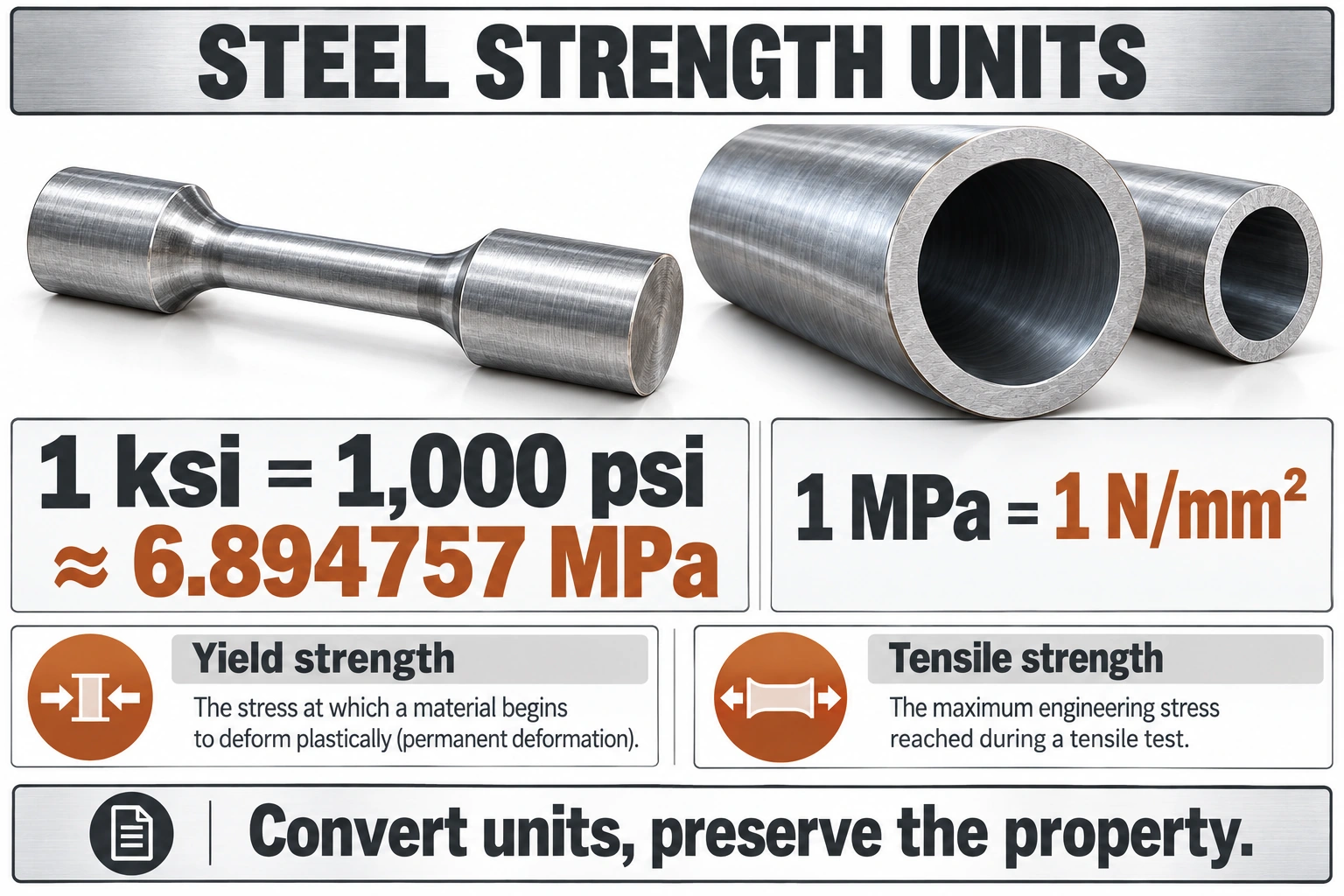
Figure 1. Stress units for a reported material property. These relationships do not convert yield strength into tensile strength. Sources [1] and [2].
The values below are calculated conversions rounded to two decimal places. They are not an API or ASTM grade acceptance table. The same factor applies to a stress value whether it is reported as yield strength, proof stress or tensile strength. [1, 2]
|
ksi |
MPa |
N/mm² |
|
20 |
137.90 |
137.90 |
|
30 |
206.84 |
206.84 |
|
35 |
241.32 |
241.32 |
|
36 |
248.21 |
248.21 |
|
40 |
275.79 |
275.79 |
|
42 |
289.58 |
289.58 |
|
45 |
310.26 |
310.26 |
|
50 |
344.74 |
344.74 |
|
52 |
358.53 |
358.53 |
|
55 |
379.21 |
379.21 |
|
60 |
413.69 |
413.69 |
|
65 |
448.16 |
448.16 |
|
70 |
482.63 |
482.63 |
|
75 |
517.11 |
517.11 |
|
80 |
551.58 |
551.58 |
|
90 |
620.53 |
620.53 |
|
100 |
689.48 |
689.48 |
|
110 |
758.42 |
758.42 |
|
125 |
861.84 |
861.84 |
For example,60 ksi ≈ 413.69 MPa. If 60 ksi is the reported tensile strength, the converted number describes tensile strength. It says nothing about the sample's yield strength unless a separate yield result is supplied.
|
MPa |
ksi |
psi |
|
235 |
34.08 |
34,084 |
|
250 |
36.26 |
36,259 |
|
275 |
39.89 |
39,885 |
|
290 |
42.06 |
42,061 |
|
315 |
45.69 |
45,687 |
|
345 |
50.04 |
50,038 |
|
355 |
51.49 |
51,488 |
|
360 |
52.21 |
52,214 |
|
415 |
60.19 |
60,191 |
|
450 |
65.27 |
65,267 |
|
485 |
70.34 |
70,343 |
|
500 |
72.52 |
72,519 |
|
550 |
79.77 |
79,771 |
|
560 |
81.22 |
81,221 |
|
690 |
100.08 |
100,076 |
|
760 |
110.23 |
110,229 |
|
860 |
124.73 |
124,732 |
MPa values are converted directly; the psi column is rounded to the nearest whole psi. Use the underlying calculation, rather than a rounded table entry, when reconciling results close to a specified limit.
The arithmetic is straightforward: 52 ksi × 6.894757 ≈ 358.53 MPa. In contrast, Mannesmann's public API 5L PSL 1 page identifies the grade as L360 / X52 and lists a minimum yield value of 360 MPa, with an approximate psi value of 52,200. The page illustrates why a grade label is not a calculator input for reconstructing every acceptance limit. [7]
|
Value being compared |
Value in MPa |
Its role |
|
Mathematical conversion of 52 ksi |
Approximately 358.53 |
Unit conversion only |
|
Yield minimum on the cited L360 / X52 page |
360 |
Manufacturer's published material reference |
|
Example measured result |
359 |
Hypothetical specimen result, not a grade definition |
An illustrative result of 359 MPa exceeds the conversion of 52 ksi but falls below 360 MPa. The ordered specification, unit system and rounding rules determine which limit governs. The manufacturer's reference illustrates the distinction; it does not replace the standard edition on the order.
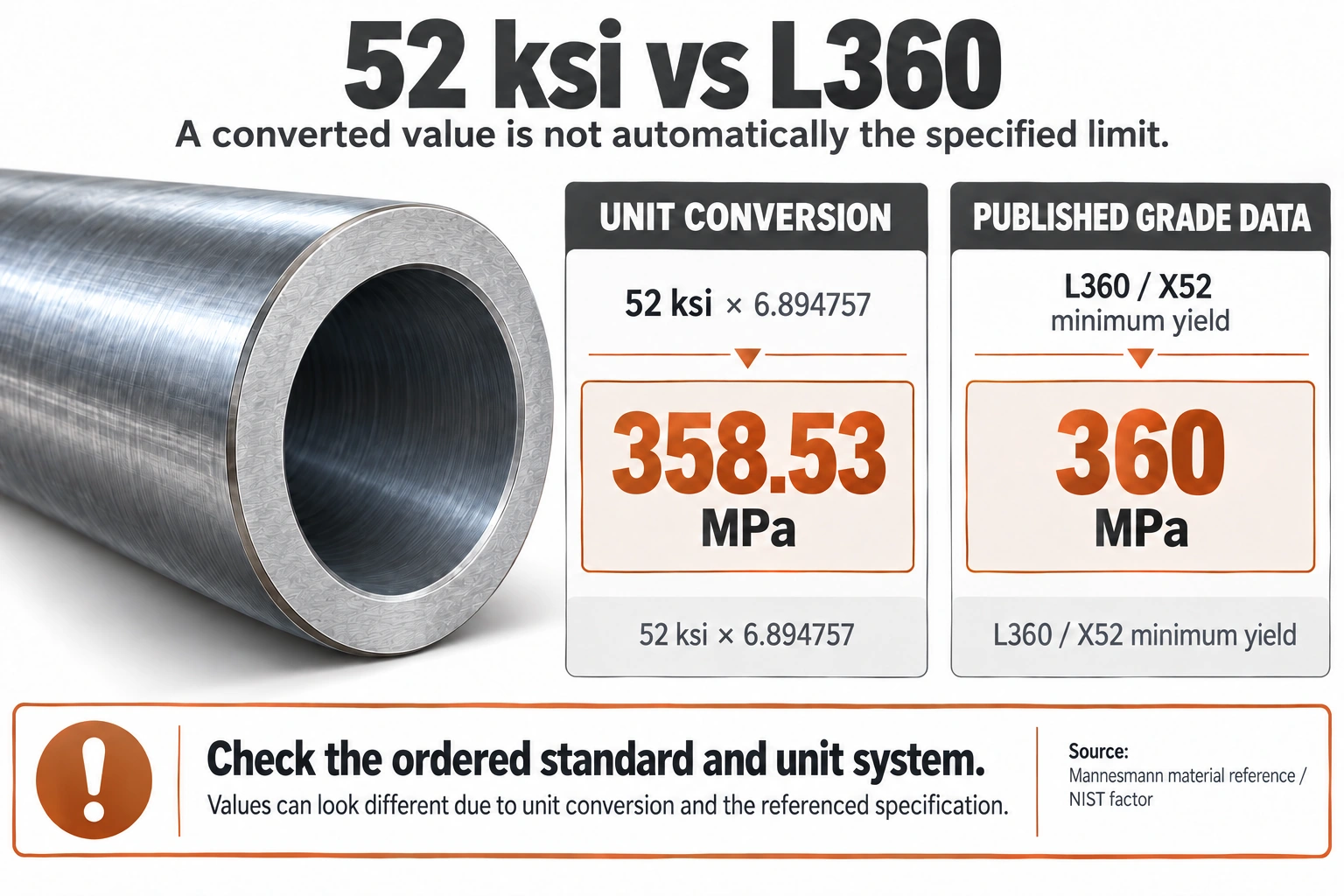
Figure 2. A converted number and a published grade requirement serve different purposes. Verify the governing requirement in the ordered specification.
ASTM A53/A53M-24 gives SI and inch-pound values as separate systems that may not be exact equivalents. Use each system independently as that specification requires; do not assume the same rule applies to every standard. [5]
A converted value is not automatically the contractual limit.Use the ordered specification, edition and unit system for acceptance, and label any calculated value as a reference.
Ksi means kilopound-force per square inch: 1 ksi = 1,000 psi. MPa means megapascal. Since a pascal is one newton per square meter, 1 MPa is exactly 1 N/mm². Both expressions can therefore describe the same stress without changing its numerical value. [1]
|
Conversion |
Calculation |
Example |
|
ksi to MPa |
ksi × 6.894757 |
80 ksi ≈ 551.58 MPa |
|
MPa to ksi |
MPa ÷ 6.894757 |
450 MPa ≈ 65.27 ksi |
|
ksi to psi |
ksi × 1,000 |
80 ksi = 80,000 psi |
|
MPa to N/mm² |
Keep the same number |
450 MPa = 450 N/mm² |
Force in kN cannot be converted to stress in MPa without an area. Engineering stress uses force divided by the specimen's original cross-sectional area. [3]
For an illustrative tensile specimen carrying 50 kN over an original area of 100 mm², engineering stress is 50,000 N ÷ 100 mm² = 500 MPa, approximately 72.52 ksi. This example is a specimen calculation, not a pipe pressure-capacity calculation.
Yield strength describes the onset of plastic deformation under the applicable test definition. Offset yield or proof stress uses a specified offset when required by the test method. Tensile strength is based on the maximum engineering tensile stress reached during the test. These are separate results even when they share the same units. [3, 4]
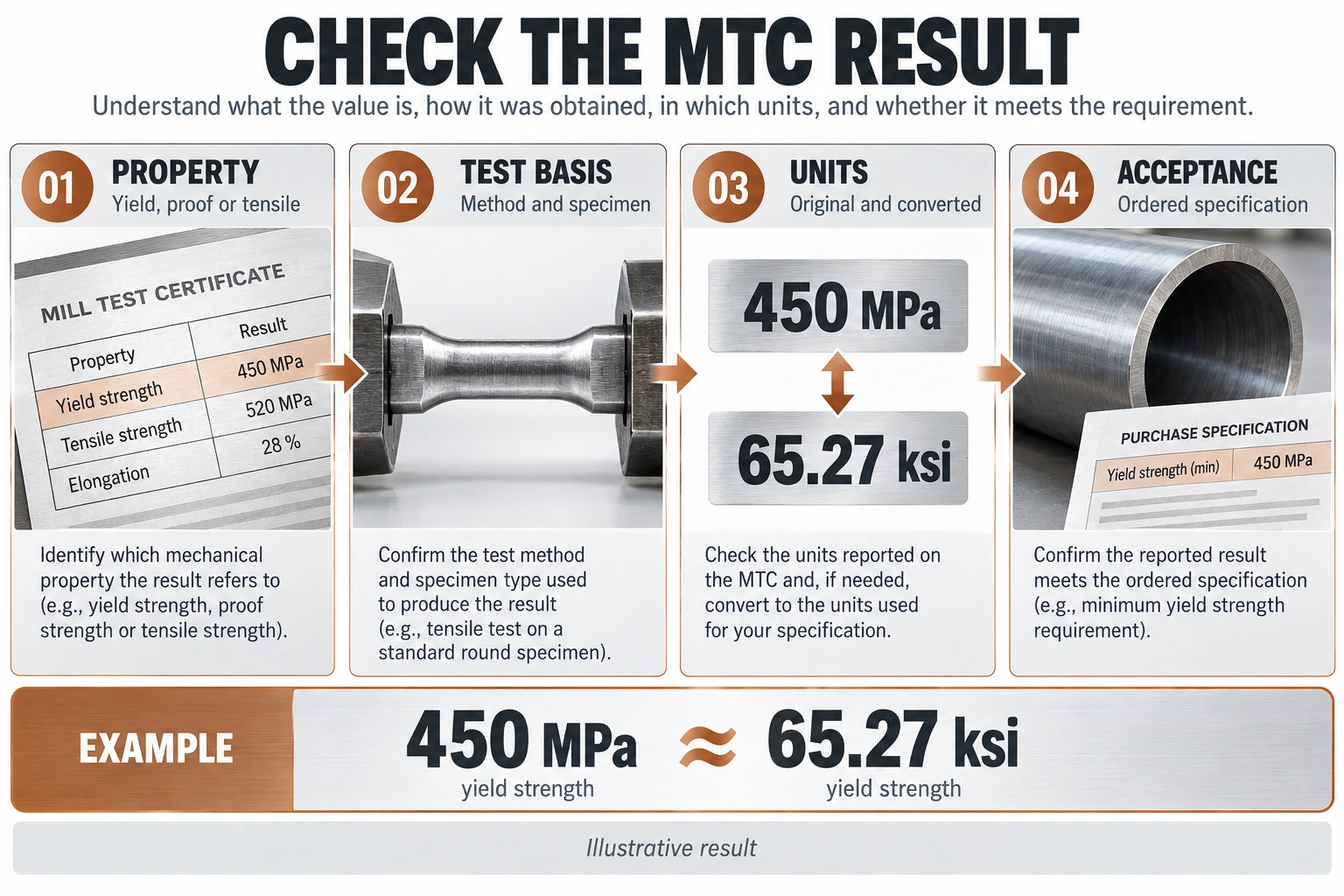
Figure 3. Compare the same property under the specified test and acceptance basis before using a converted result.
|
Certificate entry |
Meaning for comparison |
Check before conversion |
|
Yield strength |
Yield result under the stated method |
Definition and method used |
|
Rp0.2 or 0.2% proof stress |
Stress at the stated proof criterion |
Whether this is the required criterion |
|
Rm or tensile strength |
Maximum engineering tensile stress |
Match to the tensile requirement |
|
Elongation |
Extension reported as a percentage |
Gauge length and specimen basis; do not convert to MPa |
If the certificate lists only “strength 550 MPa,” request the property identification. Converting an incomplete label to ksi does not make it suitable for acceptance review. Keep specimen orientation, test temperature and material identification with the result wherever they are required by the order or test method.
Consider an illustrative certificate that reports yield strength of 450 MPa and tensile strength of 560 MPa. The unit conversions are:
|
Property |
Original result |
Converted reference value |
|
Yield strength |
450 MPa |
Approximately 65.27 ksi |
|
Tensile strength |
560 MPa |
Approximately 81.22 ksi |
These are illustrative calculations, not a Forever Steel certificate. Compare each property with its own specified minimum and, where applicable, maximum, using the required test and unit basis.
If an illustrative minimum is 450 MPa, a reported result of 449 MPa is lower than that number before any applicable rounding rule is considered. Converting it to approximately 65.12 ksi and rounding both requirement and result to 65 ksi would hide the difference. Follow the specified rounding and acceptance rules; do not invent a new rule in a spreadsheet.
Suppose an X52 certificate reports 450 MPa yield strength, approximately 65.27 ksi. That result alone does not certify the pipe as X65. Retain the grade shown on the certificate and check the full ordered requirements; a single measured value is not a new grade designation.
The same restriction applies when a buyer asks whether X52 can replace S355 because their yield figures look close. Unit conversion answers the numerical question. Product standard, delivery condition, dimensions and tolerances, chemistry and required testing remain part of a separate substitution review. Request approval against the project specification instead of relabeling the offer.
Before comparing results, match the certificate fields below. A pipe-body result and a seam-weld result, or results with different specimen directions, should not be silently treated as duplicate measurements of the same specimen.
|
MTC field |
Check in the comparison sheet |
If it is missing |
|
Heat, test unit and specimen identity |
Link each result to the supplied pipe |
Request the certificate or test-record cross-reference |
|
Pipe body or weld; specimen direction |
Preserve the original location and direction |
Ask the mill to identify the test, without assigning a guessed label |
|
Yield/proof or tensile property |
Compare with the corresponding requirement |
Request the original property heading and test method |
This is a document-matching checklist, not a prescribed sampling plan. Use the ordered standard for required specimen locations and acceptance rules.
Supplier A reports450 MPa yield strength; supplier B reports65.3 ksi tensile strength, approximately 450.23 MPa. The numbers are close, but they describe different properties. Compare the same required property and test definition. Keep labels such as ReH or Rp0.2 rather than relabeling every result “YS.”
If a label is missing, ask: “Is 65.3 ksi a measured yield result, a measured tensile result or a guaranteed limit? Please identify the test method and specimen.”
Yield ratio is yield strength divided by tensile strength, using the same units. [8] For the example above, 450 ÷ 560 = 0.803571, or about0.804. Converting both values to ksi preserves the ratio before rounding because the conversion factor cancels. Dividing 450 MPa directly by 81.22 ksi does not.
No acceptance ratio is implied by this example. Similar converted strengths also do not establish material equivalence: chemistry, delivery condition and required testing still matter.
|
Item on a material certificate |
Can the ksi to MPa factor be used? |
What is needed instead |
|
Yield or tensile stress in ksi |
Yes, for the same reported property |
Original result and specified acceptance basis |
|
Tensile force in kN |
No, not without area |
Original specimen area for engineering stress |
|
Elongation A50 or A80 in percent |
No |
Specimen and gauge-length basis |
|
Hardness HBW, HRC or HV |
No |
Applicable material-specific correlation or required test |
|
Impact energy in J |
No |
An energy conversion, if needed, and the test conditions |
SSAB explains that A50 and A80 identify different elongation gauge lengths and that hardness does not have a direct universal conversion to yield strength. Keep these fields out of the stress-unit conversion column. [6]
Keep the original result, property label, test method, applicable limit and converted reference together. Retain the standard and edition, grade, heat number and specimen identity so the calculation stays attached to the correct material.
For checks beyond unit conversion, see how to read a steel pipe MTC.
The converted result is approximately 65.27 ksi, but one measured property does not change the certified grade. Quote the documented grade unless the manufacturer establishes compliance and certification to the requested grade and the purchaser accepts it.
No. That field reports a pressure used in the identified hydrostatic test. Yield and tensile strength belong to the mechanical-test results. The shared MPa unit does not make the fields interchangeable.
The calculator converts the number 52 ksi. X52 is a grade designation, and the applicable specification supplies the actual requirements. Mannesmann's L360 / X52 reference lists 360 MPa; verify the ordered standard rather than changing its limit to the calculator result. [7]
Yes. 1 MPa = 1 N/mm² exactly. A stress value of 450 MPa can therefore be written as 450 N/mm² without changing the number.
No. Unit conversion changes how a property is expressed. Yield strength and tensile strength are different measured properties; one cannot be obtained from the other with the ksi-to-MPa factor.
No. Material stress and internal fluid pressure are different quantities in the pipe assessment, even though both can use MPa. Pipe dimensions, temperature, design rules and other applicable conditions are needed to establish a permitted service pressure.
No, provided both yield and tensile strength are converted consistently and intermediate values are not prematurely rounded. The same factor appears in the numerator and denominator and cancels.
Convert the number only after identifying the property and test basis. Preserve the original certificate value, show the converted value as a reference and compare against the ordered specification. This keeps a simple unit calculation from becoming an unintended change to the material requirement.
For a steel pipe quotation, send the grade, dimensions, specification and edition, together with the required mechanical tests and certificate requirements.
· Steel pipe inspection checklist before shipment — connect certificate results to the delivered pipe and release records.
1. NIST Guide to the SI Conversion Factors — stress and force units.
2. KOBELCO Welding Handbook — tensile stress conversion reference.
3. Instron Tensile Strength — stress, force and tensile strength.
4. Instron Yield Strength — yield and offset yield definitions.
5. ASTM A53/A53M-24 Public Scope — independent use of the two unit systems.
6. SSAB Questions About Steel Material Data — guaranteed, typical and nominal values; elongation and hardness distinctions.
7. Mannesmann L360 / X52 Material Reference — API 5L PSL 1 grade label and published mechanical properties.
8. SSAB Questions About Steel — yield-ratio definition.
Sources checked 12 October 2026. Calculated tables do not replace the ordered standard or its acceptance rules.