+8615674993216
 sales@forever-steels.com

 English
 العربية



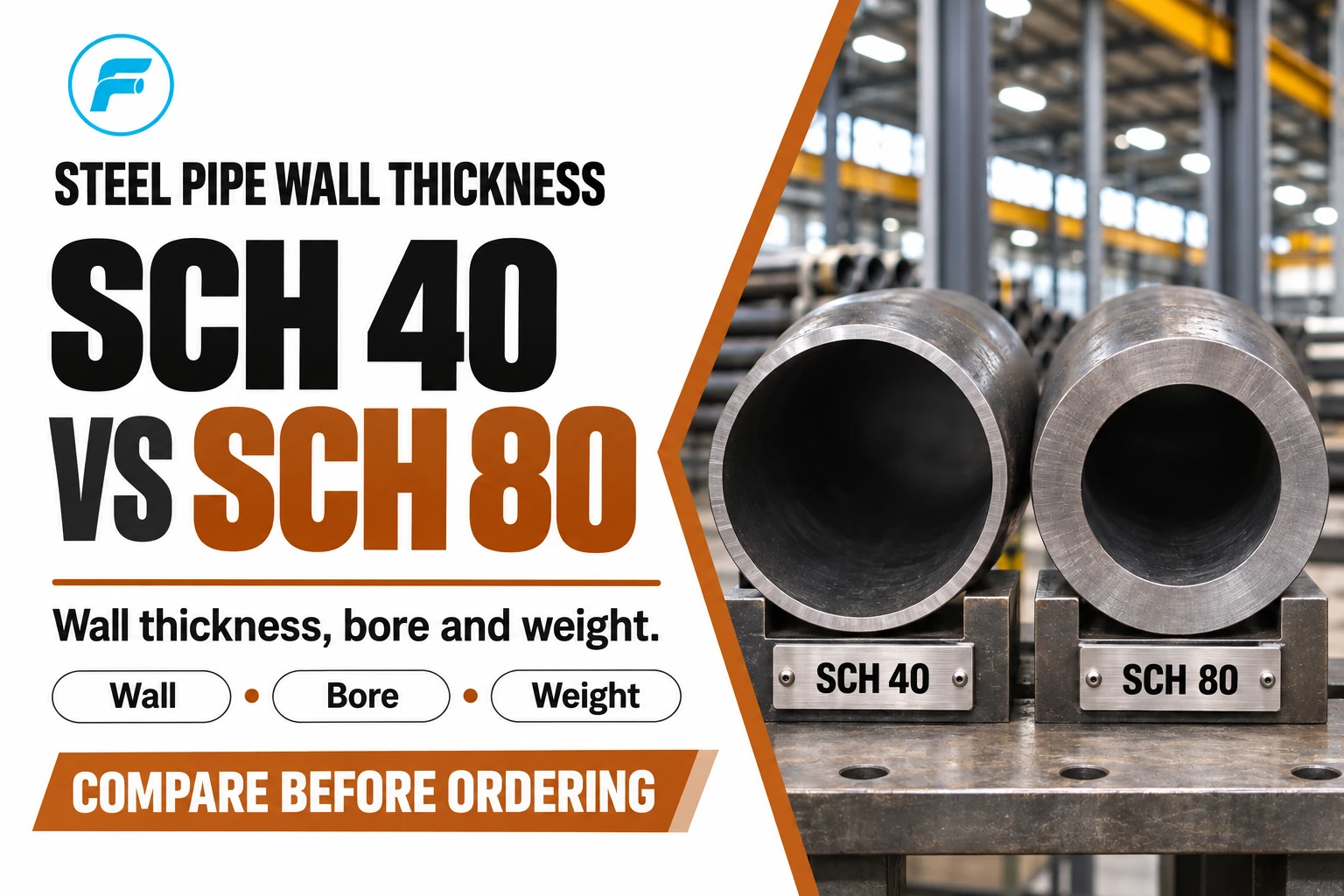
At the same NPS, SCH 40S stainless pipe has a thicker nominal wall, smaller bore and greater mass than SCH 10S, while the outside diameter is unchanged. The S suffix identifies the ASME B36.19 wall series. Neither schedule establishes a universal pressure rating. Choose the wall from the approved design and check welding, corrosion allowance, handling and connection requirements before ordering.
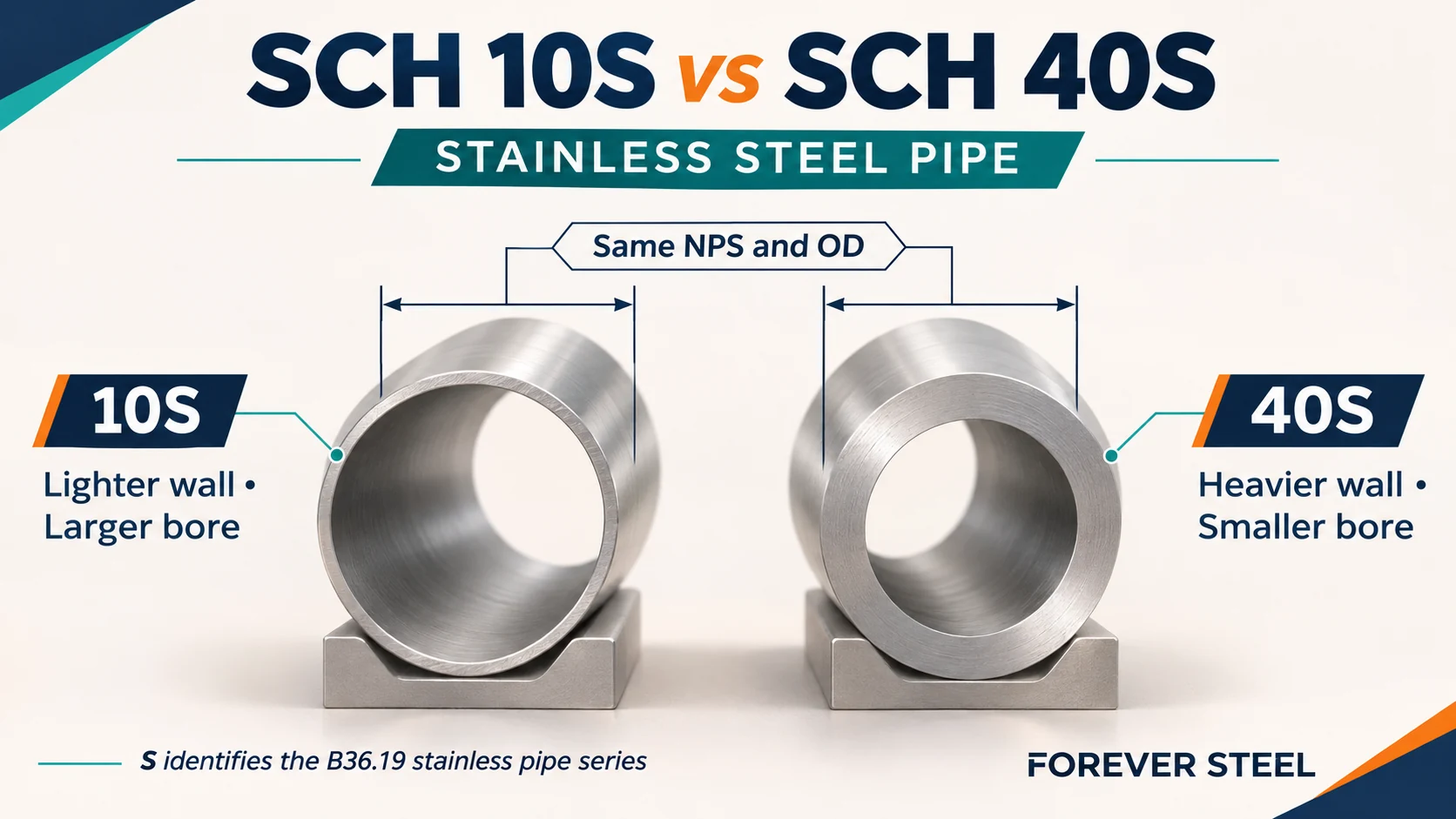
Figure 1. A change in wall series changes the bore at the same nominal size. Schematic, not to scale.
In a stainless steel (SS) pipe enquiry, wording such as “SCH 10 SS pipe” should be clarified against the intended dimensional series. ASME B36.19 uses 5S, 10S, 40S and 80S. Material grade and wall series are separate fields: TP304L or TP316L identifies a material requirement; 10S or 40S selects nominal dimensions at a stated NPS. See our ASME B36.10 vs B36.19 guide for the standard boundaries.
Schedule 10 pipe thickness varies with NPS. Confirm whether an order means the stainless 10S series before selecting a value from Table 1; “10” alone is not a wall thickness in millimetres.
Table 1. Selected stainless pipe dimensions, in / mm
|
NPS |
Outside diameter |
5S wall |
10S wall |
40S wall |
|
1 |
1.315 / 33.40 |
0.065 / 1.65 |
0.109 / 2.77 |
0.133 / 3.38 |
|
2 |
2.375 / 60.33 |
0.065 / 1.65 |
0.109 / 2.77 |
0.154 / 3.91 |
|
4 |
4.500 / 114.30 |
0.083 / 2.11 |
0.120 / 3.05 |
0.237 / 6.02 |
|
6 |
6.625 / 168.28 |
0.109 / 2.77 |
0.134 / 3.40 |
0.280 / 7.11 |
|
12 |
12.750 / 323.85 |
0.156 / 3.96 |
0.180 / 4.57 |
0.375 / 9.53 |
Basis: ASME B36.19-2022, selected inch dimensions. Millimetres are converted at 25.4 mm/in and rounded to two decimals, rather than substituted from a separately rounded metric table. These are nominal walls, subject to the applicable product tolerances.
No. ASME identifies NPS 12 as a 40S exception to B36.10: its nominal wall is 0.375 in (9.53 mm after conversion), whereas B36.10 SCH 40 is 0.406 in (10.31 mm after conversion). Other listed exceptions concern 10S at NPS 14–22 and 80S at NPS 10 and 12. Do not delete the S suffix simply because smaller sizes on a particular quotation happen to match.
Table 2. NPS 2, OD 2.375 in: calculated bore and bare mass
|
Series |
Wall, in / mm |
Calculated ID, in / mm |
Mass, kg/m |
Mass, lb/ft |
|
5S |
0.065 / 1.65 |
2.245 / 57.02 |
2.43 |
1.64 |
|
10S |
0.109 / 2.77 |
2.157 / 54.79 |
4.00 |
2.69 |
|
40S |
0.154 / 3.91 |
2.067 / 52.50 |
5.55 |
3.73 |
ID = OD − 2t. Mass = π × density × t × (OD − t) / 1,000,000 with dimensions in mm. Density 8,000 kg/m³ is an illustrative 316/316L assumption supported by the Alleima Sanmac 316/316L datasheet. Convert kg/m to lb/ft by multiplying by 0.3048 / 0.45359237 ≈ 0.671969, using NIST unit conversions; round only the result. These are theoretical masses, not certified shipping weights or universal values for every stainless grade.
On this basis, NPS 2 SCH 40S is 38.5% heavier per metre than SCH 10S. The nominal ID changes from 2.157 in to 2.067 in. Use the actual selected grade, ordered length and delivered condition when comparing quotations or calculating shipment mass.
Choose SCH 10S when the approved design permits the thinner wall and the larger bore or lower bare mass benefits the installation. For welded stainless water or process piping, consider 10S as an option only after the pressure, temperature, corrosion and mechanical checks support it. Choose SCH 40S when the specified design wall or installation requirements call for the heavier series. These are selection guidelines, not a design basis or blanket permission to substitute schedules.
Required wall depends on pressure, temperature, allowable stress, applicable factors, tolerances, corrosion allowance and other loads. ASME B31.3 is one possible governing code for process piping; use the code actually specified for the system. A service description such as “low-pressure stainless water line” does not establish the required wall by itself.
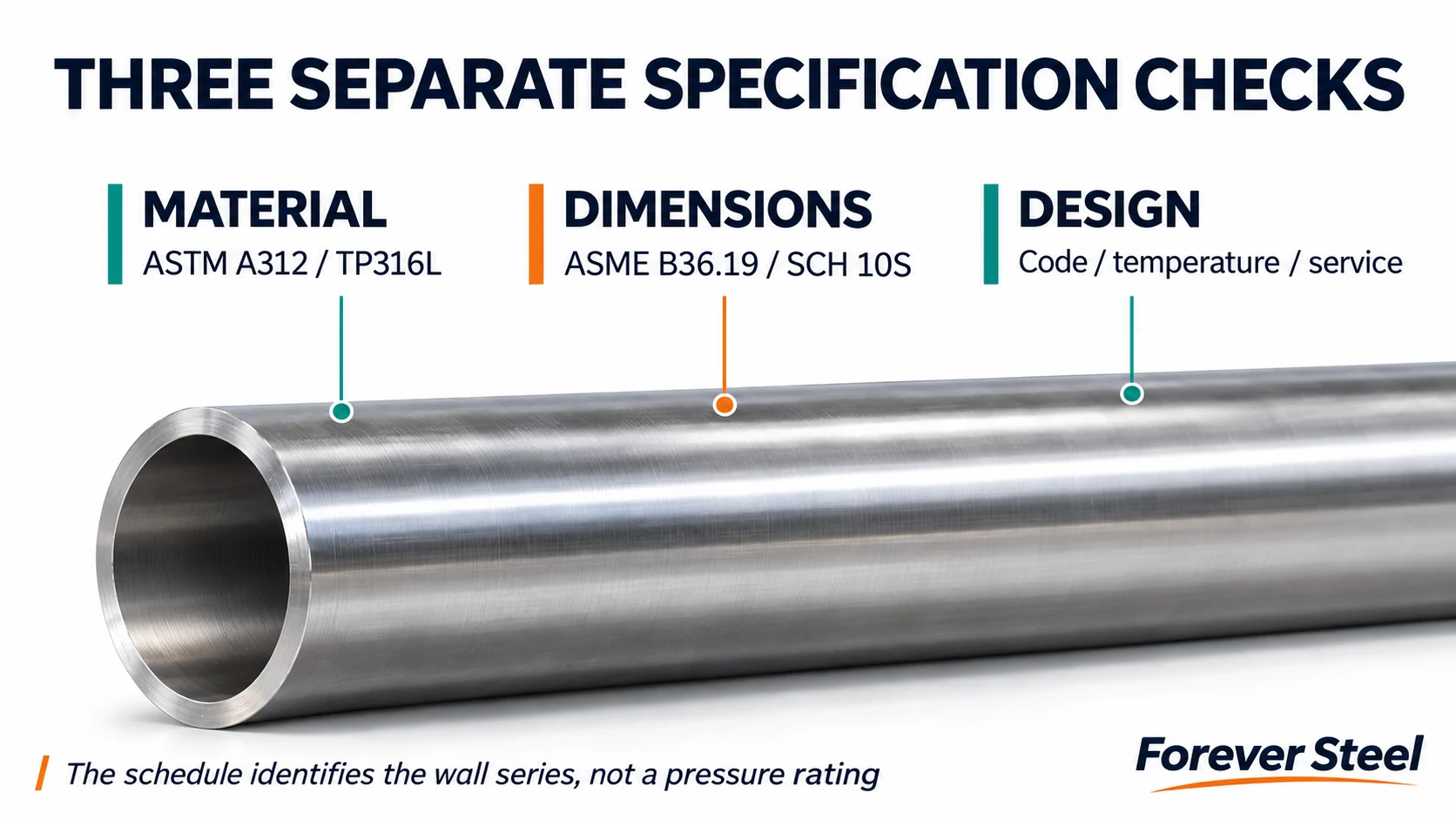
Figure 2. State the product specification, wall series and design basis as separate requirements.
A thinner wall gives a larger calculated bore at the same OD. At a fixed volumetric flow this reduces mean velocity, but pressure loss also depends on length, roughness, fluid properties and fittings. Confirm the equipment nozzle and fitting bores rather than assuming a larger pipe bore improves every system.
The lower bare mass of 10S can help handling, but it does not set the support spacing. Consider fluid, insulation, temperature, span and mechanical loads. Changing from 10S to 40S does not change the material’s intrinsic thermal-expansion coefficient; it changes pipe mass and section stiffness. Flexibility and restraint forces require their own assessment.
Thinner wall generally gives less margin for burn-through and distortion during welding. Joint preparation, fit-up, root protection, heat input and the qualified procedure should suit the actual wall and manufacturing route. Thicker wall may need more weld metal and different preparation; it is not automatically a better weld.
Material selection and surface condition also matter. Low-carbon grades reduce susceptibility to weld-related sensitization under relevant conditions, while heat tint and contamination require separate attention. Our post-weld pickling and passivation guide covers surface restoration; increasing the schedule does not remove those requirements.
Table 3. Review the demand instead of assigning a schedule by industry
|
Service or installation issue |
Information needed |
What the review decides |
|
Pressure and temperature |
Design conditions, code and grade |
Required nominal wall after allowances |
|
Aggressive medium |
Chemistry, chloride exposure, temperature and cleaning |
Material suitability and any justified allowance |
|
Handling or external loads |
Support details, transport and installation loads |
Protection, wall and support requirements |
|
Welded connections |
Actual walls, joint details and qualified procedure |
Preparation, fit-up and examination scope |
Engineering review checklist; 10S and 40S are not universal application categories.
Illustrative line item: “ASTM A312/A312M TP316L welded pipe; ASME B36.19, NPS 2, SCH 10S, nominal wall 0.109 in; 6 m lengths; plain ends; inspection, surface condition and certificate requirements as specified in the project purchase specification.” State the required standard editions, quantity and destination separately. This is a purchasing format, not a completed design specification.
When enquiring about our welded stainless steel pipe, identify the grade, manufacturing route and wall explicitly. We can then compare the requested supply scope without treating “stainless SCH 10” as a complete material description.
· Omitting the S suffix or dimensional standard.
· Using a generic “stainless density” for every grade and calling it the delivered weight.
· Approving thinner wall because the service pressure sounds low.
· Treating a thicker wall as a cure for unsuitable alloy selection or poor weld cleaning.
Not by notation alone. Stainless pipe is often ordered to the 10S series, but the dimensional standard and actual wall should be confirmed. Some B36.10 and B36.19 entries differ.
No, at the same NPS in B36.19 the OD is unchanged. The thicker wall reduces the nominal bore.
Only if the approved design and purchase specification allow the change. Pressure is one input; allowances, external loads, tolerances and installation details also matter.
Wall thickness does not change the alloy’s intrinsic corrosion resistance. Extra wall may provide a justified allowance for some mechanisms, but it cannot make an unsuitable grade suitable for pitting, crevice corrosion or stress corrosion cracking.
The joint can be designed for the unequal walls where the governing rules permit it. Establish bore transition, preparation, alignment and the welding procedure before fabrication.
Material and wall should be resolved together from the service and design. A grade addresses composition and material properties; a schedule addresses nominal dimensions. Neither field replaces the other.
It uses less metal per metre at the same size and grade, but availability, fabrication, quantity, surface requirements and inspection affect the final quotation. Compare the same supply scope.
· ASME B36.10 vs B36.19 Pipe Dimensions
· Pipe Schedule Chart: Dimensions and Wall Thickness
· ASTM A312 vs A269 vs A213: Product Selection
· Stainless Pipe Pickling and Passivation After Welding
· ASME B36.19-2022 — edition identity and dimensional standard for the selected examples.
· ASME: Stainless Steel Pipe — public scope, S suffix and listed B36.10 exceptions.
· ASTM A312/A312M-25 — product-specification scope, separate from the dimensional series.
· ASME B31.3: Process Piping — design and construction framework.
· Alleima Sanmac 316/316L datasheet, 9 May 2025 — illustrative density basis used for Table 2; supplier-specific material data.
· NIST Guide to the SI: Conversion Factors — mass and length conversions for the weight-per-foot comparison.