+8615674993216
 sales@forever-steels.com

 English
 العربية



For desalinated water transmission, choose the internal lining using the water that will actually enter the pipeline after the specified post-treatment and blending. Then select the steel pipe body, external protection and joints against the approved route and design conditions. Low salt content is not enough information to approve an unlined pipe or any particular lining.
The scope here is product-water transfer from a desalination plant toward pumping stations, reservoirs and distribution supply. Seawater intake, reverse-osmosis process piping and brine outfall are separate services. Do not carry a material choice from one of those duties into the finished-water transmission order.
For raw water, reclaimed water or another conveyed medium, start with the Steel water pipe selection by service to identify the matching service guide and required inputs.
|
Common question |
Short answer |
|
Can steel carry desalinated water? |
Yes, as a protected carbon-steel system, once the lining is matched to the final post-treated water and the joints and external protection are designed with it. |
|
Which lining is used? |
Cement mortar, liquid epoxy, FBE and polyurethane are all candidates; none is approved by the word “desalinated”. |
|
What data decides the lining? |
Final water analysis after remineralisation and blending: pH, alkalinity, calcium or hardness, TDS, temperature, disinfectant, and the stability index basis. |
|
Do intake and brine lines follow this guide? |
No. Seawater intake, RO process piping and brine discharge need their own material assessment. |
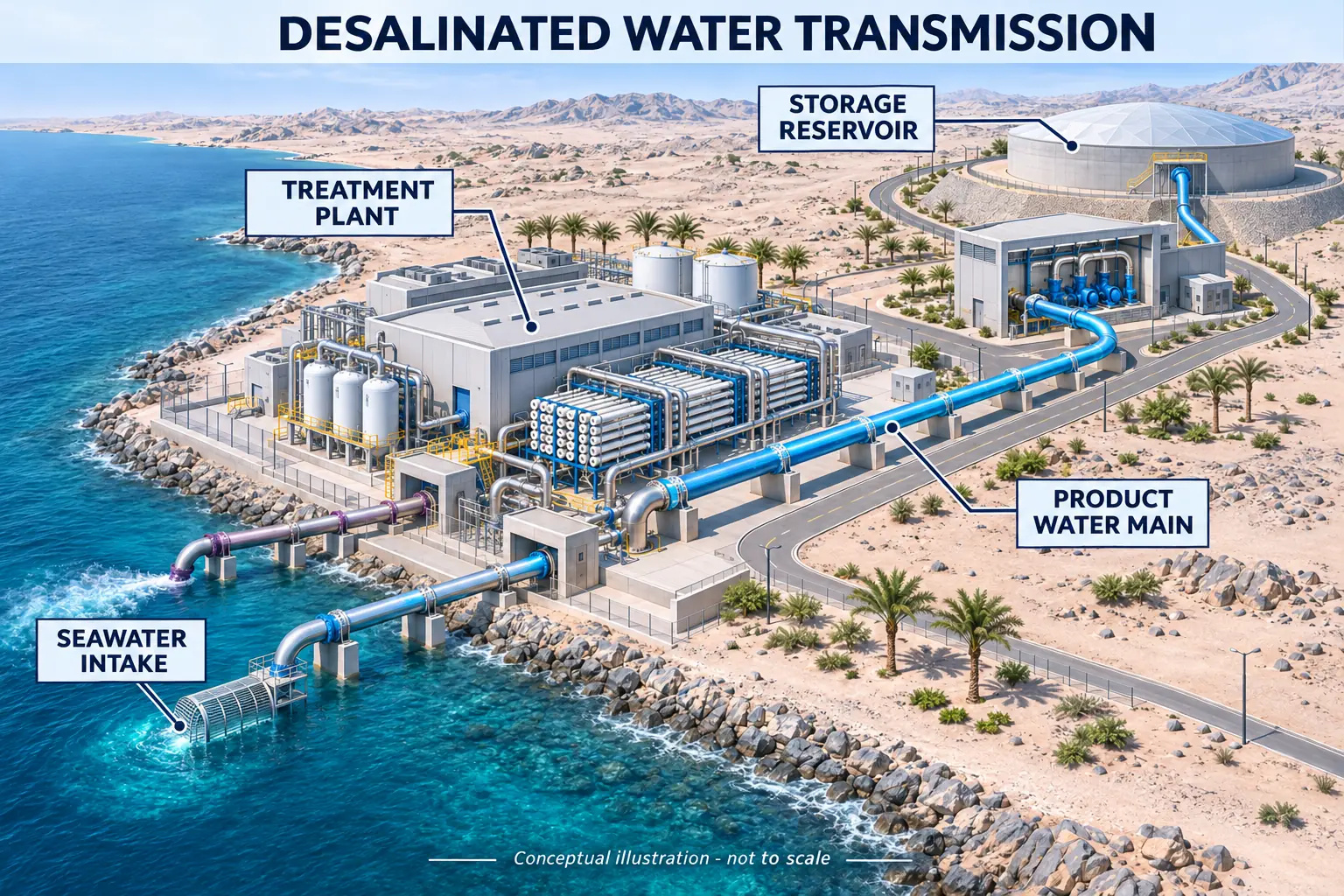
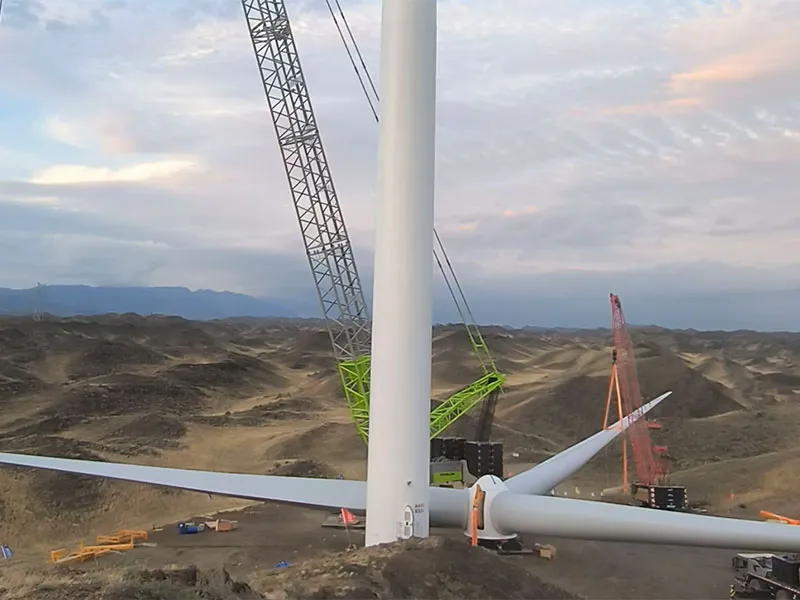
Conceptual desalination and product-water transfer scene. The landward pipeline is the subject of this guide; the illustration is not a real project reference.
|
Pipe duty |
What must be established |
How it affects this guide |
|
Seawater intake |
Saline water conditions and marine installation |
Requires its own material and installation assessment |
|
Plant process piping |
Process stage; pressure; temperature; chemical exposure |
Do not treat plant pressure piping as a bulk-water main |
|
Product-water transmission |
Actual post-treatment water; approved operating envelope |
Primary scope for protected carbon-steel main selection |
|
Brine discharge |
Concentrated discharge chemistry and outfall conditions |
Separate corrosion and environmental interface review |
Middle East project relevance is visible in SWPC’s separate desalinated-water transmission programme. That supports treating the external main as its own buying task; it does not establish a required lining or steel grade. SWPC Company Profile 2026.
Reverse-osmosis permeate is very low in dissolved minerals, so it has little hardness or alkalinity and can be aggressive to unprotected metal and to cement-based materials. For that reason product water is normally post-treated, typically by adding calcium and alkalinity and adjusting pH, and sometimes blended with other sources, before it is supplied. WHO’s desalination guidance places post-treatment and distribution within the water-safety assessment, and Ofwat explains that desalinated seawater is remineralised before drinking-water supply. These references support reviewing the final water rather than selecting pipe from the word “desalinated”. Neither provides a universal lining recipe. WHO Safe Drinking Water from Desalination; Ofwat Desalination Explained.
|
Input to request |
Selection question |
Procurement record |
|
Post-treatment and blending status |
Which water contacts the lining in service |
Approved process description and water specification |
|
pH; alkalinity; calcium or hardness; relevant dissolved species |
What compatibility and stability assessment is available |
Dated analysis with units and operating range |
|
Temperature and disinfection conditions |
Does the offered product cover the intended exposure |
Product compatibility statement and project acceptance |
|
Start-up; shutdown; low flow; off-spec diversion |
Which conditions are credible for the transmission line |
Operating envelope and exception-handling requirements |
If the design team uses the Langelier Saturation Index (LSI), calcium carbonate precipitation potential (CCPP) or another stability index, request its assumptions, calculation conditions and acceptance basis. A single index value does not replace the full water analysis, lining-product evidence or assessment of all corrosion mechanisms. The purchaser should transmit the approved assessment rather than invent a pass/fail threshold.
Where the final accepted use is drinking water, also check potable-water lining and joint-material approval; a water-chemistry assessment and drinking-water health-effects acceptance address different questions.
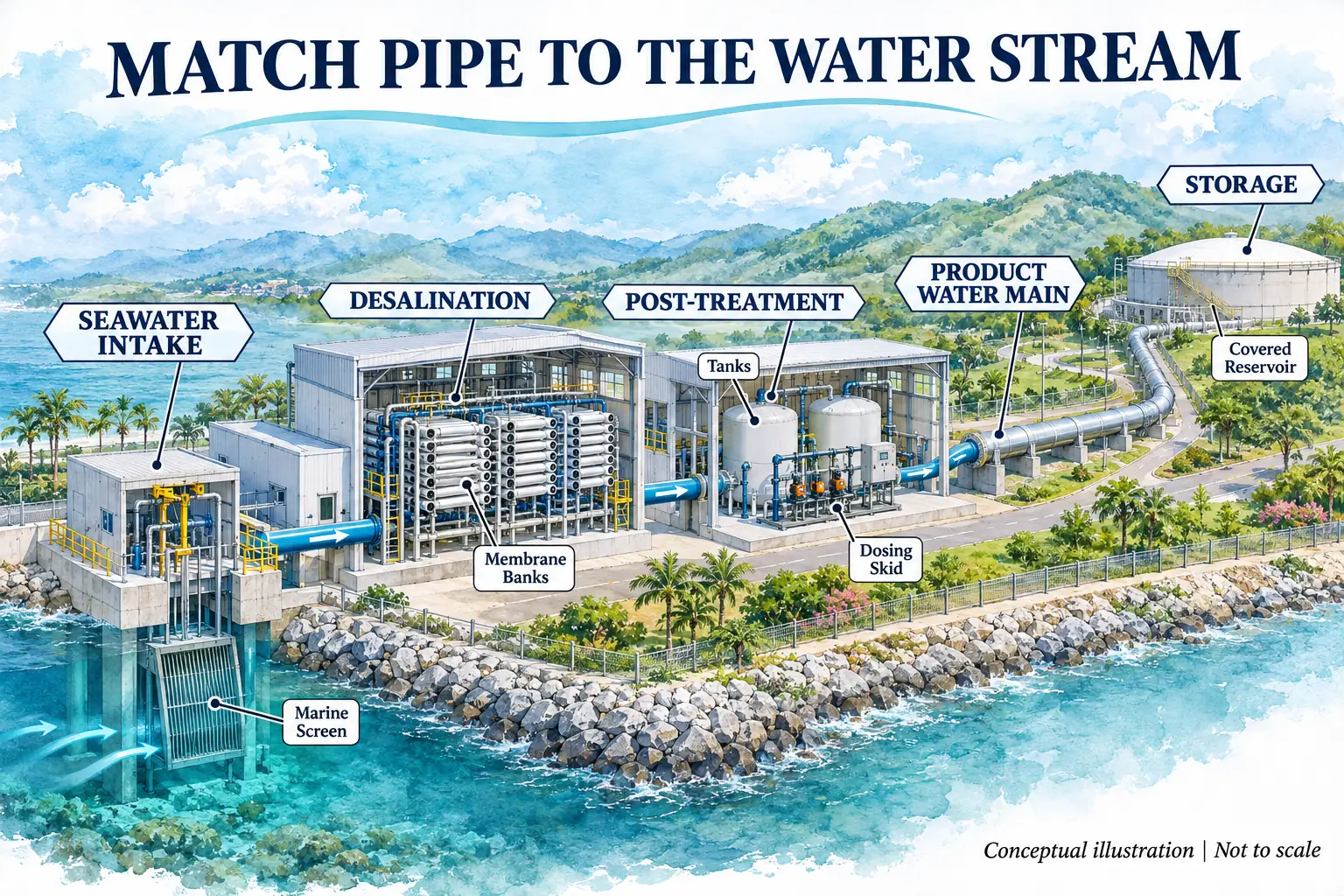
Product water is assessed after the specified treatment and blending. Data for raw seawater or an intermediate process stream is not a substitute.
Compare lining systems only within the approved specification and the offered product's limits. The AWWA families in play are cement mortar (C205), liquid epoxy (C210), FBE (C213) and polyurethane (C222). Steel Mains discusses water chemistry and low-flow residence conditions in its mortar-lining guidance. Use that as a reason to request a project review, not as a prediction that every mortar-lined desalinated-water main will fail. Steel Mains Introduction to Cement Mortar Lining.
|
Actual water or operating condition |
Lining question to review |
Evidence to obtain |
|
Final low-alkalinity or low-calcium data not yet approved |
Which lining, if any, can be assessed at all |
Approved final water analysis first; do not approve any lining substitution before it |
|
Final water approved |
Which named lining system (C205, C210, C213 or C222) suits that analysis |
Product-specific compatibility and water-contact evidence for the named lining |
|
New mortar lining with low-flow commissioning |
How curing, flushing and early water-quality monitoring are handled |
Supplier curing and handling instructions; owner's flushing and monitoring plan |
|
Internal site joints |
Does the repair system suit the same actual water |
Repair product data, application and inspection records for that water |
Fresh cement mortar can raise pH and alkalinity in water standing in the line, most noticeably in low-flow or stagnant conditions. Agree flushing, filling and early water-quality monitoring with the owner before the line is commissioned, and keep the lining supplier’s curing and handling instructions in the purchase documents.
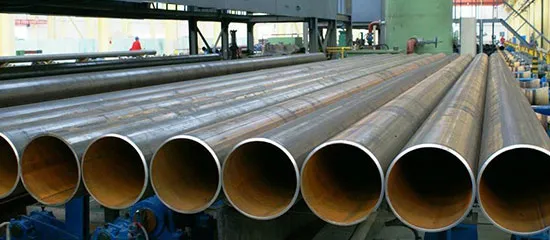
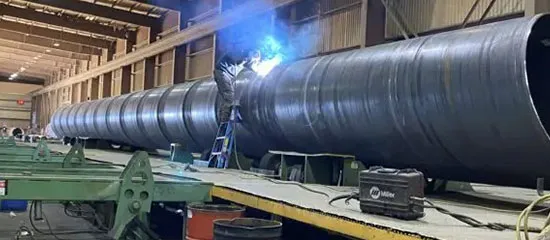
For the bulk main, evaluate SSAW pipe or LSAW pipe against the approved size, grade, wall, manufacturing route, external loads and inspection. Review ERW pipe for connection lines where the product envelope and specification permit. “Desalinated” does not establish a pipe-body grade, and the route choice follows the design, not the water source. Verify fittings, valve interfaces and the internal joint repair before accepting a shop-only lining quotation.
Desalination plants sit on the coast, so transmission routes often cross saline groundwater, chloride-bearing soil and, on Gulf routes, sabkha ground. The inside of the pipe and the outside face different environments and need separate specifications. Assess buried and exposed sections separately: buried sections can combine a polymer coating with a cathodic protection design where the project specifies it, while exposed sections near the plant need an atmospheric coating suited to salt-laden air and sun. If liquid epoxy lined pipe or FBE pipe is proposed, keep the internal and external specifications distinct.
No single material suits every duty in a desalination scheme. Use the table to see which duties this guide covers, not to rank materials.
|
Pipeline duty |
Materials to be assessed |
Covered by this guide? |
|
Seawater intake and marine sections |
Materials specified for saline marine duty; GRP or HDPE are used on some projects |
No: separate material assessment |
|
RO process piping |
High-pressure process materials such as duplex or other high-alloy stainless steel |
No: process-specific |
|
Product-water transmission main |
Protected carbon steel, with other permitted main-line materials compared on the same design inputs |
Yes: lining, coating and joint continuity |
|
Brine discharge and outfall |
Materials for concentrated-discharge chemistry and marine outfall conditions |
No: separate corrosion and environmental review |
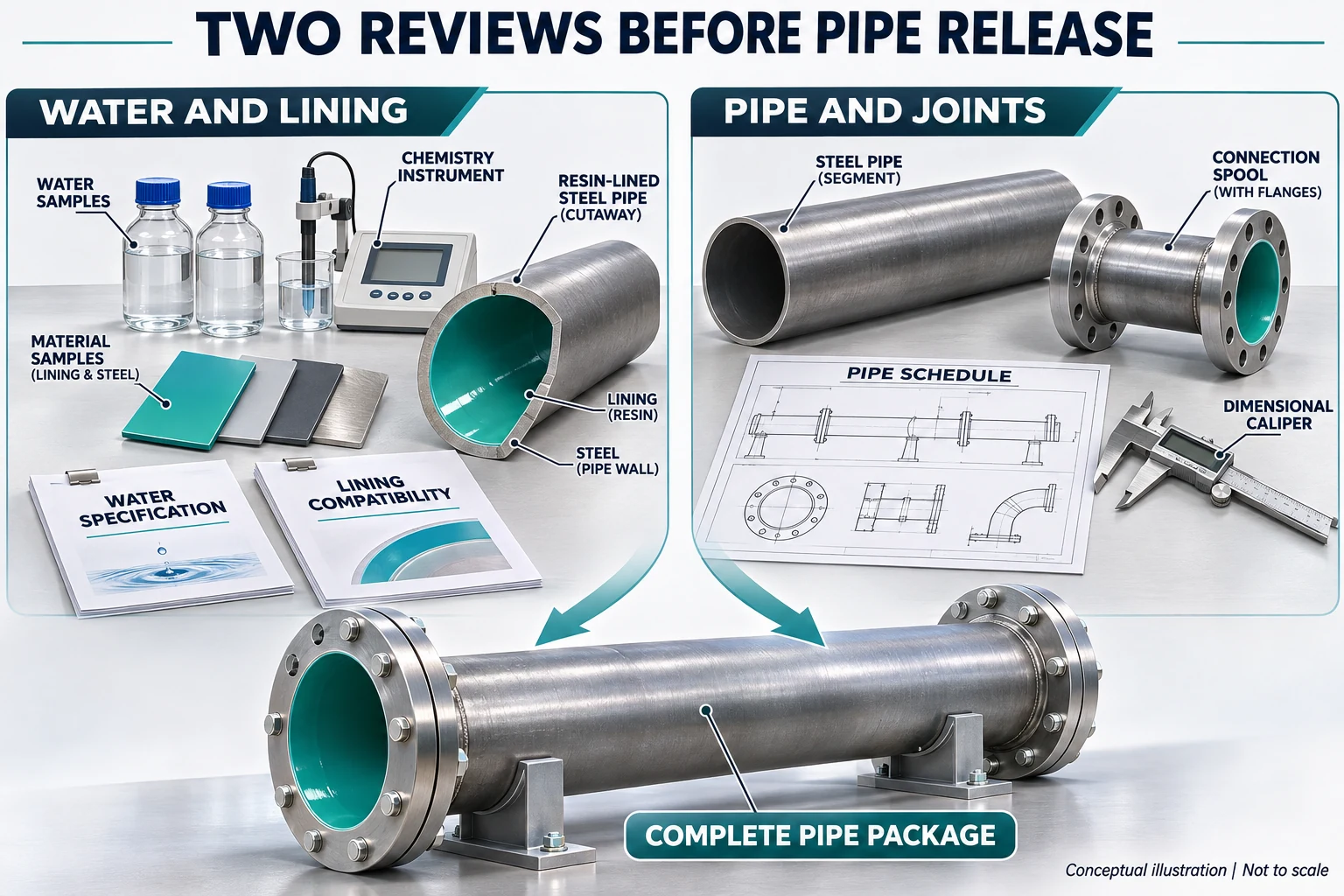
The procurement handoff links the final water specification to lining approval and the pipe schedule to fabrication. Both must meet at the joint review.
|
Mistake |
Better purchasing action |
|
Use feed seawater chemistry to select the product-water lining |
Request the analysis for the actual downstream service |
|
Approve from low TDS or LSI alone |
Review the complete water and compatibility assessment |
|
Assume all sections receive identical treated water |
Check start-up, blending, off-spec and shutdown arrangements |
|
Specify a lining but omit joint reinstatement |
Approve a complete internal protection and repair route |
|
Treat a transmission main as a reverse-osmosis pressure spool |
Identify pipe duty before issuing material requirements |
Supply the information below, and identify which data is approved and which remains open. Request confirmation of the exact lining system and scope before treating a commercial offer as technically complete.
|
Item |
What to include |
|
Line list and route |
Route sections, buried or exposed, crossings |
|
Final water and post-treatment |
Post-treatment basis; final water analysis; blending; disinfection; off-spec diversion |
|
Operating envelope |
Approved pressures, transient cases, flow range; start-up, low-flow and commissioning conditions |
|
Pipe schedule |
OD, wall, grade, lengths and quantities by section |
|
Protection and joints |
Internal lining, external coating, cathodic protection scope; joint drawings, internal repair route, site access |
|
Approvals and inspection |
Water-contact approval required; inspection and repair acceptance |
|
Delivery |
Sequence and destination |
Use the AWWA standards map to locate the appropriate product and protection references, and the water-pipe field joint guide to close installation interfaces. These details matter more than adding “desalination grade” to a generic pipe description.
It is a candidate only after the project confirms compatibility with the actual post-treated water, lining system and operating conditions. The source-water label alone cannot approve or reject it.
No single material applies to all plant and transmission duties. Locate the pipe in the process, define its exposure and obtain the approved material selection.
Reverse-osmosis permeate has little hardness or alkalinity. Post-treatment and blending adjust this, which is why the final water, not the raw seawater, governs the lining review.
The treatment and design team establishes the water specification. The pipe supplier should assess the offered product against that approved basis rather than set treatment targets.
Not automatically. Desalinated describes a treatment route; potable describes an accepted end use. Record both so the supplier knows what will contact the pipe.
Steel water pipe selection by service
Potable water transmission guide
Steel pipe for sewage force mains guide
Slurry pipeline steel pipe and lining guide
AWWA steel water pipe standards map
Field joints for steel water pipe
WHO Safe Drinking Water from Desalination