+8615674993216
 sales@forever-steels.com

 English
 العربية



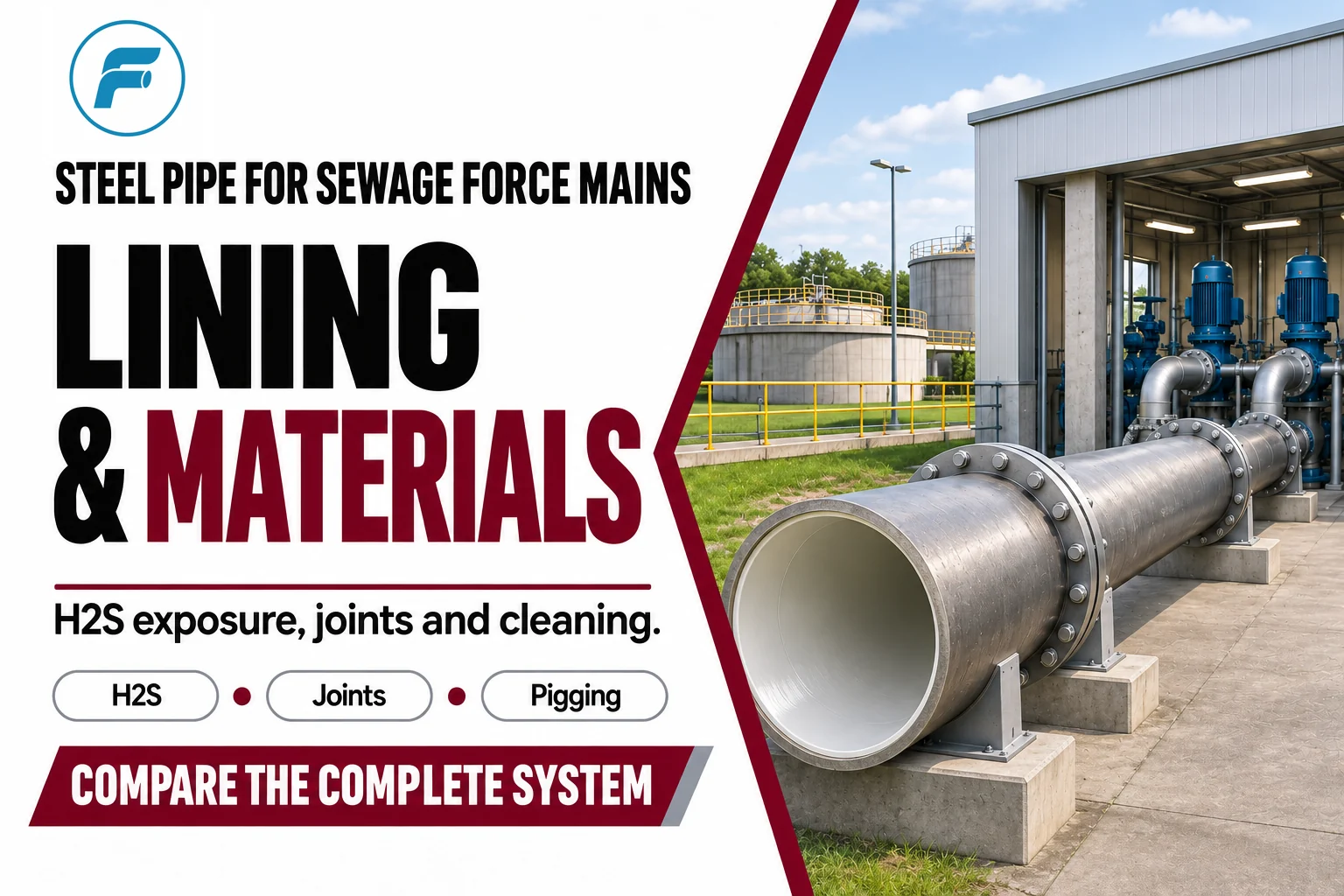
Steel is a candidate for a sewage force main when the approved design, installation and connection requirements justify a protected welded or fabricated system. Compare it with HDPE, PVC and ductile iron under the same pressure, corrosion, external-load, construction and maintenance assumptions. Large diameter or high pressure alone does not establish that steel is the preferred material.
A force main, also called a rising main in some markets, conveys wastewater under pressure from a pumping system. It differs from a gravity sewer. This guide covers material screening and purchasing requirements; it does not approve a pipe material against a local authority’s rules.
For raw water, reclaimed water or another conveyed medium, start with the Steel water pipe selection by service to identify the matching service guide and required inputs.
|
Common question |
Short answer |
|
Is steel used for sewage force mains? |
Where the authority permits it: large diameters, high pressure, crossings and pump-station spools, with an internal lining and external protection designed for sewage. |
|
What attacks the pipe? |
Septic wastewater generates sulfides. Hydrogen sulfide released at air pockets, high points and discharge points can form sulfuric acid on wetted surfaces. |
|
Which lining is used? |
Polymer systems such as liquid epoxy or polyurethane are commonly considered; confirm the exact product against the actual wastewater. |
|
What velocity is typical? |
EPA’s fact sheet gives 0.6 to 2.4 m/s (2 to 8 ft/s) for lift-station force mains, with peaks not exceeding 3 m/s (10 ft/s). |
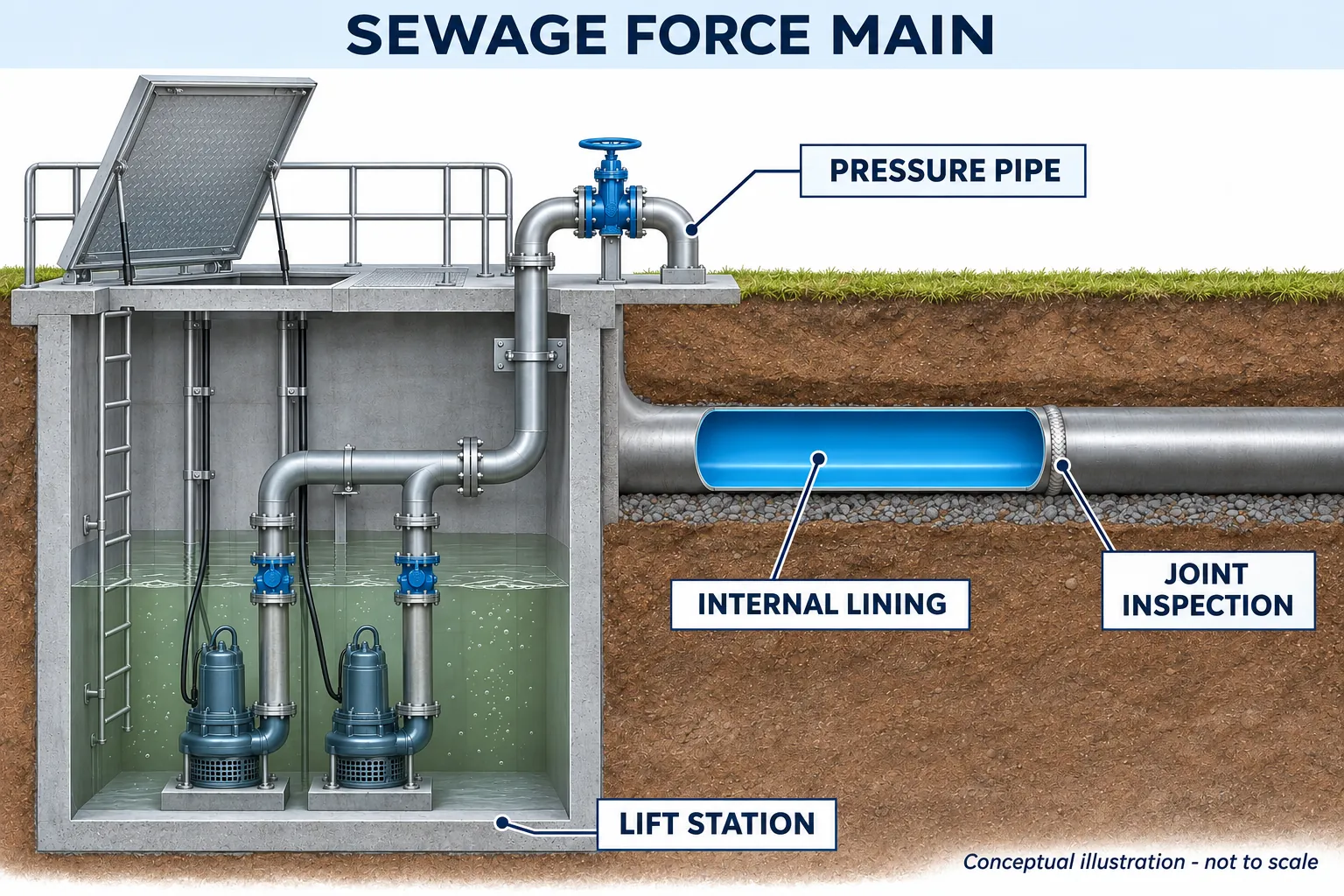
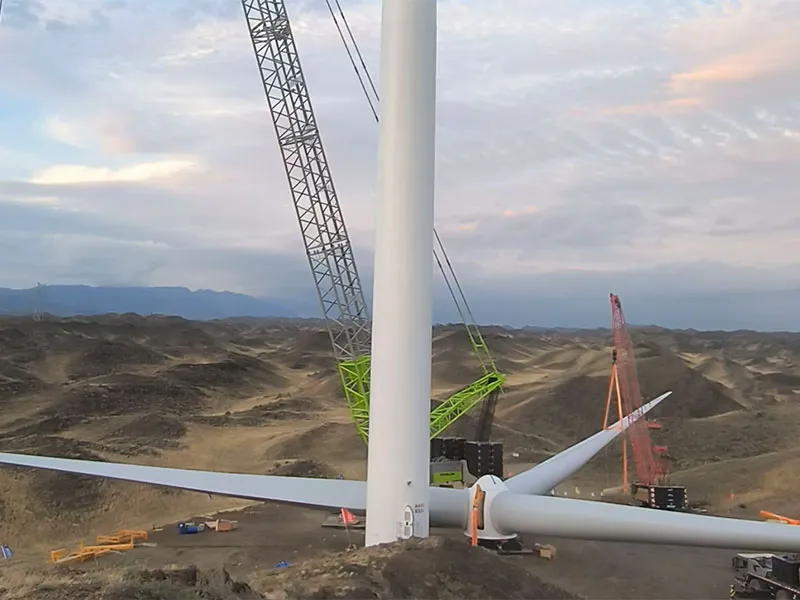
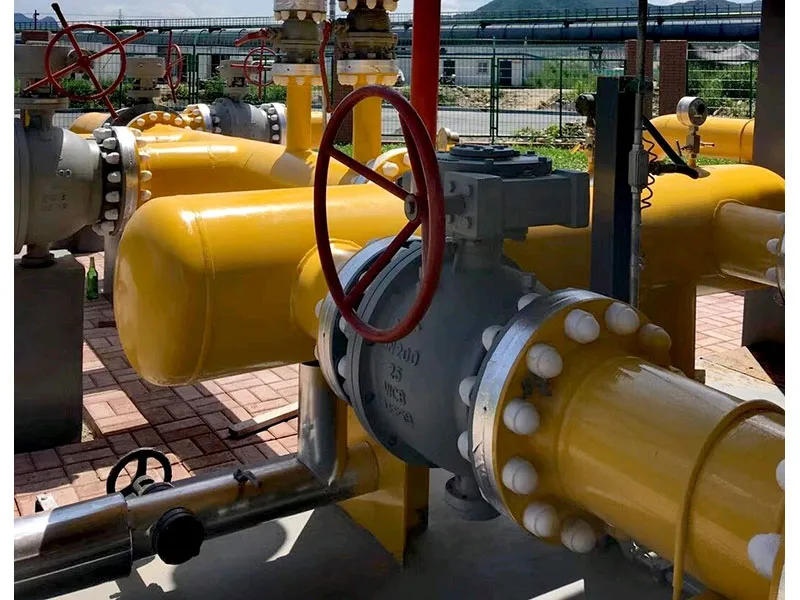
Illustrative lift station and pressure main. The concept shows the buying interface between pumping equipment and pipework, not a construction design.
EPA’s 2000 force-main fact sheet identifies wastewater quality, pressure, corrosion resistance and installation conditions as selection inputs, and covers surge control and cleaning. It lists cement-lined steel as suited to high pressure in all sizes with excellent surge resistance, ductile iron as the typical choice for high-pressure and exposed piping, and plastic as most common in short mains and smaller diameters. Use it for engineering background, not as a current mandatory code or evidence of today’s material market shares. US EPA Wastewater Technology Fact Sheet Sewers Force Main.
|
Candidate material |
Questions for the project team |
Quotation comparison |
|
Protected steel |
Does the owner permit the system; are fabricated details, geometry or installation conditions a reason to evaluate it |
Pipe and protection; welded joints; field repair; inspection; maintenance |
|
HDPE |
Does the specific pressure pipe system meet the design and installation envelope |
Product grade; dimensions; joining procedure; transitions and acceptance |
|
PVC |
Is the approved pipe and joint system suitable for the design cases and installation |
Pressure basis; joint restraint where required; fittings and installation controls |
|
Ductile iron |
What internal and external protection is required for the actual wastewater and soil |
Pipe class; lining; joints; protection and project approvals |
Use equal design inputs rather than matching nominal diameter and reading the lowest price. Compare available bore, approved pressure and transient cases, joints, installation requirements and planned access. If the authority excludes steel or another candidate, settle that before commercial comparison.
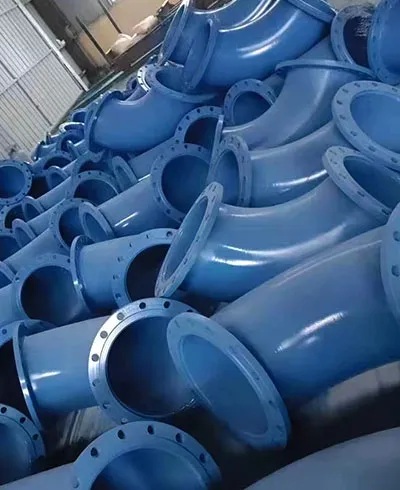
A steel proposal can be reviewed for engineered main sections, site-specific fabricated spools, connections and crossings where the approved design allows it. Welded joints give a restrained line and fabricated fittings can follow site geometry, but the case must still identify a concrete requirement: geometry, mating equipment, installation or fabrication scope. “Heavy duty” is not a selection criterion.
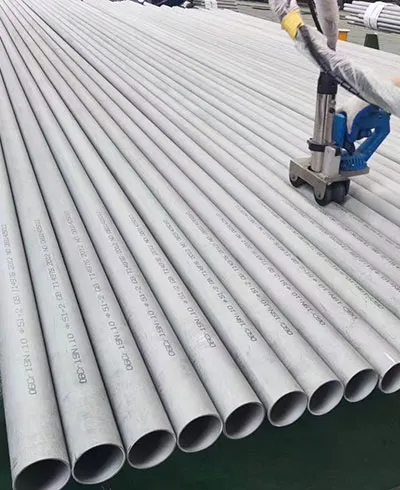
Evaluate SSAW pipe or LSAW pipe for a permitted main-line route, and ERW pipe where the required product envelope fits. Confirm seam inspection, end geometry and dimensional acceptance against the same pipe specification. Manufacture does not resolve sewage corrosion by itself.
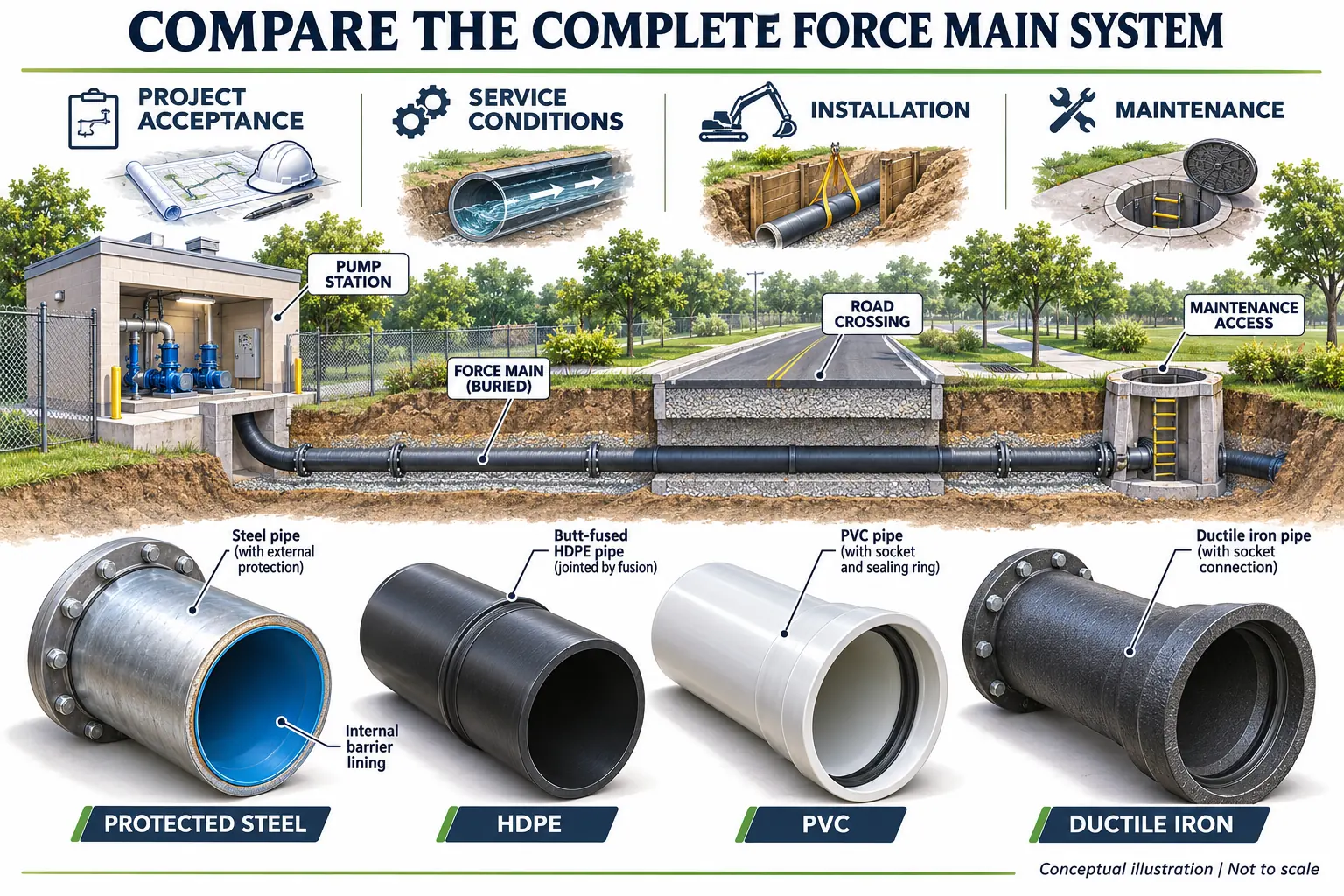
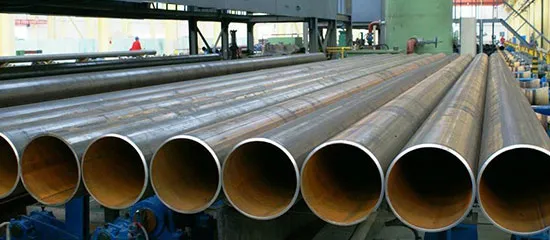
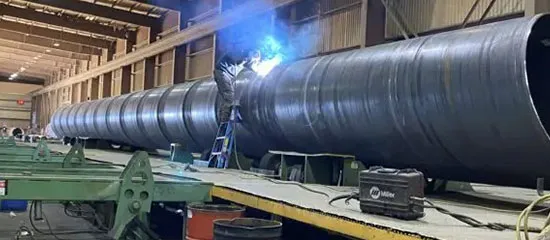
Pipe material specimens and force-main installation considerations. No material is ranked or approved by this illustration.
A force main runs full, but wastewater often arrives septic because dissolved oxygen is used up in the wet well. EPA notes that high points trap air, which reduces flow area and promotes sulfide corrosion, and that pump stations may aerate or chlorinate the wastewater to control odour and corrosion. In practice the worst attack is usually where sulfide can escape into a gas space and be oxidised to acid: air pockets, high points and the discharge chamber.
Obtain the actual wastewater description, relevant chemical analysis, temperature, retention time and operating information, industrial inputs and the project’s sulfide or corrosion assessment. The presence and severity of a mechanism must be evaluated for the pipeline; do not predict identical H2S exposure throughout every force main.
Northwest Pipe lists liquid epoxy (AWWA C210) and polyurethane (C222) for wastewater and sanitary force-main duty, and also lists cement mortar (C205) for force mains; Steel Mains describes different systems for different water conditions. Because cement mortar is alkaline and acid can attack it, septic duty with expected sulfide generation usually points the review towards polymer linings. These examples show that a protection system is chosen for the service; they do not approve an arbitrary epoxy, FBE or mortar product for sewage. Northwest Pipe Linings; Steel Mains Introduction to Cement Mortar Lining.
|
Exposure condition |
Candidate systems to review |
Evidence to obtain before acceptance |
|
Acid gas-phase exposure (air pockets, high points, discharge chamber) |
Polymer linings such as liquid epoxy or polyurethane; cement mortar is alkaline and acid can attack it |
Product evidence for sulfide and acid exposure in the actual wastewater |
|
Continuous full-bore immersion |
Liquid epoxy, FBE or polyurethane where the supplier evidences immersion duty; mortar only where the corrosion assessment supports it |
Immersion and chemical-compatibility evidence; temperature and retention conditions |
|
Cleaning by pigging |
Lining systems the supplier confirms suit the chosen pig |
Pig compatibility of the lining, bends and launcher or receiver spools |
|
Internal site joints |
Repair material from the same system family |
Repair procedure, cure and inspection records for that wastewater |
Agree inspection of the shop lining and the reinstated joint as distinct stages for a liquid epoxy lined steel pipe proposal. Thickness, cure, holiday and repair records follow the pipe coating inspection guide, and the site-joint interface follows the water pipe field joint guide.
Review the pressure envelope, pump start and stop cases, allowable pipe and connection loads, fittings and support details with the designer. Transmit the resulting pipework and access requirements to the supplier; do not order straight pipe while leaving those interfaces undefined.
|
Design item |
What EPA’s fact sheet notes |
What it adds to the steel pipe order |
|
Velocity |
0.6 to 2.4 m/s typical; peaks not above 3 m/s |
Bore after lining; wear and scour assumptions |
|
Surge |
Surges at pump start-up and shut-off last roughly 2 to 15 seconds; critical cases can follow power failure |
Approved transient pressure basis for the wall schedule |
|
Air release |
Avoid high points; use gas relief and vacuum valves where unavoidable; blowoffs at low points |
Tapping, flange and valve-chamber spools |
|
Cleaning |
Pigging is the normal method for long mains; launch and retrieval stations needed |
Pig-compatible lining, bends and launcher or receiver spools |
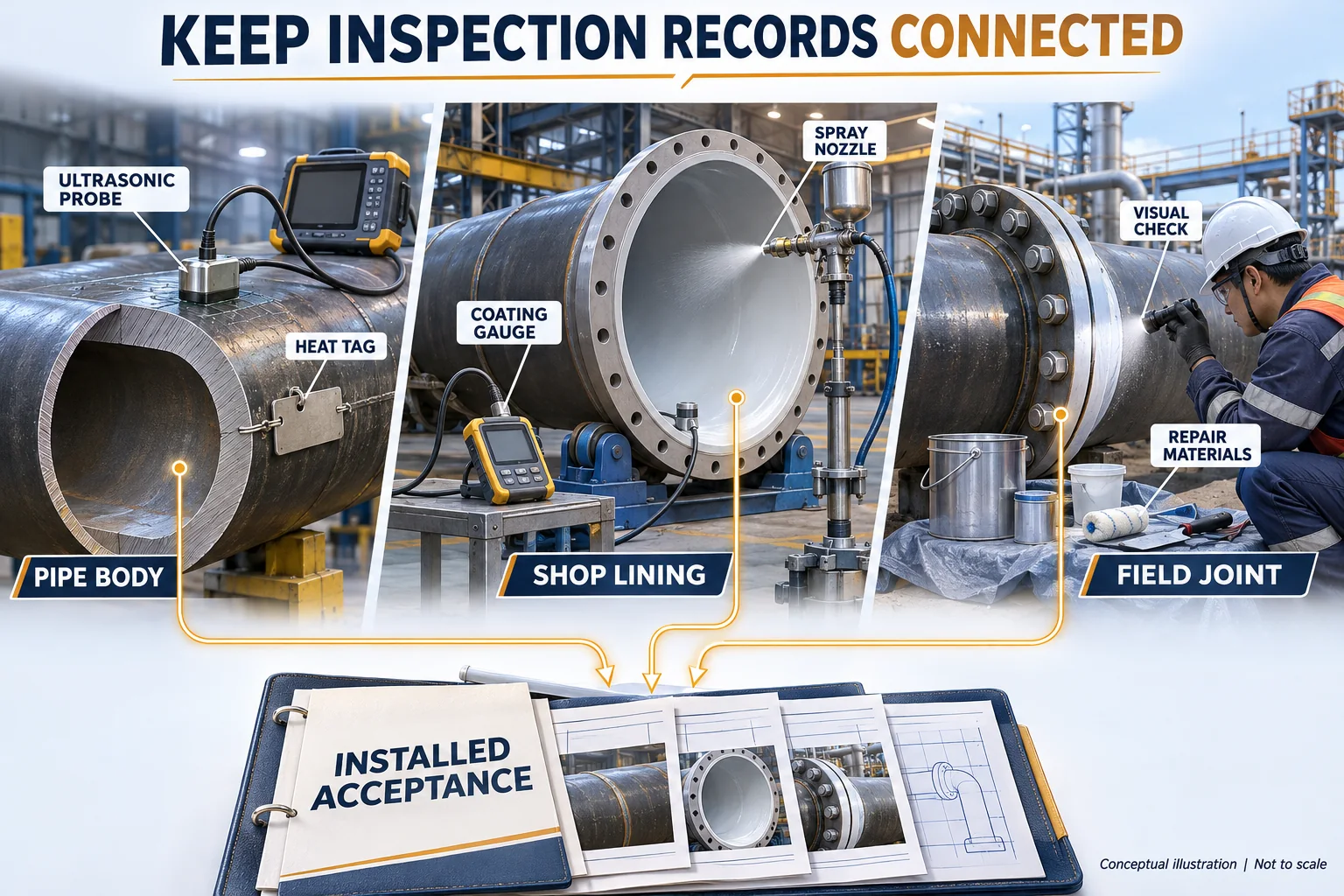
Sewage steel-pipe inspection handoff. Pipe manufacture, shop lining, field joints and installed acceptance are separate records, connected by pipe and spool identity.
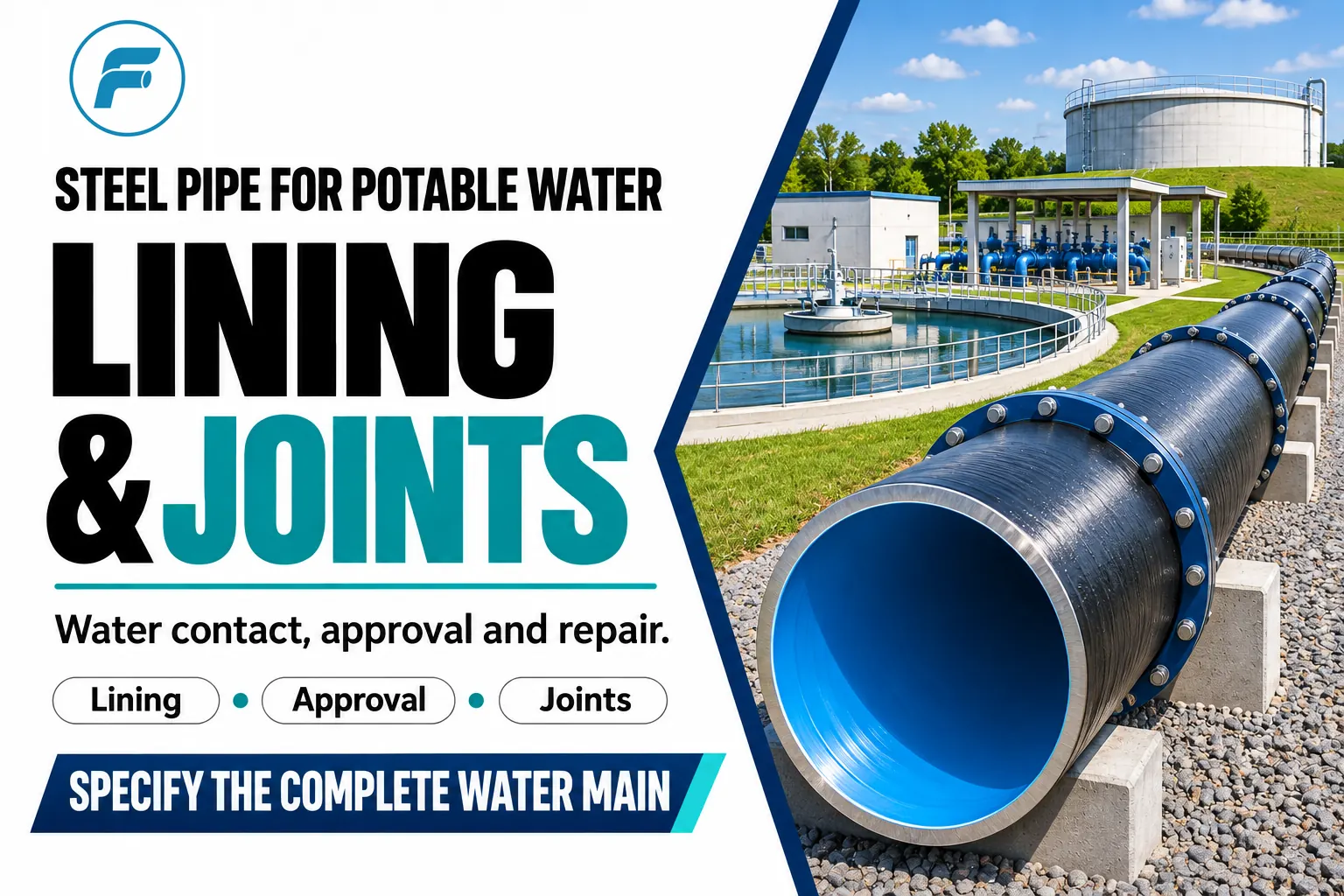
A pipe-body hydrotest does not establish chemical compatibility or the integrity of every installed lining repair; keep structural testing, lining inspection and joint acceptance as separate records. Agree the site joint procedure for both surfaces, and treat external protection as its own design: a buried steel main normally needs an external coating and, where specified, cathodic protection, none of which protects the inside of the pipe.
|
Mistake |
Required correction |
|
Steel is automatically best at large diameter |
Compare all permitted materials under the same design and installation conditions |
|
Every sewage duty needs the same H2S solution |
Obtain a service-specific corrosion assessment |
|
A normal potable-water lining is enough |
Verify the proposed formulation for the actual wastewater |
|
A pressure test proves the lining is suitable |
Keep structural testing, compatibility and lining inspections separate |
|
The comparison ends at delivered pipe price |
Include joining, protection, repairs, access and maintenance assumptions |
Ask Forever Steel to review a defined steel-pipe schedule, not to guarantee suitability from the words “sewage pipe”. Confirm the offered pipe route, actual protection system, inspection records and scope against the project, and identify supply-only work separately from installation and commissioning.
|
Item |
What to include |
|
Authority requirements |
Permitted materials and standard editions |
|
Wastewater and corrosion |
Wastewater analysis; sulfide or corrosion assessment |
|
Pump and design cases |
Approved operating, pump start-stop, transient and load cases |
|
Pipe |
OD, wall and material |
|
Protection |
Lining and external protection |
|
Spool and connection drawings |
Including air-release, vacuum and valve-chamber spools |
|
Inspection and acceptance |
Inspection plan; field repair and installed acceptance |
|
Operation and pigging access |
Maintenance access; pig launcher and receiver interfaces; delivery and packing |
No. The authority, wastewater exposure, approved design and installed protection system must permit it. A comparison may support another material.
External coating protects the outside surface. Internal exposure requires its own compatible lining or other approved corrosion-control basis.
It is listed by some manufacturers for force mains, but acid attack from sulfide corrosion is a concern in septic duty. Confirm suitability with the lining supplier and the project corrosion assessment.
EPA’s fact sheet gives 0.6 to 2.4 m/s for lift-station force mains, and says peak velocity should not exceed 3 m/s. The project designer sets the actual value.
Pigging is a standard cleaning method for force mains, so confirm that the lining, bends and launcher and receiver spools suit the chosen pig.
No. A force main uses pressure supplied by a pumping system. A gravity sewer has a different hydraulic basis; do not transfer pipe and joint requirements without review.
Steel water pipe selection by service
Potable water transmission guide
Desalinated water pipeline lining guide
Slurry pipeline steel pipe and lining guide
Water pipe field joint interfaces