+8615674993216
 sales@forever-steels.com

 English
 العربية


Select slurry pipe in two stages: establish the steel shell and joint requirements from the approved pipeline design, then evaluate bare steel or a lining against the actual slurry, wear evidence and operating conditions. Tailings, concentrate and reclaim water are different duties, and no pipe route or liner material is the best choice for all three.
This guide addresses procurement of overland lines and associated spools, including downhill sections, bends and maintenance interfaces. It does not determine a safe transport velocity, wall thickness or pressure-control design from a material name; those values must come from the responsible pipeline engineer.
For raw water, reclaimed water or another conveyed medium, start with the Steel water pipe selection by service to identify the matching service guide and required inputs.
|
Common question |
Short answer |
|
What is the best lining for a slurry pipeline? |
There is no universal answer. It depends on particle size and hardness, velocity, chemistry, temperature, pressure and maintenance strategy. |
|
Which liners suit long overland lines? |
HDPE-lined steel is widely used on long overland lines; rubber, polyurethane and ceramic are more often considered for high-wear spools, bends and pump areas. |
|
Can slurry pipe be left unlined? |
Where wear and corrosion allow, with a wear allowance and an inspection and replacement plan; in highly abrasive duty unlined steel can fail quickly. |
|
What data does the supplier need? |
Slurry and solids data, flow and temperature range, elevation profile, approved pressure envelope and test or service evidence. |
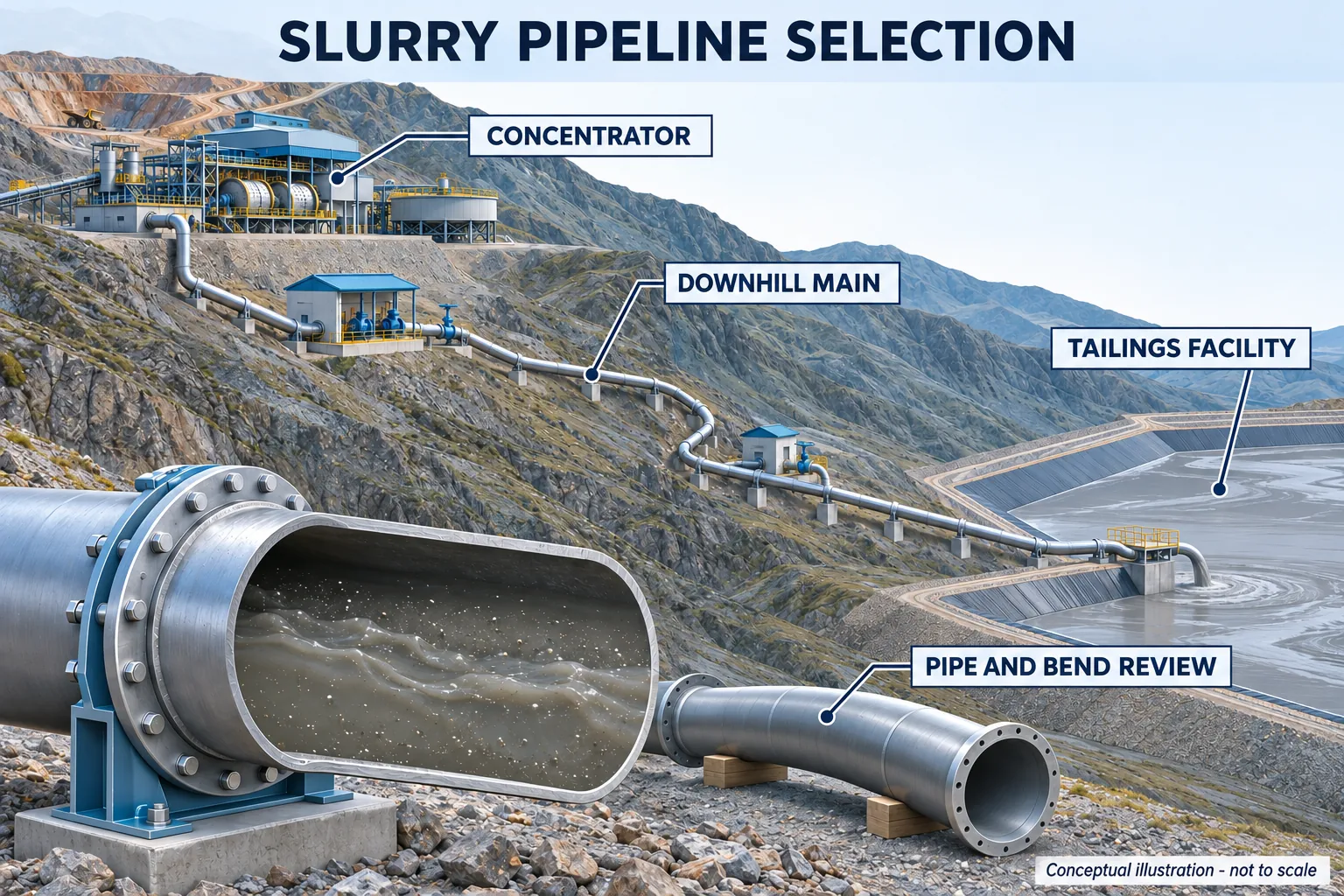
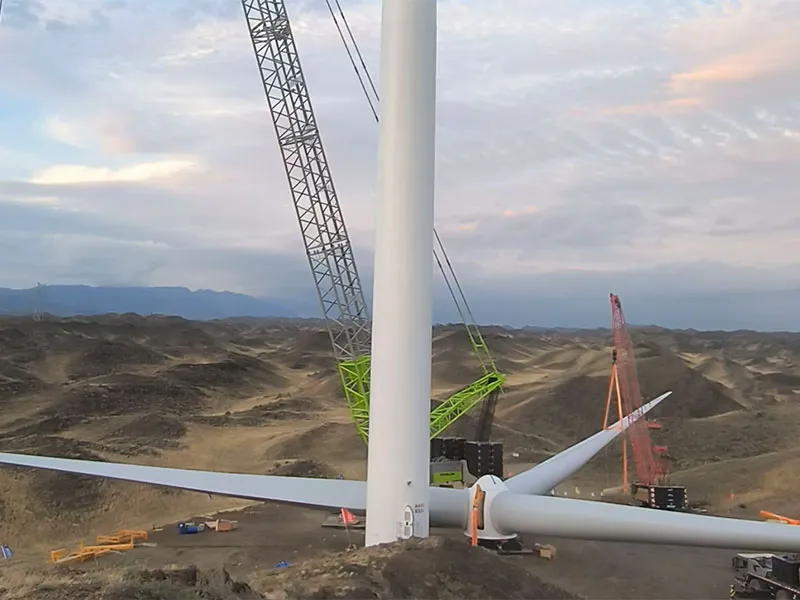
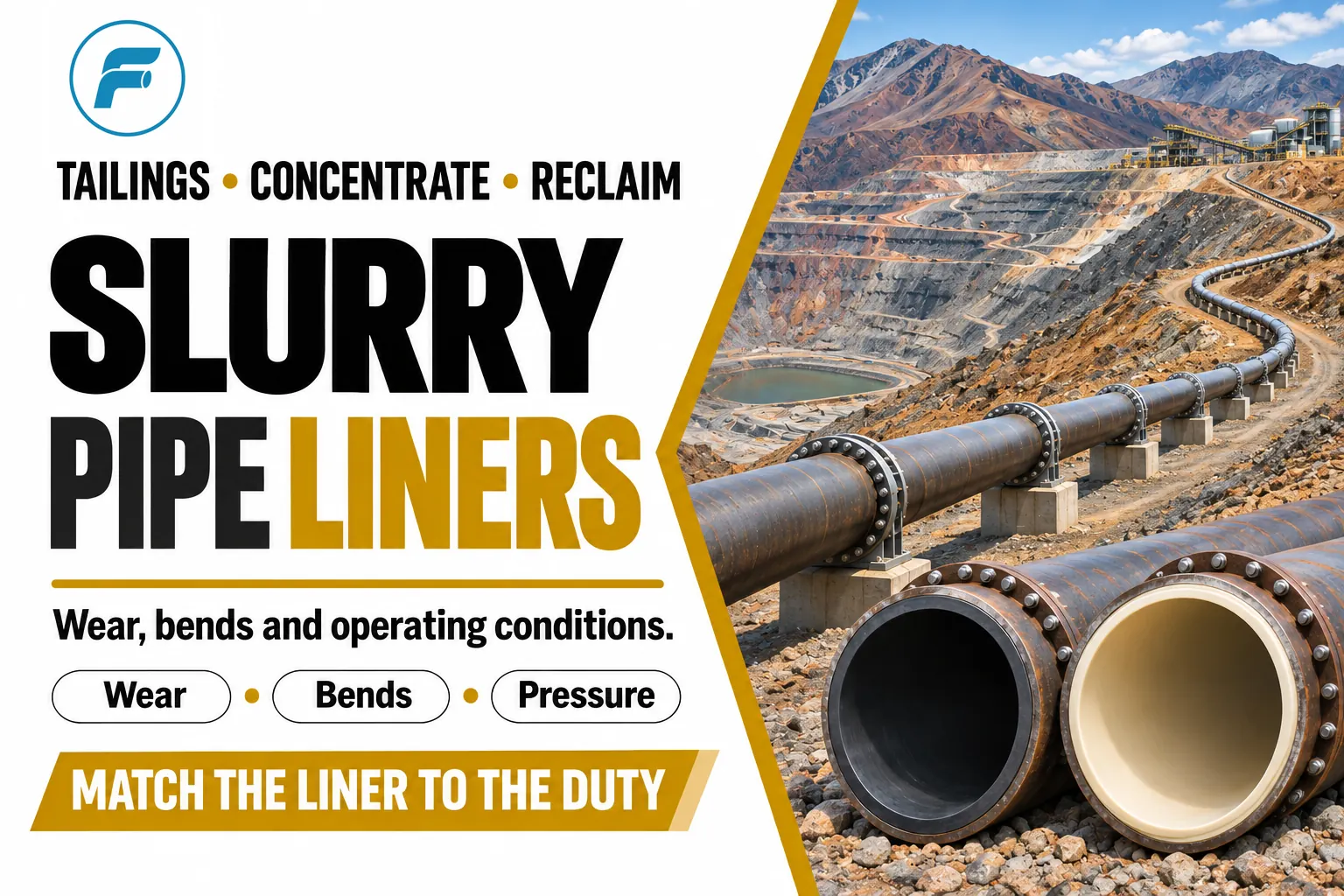
Illustrative mountain-to-valley mine pipeline. Terrain, pipe and facilities are conceptual and do not represent a Forever Steel customer project.
|
Service |
Information to obtain |
Selection consequence |
|
Tailings |
Solids distribution; concentration; chemistry; rheology; route and operating changes |
Assess transport behaviour, wear, corrosion and maintenance together |
|
Concentrate |
Mineral and particle data; fluid chemistry; throughput; operating envelope |
Define pipe and lining from tested duty rather than the commodity label |
|
Reclaim or process water |
Residual solids; dissolved species; temperature and treatment |
Do not assume it behaves like clean potable water |
|
Pump or plant spool |
Local geometry; flow conditions; support and access |
Assess local wear and replacement separately from a straight overland main |
Ausenco’s historical Los Pelambres description distinguishes tailings, concentrate and reclaim-water systems at one Chilean mine. It illustrates why a single “mining pipe” specification is insufficient; it is not a sizing template or a Forever Steel reference. Ausenco Los Pelambres Tailings and Concentrate Pipeline System.
Evaluate SSAW pipe, LSAW pipe and other permitted routes against the approved OD, wall, grade, loads and inspection. ERW pipe may be evaluated where the required dimensions and specification permit. A seamless alternative still needs the same corrosion, wear and lining assessment; removing a weld does not remove abrasion.
Compare finished bore after lining, pipe-end geometry, transportable spool length, joining method and the proposed fabrication sequence. A lining can change the available flow area and the connection detail, and those interfaces must be resolved before the shell is manufactured, not after the liner order is placed.
Start with operating history or representative test evidence. Beaver’s manufacturer-hosted articles recommend characterising the slurry and considering rheology or loop testing, and compare liner families on wear, pressure, temperature and length limits. Use those data requests without adopting a supplier’s preferred liner as a universal result. Beaver Understanding Slurry Is Key to Good Tailings Pipeline Design; Beaver Comparison of Different Lined Slurry Piping.
|
Candidate |
Where it is typically considered |
Conditions to verify (source-reported) |
Procurement issue to close |
|
Unlined steel |
Low-wear duty, or where wall allowance and replacement are planned |
Wear and corrosion life for the actual slurry; Beaver reports it can fail within weeks in highly abrasive service |
Approved remaining-wall, inspection strategy and replacement basis |
|
HDPE lined steel |
Long overland lines; protects the steel from corrosion; handles high pressure |
Abrasion fit for the particle hardness; Beaver reports quick wear in hard-rock abrasive slurry and possible debonding under vacuum |
Liner insertion; terminations; pressure changes; differential loading |
|
Rubber lined steel |
High-wear areas such as pump stations and fittings |
Lined spool length (Beaver cites typically about 6 m); surface roughness; compound compatibility with hydrocarbons and temperature |
Spool fabrication; flange face treatment; repairs and compatibility |
|
Polyurethane lined steel |
Sharp or large particle slurries; low roughness reduces pumping energy |
Temperature limit of the formulation; quality control of application; whether the offered system can be repaired on site |
Formulation evidence; application controls; joint details; repair method |
|
Ceramic lined steel |
Severe sliding abrasion |
Impact resistance at high velocity; tile attachment; lined length and weight; Beaver reports impact shattering and debonding risks |
Attachment and joint design; handling; local replacement and inspection |
Metso documents a rubber-lined steel system for abrasive pumping and tailings applications. That confirms one real product architecture, not that all rubber compounds suit every mine. Beaver compares several liner families but sells lining systems itself. Keep those commercial perspectives visible when evaluating a proposed alternative. Metso Rubber Lined Steel Pipes Slurry Pipe System; Beaver Slurry Pipeline Design Selecting the Right Wear Liner.
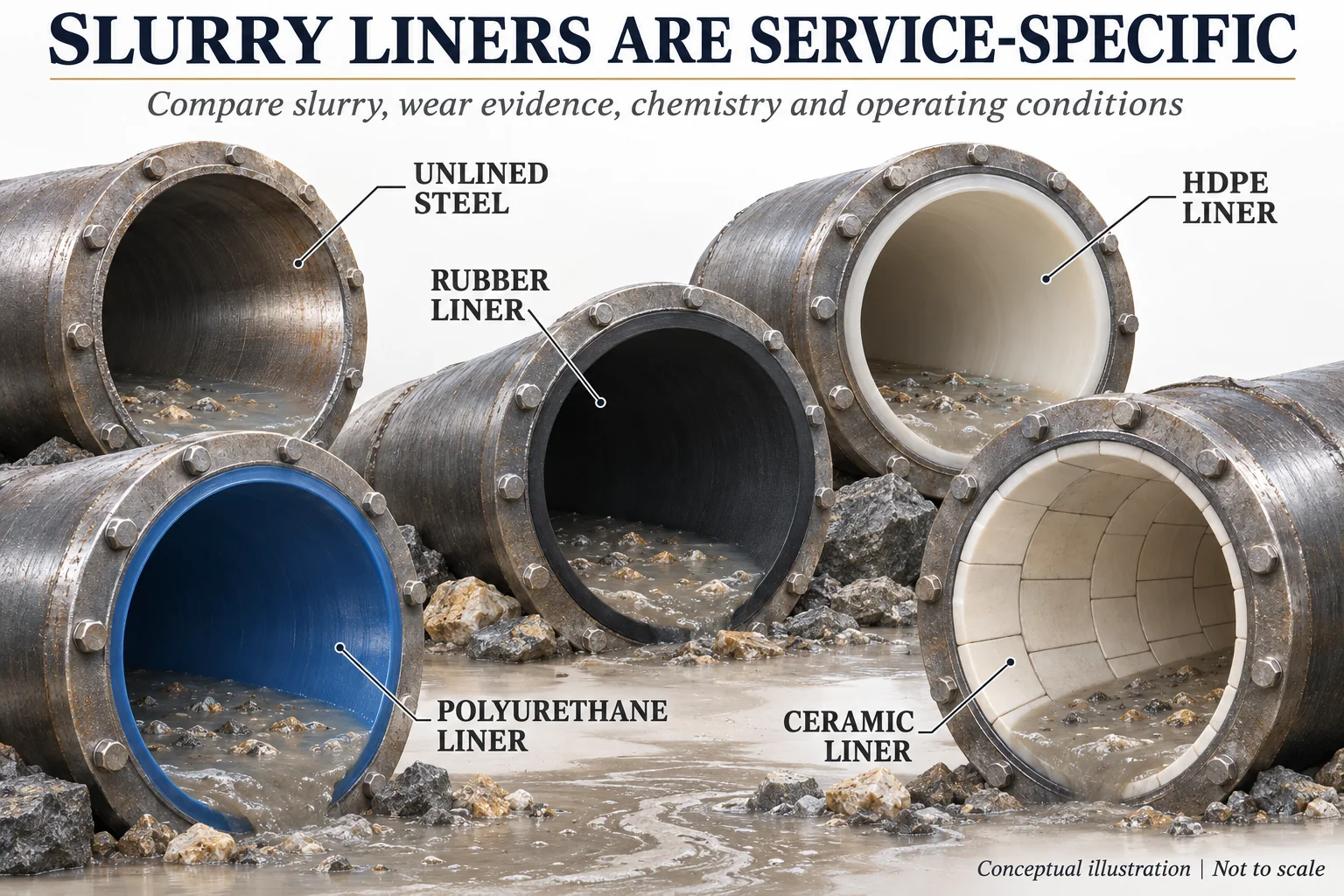
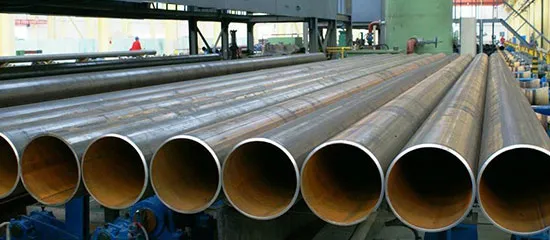
Illustrative pipe and lining specimens. Bare steel, HDPE, rubber, polyurethane and ceramic are candidates to assess against the actual slurry; specimen proportions do not represent specified thicknesses.
Liner selection is an evidence exercise. These inputs explain why bare steel or a liner is workable, and they go to both the shell and the liner supplier; the RFQ table below lists the documents to hand over.
•Slurry type and solids:particle size distribution, hardness, angularity and concentration drive abrasion, so they decide which liners are worth evaluating.
•Velocity and flow cases:set particle impact at bends and spools, where local wear starts.
•Temperature and chemistry:range, fluctuation, pH and process reagents limit which liner materials and adhesives remain valid.
•Pressure:steady and transient limits, including any vacuum condition, affect liner retention and the shell design check.
•Length and handling limits:available lined lengths, transport and field joining set the spool and joint layout.
•Surface roughness and energy:roughness changes pumping head over the route.
•Maintenance plan and total cost:inspection intervals, replacement strategy and downtime, not initial price per metre alone.
Ask for the proposed bend radius, finished bore, lining termination, flange drilling and replacement envelope. Make the engineer identify the local conditions and the acceptance evidence required. A wear problem at an elbow should not automatically trigger a thicker lining across the whole route; conversely, an acceptable straight-pipe result does not qualify every bend or pump connection.
Where regular replacement is part of the maintenance strategy, define lifting access, removable connections, spare spool identification and inspection access. Where the design relies on rotating straight pipe to spread invert wear, specify joints and marking that allow it. The RFQ should distinguish a replaceable wear item from a permanent main-line section so price, lining and maintenance records remain traceable.
A request saying “from the mountain to the valley” is missing the data needed to select pipe. Provide the full elevation profile, fluid and solids data, flow cases, approved steady and transient pressure limits, and the engineer’s treatment of shutdown and restart. Ask whether partially filled flow, negative pressure or liner differential pressure is relevant to the actual design; do not assume any is present from slope alone.
Transmit the approved results to both shell and liner suppliers. If the operating envelope or control design is unresolved, identify it as a technical hold point. Do not infer lower pressure because the route descends, or calculate the complete slurry design from the height difference alone.
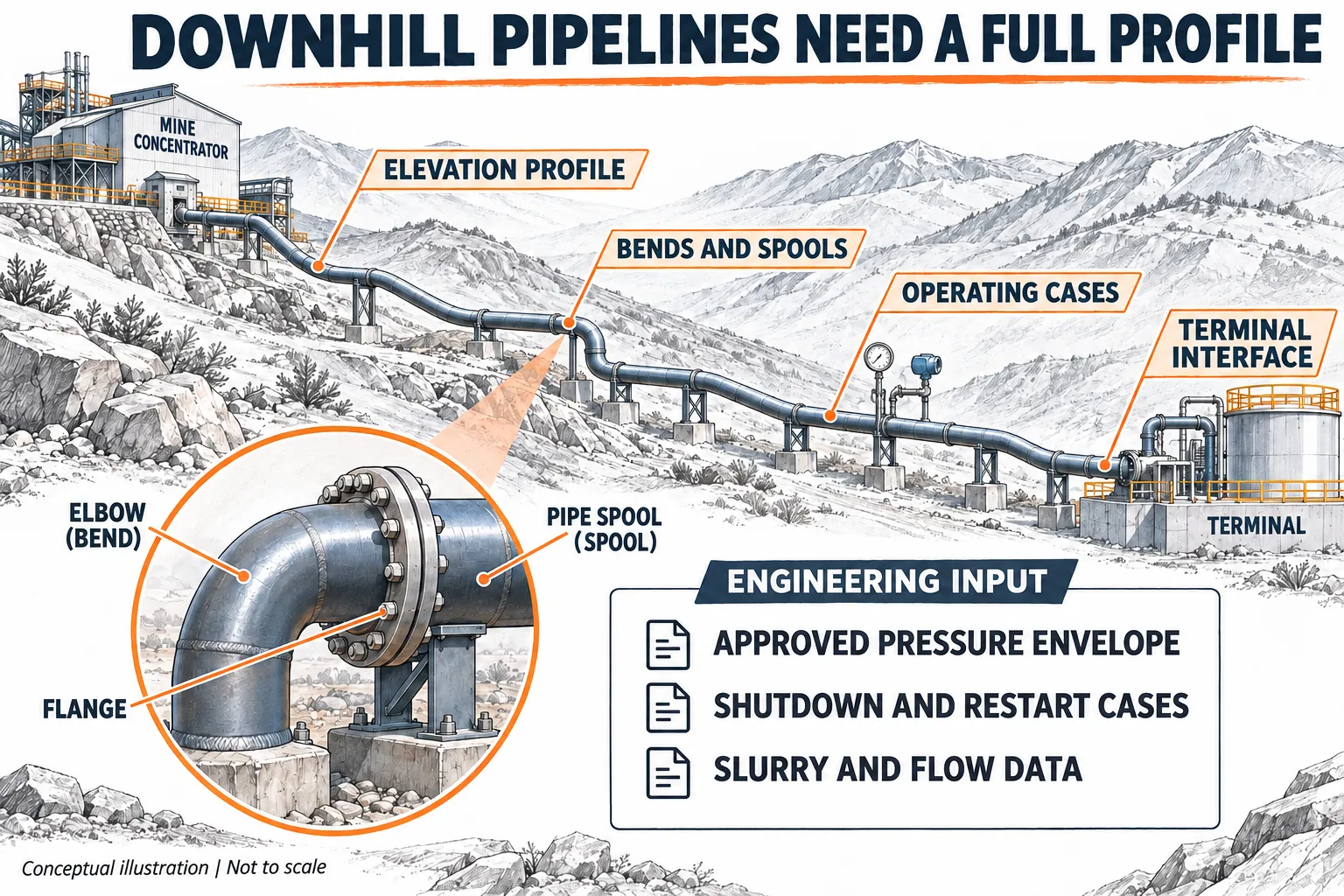
Downhill pipe inquiry data map. The terrain profile is illustrative; there are no design elevations, pressures or allowable velocities in this figure.
|
Mistake |
What to do instead |
|
Pick a liner from the name of the ore |
Obtain representative slurry data and relevant test or service evidence |
|
Treat a liner thickness as a service-life guarantee |
Review material, wear mechanism, operating envelope and maintenance basis |
|
Specify seamless pipe as the wear solution |
Assess pipe-body manufacture separately from bore wear and corrosion |
|
Use main-line specifications for every bend |
Issue separate spool drawings and local duty requirements |
|
Compare only initial price per metre |
Compare installation, inspection, downtime, repair and replacement assumptions |
Mark uncertainties instead of filling them with a generic grade or liner. For a Forever Steel inquiry, attach the approved pipe schedule and identify whether the request is for pipe bodies, fabricated spools or a complete lined assembly; confirm the available lining, process responsibility and qualification before a lined system becomes part of the purchase scope.
|
Item |
What to include |
|
Slurry dossier |
Duty type; slurry analysis, particle distribution and solids basis; chemistry and test reports |
|
Operating cases |
Flow and temperature range; route and elevations; approved pressure and load envelope |
|
Pipe schedule |
OD, wall, grade, permitted manufacturing routes, quantities |
|
Lining basis |
Lining options, test or service evidence, and who is responsible for the liner |
|
Spool and connection drawings |
Bends, pump spools, flange drilling, lining terminations, finished bore and replacement envelope |
|
Records and maintenance |
Inspection and release records; replacement strategy; spare spool identification |
|
Open items |
Technical hold points marked as unresolved instead of filled with a generic grade or liner |
|
Delivery |
Delivery sections and destination |
Use the steel pipe tolerance guide for dimensional acceptance planning and the heat number traceability guide for material records.
No universal ranking is established here. Compare formulation-specific evidence for the slurry, chemicals, temperature, connections and maintenance conditions.
It is widely used on long overland lines, but suppliers report that HDPE wears quickly in hard-rock abrasive slurry. Confirm with wear evidence for the actual tailings.
No. The engineer must establish the operating and pressure envelope for the whole profile and operating cases. The pipe inquiry must carry those approved results.
Not automatically. Request its residual solids, chemistry, temperature and treatment conditions before transferring a water-pipe lining specification.
No. Seamless manufacture removes a weld but not abrasion; wear and corrosion are assessed against the bore surface and lining.
There is no general figure. Life depends on particle properties, velocity, chemistry and liner or wall allowance; request operating history or loop-test evidence for comparable duty.
Steel water pipe selection by service
Potable water transmission guide
Desalinated water pipeline lining guide
Steel pipe for sewage force mains guide
Metso Rubber Lined Steel Pipes Slurry Pipe System
Beaver Slurry Pipeline Design Selecting the Right Wear Liner
Beaver Comparison of Different Lined Slurry Piping
Beaver Understanding Slurry Is Key to Good Tailings Pipeline Design
Ausenco Los Pelambres Tailings and Concentrate Pipeline System