+8615674993216
 sales@forever-steels.com
 English
 العربية

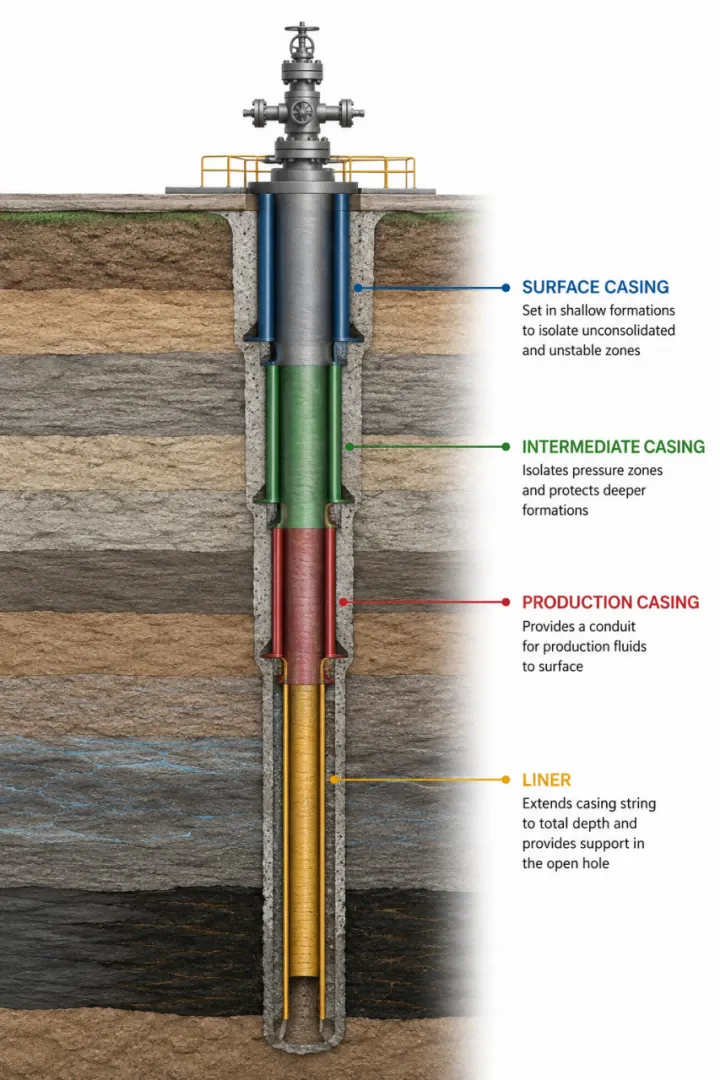
Surface, intermediate and production casing describe the role of a string in the well program. A liner describes a string that does not extend to surface. These names do not, by themselves, determine grade, wall thickness, connection or a universal setting depth. The approved well design must define the barrier function, geometry, load cases and service conditions before the tubular order is released.
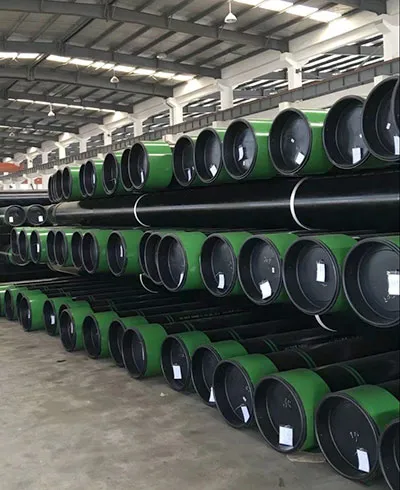
For API 5CT casing pipe procurement, attach a separate controlled line-item schedule for each string or liner. The API 5CT casing and tubing complete guide covers the wider product framework; the checks below focus on translating the casing program into dimensions, performance requirements and release evidence.
| String/configuration | Why it is used | Inputs that must reach procurement |
|---|---|---|
| Surface casing | Protects shallow freshwater formations where applicable and establishes the structural/pressure-control interface for further well construction. | Approved setting interval, barrier/cementing requirements, wellhead/BOP interface, geometry and governing regulatory/operator requirements. |
| Intermediate casing | Isolates troublesome formations or pressure regimes so drilling can proceed below them. A program may have none, one or several such strings. | Formation/pressure constraints, approved setting depths, drilling-fluid and subsequent drilling load cases, clearances and connection requirements. |
| Production casing | Supports the planned completion and pressure/barrier duty at the producing section; its placement depends on the completion design. | Completion configuration, operating/intervention pressures and temperatures, service environment, equipment interfaces and lifecycle loads. |
| Liner | Does not extend to surface; its top is suspended or anchored within a previous string. It can serve an intermediate or production role. | Overlap/top and bottom depths, hanger/seal/tie-back arrangement, geometry, installation loads and approved equipment compatibility. |
Do not assume every well uses the same number of strings or the same size sequence. A liner is not automatically a different casing material, and a production liner is not production tubing. Confirm the operator terminology and the actual program drawing when these names are used differently across projects.

Provide the approved hole/string diagram and a line-item schedule showing OD, nominal weight, wall, grade/type, connection and length distribution. Use the API 5CT casing dimensions database for reference lookups, then verify the selected row and supplied assembly against the governing specification and manufacturer data.
The engineer should supply the accepted load cases and design criteria; procurement should obtain product and connection data that can be checked against them. A collapse, burst or tension number is incomplete without its geometry, material and loading basis.
| Load/condition | What the engineering package should define | What to obtain from the supplier |
|---|---|---|
| External-pressure/collapse | Relevant internal/external pressure profiles and installation, cementing or operating conditions. | Selected pipe-body data and rating basis for the exact size/weight/grade; any approved special-collapse specification. |
| Internal-pressure/burst | Pressure profiles and pressure-test/operating scenarios, including the relevant external pressure. | Body and connection pressure-performance data and the applicable rating/acceptance basis. |
| Axial tension/compression | Suspended weight, installation loads and relevant thermal/pressure effects. | Body and connection axial-performance data, assembly configuration and limitations. |
| Combined loads/bending | Relevant simultaneous loads, well trajectory and lifecycle scenarios. | Applicable combined-load connection envelope and engineering-approved evidence coverage. |
| Material/service limits | Temperature, fluids, H2S/CO2 and the approved corrosion/material requirements. | Full grade/type, heat-treatment condition and the required material/qualification records. |
Do not transfer pipe-body ratings to the connection, assume a stronger grade solves all collapse problems, or use depth as a complete grade-selection rule. Standard tubular performance, connection performance and corrosion suitability are different checks. The collapse, burst and tension procurement guide explains which rating inputs buyers should clarify before quotation.
A liner can reduce the length of casing run to surface, but its hanger, overlap seal, installation method and any future tie-back introduce separate design and procurement requirements. Compare the complete approved system, not pipe tonnage alone. Do not select a liner solely from a casing-price comparison.
Identify which supplier is responsible for the pipe, connection, hanger/seal assembly, setting tools and any crossover or tie-back components. Record the approved mating drawings and responsibility for compatibility. A list headed “liner” without this interface definition can leave the tubular order complete while the installation package remains incomplete.
| RFQ field | Required description |
|---|---|
| Program identity | Well/project, string or liner role, drawing revision, approved interval and quantity. |
| Governing specification | API 5CT edition and applicable updates, operator/project requirements and relevant thread/connection specification. |
| Pipe geometry | OD, nominal weight/mass basis, wall, required drift, tolerances and unit basis. |
| Material | Full grade/type, heat-treatment condition, permitted manufacturing route and any approved service/material requirements. |
| Connection | Exact API or proprietary designation, coupling/configuration, source/license approval where required, protectors and running requirements. |
| Performance basis | Engineering-approved body/connection and combined-load requirements, rating-data basis and any special product specification. |
| Accessories/interfaces | Couplings, pup joints, crossovers and specified cementing/liner/tie-back interfaces; drawings and scope/responsibility split. |
| Delivery and release | Length range/distribution, tally, inspection/ITP, certificates, bundle/loading limits and delivery sequence. |
For API 5CT 11th Edition orders, avoid copying an unexplained PSL1/PSL2 label from an older program. State the governing edition and additional requirements explicitly. Document changes to grade, weight, connection, length distribution or source as deviations requiring the agreed technical approval.
The API 5CT pre-shipment inspection checklist helps define the manufacturing release package. It does not replace approval of the well program. Agree which records must be reviewed before production, before shipment and at receiving, rather than waiting for the final packing list to discover a specification mismatch.
Identify the bundle/joint marking needed to separate strings and material types at the yard and wellsite. Confirm whether the first-delivery package must include matching accessories and spare protectors, and whether receiving limits require a particular bundle mass or lifting arrangement. Project references can support this logistics discussion; OCTG project references are not a substitute for the current well-design and acceptance documents.
A practical release check is to reconcile the approved casing schedule, PO, certificate, joint/bundle identity and tally. Any proposed change to a string should identify the affected clearances, ratings, connection interfaces and installation sequence before commercial acceptance.