+8615674993216
 sales@forever-steels.com
 English
 العربية


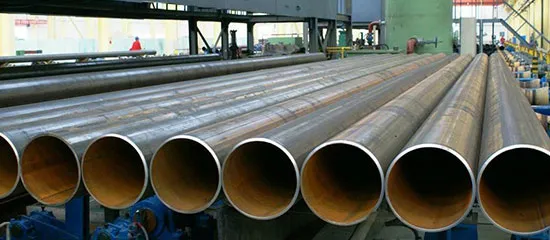
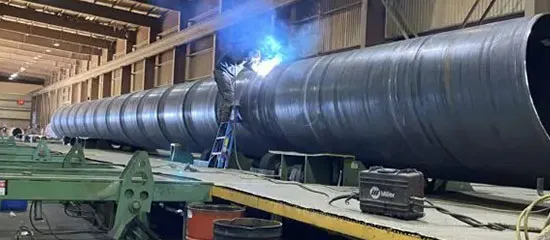
UOE and JCOE are two forming routes used in the production of longitudinally submerged-arc-welded pipe. Both can produce large-diameter, heavy-wall pipe from steel plate, and both can support demanding line-pipe and structural specifications when the manufacturing process is properly qualified.
The practical difference is not that one route is universally superior. Their forming sequence, equipment investment, production rate, size flexibility and expansion practice create different commercial and geometric strengths. Those differences matter when a project combines tight diameter tolerance, heavy wall, unusual size, limited quantity or a demanding delivery schedule.
A buyer reviewing an LSAW quotation should therefore look beyond the letters UOE or JCOE and examine the mill's qualified range and process controls for the actual order.
|
Quick answer:UOE and JCOE both produce longitudinally welded pipe, but their forming sequence, production economics, size flexibility and geometry controls can suit different order profiles. |
Public discussions rarely begin with a standard clause. They begin with a conflict that blocks a decision:
· Both quotations say LSAW. Why does one mill propose UOE and another JCOE?
· Does a different forming route explain the difference in MOQ and delivery time?
· Will pipe-end roundness and hi-lo become a site problem even when body tolerances pass?
· What evidence proves that the mill has produced the requested grade, diameter and wall combination before?
In a UOE route, prepared plate is first formed into a U shape, then closed into an O shape. After welding, mechanical expansion is commonly used to improve final geometry and relieve part of the forming variation.
In a JCOE route, the plate is progressively pressed through multiple steps that create J, C and O shapes. The welded pipe may then be mechanically expanded, depending on the mill route and specification.
|
Route |
Forming characteristic |
Typical commercial effect |
|
UOE |
Large dedicated presses form the plate through U and O stages. |
High productivity and repeatability for large project volumes within the mill range. |
|
JCOE |
Progressive press strokes form the plate in smaller increments. |
Greater size flexibility and potentially practical for varied or smaller production lots. |
Mechanical expansion is an important control stage, but the expansion ratio and procedure must be managed. Expansion can improve diameter consistency, roundness and straightness and can help establish stable pipe-end geometry for field fit-up.
It does not replace accurate plate preparation, forming and welding. Excessive or poorly controlled expansion can affect dimensions and residual stress. The relevant manufacturing procedure, qualification records and final dimensional results matter more than the presence of the word 'expanded' in a brochure.
UOE and JCOE labels do not create universal size ranges. Maximum diameter, minimum diameter, wall thickness, plate width, plate strength and press capacity vary by mill.
For high-strength heavy-wall pipe, forming force can become the limiting factor. For a small-diameter heavy-wall order, springback and pipe-end geometry may be challenging. The correct question is whether the selected mill has qualified experience with the requested combination of grade, diameter and wall thickness.
UOE lines are capital-intensive and are often associated with large pipeline programs where consistent production over many pieces supports efficiency. JCOE lines may offer more flexibility for varied dimensions or moderate project quantities, although their economics still depend on plate procurement and setup.
A lower pipe quantity does not necessarily mean a low MOQ. The steel plate heat, rolling width, normalized or TMCP condition, destructive test lot and project documentation can each create a separate minimum.
|
Order condition |
Questions to ask the proposed mill |
|
Large repeat volume |
What is the sustained production rate and inspection capacity? |
|
Unusual diameter or wall |
Has the mill produced and qualified the same combination? |
|
Small project quantity |
What plate and test-lot minimum controls the order? |
|
Tight pipe-end tolerance |
Is full-length expansion used, and how are ends measured and matched? |
Project acceptance often focuses on pipe-end outside diameter, out-of-roundness, wall-thickness transition, straightness and weld-seam geometry. A pipe can comply with general body tolerances and still create site difficulty if pipe ends are not consistently controlled.
For girth-weld fit-up, buyers may need pipe-end dimensional records, end matching or sorting, and protection against transport deformation. These controls should be linked to the project welding and installation plan rather than assumed from the forming-route name.
UOE and JCOE are capable LSAW production routes. UOE often suits high-volume programs within a dedicated size range, while JCOE can offer useful dimensional flexibility. Actual quality depends on the mill's plate control, forming practice, welding, expansion, NDT and dimensional inspection for the specified grade and size.
Forever Steels can review an LSAW requirement against available mill routes, qualified size ranges, testing and project quantity before confirming the proposed production source.
Engineers and buyers often debate UOE versus JCOE as if the acronym were a quality grade. It is not. A strong evaluation begins with the mill’s qualified envelope: plate grade and delivery condition, diameter, wall thickness, length, expansion range, welding procedure, NDT capability and previous production records.
A proven JCOE line can be a lower-risk source than an unfamiliar UOE line for a particular heavy-wall size, and the reverse can also be true. The correct comparison is mill-plus-route-plus-order, not acronym versus acronym.
The forming line is only one part of the order economics. The plate mill may require a minimum heat or rolling width. TMCP or normalized plate may need a dedicated campaign. Destructive tests can represent a defined lot, and project-specific qualification tests may consume additional plate and pipe.
This explains why a flexible forming route does not guarantee a tiny MOQ. A realistic quotation should identify which minimum is controlling: plate procurement, forming setup, welding qualification, destructive testing or project documentation.
Site hi-lo is rarely explained by one diameter measurement. Pipe-end OD, local out-of-roundness, wall-thickness variation, weld-seam reinforcement, bevel geometry and transport deformation interact. Two individually compliant ends can still be difficult to match if both are near opposite tolerance limits.
For demanding LSAW steel pipe projects, the purchaser can specify end measurement patterns, end sorting or matching, maximum local out-of-roundness and protection during transport. These requirements should be agreed before production because they affect inspection and packing.
|
Evidence |
Why it is more useful than the route name |
|
Qualified size and grade record |
Shows experience with the actual forming force and springback behavior. |
|
Pipe-end measurement map |
Shows local geometry relevant to girth-weld fit-up. |
|
Expansion procedure and records |
Explains how final diameter and roundness are controlled. |
|
Welding and NDT procedure qualifications |
Demonstrates control of seam integrity for the material and thickness. |
|
Previous order performance |
Connects manufacturing capability with delivery and site results. |
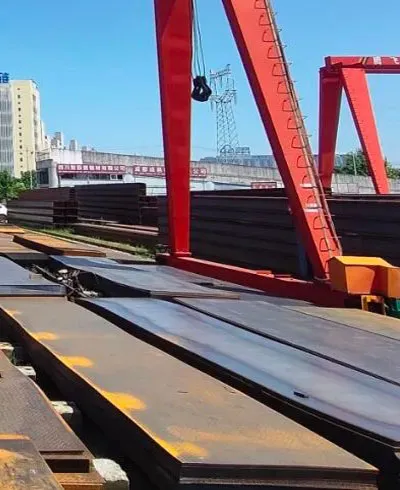
The decision begins with the available pipeline steel plates, continues through the selected welded steel pipe forming line, and ends with evidence that the proposed LSAW steel pipe geometry can be controlled for the actual order.
· API 5L Line Pipe Selection Guide for Oil and Gas Projects
· Steel Pipe Inspection Checklist Before Shipment
· How to Prevent Surface Damage to Coated Steel Pipes During Transportation
• Finite-Element Analysis of the UOE Manufacturing Process for Large-Diameter Pipes — University of Edinburgh research published in the International Journal of Solids and Structures.
• Residual-Stress Evolution in JCOE/JCOC Forming of Large-Diameter Welded Pipe — peer-reviewed 2025 research on forming-route residual stress.
• Residual Stress Measurement in X80 SAWH, UOE and JCOE Steel Pipes — research from CNPC Tubular Goods Research Institute.
• Smart Manufacturing in LSAW Pipe Production — peer-reviewed manufacturing research published in Procedia Manufacturing.
• Validating the Integrity for Re-Use of a Land Pipeline — The Welding Institute case study involving ERW seam integrity and inspection evidence.
• Differences Between JCO and UOE Line Pipe — Eng-Tips practitioner discussion; use as field context, not as a procurement standard.