+8615674993216
 sales@forever-steels.com
 English
 العربية

FBE coating problems often start before the powder reaches the pipe. A rough, clean steel surface is needed for mechanical bonding; the pipe body has to hold the right heat; the powder must melt and flow before it gels; and the cured film must survive handling, holiday testing and burial. If one of those steps is treated as a formality, the coating may look smooth at the plant and still become a weak point in service.
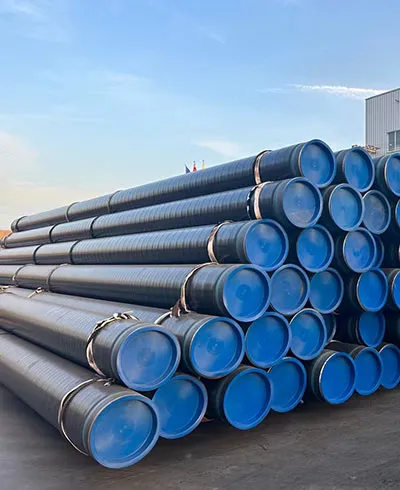
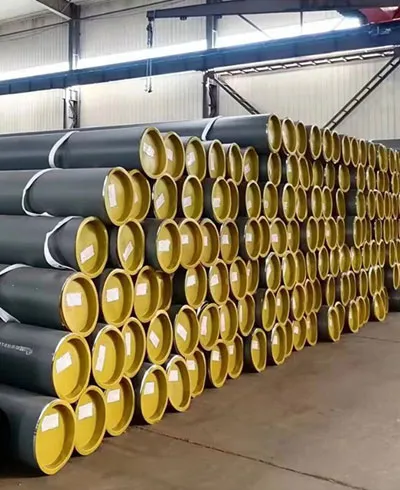
For buried pipeline orders, the first product decision is usually whether the project needs FBE coated steel pipe as the external anti-corrosion system. Where the specification also mentions internal epoxy, potable water lining or liquid epoxy repair, the buyer should separate those requirements from the external FBE layer and review epoxy coated steel pipe options on their own merits.
Fusion bonded epoxy is applied as powder, but the final protection is a cured thermoset film. During application, the heated steel melts the powder particles. The molten powder wets the blast-cleaned surface, flows into the profile, begins to gel, and then crosslinks into a hard film. That sequence is short. A small shift in pipe temperature, line speed or powder condition can change adhesion, flexibility and holiday risk.
|
Plant stage |
What the operator is controlling |
What a buyer can ask to see |
|
Blast cleaning |
Cleanliness, surface profile, dust removal and soluble salt control. |
Surface preparation record, abrasive type, profile range and inspection photos. |
|
Preheating |
Pipe surface temperature at application, including heavy-wall heat retention and cooling rate. |
Temperature log or coating line record rather than a nominal target value alone. |
|
Powder application |
Powder batch, spray coverage, pipe rotation, seam coverage and cutback control. |
Powder data sheet, batch record, DFT map and cutback confirmation. |
|
Gel and cure |
Line speed, dwell time and actual cure response for the powder grade used. |
Cure check method, adhesion or flexibility results and final inspection report. |
|
Handling release |
Cooling time, sling type, stacking method and repair of any handling damage. |
Holiday test result, repair record, packing photos and loading protection plan. |
A cure window is not a magic temperature written into every order. The usable range comes from the powder grade, pipe diameter, wall thickness, coating thickness and production speed. A heavy-wall pipe can stay hot long enough to complete cure after leaving the spray zone. A thin-wall pipe may cool too quickly if the line speed is wrong. This is why serious coating review looks at process records and test results together.
The RFQ should avoid vague phrases such as standard FBE coating or normal thickness. Better wording is: external FBE coating according to the project coating specification, with target DFT range, cutback length, holiday testing, adhesion testing, repair method and final coating report confirmed before production.
|
Symptom found later |
What it may point to |
Why it matters commercially |
|
Holiday at weld seam or edge |
Local thin film, poor spray angle, edge effect or later handling damage. |
The buyer may reject the pipe or request repair before shipment. |
|
Low adhesion |
Contaminated surface, weak surface profile, low preheat or incomplete cure. |
The problem is not cosmetic; it can become disbondment under soil and CP exposure. |
|
Brittle film after bend or impact |
Overheating, over-cure, excessive thickness or wrong powder grade. |
A coating that cracks during handling creates field repair cost. |
|
Rough or uneven surface |
Poor flow, wrong temperature window or powder condition issue. |
The surface can trap soil or make inspection and repair harder. |
|
Repeated repairs in one batch |
Unstable coating line control or rough handling after coating. |
The order may need tighter inspection before shipment release. |
FBE is a strong choice for many buried pipelines, but the specification still needs boundaries. High service temperature, strong UV exposure before burial, aggressive rocky backfill, HDD pullback, poor field joint coating and delayed cathodic protection commissioning all change the risk. A supplier can coat the pipe correctly and the project can still lose coating integrity if the installation plan does not match the coating system.
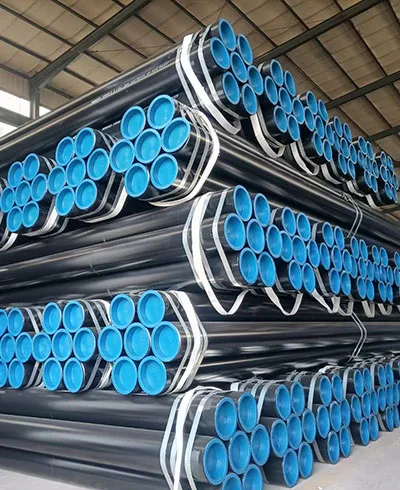
For export shipments, ask how coated pipes will be separated, lifted, stacked and loaded. Coating damage caused by a steel sling, hard spacer or rough container floor is not solved by a good cure window. Packing and loading records are part of coating quality for international buyers.
|
Information to send |
Why it changes the coating review |
|
Pipe OD, wall thickness and length |
Controls heating behavior, coating line settings, handling method and packing plan. |
|
Coating standard or project coating specification |
Sets test method, acceptance criteria, DFT range and repair rules. |
|
Service temperature and burial environment |
Helps confirm whether the FBE grade is suitable or a higher-performance system is needed. |
|
CP requirement |
Determines whether cathodic disbondment resistance and repair compatibility need extra attention. |
|
Installation method |
Open trench, rocky backfill and HDD do not create the same coating damage risk. |
|
Field joint coating requirement |
A well-coated pipe body can still fail at the weld joint if the field system is weak. |
No. FBE is a powder applied to heated steel and cured into a thermoset film. Liquid epoxy systems use a different application process and should not be treated as the same coating in a specification.
Appearance helps, but it is not enough. Adhesion, DFT, holiday testing, cure control and repair records give a more reliable view of coating quality.
ARO becomes relevant when installation can damage the coating mechanically, especially HDD pullback, rocky backfill, severe handling or long crossing sections.
· Steel Pipe Inspection Checklist Before Shipment
· How to Prevent Surface Damage to Coated Steel Pipes
· How to Prevent Corrosion in Underground Oil Pipelines
• ISO 21809-2:2026 — Single-Layer Fusion-Bonded Epoxy Coatings — International Organization for Standardization.
• Fusion-Bonded Epoxy Coating: A Technology Compendium — Pipeline Research Council International; prepared by Gary Choquette.
• Development of Low-Application-Temperature Coating Systems for Steel Pipelines — technical paper by Dennis Wong, Catherine Lam and Peter Singh, published by AMPP/NACE.
• Fusion-Bonded Epoxy Composite Coatings on Chemically Pre-Treated API Steel Surfaces — peer-reviewed research covering thermal analysis, cure behavior and coating performance.
• Water Transport Through Epoxy-Based Powder Pipeline Coatings — research by Zargarnezhad, Asselin, Wong and Lam, hosted by ChemRxiv/Cambridge Open Engage.
• Preparation and Application of Fusion-Bonded Epoxy Coating to Pipe — Transportation Research Board TRID research record.
An approved powder data sheet does not prove that each pipe received a compliant coating. The production record should connect surface preparation, steel temperature, application time, cure condition, dry-film thickness and final testing to the relevant batch or pipe identity.
| Control | Record | Buyer check |
| Surface preparation | Cleanliness, profile and contamination results | Accepted before preheat |
| Application | Pipe temperature, powder batch and spray time | Within the approved procedure window |
| Cure | Time/temperature evidence or validated process control | Matches powder and procedure requirements |
| Release | DFT, holiday, adhesion, repairs and retests | Every repair is closed |
For FBE coated steel pipe, Forever Steel can align the requested coating records with the ITP and shipment dossier. Acceptance values must come from the governing coating specification and approved procedure, not from a generic FBE description.