+8615674993216
 sales@forever-steels.com
 English
 العربية

For an oil and gas pipeline project, choose the pipe through four approval gates: service risk, permitted manufacturing route, installation and corrosion-control requirements, and a complete quotation scope. The lowest unit price is not comparable until the offers cover the same accepted technical requirements. Keep any proposed substitute separate from the base offer and obtain the responsible engineer’s approval.
The useful selection question is therefore not 'which steel pipe is best?' The useful question is: which pipe route and evidence package can pass the owner's technical review, survive transport and installation, and avoid rework after the shipment has left the mill?
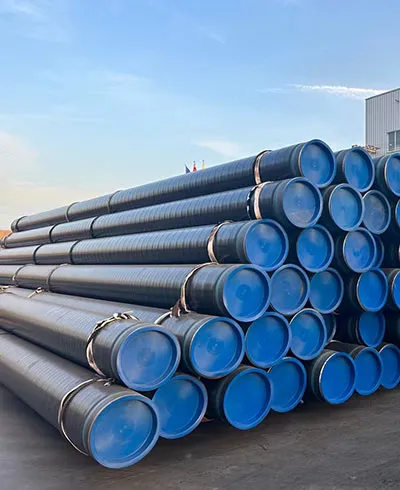
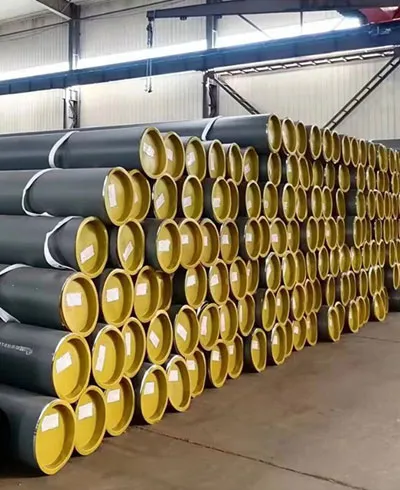
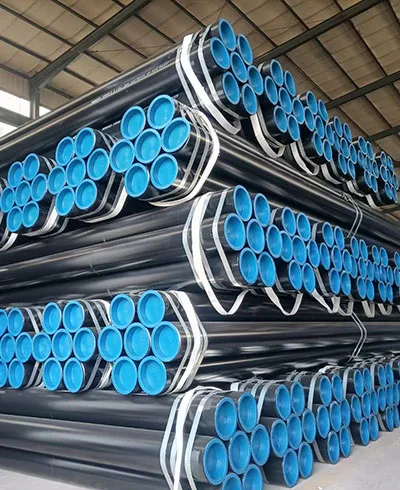
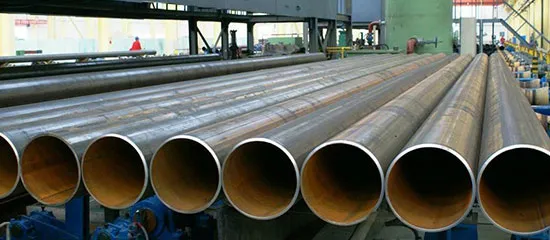
Use the API 5L line-pipe selection guide for detailed grade and PSL choices. For project supply, review the required API 5L seamless line pipe, LSAW steel pipe or SSAW steel pipe against the approved route, inspection and delivery scope.
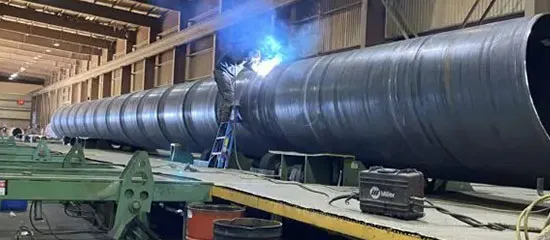
For large diameter projects, compare LSAW Steel Pipe and SSAW Steel Pipe by pressure class, wall thickness, weld acceptance and installation risk rather than by price per ton alone.
The first decision is the service environment. Gas transmission, crude oil gathering, produced-water injection, fuel distribution, offshore tie-in and construction dewatering may all use carbon steel pipe, but they do not carry the same consequence of failure. A gas line crossing populated areas needs a different level of toughness, weld inspection and traceability from a temporary low-pressure water line. A buried line in aggressive soil needs coating and handling control; an above-ground line may put more emphasis on end preparation, dimensional control and coating compatibility with painting or insulation.
Choose the grade together with pressure containment, weldability, coating protection, approval evidence and logistics requirements. A grade alone does not define the complete project acceptance package.
Eliminate any route the governing code, owner specification, dimensional range or qualification does not permit. Among the remaining routes, compare size-grade feasibility, inspection coverage, coating compatibility, end geometry and delivery plan. Do not use a general seamless/ERW/LSAW/SSAW preference as route approval.
The trap is treating the route as a hierarchy. Seamless is not automatically the right answer for every oil and gas project, and SSAW is not automatically a low-quality shortcut. The route should be accepted by the project specification, technically feasible for the required OD and wall thickness, inspectable under the required method, and suitable for the coating and transport plan.
| Project gate | Decision before RFQ | Evidence to request |
|---|---|---|
| Service and consequence | Fluid, design conditions, corrosion threats and failure consequences | Approved design basis and material/service supplements |
| Permitted route | Accepted manufacturing route and size-grade combination | Compliance matrix, manufacturing scope and named deviations |
| Installation interfaces | Field joints, end fit-up, coating cutbacks and handling | Drawings, tolerances and approved coating/packing interfaces |
| Acceptance and release | Required tests, witness points and pipe-level records | Agreed ITP, dossier index and release responsibility |
| Commercial comparison | Same quantities, delivery basis, exclusions and schedule | Normalized base offer with separately identified alternates |
A usable RFQ should state API 5L edition, grade, PSL, OD, wall thickness or schedule, manufacturing route, quantity, length range, pipe end, coating system, inspection scope, certificate type, marking, packing, shipment method and third-party inspection requirement. If alternates are allowed, ask the supplier to quote them as alternate offers, not as silent substitutions. This protects the buyer from comparing a fully tested PSL2 coated pipe against a bare pipe with partial documentation.
For coating, specify the coating standard or project requirement, surface preparation, DFT range, cutback, holiday test, repair acceptance and packing method. For dimensions, define OD, WT, length, ovality, straightness and bevel checks where they affect field welding. For documents, ask for draft MTC and ITP before production when the order is critical.
Technical approval comes before price comparison. List each offer’s deviations from the approved base requirement, assign the decision to the responsible reviewer, and retain the written acceptance or rejection. A supplier’s “equivalent” statement does not close a project deviation.
A buyer may send one inquiry to three suppliers and receive three quotations for 'API 5L X52 pipe'. One supplier quotes seamless PSL2 with hydrotest, bevel, caps, MTC and coating records. Another quotes welded pipe PSL1 with bare pipe only. A third quotes the right grade but assumes random length and no third-party inspection. All three quotations may carry the same grade designation, but they are not quoting the same project responsibility.
Define the acceptance package before requesting final price. Compare pipe route, PSL, coating, testing, documentation, packing and loading. A lower price may reflect omitted requirements rather than a lower cost for the same scope.
Issue one controlled RFQ revision with the approved design inputs and acceptance package. Require each supplier to state included, excluded or alternate against every line; a blank response is an open item, not an assumption of compliance.
| Alternate-offer register field | Example of information required |
|---|---|
| Base requirement / proposed change | Required route, coating or test scope versus the supplier’s proposed alternative |
| Technical effect | Changed acceptance evidence, interfaces, inspection coverage or installation assumptions |
| Commercial effect | Price, lead time, inspection, transport and any excluded work |
| Approval and status | Named reviewing authority, document/revision, decision date and open actions |
Before issuing the inquiry, resolve these questions: Will the pipe pass technical review? Can the supplier document the manufacturing route? Will the coating survive handling? Can the specified length be loaded? Can the MTC be traced to the cargo?
· State the applicable standard, grade, edition, size, wall thickness, quantity, length and manufacturing route.
· Define coating, pipe ends, marking, packing and shipment method before price comparison.
· Confirm MTC, heat-number traceability, NDT, hydrotest, dimensional report and coating report where applicable.
· Ask the supplier to identify any alternate offer separately from the base requirement.
· Agree document submission and third-party inspection hold points before production if the order is critical.
· API 5L Line Pipe Selection Guide for Oil and Gas Projects
· API 5L Grade B vs X42 vs X52: Which Line Pipe Grade Fits Your Project
· Seamless vs Welded Steel Pipe Selection Guide
· Steel Pipe Inspection Checklist Before Shipment
· API Specification 5L standards page
· API announcement: API Spec 5L 47th Edition
· ISO 3183: Petroleum and natural gas industries - Steel pipe for pipeline transportation systems
· ASME B31.8 Gas Transmission and Distribution Piping Systems
· AMPP: Introduction to field-applied pipeline coatings
· Eng-Tips Pipeline Engineering Forum, used as field-question signal