+8615674993216
 sales@forever-steels.com
 English
 العربية

A buyer-focused technical guide to ISO 21809-1/2, DIN 30670, DIN 30678, CSA Z245.20, AS/NZS 3862 and GOST 31448 for FBE, 3LPE and 3LPP coated steel pipe.
When buyers discuss coated steel pipe, the conversation often stops at the coating name: 3PE, 3LPE, FBE or 3LPP. That is not enough for a serious pipeline order. The real control points are coating thickness, layer structure, surface preparation, curing, holiday testing, adhesion, cutback, repair and traceability.
A pipe can meet the base pipe standard and still fail the coating requirement if the steel surface is not clean enough, the anchor profile is unstable, the FBE is under-cured, the adhesive layer is too thin, the PE/PP layer is overheated, or the weld seam area is not measured correctly. These are factory-process issues, not just laboratory issues.
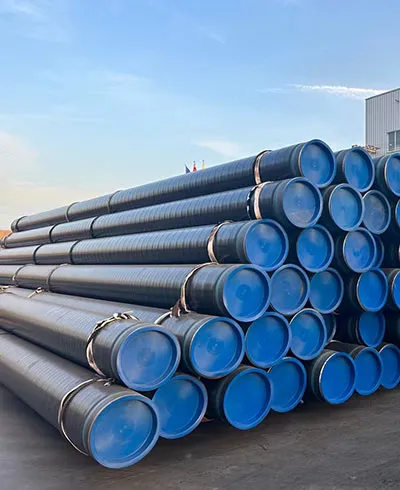
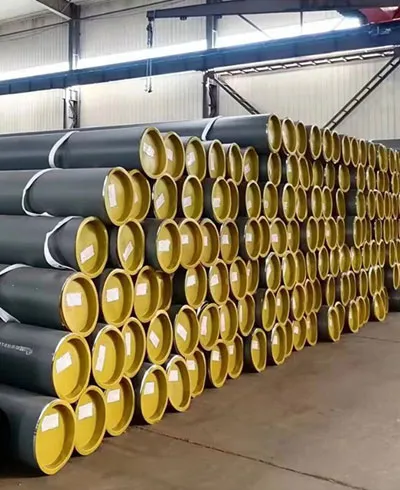
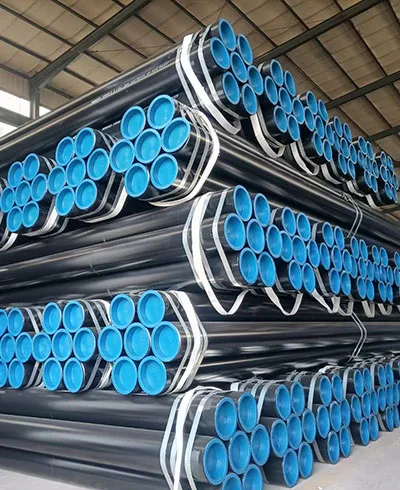
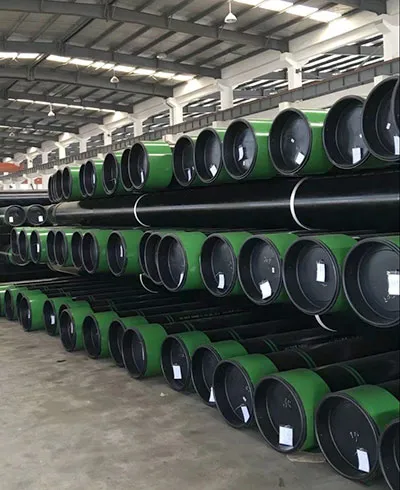
Forever Steel supplies coated steel pipes including 3PE coated steel pipe and FBE coated steel pipe for oil, gas, water transmission and infrastructure projects. The guide below explains how the main coating standards should be read from a buyer's point of view.
|
Standard |
Main coating / product |
Typical thickness reference |
Best-fit products |
Buyer risk to control |
|
ISO 21809-1 |
3LPE / 3LPP external polyolefin coating |
Class-based system; commonly about 1.3-4.7 mm depending on pipe mass and coating class |
API 5L seamless, ERW, LSAW, SSAW line pipe for buried/submerged service |
Do not omit coating class, pipe mass basis, field-joint compatibility and seam-area thickness rule. |
|
ISO 21809-2 |
External FBE |
Project-specified; common FBE orders often use about 300-600 um, with 400 um as a frequent nominal value |
Line pipe, water pipe, gas pipe, sewage pipe, FBE primer under 3LPE/3LPP |
Cure, adhesion, holiday test voltage, cathodic disbondment and handling damage. |
|
DIN 30670 |
PE coating, commonly 3LPE/3PE |
Normal: 1.8-3.0 mm by DN; reinforced: 2.5-3.7 mm by DN |
Buried gas, oil and water transmission pipe; 3PE coated seamless/welded pipe |
Normal vs reinforced class must be named; weld seam readings need separate attention. |
|
DIN 30678 |
PP coating, commonly 3LPP/3PP |
Common minimum values: 1.8 mm up to DN100, 2.0 mm DN125-250, 2.2 mm DN300-500, 2.5 mm DN600+; project specs may require more |
Higher-temperature buried pipeline, rocky backfill, mechanically demanding service |
PP extrusion temperature and adhesive bonding window are more sensitive than a simple thickness check. |
|
CSA Z245.20 |
External FBE |
PO-specified nominal thickness; common FBE practice about 305-508 um or around 406 um nominal for single-layer work |
North American oil/gas line pipe and plant-applied FBE pipe |
Calibration, cure, flexibility, adhesion, CD test and repair acceptance. |
|
AS/NZS 3862 |
External FBE |
PO-specified FBE thickness; commonly treated like 300-600 um engineering range unless owner specification states otherwise |
Australia/New Zealand water, gas and pipeline projects |
Confirm local owner requirements, potable-water approvals if relevant, and test frequency. |
|
GOST 31448 |
External 3LPE / 3LPP and epoxy systems |
Public references show single-layer epoxy around 0.35 mm; PE/PP normal/special performance thickness over weld reinforcement varies by pipe OD |
Russian/CIS pipeline projects using GOST documentation |
Translation, performance class, seam-area thickness and document language must be confirmed. |
DIN 30670 is one of the most familiar references for polyethylene coating on steel pipes and fittings. In export orders, it is often used for 3PE or 3LPE coated pipe. The key procurement point is whether the project requires normal coating or reinforced coating.
|
Pipe nominal size |
Normal coating N min. thickness |
Reinforced coating V min. thickness |
Where buyers usually use it |
|
DN <= 100 |
1.8 mm |
2.5 mm |
Small buried service lines, utility pipe, lower mechanical stress |
|
100 < DN <= 250 |
2.0 mm |
2.7 mm |
Municipal water/gas and industrial buried pipe |
|
250 < DN <= 500 |
2.2 mm |
2.9 mm |
Medium-diameter water, oil and gas transmission |
|
500 < DN < 800 |
2.5 mm |
3.2 mm |
Large-diameter water transmission, SSAW/LSAW pipe |
|
DN >= 800 |
3.0 mm |
3.7 mm |
Large-diameter trunk lines and high handling-risk projects |
|
Production focus for DIN 30670:Control the FBE primer continuity, adhesive melt condition, PE extrusion temperature, cooling uniformity and coating thickness at the weld seam. For SAW pipe, the raised weld area is where thin coating and holiday defects are most often found. |
· Specify N or V class in the PO. If the order only says DIN 30670 without class, quotations may not be comparable.
· Ask for coating thickness readings around the circumference, not only on the smooth pipe body.
· For SSAW and LSAW pipe, require several readings on or near the weld reinforcement because extrusion flow can be less uniform there.
· Confirm cutback length and bevel protection before coating; rework at pipe ends after coating is expensive and can damage the coating edge.
ISO 21809-1 covers plant-applied three-layer polyethylene and polypropylene external coatings for buried or submerged pipeline transportation systems. It is broader than a simple diameter table because the coating class is tied to pipe mass and project application. In practice, the buyer must name the coating class and should not rely on the phrase 'ISO 21809-1 coating' alone.
|
Pipe mass M (kg/m) |
Class A1 |
Class A2 |
Class A3 |
Best use |
|
M <= 15 |
1.8 mm |
2.1 mm |
2.6 mm |
Light pipe, low to high mechanical demand depending on class |
|
15 < M <= 50 |
2.0 mm |
2.4 mm |
3.0 mm |
Small/medium line pipe |
|
50 < M <= 130 |
2.4 mm |
2.8 mm |
3.5 mm |
Medium pipeline pipe |
|
130 < M <= 300 |
2.6 mm |
3.2 mm |
3.9 mm |
Large line pipe |
|
M > 300 |
3.2 mm |
3.8 mm |
4.7 mm |
Heavy large-diameter pipe |
|
Pipe mass M (kg/m) |
Class B1 |
Class B2 |
Class B3 |
Best use |
|
M <= 15 |
1.3 mm |
1.8 mm |
2.3 mm |
Where class B is permitted by owner specification |
|
15 < M <= 50 |
1.5 mm |
2.1 mm |
2.7 mm |
Project-specific medium protection |
|
50 < M <= 130 |
1.8 mm |
2.5 mm |
3.1 mm |
Pipeline sections with defined handling risk |
|
130 < M <= 300 |
2.2 mm |
2.8 mm |
3.5 mm |
Large pipe with higher damage risk |
|
M > 300 |
2.5 mm |
3.3 mm |
4.2 mm |
Heavy pipe |
|
Pipe mass M (kg/m) |
Class C1 |
Class C2 |
Class C3 |
Best use |
|
M <= 15 |
1.3 mm |
1.7 mm |
2.1 mm |
Where class C is accepted by the project specification |
|
15 < M <= 50 |
1.5 mm |
1.9 mm |
2.4 mm |
Moderate protection requirements |
|
50 < M <= 130 |
1.8 mm |
2.3 mm |
2.8 mm |
Medium/heavy pipe by owner design |
|
130 < M <= 300 |
2.2 mm |
2.5 mm |
3.2 mm |
Large pipe with defined installation control |
|
M > 300 |
2.5 mm |
3.0 mm |
3.8 mm |
Heavy pipe where C class is specified |
|
Buyer note for ISO 21809-1:The coating class is a commercial and technical decision. Higher class normally means better mechanical protection but higher material cost, slower production and sometimes stricter bend/impact requirements. Confirm the class before quoting, especially for rocky backfill, HDD, offshore loading or long-distance transport. |
DIN 30678 is used for polypropylene coating. Compared with PE, PP is usually selected when the project needs better high-temperature resistance or stronger mechanical performance. Thickness is only one part of the decision; production temperature control and interlayer bonding are especially important.
|
Pipe nominal size |
Common minimum PP coating thickness |
Typical product fit |
Production point |
|
DN <= 100 |
1.8 mm |
Small-diameter buried pipe where PP is specified |
Avoid overheating the primer and adhesive during PP application. |
|
DN 125-250 |
2.0 mm |
Medium process or transmission lines |
Check adhesive melt and wrap/extrusion uniformity. |
|
DN 300-500 |
2.2 mm |
Medium/high-temperature buried pipelines |
Control cooling to reduce residual stress and edge lifting. |
|
DN >= 600 |
2.5 mm or project-specified higher value |
Large-diameter 3LPP pipe, rocky backfill, higher installation stress |
Measure body and weld seam zones separately; inspect cutback transition. |
FBE coating is normally much thinner than 3LPE or 3LPP, but it relies heavily on surface preparation, steel preheat, powder quality and cure. A visually smooth FBE coating can still be weak if the pipe temperature is outside the powder manufacturer's window or the cure is incomplete.
|
FBE reference |
Typical thickness language in procurement |
Suitable products |
Inspection focus |
|
ISO 21809-2 |
Often specified around 300-600 um depending on project; nominal 400 um is common in many export inquiries |
External FBE for oil, gas, water and sewage line pipe; FBE primer under 3LPE/3LPP |
Surface cleanliness, anchor profile, preheat temperature, cure, holiday test, adhesion, CD test. |
|
CSA Z245.20 |
PO-defined nominal thickness; common single-layer FBE practice may be around 12-20 mils or around 305-508 um, with owner specs sometimes higher |
North American line pipe and plant-applied FBE |
Calibrated DFT checks, flexibility, impact, cathodic disbondment, repair marking. |
|
AS/NZS 3862 |
PO-defined thickness; often handled in the same engineering range as FBE systems unless the owner document sets exact values |
Australia/New Zealand FBE-coated steel pipe, water and gas projects |
Compatibility with local owner specs, potable-water or service approval where applicable. |
|
Dual-layer FBE / FBE + ARO |
Base FBE plus abrasion-resistant overcoat; total thickness is project-defined |
HDD, rocky backfill, road/rail crossings, high handling risk |
Intercoat adhesion, gouge resistance, overcoat continuity and field joint compatibility. |
|
FBE production focus:For FBE, the most dangerous shortcut is treating coating thickness as the only acceptance point. The plant must control blasting quality, pipe temperature before powder application, powder gel time, curing degree, cooling water quality and handling after cure. Under-cured FBE may pass a quick visual inspection and fail later in adhesion or cathodic disbondment. |
GOST 31448 is often referenced for Russian/CIS pipeline coating documentation. Buyers should be careful because translated specifications may use different wording for normal and special performance. The safest approach is to put the coating type, performance class, minimum thickness and document language directly into the purchase order.
|
GOST-related item |
Practical reference value |
How to use it in procurement |
|
Single-layer epoxy |
Public technical references show about 0.35 mm for normal performance |
Use only when the project actually calls for single-layer epoxy; do not confuse it with 3LPE/3LPP. |
|
Normal performance over weld reinforcement |
Not less than about 1.7 mm up to OD 530 mm; about 2.0 mm up to OD 820 mm; about 2.5 mm above OD 820 mm |
For SAW pipe, require readings over weld reinforcement, not only at smooth body locations. |
|
Special performance over weld reinforcement |
Not less than about 2.0 mm up to OD 530 mm; about 2.5 mm up to OD 820 mm; about 3.0 mm above OD 820 mm |
Use where project risk, soil, handling or owner specification requires higher performance. |
|
Documents |
Russian/CIS projects often require specific certificate wording |
Confirm bilingual reports, heat number traceability and coating inspection reports before production. |
|
Product / pipe type |
Coating systems normally suitable |
Typical project use |
Internal link |
|
Seamless steel pipe |
FBE, 3LPE, 3LPP, internal epoxy |
Oil/gas process lines, smaller line pipe, high-pressure service depending on base standard |
Seamless Steel Pipes |
|
ERW steel pipe |
FBE, 3LPE, internal epoxy |
Water, gas, utility and structural pipeline applications |
ERW Steel Pipe |
|
LSAW steel pipe |
3LPE, 3LPP, FBE + ARO |
Large-diameter oil/gas pipelines, high-strength line pipe, crossings |
LSAW Steel Pipe |
|
SSAW steel pipe |
3LPE, 3LPP, liquid epoxy lining, cement mortar lining by project |
Water transmission, piling, infrastructure and lower/medium pressure transmission |
SSAW Steel Pipe |
|
Coated steel pipe category |
3PE, epoxy, FBE and project-specific systems |
Buyers comparing coating routes before RFQ |
Coated Steel Pipes |
A coating standard becomes meaningful only when the plant converts it into production controls. The following checkpoints are where coated-pipe quality is won or lost.
|
Production stage |
What must be controlled |
Why it matters |
Buyer evidence to request |
|
Incoming bare pipe |
OD, wall thickness, ovality, weld reinforcement, surface defects, pipe end condition |
Coating thickness and adhesion are affected by geometry and surface defects before blasting. |
Bare pipe inspection record, MTC, heat number traceability. |
|
Preheating / drying |
Remove moisture and bring pipe to stable temperature before blasting/coating |
Moisture and unstable pipe temperature cause poor adhesion and coating pores. |
Temperature log or production parameter record. |
|
Abrasive blasting |
Sa 2.5 cleanliness, anchor profile, dust and soluble salt where required |
FBE and primer adhesion depend directly on surface condition. |
Surface preparation report, roughness readings, abrasive batch control. |
|
FBE primer application |
Pipe temperature, powder flow, electrostatic spray, gel/cure time |
Under-cure or over-bake can reduce adhesion and flexibility. |
Powder certificate, application temperature log, cure test record. |
|
Adhesive layer |
Adhesive temperature, thickness and melt bonding |
Weak adhesive bonding causes peeling between FBE and PE/PP layers. |
Layer thickness check and peel/adhesion result. |
|
PE/PP outer layer |
Extrusion temperature, wrap tension, overlap, cooling rate |
Outer layer gives mechanical protection; uneven cooling can cause stress or edge lifting. |
DFT report, visual inspection, holiday test record. |
|
Pipe ends and cutback |
Cutback length, bevel cleanliness, coating edge shape, end protection |
Field welding and field joint coating depend on clean, controlled ends. |
Cutback measurement, bevel/end photos, packing photos. |
|
Repair |
Approved repair material, surface prep of damaged area, retest after repair |
Uncontrolled repair becomes the weakest coating point. |
Repair map, before/after photos, retest record. |
For coated pipe, pre-shipment inspection should not be limited to appearance. The inspector should prove that the coating is continuous, thick enough, well bonded and traceable to each pipe or bundle.
|
Inspection item |
Critical point |
Common problem found |
How buyers should write it |
|
Coating thickness |
Measure body, ends and weld seam; record min/avg/max |
Reports show only average values and hide local thin spots |
Define number of readings per pipe/lot and require seam readings for welded pipe. |
|
Holiday test |
Correct voltage, calibrated detector, full pipe coverage |
Voltage too low or speed too fast misses pinholes |
State standard/method, voltage basis, repair and retest rule. |
|
Adhesion / peel |
Test at temperature and location required by standard |
Good body adhesion but weak seam or repair-area adhesion |
Require test location, photos and acceptance grade. |
|
Cathodic disbondment |
Use where project spec requires long-term CP compatibility |
Skipped because it is slower than routine tests |
List it as a required lab test when owner specification calls for it. |
|
Impact / indentation / gouge |
Important for rocky soil, HDD and rough transport |
Coating passes DFT but fails mechanical damage resistance |
Use reinforced class or ARO where installation risk justifies it. |
|
Cutback |
Length, straightness, clean edge, no undercut or lifting |
Cutback varies pipe to pipe, causing field joint problems |
Define cutback tolerance and require final photos. |
|
Packing and loading |
Sling type, separators, end caps, coating protection |
Coating damage occurs after final inspection |
Require loading photos and damage repair record before release. |
The main difference between a weak coated-pipe order and a strong one is not the brand of coating powder or the color of the outer layer. It is whether the buyer defines the standard, coating class, thickness, inspection method and document package before production starts.
DIN 30670 is straightforward for 3LPE thickness by diameter. ISO 21809-1 gives a broader class-based route for 3LPE and 3LPP. DIN 30678 becomes important when PP coating is selected. ISO 21809-2, CSA Z245.20 and AS/NZS 3862 are practical references for FBE coating control. GOST 31448 should be handled carefully when Russian/CIS project documents control acceptance.
For buyers, the practical rule is simple: never buy only a coating name. Buy a coating system with a standard, thickness class, inspection plan and traceable records. That is what turns anti-corrosion coating from a marketing phrase into a project acceptance item.
· Pipe Coating Inspection Before Shipment: Thickness, Adhesion, Holiday Test and Repair Records
· Steel Pipe Specification Review Before Production: How We Avoid Wrong Material or Wrong Standard
· Weld Seam Inspection for ERW, LSAW and SSAW Pipes
· SSAW Steel Pipe Supplier: What Buyers Should Confirm Before Ordering
• ISO 21809-1:2018 — Polyolefin Coatings (3-Layer PE and 3-Layer PP) — International Organization for Standardization.
• ISO 21809-2:2026 — Single-Layer Fusion-Bonded Epoxy Coatings — International Organization for Standardization.
• ISO 21809-11:2019 — Coatings for In-Field Application, Repairs and Rehabilitation — International Organization for Standardization.
• Coating Application on Pipelines — Association for Materials Protection and Performance (AMPP).
• Fusion-Bonded Epoxy Coating: A Technology Compendium — Pipeline Research Council International; prepared by Gary Choquette.
• Evaluation of Cathodic Disbondment Resistance of Pipeline Coatings: A Review — peer-reviewed research published in Progress in Organic Coatings.